妃
| ||||||||
Translingual
Han character
妃 (Kangxi radical 38, 女+3, 6 strokes, cangjie input 女尸山 (VSU), four-corner 47417, composition ⿰女己)
References
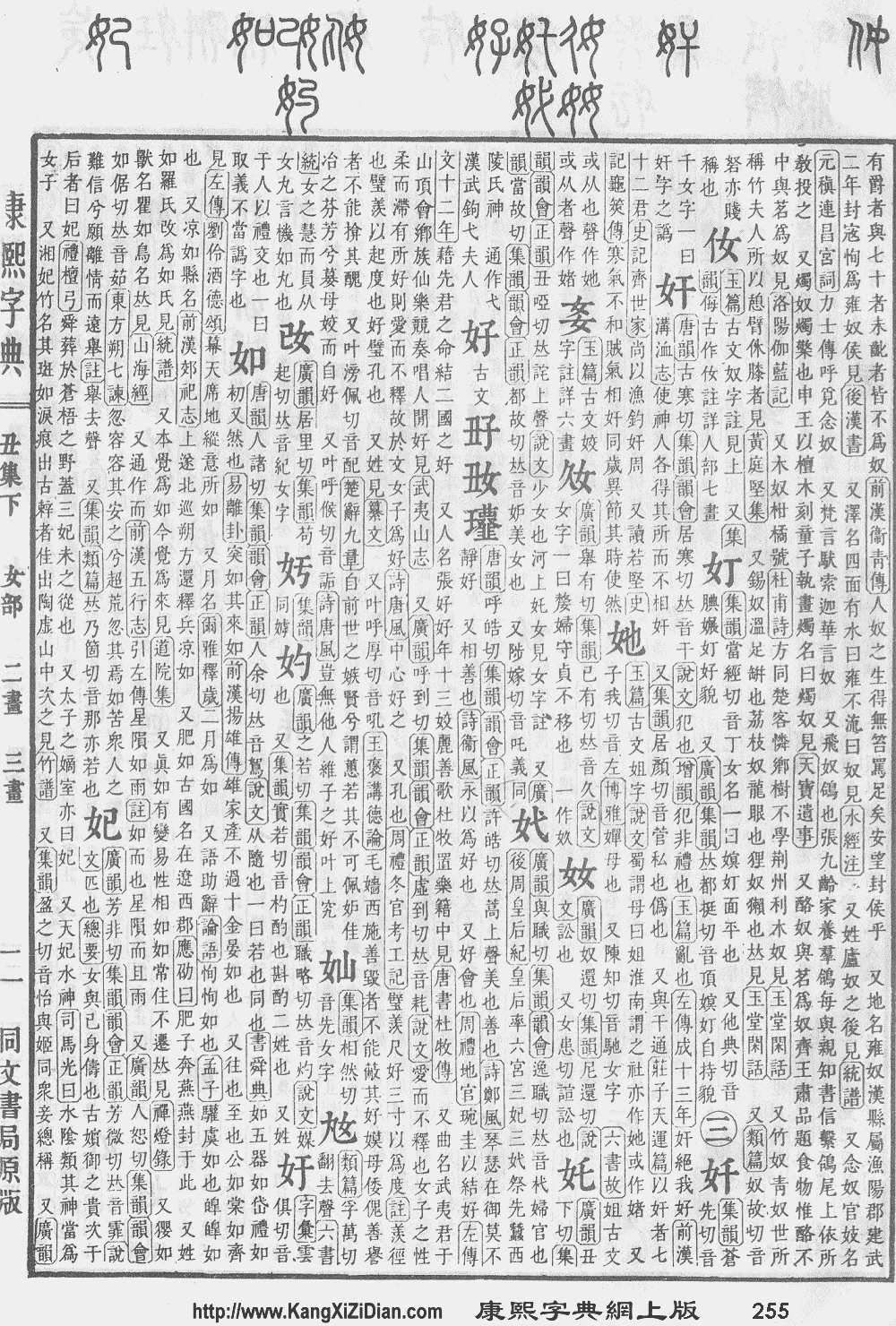
- Kangxi Dictionary: page 255, character 22
- Dai Kanwa Jiten: character 6061
- Hanyu Da Zidian (first edition): volume 2, page 1027, character 11
- Unihan data for U+5983
Chinese
| trad. | 妃 | |
|---|---|---|
| simp. # | 妃 | |
| alternative forms | 𡚱 | |
Etymology 1
Probably related to 配 (OC *pʰɯːds, “to match”) (Wang, 1982).
Pronunciation
Definitions
妃
Compounds
- 九妃
- 二妃
- 五妃廟/五妃庙
- 仙妃
- 伯妃引
- 側妃/侧妃
- 儲妃/储妃
- 元妃 (yuánfēi)
- 兩妃/两妃
- 取青妃白
- 后妃 (hòufēi)
- 四妃
- 大妃
- 太妃 (tàifēi)
- 天妃 (Tiānfēi)
- 太妃糖 (tàifēitáng)
- 天子妃
- 妃匹
- 妃呼豨 (fēihūxī)
- 妃妾
- 妃嬪/妃嫔 (fēipín)
- 妃子 (fēizi)
- 妃子園/妃子园
- 妃子笑
- 妃祿仙女/妃禄仙女
- 妃色
- 妾妃
- 娀妃
- 婁妃/娄妃
- 嬪妃/嫔妃 (pínfēi)
- 宓妃
- 宮妃/宫妃 (gōngfēi)
- 宸妃
- 少妃
- 帝妃 (dìfēi)
- 庶妃
- 徐妃
- 明妃
- 星妃
- 景陽妃/景阳妃
- 月妃
- 梅妃
- 楊妃/杨妃
- 楚妃
- 楚妃吟
- 楊妃垢/杨妃垢
- 楊妃山茶/杨妃山茶
- 楊妃春睡/杨妃春睡
- 楚妃歎/楚妃叹
- 楊妃粉/杨妃粉
- 楊妃茶/杨妃茶
- 楊妃醉舞/杨妃醉舞
- 楊貴妃/杨贵妃 (Yáng Guìfēi)
- 正妃
- 水妃
- 江妃
- 江妃佩
- 洛妃
- 洛浦宓妃
- 淬妃
- 淑妃
- 湘妃
- 湘妃墓
- 湘妃廟/湘妃庙
- 湘妃椅
- 湘妃竹 (xiāngfēizhú)
- 湘妃鼓瑟
- 湘陵妃子
- 漆妃
- 漢宮妃/汉宫妃
- 潘妃
- 潘妃步
- 潘妃金蓮/潘妃金莲
- 王妃 (wángfēi)
- 玉妃 (yùfēi)
- 瑤妃/瑶妃
- 瓊妃/琼妃
- 皇太妃
- 皇妃 (huángfēi)
- 皇貴妃/皇贵妃 (huángguìfēi)
- 真妃
- 禿妃之髮/秃妃之发
- 秦妃
- 竹妃
- 羿妃
- 虙妃
- 蟾妃
- 貞妃/贞妃
- 貴妃/贵妃 (guìfēi)
- 貴妃榻/贵妃榻
- 貴妃粉/贵妃粉
- 貴妃醉酒/贵妃醉酒
- 賢妃/贤妃
- 遺妃/遗妃
- 邰妃
- 醉楊妃/醉杨妃
- 醉楊妃色/醉杨妃色
- 霜妃
- 靈妃/灵妃
- 香妃
- 魏妃
- 麗妃/丽妃
- 黃妃塔/黄妃塔
Etymology 2
Related to 配 (OC *pʰɯːds, “to match”).
Pronunciation
Compounds
- 妃偶
- 妃合
- 妃耦 (pèi'ǒu)
Japanese
| Shinjitai | 妃 | |
| Kyūjitai [1] |
妃󠄂 妃+ 󠄂?(Hanyo-Denshi) (Moji_Joho) |
 |
| The displayed kanji may be different from the image due to your environment. See here for details. | ||
Readings
From Middle Chinese 妃 (MC phj+j); compare Mandarin 妃 (fēi):
From Middle Chinese 妃 (MC phwojH); compare Mandarin 妃 (pèi):
From native Japanese roots:
Pronunciation
- (Tokyo) きさき [kìsáꜜkì] (Nakadaka – [2])[2][3]
- (Tokyo) きさき [kìsákí] (Heiban – [0])[2][3]
- IPA(key): [kʲisa̠kʲi]
Noun
- A ruler's wife; queen; empress.
- 1632, Diego Collado, Dictionarium sive thesauri linguae Iaponicae compendium, page 112:
- Regina, æ . reina . qisàqi .
- Regina, æ . reina . qisàqi .
- (please add an English translation of this quotation)
Noun
妃 • (hi)
- a queen consort or princess consort
- お妃
- o-hi
- the queen
- 聖剣を抱く王妃ギネヴィア
- Seiken o Idaku Ōhi Ginevia
- Guinevere, the Queen Who Bears the Holy Sword
- 妃殿下
- Hidenka
- Her Highness the Princess
- 文仁親王妃紀子
- Fumihito Shinnōhi Kiko
- Kiko, Princess Fumihito
- (literally, “Kiko, Consort of Prince Fumihito”)
- ウェールズ公妃ダイアナ
- Wēruzu Kōhi Daiana
- Diana, Princess of Wales
- (literally, “Diana, Consort of the Prince of Wales”)
- お妃
References
- Shōundō Henshūjo, editor (1927), 新漢和辞典 [The New Kanji-Japanese Dictionary] (in Japanese), Ōsaka: Shōundō, , page 393 (paper), page 209 (digital)
- Yamada, Tadao et al., editors (2011), 新明解国語辞典 [Shin Meikai Kokugo Jiten] (in Japanese), Seventh edition, Tōkyō: Sanseidō, →ISBN
- Matsumura, Akira, editor (2006), 大辞林 [Daijirin] (in Japanese), Third edition, Tōkyō: Sanseidō, →ISBN
Korean
Etymology 1
From Middle Chinese 妃 (MC phj+j). Recorded as Middle Korean 비 (pi) (Yale: pi) in Hunmong Jahoe (訓蒙字會 / 훈몽자회), 1527.
Etymology 2
From Middle Chinese 妃 (MC phwojH).
Vietnamese
This article is issued from Wiktionary. The text is licensed under Creative Commons - Attribution - Sharealike. Additional terms may apply for the media files.