己
| ||||||||
| ||||||||
Translingual
| Stroke order | |||
|---|---|---|---|
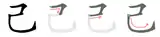 | |||
| Stroke order | |||
|---|---|---|---|
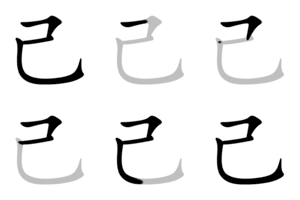 | |||
Han character
己 (Kangxi radical 49, 己+0, 3 strokes, cangjie input 尸山 (SU), four-corner 17717, composition ⿳𠃍一乚)
- Kangxi radical #49, ⼰.
- Shuowen Jiezi radical №518
Derived characters
Descendants
- こ (Hiragana character derived from man'yōgana)
- コ (Katakana character derived from man'yōgana)
Further reading
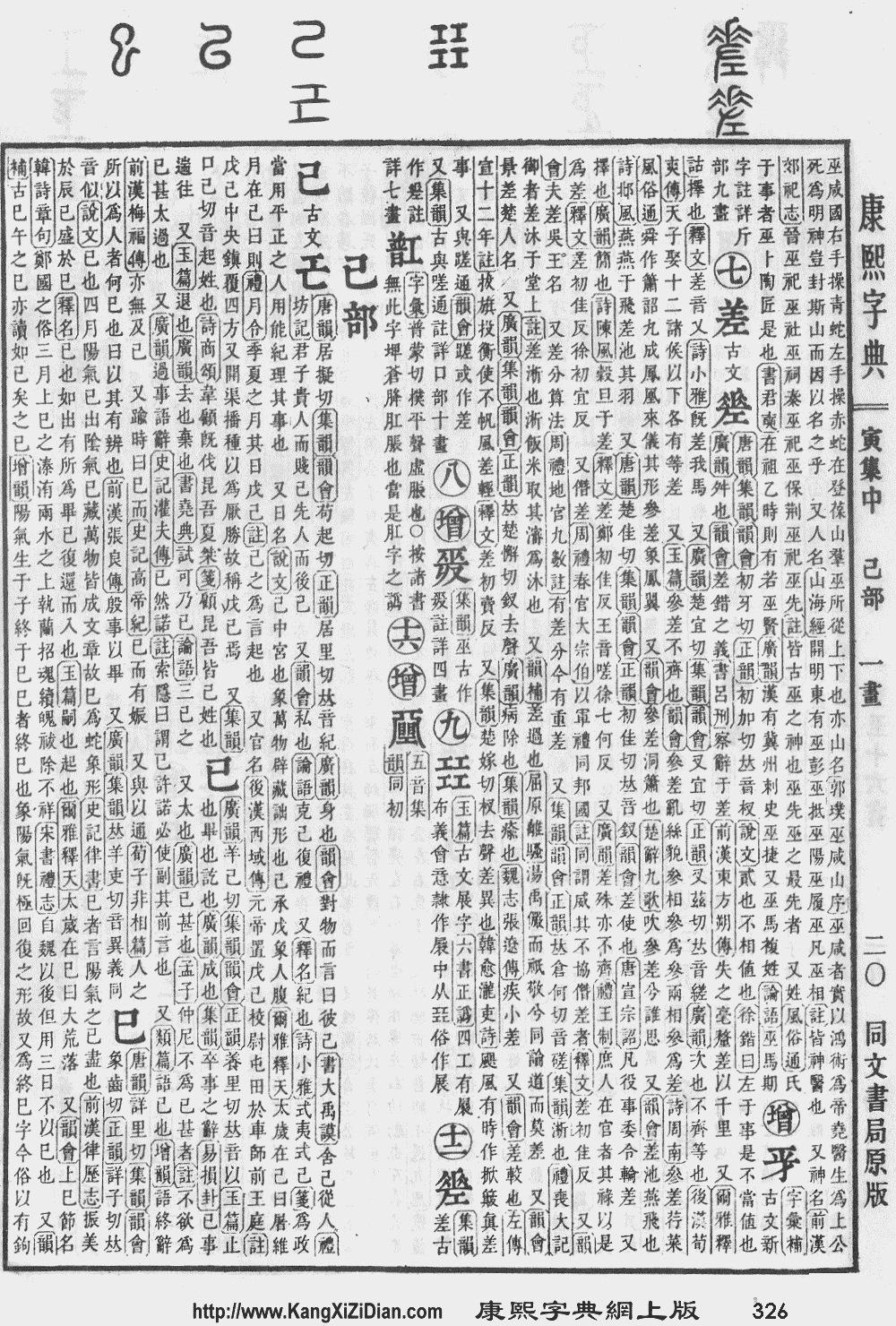
- Kangxi Dictionary: page 326, character 9
- Dai Kanwa Jiten: character 8742
- Dae Jaweon: page 630, character 10
- Hanyu Da Zidian (first edition): volume 2, page 983, character 5
- Unihan data for U+5DF1
Baekje
References
- John Bentley (2000) “New Look at Paekche and Korean: Data from Nihon shoki”, in Language Research, volume 36, number 2, Seoul National University, pages 417—443
- Alexander Vovin (2005) “Koguryo and Paekche: Different Languages or Dialects of Old Korean?”, in Journal of Inner and East Asian Studies, volume 2, number 2, Koguryo Research Foundation, pages 108—140
- Alexander Vovin (2013) “From Koguryo to T'amna”, in Korean Linguistics, volume 15, number 2, John Benjamins Publishing Company, pages 222—240
Chinese
| simp. and trad. |
己 | |
|---|---|---|
| alternative forms | 𢀒 | |
Glyph origin
| Historical forms of the character 己 | ||||
|---|---|---|---|---|
| Shang | Western Zhou | Warring States | Shuowen Jiezi (compiled in Han) | Liushutong (compiled in Ming) |
| Oracle bone script | Bronze inscriptions | Chu slip and silk script | Small seal script | Transcribed ancient scripts |
 |
 |
 |
 |
 |
Pictogram (象形) – silk rope for binding objects. Original form of 紀 (OC *kɯʔ). The character must not be confused with 已 and 巳.
Etymology
Unknown (Schuessler, 2007).
Pronunciation 1
Coordinate terms
Compounds
- 一己 (yījǐ)
- 一己之私 (yījǐzhīsī)
- 一己之見/一己之见 (yījǐzhījiàn)
- 人一己百
- 人己一視/人己一视
- 人溺己溺
- 人飢己飢/人饥己饥
- 以己度人 (yǐjǐduórén)
- 修己
- 先人後己/先人后己
- 克己 (kèjǐ)
- 克己主義/克己主义 (kèjǐ zhǔyì)
- 克己奉公 (kèjǐfènggōng)
- 克己復禮/克己复礼 (kèjǐfùlǐ)
- 克盡己職/克尽己职
- 入己
- 切己
- 利人利己
- 利己 (lìjǐ)
- 利己主義/利己主义 (lìjǐzhǔyì)
- 利己妨人
- 占為己有
- 反求諸己/反求诸己 (fǎnqiúzhūjǐ)
- 叨在知己
- 各執己見/各执己见 (gèzhíjǐjiàn)
- 各抒己見/各抒己见 (gèshūjǐjiàn)
- 各持己見/各持己见 (gèchíjǐjiàn)
- 嗇己奉公/啬己奉公
- 嚴於律己/严于律己
- 固執己見/固执己见 (gùzhíjǐjiàn)
- 天涯知己
- 奉公正己
- 威福由己
- 威福自己
- 孤行己意
- 孤行己見/孤行己见
- 安分守己 (ānfènshǒujǐ)
- 害人利己
- 害人害己 (hàirénhàijǐ)
- 家己 (ka-kī)
- 審己度人/审己度人
- 尊己卑人
- 小己
- 屈己待人 (qūjǐ dàirén)
- 屈己從人/屈己从人
- 己任 (jǐrèn)
- 己方 (jǐfāng)
- 己飢己溺/己饥己溺
- 徇公忘己
- 徇國忘己/徇国忘己
- 律己 (lǜjǐ)
- 復禮克己/复礼克己
- 恭己
- 恕己及人
- 恕己及物
- 恭己待人
- 恃才矜己
- 愛人如己/爱人如己 (àirénrújǐ)
- 打擊異己/打击异己
- 打體己/打体己
- 推己及人 (tuījǐjírén)
- 捨己就人/舍己就人
- 捨己從人/舍己从人
- 捨己成人/舍己成人
- 捨己救人/舍己救人
- 捨己為人/舍己为人 (shějǐwèirén)
- 捨己為公/舍己为公
- 排斥異己/排斥异己
- 揣己
- 揚己露才/扬己露才
- 損人利己/损人利己 (sǔnrénlìjǐ)
- 損人安己/损人安己
- 損人益己/损人益己
- 損人肥己/损人肥己
- 損己利物/损己利物
- 據為己有/据为己有 (jùwéijǐyǒu)
- 昧己瞞心/昧己瞒心
- 枉己正人
- 梯己
- 正中己懷/正中己怀
- 正己守道
- 潔己/洁己
- 潔己奉公/洁己奉公
- 潔己愛人/洁己爱人
- 異己/异己 (yìjǐ)
- 瘠人肥己
- 瘠己肥人
- 直己 (zhíjǐ)
- 直抒己見/直抒己见
- 瞞心昧己/瞒心昧己
- 矜己任智
- 矜己自飾/矜己自饰
- 知己 (zhījǐ)
- 知己知彼 (zhījǐzhībǐ)
- 知己話/知己话
- 知彼知己 (zhībǐzhījǐ)
- 視如己出/视如己出
- 私己 (sījǐ)
- 立身行己
- 紅粉知己/红粉知己
- 罪己 (zuìjǐ)
- 罪己詔/罪己诏 (zuìjǐzhào)
- 自己 (zìjǐ)
- 自己人 (zìjǐrén)
- 舍己從人/舍己从人
- 舍己芸人
- 著己
- 虛己/虚己
- 虛己受人/虚己受人
- 行己有恥/行己有耻
- 行己有方
- 衒材揚己/衒材扬己
- 誅鋤異己/诛锄异己
- 貼己/贴己 (tiējǐ)
- 身不由己 (shēnbùyóujǐ)
- 身己 (shēnjǐ)
- 逞己失眾/逞己失众
- 露才揚己/露才扬己
- 風塵知己/风尘知己
- 養家肥己/养家肥己
- 體己/体己
- 體己信兒/体己信儿
Descendants
- → Zhuang: geij
Pronunciation 2
Japanese
Readings
Compounds
Proper noun
己 • (Ki)
Etymology 2
| Kanji in this term |
|---|
| 己 |
| つちのと Grade: 6 |
| kun’yomi |
Originally a compound of 土 (tsuchi, “earth”, one of the Chinese five elements) + の (no, possessive particle) + 弟 (oto, “younger brother”).
Proper noun
己 • (Tsuchinoto)
Etymology 3
| Kanji in this term |
|---|
| 己 |
| おのれ Grade: 6 |
| kun’yomi |
From 己 (ono, reflexive or first-person pronoun, see below) + れ (re, “thing”, demonstrative nominalizer ending).
Pronoun
己 • (onore)
- reflexive pronoun: oneself
- first-person pronoun: I, me
- second-person pronoun: you (Can we verify(+) this sense?)
Derived terms
- 己と (onore to)
- 己やれ (onore yare)
- 己顔 (onoregao)
- 己奴 (onoreme)
- 己等 (onorera)
- 己を枉ぐ (onore o magu)
- 勝つは己に克つより大なるはなし (katsu wa onore ni katsu yori dai naru wa nashi)
See also
| a-/wa- “I, we” (first person) |
na-/-ma- “you, ye, thou” (second person) |
k- “this” (close to speaker) |
s- “that” (close to listener) |
a-/ka- “that over there” (far from both) |
i-/ta-/nani- “who, what, where, how, when” (interrogative) |
ono- “oneself” (reflexive) | |
|---|---|---|---|---|---|---|---|
| Person | あ (a) あれ (are) わ (wa) われ (ware) まろ (maro) |
な (na) なれ (nare) なんぢ (nanji) まし (mashi) いまし (imashi) みまし (mimashi) きみ (kimi) |
こ (ko) これ (kore) |
そ (so) それ (sore) |
あ (a) あれ (are) か (ka) かれ (kare) |
た (ta) たれ (tare) なにがし (nanigashi) |
おの (ono) おのれ (onore) |
| Thing | こ (ko) これ (kore) |
そ (so) それ (sore) |
あ (a) あれ (are) か (ka) かれ (kare) |
いづれ (izure) なに (nani) |
|||
| Location | ここ (koko) | そこ (soko) | あしこ (ashiko) かしこ (kashiko) |
いづく (izuku) いづこ (izuko) いどこ (idoko) どこ (doko) |
|||
| Direction | こち (kochi) こなた (konata) |
そち (sochi) そなた (sonata) |
あち (achi) あなた (anata) かなた (kanata) |
いづち (izuchi) いづら (izura) いづかた (izukata) |
|||
| Manner | か (ka) かく (kaku) かくて (kakute) かう (kō) |
さ (sa) さて (sate) しか (shika) |
いか (ika) | ||||
| Time | いつ (itsu) |
Etymology 4
| Kanji in this term |
|---|
| 己 |
| おの Grade: 6 |
| kun’yomi |
Seemingly akin to Miyako ッヴァ (vva, 2nd person singular pronoun). See also うぬ (unu) and うな (una).
Pronunciation
Derived terms
See also
| a-/wa- “I, we” (first person) |
na-/-ma- “you, ye, thou” (second person) |
k- “this” (close to speaker) |
s- “that” (close to listener) |
a-/ka- “that over there” (far from both) |
i-/ta-/nani- “who, what, where, how, when” (interrogative) |
ono- “oneself” (reflexive) | |
|---|---|---|---|---|---|---|---|
| Person | あ (a) あれ (are) わ (wa) われ (ware) まろ (maro) |
な (na) なれ (nare) なんぢ (nanji) まし (mashi) いまし (imashi) みまし (mimashi) きみ (kimi) |
こ (ko) これ (kore) |
そ (so) それ (sore) |
あ (a) あれ (are) か (ka) かれ (kare) |
た (ta) たれ (tare) なにがし (nanigashi) |
おの (ono) おのれ (onore) |
| Thing | こ (ko) これ (kore) |
そ (so) それ (sore) |
あ (a) あれ (are) か (ka) かれ (kare) |
いづれ (izure) なに (nani) |
|||
| Location | ここ (koko) | そこ (soko) | あしこ (ashiko) かしこ (kashiko) |
いづく (izuku) いづこ (izuko) いどこ (idoko) どこ (doko) |
|||
| Direction | こち (kochi) こなた (konata) |
そち (sochi) そなた (sonata) |
あち (achi) あなた (anata) かなた (kanata) |
いづち (izuchi) いづら (izura) いづかた (izukata) |
|||
| Manner | か (ka) かく (kaku) かくて (kakute) かう (kō) |
さ (sa) さて (sate) しか (shika) |
いか (ika) | ||||
| Time | いつ (itsu) |
Etymology 5
| Kanji in this term |
|---|
| 己 |
| おれ Grade: 6 |
| kun’yomi |
Etymology 6
| Kanji in this term |
|---|
| 己 |
| おら Grade: 6 |
| kun’yomi |
(This etymology is missing or incomplete. Please add to it, or discuss it at the Etymology scriptorium.)
Alternative forms
Pronunciation
- Pronunciation for pronoun senses unknown.
Pronoun
己 • (unu)
- second-person pronoun: you
- reflexive pronoun: oneself
- Synonym: 自分自身 (jibun-jishin)
Etymology 8
| Kanji in this term |
|---|
| 己 |
| うら Grade: 6 |
| irregular |
(This etymology is missing or incomplete. Please add to it, or discuss it at the Etymology scriptorium.)
References
- Matsumura, Akira, editor (2006), 大辞林 [Daijirin] (in Japanese), Third edition, Tōkyō: Sanseidō, →ISBN
- Yamada, Tadao et al., editors (2011), 新明解国語辞典 [Shin Meikai Kokugo Jiten] (in Japanese), Seventh edition, Tōkyō: Sanseidō, →ISBN