氣
| ||||||||
Translingual
| Traditional | 氣 |
|---|---|
| Shinjitai | 気 |
| Simplified | 气 |
Han character
氣 (Kangxi radical 84, 气+6, 10 strokes, cangjie input 人弓火木 (ONFD), four-corner 80917, composition ⿹气米)
Derived characters
References
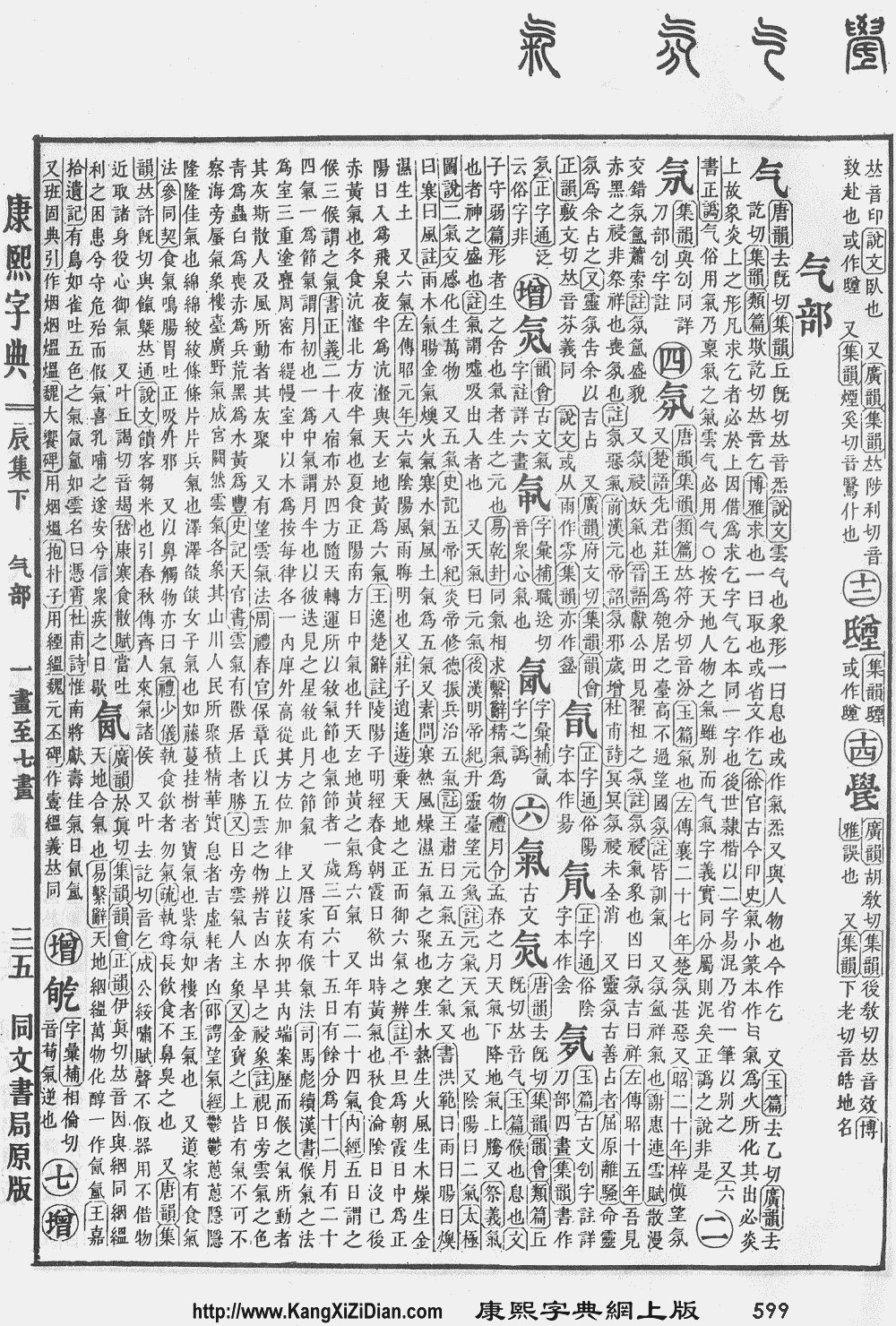
- Kangxi Dictionary: page 599, character 12
- Dai Kanwa Jiten: character 17059
- Dae Jaweon: page 990, character 26
- Hanyu Da Zidian (first edition): volume 3, page 2011, character 14
- Unihan data for U+6C23
Chinese
| trad. | 氣 | |
|---|---|---|
| simp. | 气* | |
| alternative forms | ||
Glyph origin
| Historical forms of the character 氣 | ||
|---|---|---|
| Warring States | Shuowen Jiezi (compiled in Han) | Liushutong (compiled in Ming) |
| Qin slip script | Small seal script | Transcribed ancient scripts |
 |
 |
 |
Characters in the same phonetic series (气) (Zhengzhang, 2003)
Phono-semantic compound (形聲/形声, OC *kʰɯds, *qʰɯds) : phonetic 气 (OC *kʰɯds) + semantic 米 (“rice”) – to give rice as a gift.
Later borrowed meanings of “air, flow” from 气 (OC *kʰɯds). The derivative 餼 (OC *qʰɯds) refers to the original word. Compare 乞 (OC *kʰɯds, *kʰɯd).
Pronunciation 1
Definitions
氣
- gas (matter in an intermediate state between liquid and plasma)
- (meteorology) air
- breath (Classifier: 口 m; 股 m; 啖 c)
- (Chinese philosophy, traditional Chinese medicine) qi; vital energy; life force
- weather
- smell; odour
- anger (Classifier: 條/条 c; 啖 c; 度 c)
- to be angry
- to make angry; to annoy; to anger; to enrage
- quality; character; spirit; mettle
- vitality; vigor; morale; spirit
- bad habit; bad practice
- a surname: Qi
Synonyms
Dialectal synonyms of 天氣 (“weather”) [map]
- (smell):
Dialectal synonyms of 氣味 (“smell; odour”) [map]
| Variety | Location | Words |
|---|---|---|
| Formal (Written Standard Chinese) | 氣息, 臭味, 氣 | |
| Mandarin | Beijing | 味兒 |
| Taiwan | 味 | |
| Jinan | 味兒 | |
| Xi'an | 味兒, 味氣 | |
| Wuhan | 氣味, 氣色 | |
| Chengdu | 氣氣, 味道 | |
| Yangzhou | 味道 | |
| Hefei | 味道, 氣味 | |
| Sokuluk (Gansu Dungan) | 味味子, 味味兒 | |
| Cantonese | Guangzhou | 味, 𡃴 |
| Hong Kong | 味, 𡃴 | |
| Hong Kong (San Tin Weitou) | 𡃴 | |
| Yangjiang | 味, 𡃴 | |
| Gan | Nanchang | 氣味 |
| Hakka | Meixian | 味道, 氣味 |
| Miaoli (N. Sixian) | 味道, 氣味 | |
| Pingtung (Neipu; S. Sixian) | 味道, 氣味 | |
| Hsinchu County (Zhudong; Hailu) | 味道, 氣味 | |
| Taichung (Dongshi; Dabu) | 味道, 氣味 | |
| Hsinchu County (Qionglin; Raoping) | 味道, 氣味 | |
| Yunlin (Lunbei; Zhao'an) | 味道, 氣味 | |
| Hong Kong | 味 | |
| Jin | Taiyuan | 味氣 |
| Northern Min | Jian'ou | 味道, 氣色 |
| Eastern Min | Fuzhou | 味 |
| Southern Min | Xiamen | 味, 味素 |
| Quanzhou | 味, 味素 | |
| Zhangzhou | 味 | |
| Singapore (Hokkien) | 味, 味素, 峇羽 | |
| Manila (Hokkien) | 味, 味素 | |
| Chaozhou | 味, 味素, 羶, 氣味 | |
| Wu | Suzhou | 味道, 氣味 |
| Wenzhou | 氣道 | |
| Xiang | Changsha | 氣色, 味道, 氣味 |
| Shuangfeng | 氣色, 氣 | |
- (to be angry):
Dialectal synonyms of 生氣 (“to be angry”) [map]
- 上火 (shànghuǒ) (dialectal Mandarin)
- 使性地 (sái-sìng-tē) (Hokkien)
- 使性子 (shǐ xìngzi)
- 使氣/使气 (shǐqì)
- 使癖 (Hokkien)
- 使頸/使颈 (sai2 geng2) (Cantonese)
- 冒煙/冒烟 (màoyān) (colloquial)
- 動怒/动怒 (dòngnù)
- 受氣/受气 (siū-khì) (Hokkien)
- 嗔怒 (chēnnù)
- 大怒 (dànù)
- 奭 (shì) (literary, or in compounds)
- 威怒 (wēinù) (literary)
- 尥蹶子 (liàojuězi)
- 𡳞火 (Hokkien, vulgar)
- 弄性子 (nòng xìngzi) (colloquial)
- 忿懥 (fènzhì) (literary)
- 怒 (nù) (literary, or in compounds)
- 急 (jí)
- 急眼 (jíyǎn) (colloquial)
- 惱怒/恼怒 (nǎonù)
- 惹氣/惹气 (rěqì)
- 惱火/恼火 (nǎohuǒ)
- 戳火 (cuah4 hue2) (Jin)
- 掛氣/挂气 (guàqì) (dialectal)
- 暴怒 (bàonù) (to explode in anger)
- 有氣/有气 (yǒuqì)
- 氣惱/气恼 (qìnǎo)
- 火大 (huǒdà)
- 火癀 (Hokkien)
- 燒色/烧色 (chiáu-să̤) (Northern Min)
- 爆氣/爆气
- 犯脾氣/犯脾气 (fàn píqi) (colloquial)
- 狂怒 (kuángnù) (to explode in anger)
- 生氣/生气 (shēngqì)
- 癀發/癀发 (Hokkien)
- 發呴/发呴 (7faq 1heu) (Wu)
- 發性地/发性地 (Hokkien)
- 發火/发火 (fāhuǒ)
- 發癀/发癀 (Xiamen Hokkien)
- 發老脾/发老脾 (faat3 lou5 pei4-2) (Cantonese)
- 發脾四/发脾四 (faat3 pei4 sei3) (Cantonese)
- 發脾氣/发脾气 (fā píqi)
- 發臉/发脸 (Hokkien)
- 發輦/发辇 (Taiwanese Hokkien)
- 發飆/发飙 (fābiāo) (colloquial)
- 盛怒 (shèngnù)
- 耍態度/耍态度 (shuǎ tàidù) (colloquial)
- 耍脾氣/耍脾气 (shuǎ píqi)
- 苦氣/苦气 (Hokkien)
- 見氣/见气 (Yangzhou Mandarin, Pingxiang Gan, Huizhou, Pingxiang Gan, Wu, Pingxiang Gan, Xiang, Pingxiang Gan)
- 起性 (Hokkien)
- 起性地 (Hokkien)
- 起火
- 起花光 (kī-huă-guŏng) (Eastern Min)
- 震怒 (zhènnù)
- 鬧脾氣/闹脾气 (nào píqi)
- (vitality):
Descendants
Pronunciation 2
Compounds
- 一托氣/一托气
- 一氣/一气 (yīqì)
- 一絲兩氣/一丝两气
- 一絲半氣/一丝半气
- 一連氣/一连气
- 一鼓作氣/一鼓作气 (yīgǔzuòqì)
- 下床氣/下床气
- 下氣/下气
- 不平之氣/不平之气
- 不怯氣/不怯气
- 不氣干
- 不氣長/不气长
- 不識氣/不识气
- 不送氣音/不送气音 (bùsòngqìyīn)
- 中氣/中气 (zhōngqì)
- 串氣/串气 (chuànqì)
- 丹氣/丹气
- 二氣/二气
- 人氣/人气 (rénqì)
- 仙氣/仙气
- 伏氣/伏气
- 任氣/任气
- 使氣/使气 (shǐqì)
- 佳氣/佳气
- 俗氣/俗气 (súqì)
- 俠氣/侠气
- 傻氣/傻气 (shǎqì)
- 傷氣/伤气
- 傲氣/傲气 (àoqì)
- 元氣/元气 (yuánqì)
- 充氣/充气 (chōngqì)
- 光氣/光气 (guāngqì)
- 六氣/六气
- 冤枉氣/冤枉气
- 冷氣/冷气 (lěngqì)
- 凶氣
- 出氣/出气 (chūqì)
- 劍氣/剑气 (jiànqì)
- 力氣/力气 (lìqi)
- 勇氣/勇气 (yǒngqì)
- 動氣/动气 (dòngqì)
- 匠氣/匠气 (jiàngqì)
- 厭氣/厌气
- 又急又氣/又急又气
- 又氣又急/又气又急
- 受氣/受气 (shòuqì)
- 口氣/口气 (kǒuqì)
- 可氣/可气
- 吐氣/吐气 (tǔqì)
- 名氣/名气 (míngqì)
- 同氣/同气
- 合氣/合气
- 吁氣
- 吸氣/吸气 (xīqì)
- 吷氣/吷气
- 吭氣/吭气 (kēngqì)
- 吞氣/吞气
- 吹氣勝蘭/吹气胜兰
- 吞聲忍氣/吞声忍气
- 吞聲飲氣/吞声饮气
- 和和氣氣/和和气气
- 和氣/和气
- 呼氣/呼气 (hūqì)
- 咽氣/咽气
- 哈氣/哈气 (hāqì)
- 唼氣/唼气
- 喪氣/丧气
- 喘氣/喘气 (chuǎnqì)
- 喜氣/喜气 (xǐqì)
- 善氣迎人/善气迎人
- 喪聲嚎氣/丧声嚎气
- 喬聲怪氣/乔声怪气
- 喪聲歪氣/丧声歪气
- 嗤騾子氣/嗤骡子气
- 嘆氣/叹气 (tànqì)
- 嘔氣/呕气
- 噴氣/喷气 (pēnqì)
- 噫氣/噫气
- 噯氣/嗳气 (ǎiqì)
- 嚥氣/咽气 (yànqì)
- 嚴氣正性/严气正性
- 四氣/四气
- 回腸蕩氣/回肠荡气
- 土氣/土气 (tǔqì)
- 壓氣兒/压气儿
- 士氣/士气 (shìqì)
- 壯氣/壮气
- 夜氣/夜气
- 大氣/大气
- 大爺氣/大爷气
- 天朗氣清/天朗气清
- 天氣/天气 (tiānqì)
- 天清氣朗/天清气朗
- 天然氣/天然气 (tiānránqì)
- 天高氣清/天高气清
- 天高氣爽/天高气爽
- 失氣/失气
- 奪氣/夺气
- 女兒氣/女儿气
- 女氣/女气 (nǚqi)
- 好氣/好气
- 妖氣/妖气
- 姑娘氣/姑娘气
- 婆兒氣/婆儿气
- 媠氣/媠气
- 嬌氣/娇气 (jiāoqì)
- 孩子氣/孩子气 (háiziqì)
- 孩氣/孩气
- 官氣/官气 (guānqì)
- 定神順氣/定神顺气
- 客氣/客气
- 寒氣/寒气 (hánqì)
- 寶氣/宝气
- 導氣/导气
- 小家子氣/小家子气 (xiǎojiāziqì)
- 小家氣/小家气 (xiǎojiāqì)
- 小家罕氣/小家罕气
- 小氣/小气 (xiǎoqì)
- 少氣無力/少气无力
- 尖聲尖氣/尖声尖气
- 尸居餘氣/尸居余气 (shījūyúqì)
- 屏息凝氣/屏息凝气
- 屏氣/屏气 (bǐngqì)
- 岔氣/岔气 (chàqì)
- 嵐氣/岚气
- 左皮氣/左皮气
- 布氣/布气
- 帥氣/帅气 (shuàiqì)
- 干鳥氣/干鸟气
- 平心定氣/平心定气 (píngxīndìngqì)
- 平心易氣/平心易气 (píngxīnyìqì)
- 平心靜氣/平心静气 (píngxīnjìngqì)
- 廢氣/废气 (fèiqì)
- 弄性尚氣/弄性尚气
- 引氣/引气
- 彆氣/别气
- 形氣/形气
- 御氣/御气
- 心和氣平/心和气平
- 心平氣和/心平气和 (xīnpíngqìhé)
- 心平氣定/心平气定
- 心平靜氣/心平静气
- 心氣/心气 (xīnqì)
- 心浮氣躁/心浮气躁
- 心粗氣浮/心粗气浮
- 心高氣傲/心高气傲 (xīngāoqì'ào)
- 心高氣硬/心高气硬
- 志同氣合/志同气合
- 志氣/志气 (zhìqì)
- 忍氣吞聲/忍气吞声 (rěnqìtūnshēng)
- 志滿氣得/志满气得
- 志高氣揚/志高气扬
- 忿氣/忿气
- 性氣/性气 (xìngqì)
- 怨氣/怨气 (yuànqì)
- 怒氣/怒气 (nùqì)
- 怯聲怯氣/怯声怯气
- 怪裡怪氣/怪里怪气
- 息心靜氣/息心静气
- 息氣/息气
- 悔氣/悔气
- 惡氣/恶气
- 悶氣/闷气
- 意氣/意气 (yìqì)
- 愚氣/愚气
- 愜氣/惬气
- 惹氣/惹气 (rěqì)
- 憋氣/憋气 (biēqì)
- 憤氣填膺/愤气填膺
- 戾氣/戾气
- 才氣/才气 (cáiqì)
- 手氣/手气 (shǒuqì)
- 才高氣傲/才高气傲
- 打氣/打气 (dǎqì)
- 抖氣/抖气
- 抽氣機/抽气机
- 掛氣/挂气 (guàqì)
- 排氣/排气 (páiqì)
- 捯氣/捯气 (dáoqì)
- 換氣/换气 (huànqì)
- 揚氣/扬气
- 撒氣/撒气 (sāqì)
- 攮氣/攮气
- 支氣管炎/支气管炎 (zhīqìguǎnyán)
- 放氣/放气 (fàngqì)
- 文氣/文气 (wénqì)
- 斷氣/断气 (duànqì)
- 方巾氣/方巾气
- 日氣/日气 (rìqì)
- 春氣/春气
- 星氣/星气
- 時氣/时气 (shíqì)
- 晦氣/晦气 (huìqì)
- 暑氣/暑气 (shǔqì)
- 景氣/景气 (jǐngqì)
- 暖氣/暖气 (nuǎnqì)
- 暴厲之氣/暴厉之气
- 暴戾之氣/暴戾之气
- 暮氣/暮气 (mùqì)
- 曝氣/曝气
- 書卷氣/书卷气 (shūjuànqì)
- 有氣/有气 (yǒuqì)
- 服氣/服气 (fúqì)
- 朔氣/朔气
- 望氣/望气
- 朝氣/朝气 (zhāoqì)
- 村氣/村气
- 根氣/根气
- 梯氣/梯气
- 歎氣/叹气 (tànqì)
- 正氣/正气 (zhèngqì)
- 死氣沉沉/死气沉沉 (sǐqìchénchén)
- 死氣白賴/死气白赖
- 死聲活氣/死声活气
- 殺氣/杀气 (shāqì)
- 毆氣/殴气
- 毒氣/毒气 (dúqì)
- 民氣/民气 (mínqì)
- 氡氣/氡气
- 氣不公/气不公
- 氣不平/气不平
- 氣不忿/气不忿
- 氣不忿兒/气不忿儿
- 氣不憤/气不愤
- 氣不打一處來/气不打一处来
- 氣不過/气不过
- 氣丕丕/气丕丕
- 氣井/气井
- 氣人/气人
- 氣候/气候 (qìhòu)
- 氣傲心高/气傲心高
- 氣充志定/气充志定
- 氣充志驕/气充志骄
- 氣充文見/气充文见
- 氣克斗牛
- 氣兒不打一處來/气儿不打一处来
- 氣兒不順/气儿不顺
- 氣冠三軍/气冠三军
- 氣凌霄漢/气凌霄汉
- 氣分/气分 (qìfēn)
- 氣割/气割
- 氣力/气力 (qìlì)
- 氣功/气功 (qìgōng)
- 氣勃勃/气勃勃
- 氣勢/气势 (qìshì)
- 氣包子/气包子
- 氣化/气化 (qìhuà)
- 氣厥/气厥
- 氣吁吁
- 氣吐眉揚/气吐眉扬
- 氣吐虹霓/气吐虹霓
- 氣吞山河/气吞山河
- 氣吞牛斗
- 氣命/气命
- 氣味/气味 (qìwèi)
- 氣呼呼/气呼呼 (qìhūhū)
- 氣咻咻/气咻咻
- 氣咽聲絲/气咽声丝
- 氣哼哼/气哼哼
- 氣喪/气丧
- 氣喘/气喘 (qìchuǎn)
- 氣嗓/气嗓
- 氣噎/气噎
- 氣囊/气囊 (qìnáng)
- 氣囔囔/气囔囔
- 氣圈/气圈 (qìquān)
- 氣團/气团 (qìtuán)
- 氣塞/气塞
- 氣墊/气垫 (qìdiàn)
- 氣壓/气压 (qìyā)
- 氣壯山河/气壮山河
- 氣壯河山/气壮河山
- 氣壯理直/气壮理直
- 氣夯/气夯
- 氣孔/气孔 (qìkǒng)
- 氣宇/气宇 (qìyǔ)
- 氣定神閒/气定神闲 (qìdìngshénxián)
- 氣度/气度 (qìdù)
- 氣強/气强
- 氣忍聲吞/气忍声吞
- 氣忿/气忿 (qìfèn)
- 氣性/气性
- 氣急/气急
- 氣息/气息 (qìxī)
- 氣悶/气闷 (qìmèn)
- 氣惱/气恼 (qìnǎo)
- 氣態/气态 (qìtài)
- 氣憤/气愤 (qìfèn)
- 氣拍/气拍
- 氣揚采飛/气扬采飞
- 氣撅撅/气撅撅
- 氣數/气数 (qìshù)
- 氣旋/气旋 (qìxuán)
- 氣昂昂/气昂昂 (qì'áng'áng)
- 氣根/气根 (qìgēn)
- 氣概/气概 (qìgài)
- 氣槍/气枪 (qìqiāng)
- 氣樓/气楼 (qìlóu)
- 氣歇/气歇
- 氣死/气死 (qìsǐ)
- 氣殺鍾馗/气杀钟馗
- 氣母/气母
- 氣毬/气球
- 氣氛/气氛
- 氨氣/氨气 (ānqì)
- 氧氣/氧气 (yǎngqì)
- 氣氳氳/气氲氲
- 氣沖斗牛/气冲斗牛
- 氣沖沖/气冲冲 (qìchōngchōng)
- 氣沖牛斗/气冲牛斗
- 氣沖牛鬥/气冲牛斗
- 氣沖霄漢/气冲霄汉
- 氣沖鬥牛/气冲斗牛
- 氣泡/气泡 (qìpào)
- 氣沮/气沮
- 氣派/气派
- 氣流/气流 (qìliú)
- 氣洶洶/气汹汹
- 氣浪/气浪 (qìlàng)
- 氣海/气海
- 氣消膽奪/气消胆夺
- 氣湊/气凑
- 氣湧如山/气涌如山
- 氣溫/气温 (qìwēn)
- 氣滿填胸/气满填胸
- 氣滿志得/气满志得
- 氣滿志驕/气满志骄
- 氣火/气火
- 氣焊/气焊 (qìhàn)
- 氣焰/气焰 (qìyàn)
- 氣煤/气煤
- 氣煞車/气煞车
- 氣燄 (qìyàn)
- 氣燄高張/气焰高张
- 氣爆/气爆
- 氣狠狠/气狠狠
- 氣球/气球 (qìqiú)
- 氣田/气田 (qìtián)
- 氣盛/气盛
- 氣盡/气尽
- 氣眼/气眼
- 氣短/气短 (qìduǎn)
- 氣泵/气泵 (qìbèng)
- 氣禁/气禁
- 氣窗/气窗 (qìchuāng)
- 氣筒/气筒
- 氣節/气节 (qìjié)
- 氣管/气管 (qìguǎn)
- 氣籲籲/气吁吁
- 氣粗/气粗
- 氣索/气索
- 氣絕/气绝 (qìjué)
- 氣結/气结
- 氣絲絲/气丝丝
- 氣義相投/气义相投
- 氣胞/气胞
- 氣胸/气胸 (qìxiōng)
- 氣脈/气脉 (qìmài)
- 氣腔/气腔
- 氣腹/气腹
- 氣艇/气艇
- 氣色/气色 (qìsè)
- 氣苦/气苦
- 氣若游絲/气若游丝
- 氣蓋山河/气盖山河
- 氣虛/气虚
- 氣蠱/气蛊
- 氣血/气血 (qìxuè)
- 氣褥子/气褥子
- 氣話/气话 (qìhuà)
- 氣誼/气谊
- 氣象/气象 (qìxiàng)
- 氣貫長虹/气贯长虹
- 氣質/气质 (qìzhì)
- 氣賭/气赌
- 氣踰霄漢/气逾霄汉
- 氣輪機/气轮机
- 氣逆/气逆
- 氣道/气道 (qìdào)
- 氣運/气运 (qìyùn)
- 氣量/气量 (qìliàng)
- 氣銲/气焊
- 氣錘/气锤
- 氣鍋/气锅
- 氣門/气门 (qìmén)
- 氣閥/气阀
- 氣韻/气韵 (qìyùn)
- 氣頭上/气头上 (qìtóushàng)
- 氣類/气类
- 氣餒/气馁 (qìněi)
- 氣騰騰/气腾腾
- 氣驕志滿/气骄志满
- 氣骨/气骨
- 氣體/气体 (qìtǐ)
- 氣高/气高
- 氣鬱/气郁
- 氣魄/气魄 (qìpò)
- 氣鳴樂器/气鸣乐器
- 氣鼓/气鼓
- 氫氣/氢气 (qīngqì)
- 氯氣/氯气 (lǜqì)
- 水氣/水气 (shuǐqì)
- 沉不住氣/沉不住气
- 沉住氣/沉住气 (chénzhùqì)
- 沉得住氣/沉得住气
- 沒氣/没气 (méiqì)
- 沼氣/沼气 (zhǎoqì)
- 油氣/油气 (yóuqì)
- 沴氣/沴气
- 泳氣鐘/泳气钟
- 活氣/活气 (huóqì)
- 洩氣/泄气 (xièqì)
- 洋氣/洋气 (yángqì)
- 流氣/流气 (liúqì)
- 浮氣/浮气
- 消氣/消气 (xiāoqì)
- 浩氣/浩气 (hàoqì)
- 浩然之氣/浩然之气
- 浪聲顙氣/浪声颡气
- 涼氣/凉气
- 清氣/清气
- 淘氣/淘气 (táoqì)
- 淑氣/淑气
- 淫氣/淫气
- 湖海氣/湖海气
- 溼氣/湿气 (shīqì)
- 漏氣/漏气 (lòuqì)
- 滯氣/滞气
- 潮氣/潮气 (cháoqì)
- 潮氣量/潮气量 (cháoqìliàng)
- 潑聲浪氣/泼声浪气
- 濁氣/浊气
- 灝氣/灏气 (hàoqì)
- 火氣/火气 (huǒqì)
- 烏煙瘴氣/乌烟瘴气 (wūyānzhàngqì)
- 煤氣/煤气 (méiqì)
- 煞氣/煞气 (shàqì)
- 蒸氣/蒸气 (zhēngqì)
- 熱氣/热气 (rèqì)
- 燃氣輪機/燃气轮机
- 爭氣/争气 (zhēngqì)
- 爭閑氣/争闲气
- 爽氣/爽气
- 牛氣/牛气 (niúqi)
- 狂氣/狂气
- 狗氣/狗气
- 獃氣/獃气
- 獄氣/狱气
- 玄氣/玄气
- 王氣/王气 (wángqì)
- 理氣/理气
- 理直氣壯/理直气壮 (lǐzhíqìzhuàng)
- 瑞氣/瑞气
- 甕聲甕氣/瓮声瓮气
- 生氣/生气 (shēngqì)
- 男氣/男气
- 異香異氣/异香异气
- 疏財尚氣/疏财尚气
- 疝氣/疝气 (shànqì)
- 疫氣/疫气 (yìqì)
- 痰氣/痰气
- 瘴氣/瘴气 (zhàngqì)
- 癖氣/癖气
- 發氣/发气
- 白氣/白气 (báiqì)
- 益氣/益气 (yìqì)
- 盛氣/盛气
- 目指氣使/目指气使
- 直節勁氣/直节劲气
- 真氣/真气
- 短氣/短气
- 硬氣/硬气 (yìngqi)
- 碳酸氣/碳酸气 (tànsuānqì)
- 神安氣定/神安气定
- 神安氣集/神安气集
- 神完氣足/神完气足
- 神氣/神气 (shénqì)
- 神清氣全/神清气全
- 神清氣和/神清气和
- 神清氣朗/神清气朗
- 神清氣正/神清气正
- 神清氣爽/神清气爽 (shénqīngqìshuǎng)
- 福氣/福气
- 秀氣/秀气 (xiùqi)
- 秋氣/秋气
- 秋高氣爽/秋高气爽 (qiūgāoqìshuǎng)
- 秋高氣肅/秋高气肃
- 稟氣/禀气 (bǐngqì)
- 稚氣/稚气 (zhìqì)
- 穢氣/秽气
- 空氣/空气 (kōngqì)
- 窩囊氣/窝囊气
- 窮氣/穷气
- 笑氣/笑气 (xiàoqì)
- 節氣/节气 (jiéqì)
- 粗聲粗氣/粗声粗气 (cūshēngcūqì)
- 精氣/精气
- 素氣/素气
- 紫氣/紫气
- 細聲細氣/细声细气
- 絕氣/绝气
- 絳氣/绛气
- 義氣/义气 (yìqì)
- 習氣/习气 (xíqì)
- 老氣/老气
- 聒氣/聒气
- 聲吞氣忍/声吞气忍
- 聲應氣求/声应气求
- 聲氣/声气 (shēngqì)
- 聲求氣應/声求气应
- 聲絲氣咽/声丝气咽
- 聽氣兒/听气儿
- 肝氣/肝气
- 肺氣腫/肺气肿 (fèiqìzhǒng)
- 胎氣/胎气 (tāiqì)
- 背氣/背气 (bèiqì)
- 脂粉氣/脂粉气 (zhīfěnqì)
- 脾氣/脾气
- 脹氣/胀气 (zhàngqì)
- 腐氣/腐气
- 腥氣/腥气 (xīngqì)
- 腳氣病/脚气病 (jiǎoqìbìng)
- 腰粗氣豪/腰粗气豪
- 膽氣/胆气 (dǎnqì)
- 臊氣/臊气 (sāoqì)
- 臭氣/臭气 (chòuqì)
- 艾氣/艾气
- 芳氣/芳气 (fāngqì)
- 英氣/英气 (yīngqì)
- 蔬茹氣/蔬茹气
- 蕩氣回腸/荡气回肠
- 蕩氣迴腸/荡气回肠
- 藏風聚氣/藏风聚气
- 虛憍恃氣/虚㤭恃气
- 虹氣/虹气
- 蜃氣/蜃气
- 蜃氣樓/蜃气楼
- 血氣/血气 (xuèqì)
- 補氣/补气 (bǔqì)
- 規氣/规气
- 解氣/解气 (jiěqì)
- 討氣/讨气
- 語氣/语气 (yǔqì)
- 調氣/调气
- 譜氣/谱气
- 豪氣/豪气 (háoqì)
- 負氣/负气 (fùqì)
- 財氣/财气 (cáiqì)
- 貫氣/贯气
- 貧氣/贫气
- 費氣/费气
- 貯氣槽/贮气槽
- 賭氣/赌气 (dǔqì)
- 賭鱉氣/赌鳖气
- 足高氣揚/足高气扬
- 趾高氣揚/趾高气扬 (zhǐgāoqìyáng)
- 蹩氣/蹩气
- 辣氣/辣气
- 辭嚴氣正/辞严气正
- 辭氣/辞气 (cíqì)
- 迂氣/迂气
- 送氣/送气 (sòngqì)
- 迴腸蕩氣/回肠荡气
- 通氣/通气 (tōngqì)
- 逗氣/逗气
- 透氣/透气 (tòuqì)
- 連氣兒/连气儿
- 進氣/进气
- 逸氣/逸气
- 遊氣/游气
- 運氣/运气
- 過氣/过气 (guòqì)
- 過病氣/过病气
- 邪氣/邪气 (xiéqì)
- 鄉氣/乡气
- 重氣/重气
- 量小氣窄/量小气窄
- 銜聲茹氣/衔声茹气
- 銳氣/锐气 (ruìqì)
- 鍊氣/炼气
- 鐳射氣/镭射气
- 閉氣/闭气 (bìqì)
- 閒氣/闲气
- 閣氣/阁气
- 闊氣/阔气 (kuòqì)
- 陰氣/阴气 (yīnqì)
- 陰陽怪氣/阴阳怪气 (yīnyángguàiqì)
- 陽氣/阳气
- 雄氣/雄气
- 雲氣/云气 (yúnqì)
- 電氣/电气 (diànqì)
- 霉氣 (méiqì)
- 霧氣/雾气 (wùqì)
- 霸氣/霸气 (bàqì)
- 靈氣/灵气 (língqì)
- 頭巾氣/头巾气
- 頤指氣使/颐指气使 (yízhǐqìshǐ)
- 頹氣/颓气
- 顥氣/颢气
- 風氣/风气 (fēngqì)
- 風清氣爽/风清气爽
- 食氣/食气
- 飲氣吞聲/饮气吞声
- 養氣/养气
- 香氣/香气 (xiāngqì)
- 馭氣/驭气
- 駐氣/驻气
- 驕氣/骄气 (jiāoqì)
- 骨氣/骨气
- 體氣/体气
- 鬆氣/松气 (sōngqì)
- 鬥氣/斗气 (dòuqì)
- 鬥閑氣/斗闲气
- 魂消氣泄
- 鳥裡鳥氣/鸟里鸟气
- 黑氣沖天/黑气冲天
References
- “氣”, in 漢語多功能字庫 (Multi-function Chinese Character Database), 香港中文大學 (the Chinese University of Hong Kong), 2014–
Korean
Etymology
From Middle Chinese 氣 (MC khj+jH).
| Historical Readings | ||
|---|---|---|
| Dongguk Jeongun Reading | ||
| Dongguk Jeongun, 1448 | 킝〮 (Yale: khúy) | |
| Middle Korean | ||
| Text | Eumhun | |
| Gloss (hun) | Reading | |
| Hunmong Jahoe, 1527 | 긔〮운〮 (Yale: kúywún) | ᄭᅴ〮 (Yale: skúy) |
Pronunciation
- (SK Standard/Seoul) IPA(key): [ki]
- Phonetic hangul: [기]
Compounds
Compounds
- 감기 (感氣, gamgi)
- 경기 (景氣, gyeonggi)
- 공기 (空氣, gonggi)
- 기력 (氣力, giryeok)
- 기류 (氣流, giryu)
- 기백 (氣魄, gibaek)
- 기분 (氣分, gibun)
- 기상 (氣象, gisang)
- 기세 (氣勢, gise)
- 기승 (氣勝, giseung)
- 기압 (氣壓, giap)
- 기온 (氣溫, gion)
- 기운 (氣運, giun)
- 기체 (氣體, giche)
- 기후 (氣候, gihu)
- 대기 (大氣, daegi)
- 분위기 (雰圍氣, bunwigi)
- 생기 (生氣, saenggi)
- 수증기 (水蒸氣, sujeunggi)
- 연기 (煙氣, yeon'gi)
- 오기 (傲氣, ogi)
- 일기 (日氣, ilgi)
- 자기 (磁氣, jagi)
- 전기 (電氣, jeon'gi)
- 절기 (節氣, jeolgi)
- 증기 (蒸氣, jeunggi)
- 토기 (吐氣, togi)
- 향기 (香氣, hyanggi)
- 혈기 (血氣, hyeolgi)
Vietnamese
This article is issued from Wiktionary. The text is licensed under Creative Commons - Attribution - Sharealike. Additional terms may apply for the media files.