商
See also: 啇
| ||||||||
Translingual
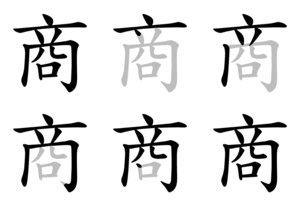
| Stroke order | |||
|---|---|---|---|
 | |||
Han character
商 (Kangxi radical 30, 口+8, 11 strokes, cangjie input 卜金月口 (YCBR), four-corner 00227, composition ⿳亠丷冏)
References
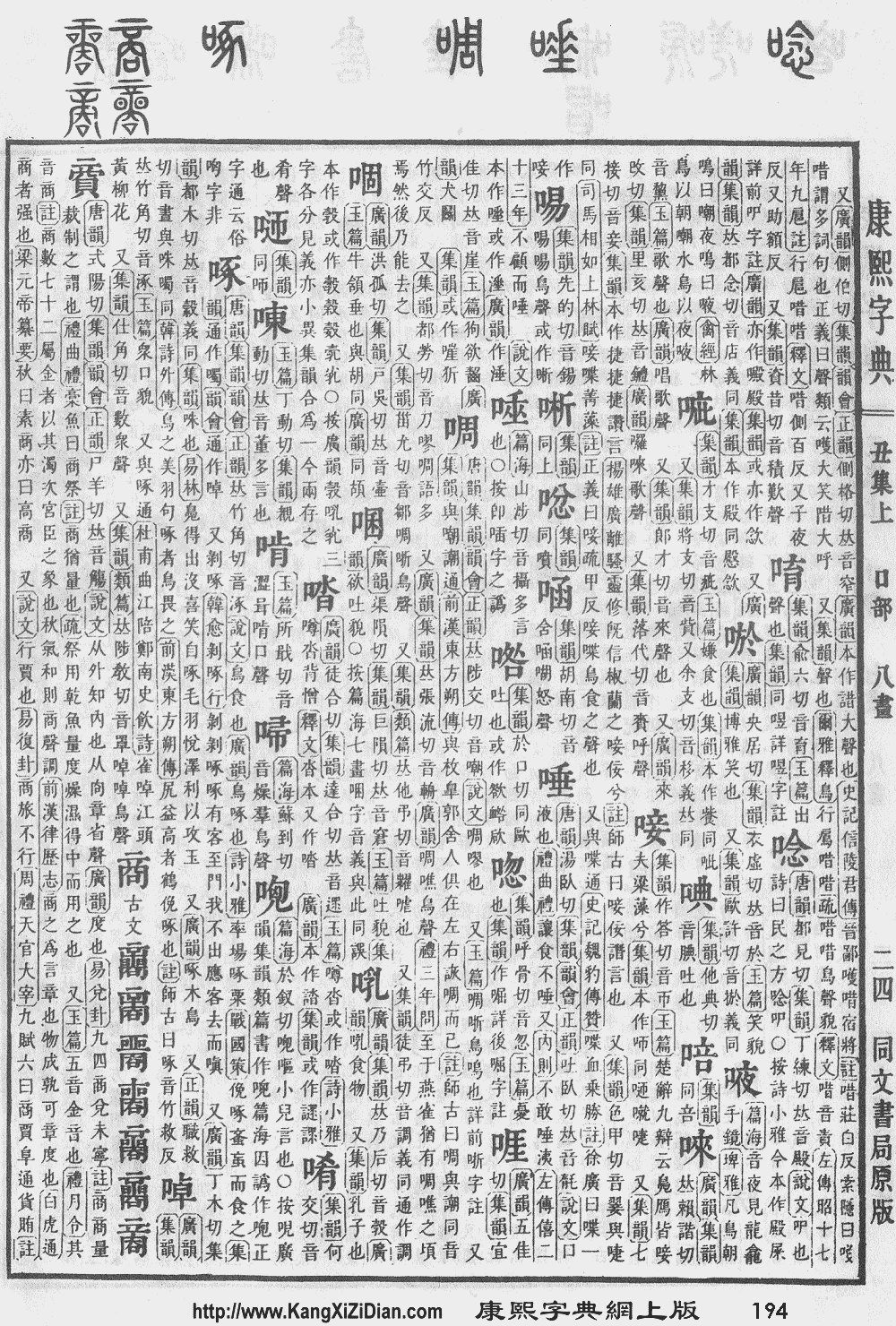
- Kangxi Dictionary: page 194, character 32
- Dai Kanwa Jiten: character 3803
- Dae Jaweon: page 415, character 9
- Hanyu Da Zidian (first edition): volume 1, page 288, character 6
- Unihan data for U+5546
Chinese
| trad. | 商 | |
|---|---|---|
| simp. # | 商 | |
| alternative forms | ||
Glyph origin
| Historical forms of the character 商 | ||||
|---|---|---|---|---|
| Shang | Western Zhou | Warring States | Shuowen Jiezi (compiled in Han) | Liushutong (compiled in Ming) |
| Oracle bone script | Bronze inscriptions | Chu slip and silk script | Small seal script | Transcribed ancient scripts |
 |
 |
 |
 |
 |
Etymology
Traditionally it is considered that 商人 (shāngrén) is so named because this term originally refers to people from Shang dynasty, who tend to do business.[1]
From 賒 (OC *hljaː) plus terminative suffix *-ŋ (Schuessler, 2007). See there for further etymology.
Pronunciation
Definitions
商
- trade; commerce; business
- 商則有居善疾售之貨。 [Classical Chinese, trad.]
- From: Wang Chong, Lun Heng (Discussive Weighing), 80 CE, translated based on Alfred Forke's version
- Shāng zé yǒu jū shàn jí shòu zhī huò. [Pinyin]
- In commerce those sort of people manage to get excellent merchandise, which sells without delay.
商则有居善疾售之货。 [Classical Chinese, simp.]
- businessman; dealer; trader; merchant
- 使商無得糴,農無得糶。 [Classical Chinese, trad.]
- From: The Book of Lord Shang, circa 3rd century BCE, translated based on J.J.L. Duyvendak's version
- Shǐ shāng wúdé dí, nóng wúdé tiào. [Pinyin]
- Do not allow merchants to buy grain nor farmers to sell grain.
使商无得籴,农无得粜。 [Classical Chinese, simp.]- 富家之商,必奪貧室之財。 [Classical Chinese, trad.]
- From: Wang Chong, Lun Heng (Discussive Weighing), 80 CE, translated based on Alfred Forke's version
- Fùjiā zhī shāng, bì duó pínshì zhī cái. [Pinyin]
- Merchants of wealthy houses will certainly snatch away the property of poor families.
富家之商,必夺贫室之财。 [Classical Chinese, simp.]
- (mathematics) quotient
- (music) the second note in the Chinese pentatonic scale
- 商者,張也,陰氣開張,陽氣始降也;……。 [Classical Chinese, trad.]
- From: Ban Gu, The Comprehensive Discussions in the White Tiger Hall, 79 CE, translated based on Tjan Tjoe Som's version
- Shāng zhě, zhāng yě, yīnqì kāi zhāng, yángqì shǐ jiàng yě;....... [Pinyin]
- Shāng means zhāng 'to expand'; the yin-fluid begins to expand [while] the yang-fuild begins to contract; [...].
商者,张也,阴气开张,阳气始降也;……。 [Classical Chinese, simp.]
- (~朝) Shang Dynasty
- to discuss; to consult
- (~宿) (Chinese astronomy) Alternative name for 心 (xīn, “Heart mansion (one of the Twenty-Eight Mansions)”).
See also
Compounds
- 一片宮商/一片宫商
- 中心商品
- 中盤商/中盘商
- 中華商場/中华商场
- 中間商/中间商
- 五口通商
- 代理商 (dàilǐshāng)
- 代銷商/代销商
- 供應商/供应商 (gōngyìngshāng)
- 便利商店 (biànlì shāngdiàn)
- 僑商/侨商 (qiáoshāng)
- 免稅商店/免税商店
- 共商大計/共商大计 (gòngshāngdàjì)
- 券商 (quànshāng)
- 動如參商/动如参商
- 包商
- 協商/协商 (xiéshāng)
- 參商/参商
- 友誼商店/友谊商店 (yǒuyì shāngdiàn)
- 古董商
- 商丘 (Shāngqiū)
- 商事 (shāngshì)
- 商亭 (shāngtíng)
- 商人 (shāngrén)
- 商借 (shāngjiè)
- 商儈/商侩
- 商兌/商兑 (shāngduì)
- 商功
- 商務/商务 (shāngwù)
- 商務仲裁/商务仲裁
- 商君書/商君书 (Shāngjūnshū)
- 商品 (shāngpǐn)
- 商品情報/商品情报
- 商品條碼/商品条码
- 商品檢驗/商品检验
- 商圈 (shāngquān)
- 商埠 (shāngbù)
- 商場/商场 (shāngchǎng)
- 商女 (shāngnǚ)
- 商定 (shāngdìng)
- 商家 (shāngjiā)
- 商展
- 商山四皓
- 商店 (shāngdiàn)
- 商情 (shāngqíng)
- 商戰/商战
- 商數/商数 (shāngshù)
- 商旅 (shānglǚ)
- 商旅店
- 商書/商书
- 商會/商会 (shānghuì)
- 商朝 (Shāngcháo)
- 商業/商业 (shāngyè)
- 商業區/商业区 (shāngyèqū)
- 商業影片/商业影片
- 商業設計/商业设计
- 商業銀行/商业银行 (shāngyè yínháng)
- 商榷 (shāngquè)
- 商標/商标 (shāngbiāo)
- 商標法/商标法
- 商檢/商检
- 商歌
- 商法 (shāngfǎ)
- 商洛 (Shāngluò)
- 商洽 (shāngqià)
- 商港 (shānggǎng)
- 商湯/商汤
- 商用 (shāngyòng)
- 商略
- 商秋
- 商科 (shāngkē)
- 商約/商约
- 商紂/商纣
- 商股
- 商船 (shāngchuán)
- 商號/商号 (shānghào)
- 商蚷
- 商行 (shāngháng)
- 商訂/商订
- 商計/商计
- 商討/商讨 (shāngtǎo)
- 商談/商谈 (shāngtán)
- 商調/商调
- 商謎/商谜
- 商議/商议 (shāngyì)
- 商譽/商誉 (shāngyù)
- 商販/商贩 (shāngfàn)
- 商賈/商贾 (shānggǔ)
- 商購/商购
- 商酌 (shāngzhuó)
- 商量
- 商隊/商队 (shāngduì)
- 商頌/商颂
- 商風/商风 (shāngfēng)
- 商飆/商飙
- 國際商展/国际商展
- 在商言商
- 士農工商/士农工商 (shìnónggōngshāng)
- 外商 (wàishāng)
- 大邑商 (Dàyìshāng)
- 奸商 (jiānshāng)
- 婉商
- 官商 (guānshāng)
- 官商勾結/官商勾结 (guānshānggōujié)
- 官商合辦/官商合办
- 官督商辦/官督商办
- 客商 (kèshāng)
- 家商
- 宮商/宫商
- 密商 (mìshāng)
- 富商 (fùshāng)
- 富商大賈/富商大贾 (fùshāngdàgǔ)
- 少商
- 工商業/工商业 (gōngshāngyè)
- 工商社會/工商社会
- 工商階級/工商阶级
- 工商黃頁/工商黄页
- 巨商
- 平價商店/平价商店
- 廠商/厂商 (chǎngshāng)
- 建商
- 引商刻羽
- 從商/从商 (cóngshāng)
- 情商 (qíngshāng)
- 情緒智商/情绪智商
- 情趣商店 (qíngqù shāngdiàn)
- 承包商 (chéngbāoshāng)
- 批發商/批发商 (pīfāshāng)
- 承銷商/承销商
- 招商局
- 招商店
- 教育商數/教育商数
- 智力商數/智力商数
- 智商 (zhìshāng)
- 書商/书商 (shūshāng)
- 會商/会商 (huìshāng)
- 殷商 (Yīnshāng)
- 水商
- 沒商量/没商量
- 洽商 (qiàshāng)
- 洋商陸/洋商陆
- 海商
- 海商法 (hǎishāngfǎ)
- 清商 (qīngshāng)
- 清商樂/清商乐 (qīngshāngyuè)
- 無商不尖/无商不尖
- 熟商量
- 營商/营商 (yíngshāng)
- 片商
- 特約商店/特约商店
- 王商 (Wángshāng)
- 略無參商/略无参商
- 相商 (xiāngshāng)
- 研商 (yánshāng)
- 磋商 (cuōshāng)
- 私商
- 管商
- 籌商/筹商
- 紅頂商人/红顶商人 (hóngdǐng shāngrén)
- 紳商/绅商
- 經商/经商 (jīngshāng)
- 經銷商/经销商 (jīngxiāoshāng)
- 網路商場/网路商场
- 網路商機/网路商机
- 美商 (měishāng)
- 臺商/台商 (táishāng)
- 舶商
- 茶商 (cháshāng)
- 藥商/药商 (yàoshāng)
- 行口商
- 行商 (xíngshāng)
- 補助商業/补助商业
- 製造商/制造商 (zhìzàoshāng)
- 註冊商標/注册商标 (zhùcè shāngbiāo)
- 諮商/谘商 (zīshāng)
- 費商量/费商量
- 貿易商/贸易商
- 賈儒商秀/贾儒商秀
- 巡商
- 通商 (tōngshāng)
- 通商口岸 (tōngshāng kǒu'àn)
- 通商條約/通商条约
- 通商港 (tōngshānggǎng)
- 連鎖商店/连锁商店 (liánsuǒ shāngdiàn)
- 郵購商店/邮购商店
- 金融商品
- 零售商 (língshòushāng)
- 青年商店
- 高商
- 鹽商/盐商 (yánshāng)
References
- “商”, in 漢語多功能字庫 (Multi-function Chinese Character Database), 香港中文大學 (the Chinese University of Hong Kong), 2014–
- Dictionary of Chinese Character Variants (教育部異體字字典), A00600
Japanese
Readings
Compounds
- 農商 (nōshō): agriculture and commerce
Etymology 2
| Kanji in this term |
|---|
| 商 |
| あき Grade: 3 |
15th century[2] (This etymology is missing or incomplete. Please add to it, or discuss it at the Etymology scriptorium.)
Noun
商 • (aki)
References
- Matsumura, Akira, editor (2006), 大辞林 [Daijirin] (in Japanese), Third edition, Tōkyō: Sanseidō, →ISBN
- Shōgaku Tosho (1988) 国語大辞典(新装版) [Unabridged Dictionary of Japanese (Revised Edition)] (in Japanese), Tōkyō: Shogakukan, →ISBN
Korean
Etymology
From Middle Chinese 商 (MC syang). Recorded as Middle Korean 샤ᇰ (syang) (Yale: syang) in Hunmong Jahoe (訓蒙字會 / 훈몽자회), 1527.
Compounds
Compounds
- 협상 (協商, hyeopsang)
- 상품 (商品, sangpum)
- 통상 (通商, tongsang)
- 상인 (商人, sang'in)
- 상업 (商業, sang'eop)
- 상점 (商店, sangjeom)
- 상가 (商街, sangga)
- 상호 (商號, sangho)
- 상표 (商標, sangpyo)
- 상선 (商船, sangseon)
- 상법 (商法, sangbeop)
- 행상 (行商, haengsang)
- 상권 (商權, sanggwon)
- 상술 (商術, sangsul)
- 상거래 (商去來, sanggeorae)
- 상공업 (商工業, sanggong'eop)
- 노점상 (露店商, nojeomsang)
- 도매상 (都賣商, domaesang)
Vietnamese
This article is issued from Wiktionary. The text is licensed under Creative Commons - Attribution - Sharealike. Additional terms may apply for the media files.