毀
| ||||||||
Translingual
| Traditional | 毀 |
|---|---|
| Shinjitai (extended) |
𭮳 |
| Simplified | 毁 |
Han character
毀 (Kangxi radical 79, 殳+9, 13 strokes, cangjie input 竹土竹弓水 (HGHNE), four-corner 77147, composition ⿰⿱臼土殳)
Related characters
Further reading
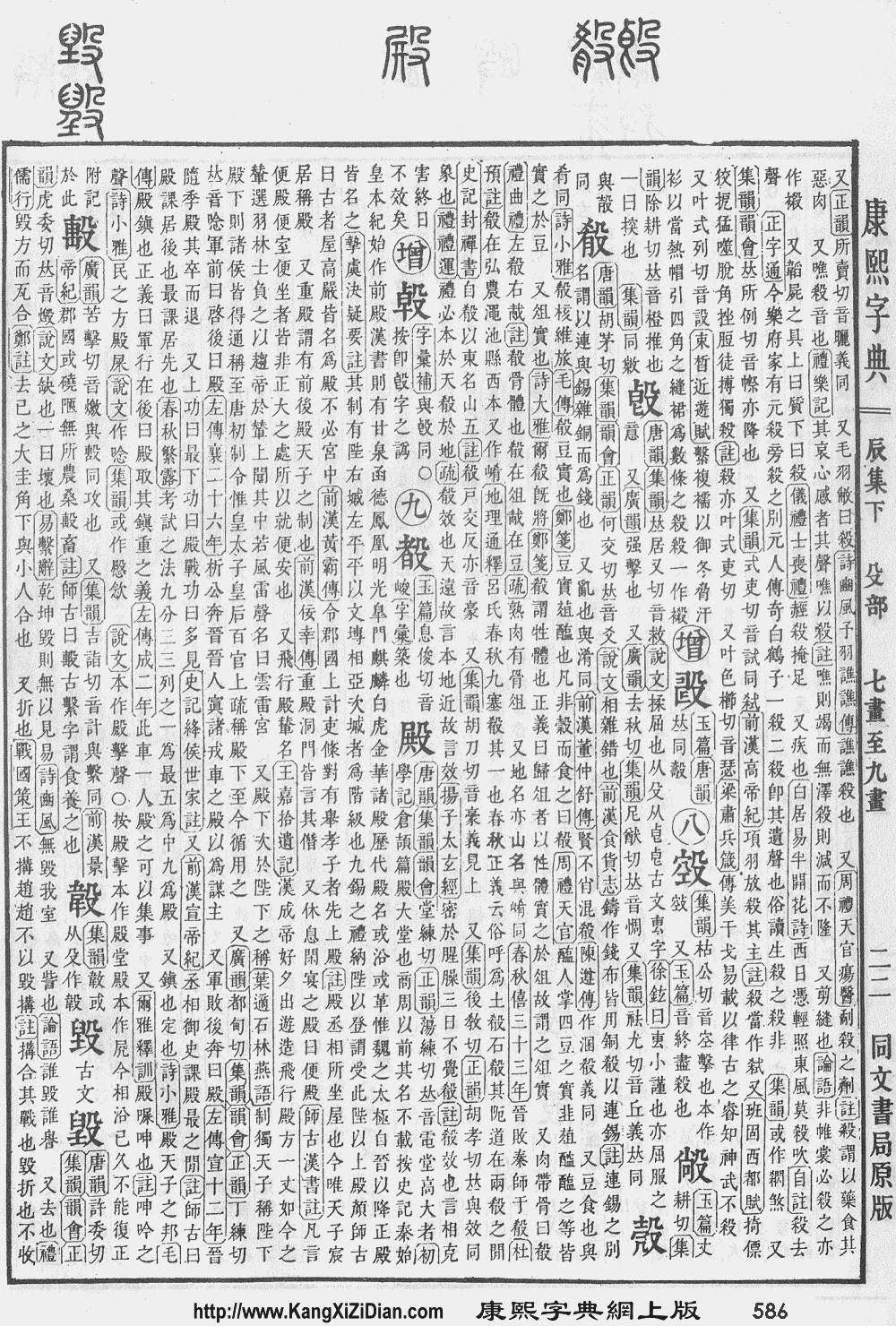
- Kangxi Dictionary: page 586, character 12
- Dai Kanwa Jiten: character 16654
- Dae Jaweon: page 979, character 2
- Hanyu Da Zidian (first edition): not present, would follow volume 3, page 2162, character 4
- Unihan data for U+6BC0
Chinese
Glyph origin
Characters in the same phonetic series (毀) (Zhengzhang, 2003)
- Sears interprets it as Ideogrammic compound (會意/会意) : 臼 (“cracked skull”) + 工 (“tool”) + 殳 (“hand action”), a man being hit in the head.
- Liu Zhao interprets it as Phono-semantic compound (形聲/形声, OC *hmralʔ, *hmrals) : phonetic 𬛸 () + semantic 殳 (“hand holding staff; strike”)
- Shuowen Jiezi interprets it as Phono-semantic compound (形聲/形声, OC *hmralʔ, *hmrals) : abbreviated phonetic 毇 (OC *hmralʔ) + semantic 土
Pronunciation
Definitions
毀
- to destroy; to ruin
- to slander
- 叔孫武叔毀仲尼。子貢曰:「無以為也!仲尼不可毀也。 [Classical Chinese, trad.]
- From: The Analects of Confucius, c. 475 – 221 BCE, translated based on James Legge's version
- Shūsūn Wǔ Shū huǐ Zhòngní. Zǐ Gòng yuē: “Wúyǐ wéi yě! Zhòngní bùkě huǐ yě. [Pinyin]
- Shu Sun Wu Shu having spoken revilingly of Zhong Ni, Zi Gong said, "It is of no use doing so. Zhong Ni cannot be reviled.
叔孙武叔毁仲尼。子贡曰:「无以为也!仲尼不可毁也。 [Classical Chinese, simp.]
- a surname: Hui
Synonyms
- (to destroy):
- 亂/乱 (luàn) (literary, or in compounds)
- 僝僽 (chánzhòu) (literary)
- 圮毀/圮毁 (pǐhuǐ) (literary)
- 壞/坏 (huài)
- 打掉 (dǎdiào)
- 損壞/损坏 (sǔnhuài)
- 損毀/损毁 (sǔnhuǐ)
- 搗砸/捣砸 (dau2 zah5) (Jin)
- 摧殘/摧残 (cuīcán)
- 摧毀/摧毁 (cuīhuǐ)
- 毀壞/毁坏 (huǐhuài)
- 毀損/毁损 (huǐsǔn)
- 決裂/决裂 (juéliè) (archaic)
- 破 (pò) (literary, or in compounds)
- 破壞/破坏 (pòhuài)
- 糟 (zāo) (literary, or in compounds)
- 糟蹋 (zāotà)
- 隳 (huī) (literary, or in compounds)
Compounds
- 哀毀骨立/哀毁骨立 (āihuǐgǔlì)
- 圮毀/圮毁 (pǐhuǐ)
- 坍毀/坍毁
- 墜毀/坠毁 (zhuìhuǐ)
- 巢毀卵破/巢毁卵破
- 平毀/平毁 (pínghuǐ)
- 拆毀/拆毁 (chāihuǐ)
- 損毀/损毁 (sǔnhuǐ)
- 搗毀/捣毁 (dǎohuǐ)
- 摧毀/摧毁 (cuīhuǐ)
- 撕毀/撕毁 (sīhuǐ)
- 擊毀/击毁
- 柴毀/柴毁
- 柴毀滅性/柴毁灭性
- 柴毀骨立/柴毁骨立
- 殺馬毀車/杀马毁车
- 毀不滅性/毁不灭性
- 毀傷/毁伤 (huǐshāng)
- 毀壞/毁坏 (huǐhuài)
- 毀宗夷族/毁宗夷族
- 毀害/毁害
- 毀容/毁容 (huǐróng)
- 毀家紓國/毁家纾国
- 毀家紓難/毁家纾难 (huǐjiāshūnàn)
- 毀屍滅跡/毁尸灭迹 (huǐshīmièjì)
- 毀廉蔑恥/毁廉蔑耻
- 毀形滅性/毁形灭性
- 毀打/毁打
- 毀掉/毁掉 (huǐdiào)
- 毀損/毁损 (huǐsǔn)
- 毀損罪/毁损罪
- 毀敗/毁败
- 毀方投圓/毁方投圆
- 毀方瓦合/毁方瓦合
- 毀於一旦/毁于一旦 (huǐyúyīdàn)
- 毀棄/毁弃
- 毀滅/毁灭 (huǐmiè)
- 毀熸/毁熸
- 毀瓦畫墁/毁瓦画墁
- 毀疾/毁疾
- 毀瘠/毁瘠
- 毀短/毁短
- 毀約/毁约 (huǐyuē)
- 毀舟為杕/毁舟为杕
- 毀言/毁言
- 毀訾/毁訾
- 毀謗/毁谤 (huǐbàng)
- 毀譽/毁誉 (huǐyù)
- 毀譽參半/毁誉参半 (huǐyùcānbàn)
- 毀車殺馬/毁车杀马
- 毀鐘為鐸/毁钟为铎
- 毀顏/毁颜
- 毀風敗俗/毁风败俗
- 毀齒/毁齿
- 求全之毀/求全之毁
- 炸毀/炸毁 (zhàhuǐ)
- 焚毀/焚毁 (fénhuǐ)
- 燒毀/烧毁 (shāohuǐ)
- 痛毀極詆/痛毁极诋
- 眾毀所歸/众毁所归
- 砸毀/砸毁 (záhuǐ)
- 破璧毀珪/破璧毁珪
- 積毀銷骨/积毁销骨
- 自毀長城/自毁长城 (zìhuǐchángchéng)
- 裂冠毀冕/裂冠毁冕
- 覆巢毀卵/覆巢毁卵
- 詆毀/诋毁 (dǐhuǐ)
- 謗毀/谤毁
- 車毀人亡/车毁人亡 (chēhuǐrénwáng)
- 銷毀/销毁 (xiāohuǐ)
- 非毀/非毁
- 面譽背毀/面誉背毁
- 黃鐘毀棄/黄钟毁弃
Korean
Hanja
毀 • (hwe) (hangeul 훼)
- This term needs a translation to English. Please help out and add a translation, then remove the text
{{rfdef}}.
Vietnamese
This article is issued from Wiktionary. The text is licensed under Creative Commons - Attribution - Sharealike. Additional terms may apply for the media files.