壞
| ||||||||
Translingual
| Traditional | 壞 |
|---|---|
| Shinjitai | 壊 |
| Simplified | 坏 |
Han character
壞 (Kangxi radical 32, 土+16, 19 strokes, cangjie input 土卜田女 (GYWV), four-corner 44132, composition ⿰土褱)
Derived characters
References
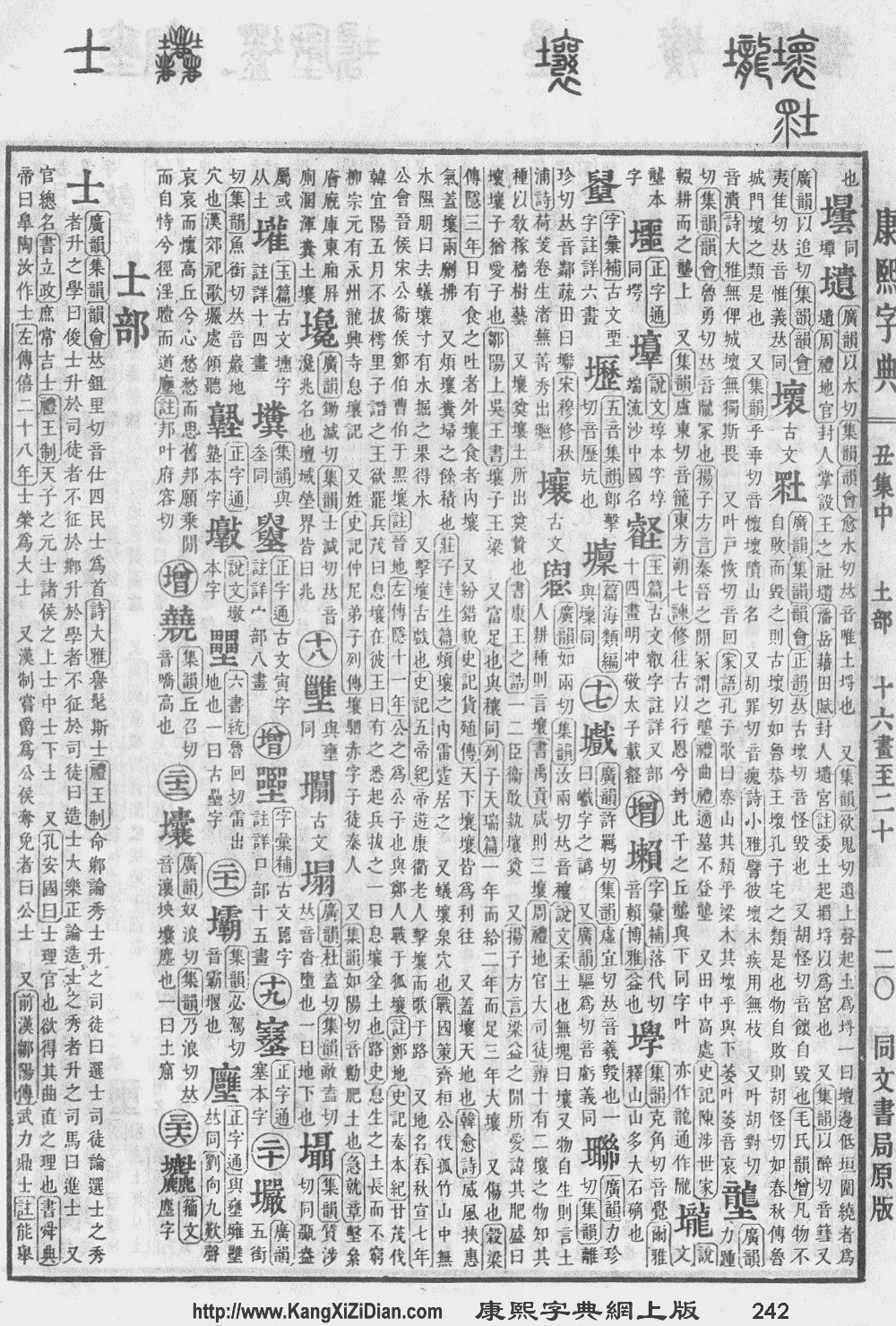
- Kangxi Dictionary: page 242, character 3
- Dai Kanwa Jiten: character 5590
- Dae Jaweon: page 481, character 27
- Hanyu Da Zidian (first edition): volume 1, page 500, character 2
- Unihan data for U+58DE
Chinese
Glyph origin
Characters in the same phonetic series (褱) (Zhengzhang, 2003)
Phono-semantic compound (形聲/形声, OC *ɡruːls) : semantic 土 (“earth”) + phonetic 褱 (OC *ɡruːl, *ɡruːl).
Etymology 1
| trad. | 壞 | |
|---|---|---|
| simp. | 坏* | |
| alternative forms | 坯 | |
Compare Tibetan འདྲུལ ('drul, “to become putrid/rotten”), Tibetan བྲུལ (brul, “crumbles”) (Hill, 2019).
Pronunciation
Definitions
壞
- bad
- rotten; spoiled
- to spoil; to ruin
- to break; to stop working
- (Classical) to collapse
- (Classical) to demolish; to destroy
- 暴君代作,壞宮室以為汙池,民無所安息。 [Classical Chinese, trad.]
- From: Mencius, c. 4th century BCE
- Bàojūn dàizuò, huài gōngshì yǐ wéi wūchí, mín wú suǒ ānxī. [Pinyin]
- Oppressive sovereigns arose one after another, who pulled down houses to make ponds and lakes, so that the people knew not where they could rest in quiet.
暴君代作,坏宫室以为污池,民无所安息。 [Classical Chinese, simp.]
- bad idea; dirty trick
- extremely; very; highly
Synonyms
- (bad):
Dialectal synonyms of 壞 (“bad; not good”) [map]
| Variety | Location | Words |
|---|---|---|
| Classical Chinese | 惡 | |
| Formal (Written Standard Chinese) | 壞 | |
| Mandarin | Beijing | 壞, 賴 |
| Taiwan | 壞 | |
| Jinan | 壞, 孬, 賴 | |
| Xi'an | 瞎, 壞 | |
| Wuhan | 壞, 拐 | |
| Chengdu | 壞 | |
| Yangzhou | 壞 | |
| Hefei | 壞 | |
| Malaysia | 壞 | |
| Singapore | 壞 | |
| Cantonese | Guangzhou | 壞, 弊, 衰 |
| Hong Kong | 壞, 衰 | |
| Zhongshan (Shiqi) | 衰 | |
| Yangjiang | 壞 | |
| Kuala Lumpur (Guangfu) | 衰 | |
| Singapore (Guangfu) | 衰 | |
| Gan | Nanchang | 壞 |
| Hakka | Meixian | 壞 |
| Wuhua (Meilin) | 衰 | |
| Jin | Taiyuan | 賴, 壞 |
| Northern Min | Jian'ou | 壞, 獰 |
| Eastern Min | Fuzhou | 呆, 否 |
| Southern Min | Xiamen | 歹, 䆀 |
| Xiamen (Tong'an) | 歹 | |
| Quanzhou | 歹 | |
| Jinjiang | 歹 | |
| Nan'an | 歹 | |
| Shishi | 歹 | |
| Zhangzhou | 䆀 | |
| Zhao'an | 䆀, 孬 | |
| Tainan | 歹 | |
| Penang (Hokkien) | 䆀, 歹 | |
| Singapore (Hokkien) | 歹 | |
| Manila (Hokkien) | 歹 | |
| Datian | 歹 | |
| Chaozhou | 孬 | |
| Shantou | 孬 | |
| Jieyang | 孬, 歹 | |
| Singapore (Teochew) | 歹, 孬 | |
| Leizhou | 㾀 | |
| Wenchang | 㾀 | |
| Haikou | 㾀 | |
| Singapore (Hainanese) | 㾀 | |
| Wu | Shanghai | 壞, 恘 |
| Suzhou | 壞, 恘 | |
| Ningbo | 歪, 推扳, 嘸做 | |
| Wenzhou | 毛 | |
| Xiang | Changsha | 壞, 拐 |
| Shuangfeng | 壞, 拐 | |
Dialectal synonyms of 壞 (“rotten; spoilt”) [map]
| Variety | Location | Words |
|---|---|---|
| Formal (Written Standard Chinese) | 壞 | |
| Mandarin | Taiwan | 壞 |
| Malaysia | 壞 | |
| Singapore | 壞 | |
| Cantonese | Hong Kong | 壞 |
| Singapore (Guangfu) | 壞 | |
| Hakka | Miaoli (N. Sixian) | 壞 |
| Pingtung (Neipu; S. Sixian) | 壞 | |
| Hsinchu County (Zhudong; Hailu) | 壞 | |
| Taichung (Dongshi; Dabu) | 壞 | |
| Hsinchu County (Qionglin; Raoping) | 壞 | |
| Yunlin (Lunbei; Zhao'an) | 壞 | |
| Southern Min | Taipei | 歹 GT |
| Penang (Hokkien) | 歹 | |
| Singapore (Hokkien) | 歹 | |
| Wu | Ningbo | 壞, 嘸做 |
| Note | GT - General Taiwanese (no specific region identified) | |
- (to spoil):
- (to ruin):
- 亂/乱 (luàn) (literary, or in compounds)
- 僝僽 (chánzhòu) (literary)
- 圮毀/圮毁 (pǐhuǐ) (literary)
- 打掉 (dǎdiào)
- 損壞/损坏 (sǔnhuài)
- 損毀/损毁 (sǔnhuǐ)
- 搗砸/捣砸 (dau2 zah5) (Jin)
- 摧殘/摧残 (cuīcán)
- 摧毀/摧毁 (cuīhuǐ)
- 毀/毁 (huǐ)
- 毀壞/毁坏 (huǐhuài)
- 毀損/毁损 (huǐsǔn)
- 決裂/决裂 (juéliè) (archaic)
- 破 (pò) (literary, or in compounds)
- 破壞/破坏 (pòhuài)
- 糟 (zāo) (literary, or in compounds)
- 糟蹋 (zāotà)
- 隳 (huī) (literary, or in compounds)
- (extremely):
Antonyms
- (antonym(s) of “bad”): 好 (hǎo)
Compounds
- 壞主意/坏主意
- 壞事/坏事 (huàishì)
- 壞人/坏人 (huàirén)
- 壞分子/坏分子 (huàifènzǐ)
- 壞包兒/坏包儿 (huàibāor)
- 壞小子/坏小子 (huàixiǎozi)
- 壞心眼兒/坏心眼儿
- 壞東西/坏东西
- 壞死/坏死 (huàisǐ)
- 壞水/坏水 (huàishuǐ)
- 壞腸子/坏肠子
- 壞處/坏处 (huàichù)
- 壞蛋/坏蛋 (huàidàn)
- 壞血病/坏血病 (huàixuèbìng)
- 壞話/坏话 (huàihuà)
- 壞賬/坏账 (huàizhàng)
- 損壞/损坏 (sǔnhuài)
- 敗壞/败坏 (bàihuài)
- 破壞/破坏 (pòhuài)
- 破壞力/破坏力 (pòhuàilì)
- 禮崩樂壞/礼崩乐坏 (lǐbēngyuèhuài)
- 腐壞/腐坏 (fǔhuài)
Etymology 2
| trad. | 壞 | |
|---|---|---|
| simp. | 坏* | |
| alternative forms | 獪/狯 乖 契 Siyi 蒯 | |
(This etymology is missing or incomplete. Please add to it, or discuss it at the Etymology scriptorium.)
Pronunciation
Synonyms
Dialectal synonyms of 頑皮 (“naughty”) [map]
Korean
Etymology
From Middle Chinese 壞 (MC kweajH).
| Historical readings |
|---|
|
Pronunciation
- (SK Standard/Seoul) IPA(key): [kwe̞(ː)] ~ [kø̞(ː)]
- Phonetic hangul: [궤(ː)/괴(ː)]
- Though still prescribed in Standard Korean, most speakers in both Koreas no longer distinguish vowel length.
Compounds
Compounds
- 붕괴 (崩壞, bunggoe)
- 파괴 (破壞, pagoe)
- 괴고 (壞苦, goego)
- 괴결 (壞決, goegyeol)
- 괴멸 (壞滅, goemyeol)
- 괴폐 (壞廢, goepye)
- 손괴 (損壞, son'goe)
- 괴락 (壞落, goerak)
- 괴색 (壞色, goesaek)
- 부괴 (腐壞, bugoe)
- 괴란 (壞亂, goeran)
- 반괴 (半壞, ban'goe)
- 괴저 (壞疽, goejeo)
- 괴사 (壞死, goesa)
- 괴손 (壞損, goeson)
- 도괴 (倒壞, dogoe)
- 잔괴 (殘壞, jan'goe)
- 훼괴 (毁壞, hwegoe)
- 괴변 (壞變, goebyeon)
- 자괴 (自壞, jagoe)
- 전괴 (全壞, jeon'goe)
Vietnamese
This article is issued from Wiktionary. The text is licensed under Creative Commons - Attribution - Sharealike. Additional terms may apply for the media files.