爛
See also: 烂
| ||||||||
| ||||||||
Translingual
Han character
爛 (Kangxi radical 86, 火+17, 21 strokes, cangjie input 火日弓田 (FANW), four-corner 97820, composition ⿰火闌)
References
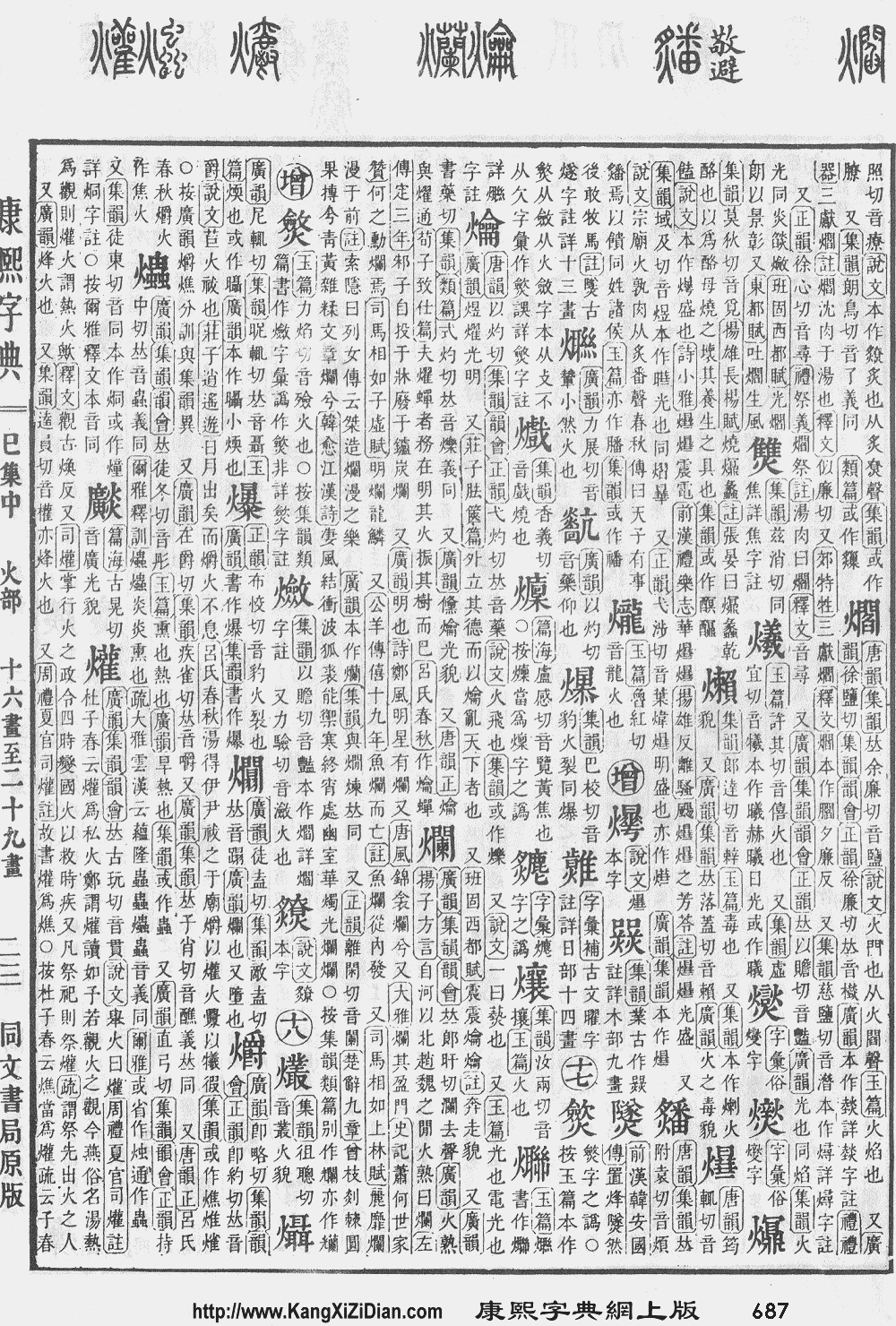
- Kangxi Dictionary: page 687, character 25
- Dai Kanwa Jiten: character 19604
- Dae Jaweon: page 1099, character 12
- Hanyu Da Zidian (first edition): volume 3, page 2249, character 2
- Unihan data for U+721B
- Unihan data for U+F91E
Chinese
| trad. | 爛 | |
|---|---|---|
| simp. | 烂 | |
Glyph origin
| Historical forms of the character 爛 |
|---|
| Shuowen Jiezi (compiled in Han) |
| Small seal script |
 |
Characters in the same phonetic series (柬) (Zhengzhang, 2003)
| Old Chinese | |
|---|---|
| 蘭 | *ɡ·raːn |
| 攔 | *ɡ·raːn |
| 欄 | *ɡ·raːn |
| 瀾 | *ɡ·raːn, *ɡ·raːns |
| 讕 | *ɡ·raːn, *ɡ·raːnʔ, *ɡ·raːns |
| 闌 | *ɡ·raːn |
| 韊 | *ɡ·raːn |
| 幱 | *ɡ·raːn |
| 籣 | *ɡ·raːn |
| 躝 | *ɡ·raːn |
| 爛 | *ɡ·raːns |
| 爤 | *ɡ·raːns |
| 鑭 | *ɡ·raːns |
| 糷 | *ɡ·raːns |
| 斕 | *ɡ·reːn |
| 揀 | *kreːnʔ, *ɡ·reːns |
| 柬 | *kreːnʔ |
| 暕 | *kreːnʔ |
| 諫 | *kraːns |
| 練 | *ɡ·reːns |
| 鍊 | *ɡ·reːns |
| 煉 | *ɡ·reːns |
| 楝 | *ɡ·reːns |
| 萰 | *ɡ·reːns |
| 堜 | *ɡ·reːns |
| 湅 | *ɡ·reːns |
Phono-semantic compound (形聲/形声, OC *ɡ·raːns) : semantic 火 (“fire”) + phonetic 闌 (OC *ɡ·raːn).
Pronunciation
Definitions
爛
- (of fruits, etc.) rotten; spoiled; decayed
- well-cooked; soft; mushy
- broken; fragmented; shattered
- low-quality; poor; lousy
- to rot; to decay; to decompose; to spoil
- completely; thoroughly
- bright; brilliant; gorgeous; magnificent
- (Cantonese) to be addicted to
- (Cantonese) extremely
- Used in 爛漫/烂漫 (lànmàn).
Synonyms
Dialectal synonyms of 爛 (“rotten; decayed”) [map]
| Variety | Location | Words |
|---|---|---|
| Formal (Written Standard Chinese) | 爛 | |
| Mandarin | Taiwan | 爛 |
| Singapore | 爛 | |
| Southern Min | Tainan | 爛 |
| Penang (Hokkien) | 爛 | |
| Singapore (Hokkien) | 爛 | |
| Jieyang | 糜 | |
| Singapore (Teochew) | 糜 | |
Compounds
- 下三爛/下三烂 (xiàsānlàn)
- 光輝燦爛/光辉灿烂 (guānghuīcànlàn)
- 土崩魚爛/土崩鱼烂
- 天真爛漫/天真烂漫 (tiānzhēnlànmàn)
- 希爛/希烂
- 打爛/打烂 (dǎlàn)
- 打爛帳/打烂帐
- 扯爛汙/扯烂污
- 拆爛汙/拆烂污
- 拾破爛/拾破烂
- 揀破爛/拣破烂
- 撕爛/撕烂
- 撿破爛/捡破烂 (jiǎn pòlàn)
- 斷爛朝報/断烂朝报
- 朽爛/朽烂 (xiǔlàn)
- 朱墨爛然/朱墨烂然
- 柯爛忘歸/柯烂忘归
- 海枯石爛/海枯石烂 (hǎikūshílàn)
- 滾瓜爛熟/滚瓜烂熟 (gǔnguālànshú)
- 潰爛/溃烂 (kuìlàn)
- 焦沙爛石/焦沙烂石
- 焜爛/焜烂
- 焦頭爛額/焦头烂额 (jiāotóulàn'é)
- 熀爛/熀烂
- 燈光燦爛/灯光灿烂
- 燋爛/燋烂
- 燋頭爛額/燋头烂额
- 燦爛/灿烂 (cànlàn)
- 燦爛奪目/灿烂夺目
- 爛不濟/烂不济
- 爛了嘴/烂了嘴
- 爛了舌頭/烂了舌头
- 爛化/烂化
- 爛口/烂口
- 爛好人/烂好人 (lànhǎorén)
- 爛帳/烂帐 (lànzhàng)
- 爛忠厚/烂忠厚
- 爛攤子/烂摊子 (làntānzi)
- 爛料/烂料
- 爛板洋錢/烂板洋钱
- 爛板烏龜/烂板乌龟
- 爛柯/烂柯 (lànkē)
- 爛殺/烂杀
- 爛汙貨/烂污货
- 爛泥/烂泥 (lànní)
- 爛漫/烂漫 (lànmàn)
- 爛然/烂然
- 爛熳/烂熳 (lànmàn)
- 爛熟/烂熟 (lànshú)
- 爛爛兒的/烂烂儿的
- 爛片/烂片
- 爛糊/烂糊
- 爛縵/烂缦 (lànmàn)
- 爛羊頭/烂羊头
- 爛腸子/烂肠子
- 爛舌頭/烂舌头
- 爛若披錦/烂若披锦
- 爛賬/烂账
- 爛遊/烂游
- 爛醉/烂醉
- 爛醉如泥/烂醉如泥
- 爛醬/烂酱
- 爛銀盤/烂银盘 (lànyínpán)
- 爛頭寸/烂头寸 (làntóucùn)
- 爛額焦頭/烂额焦头
- 爛飯/烂饭 (lànfàn)
- 珠斗爛班
- 皮焦肉爛/皮焦肉烂
- 石爛海枯/石烂海枯
- 破爛/破烂 (pòlàn)
- 砸爛/砸烂 (zálàn)
- 破爛不堪/破烂不堪 (pòlànbùkān)
- 破爛兒/破烂儿
- 破爛流丟/破烂流丢
- 破銅爛鐵/破铜烂铁 (pòtónglàntiě)
- 稀巴爛/稀巴烂 (xībālàn)
- 稀爛/稀烂 (xīlàn)
- 米爛成倉/米烂成仓
- 糜爛/糜烂 (mílàn)
- 絢爛/绚烂 (xuànlàn)
- 綿爛/绵烂 (mî-nōa) (Min Nan)
- 腐爛/腐烂 (fǔlàn)
- 臭街爛巷/臭街烂巷
- 那爛陀/那烂陀
- 霉爛 (méilàn)
- 靡爛/靡烂
- 魚爛/鱼烂
- 魚爛土崩/鱼烂土崩
- 魚爛而亡/鱼烂而亡
References
- “爛”, in 漢語多功能字庫 (Multi-function Chinese Character Database), 香港中文大學 (the Chinese University of Hong Kong), 2014–
Japanese
Korean
Vietnamese
This article is issued from Wiktionary. The text is licensed under Creative Commons - Attribution - Sharealike. Additional terms may apply for the media files.