很
| ||||||||
Translingual
| Stroke order | |||
|---|---|---|---|
 | |||
| Stroke order | |||
|---|---|---|---|
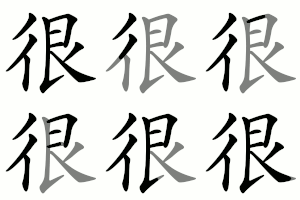 | |||
Han character
很 (Kangxi radical 60, 彳+6, 9 strokes, cangjie input 竹人日女 (HOAV), four-corner 27232, composition ⿰彳艮)
References
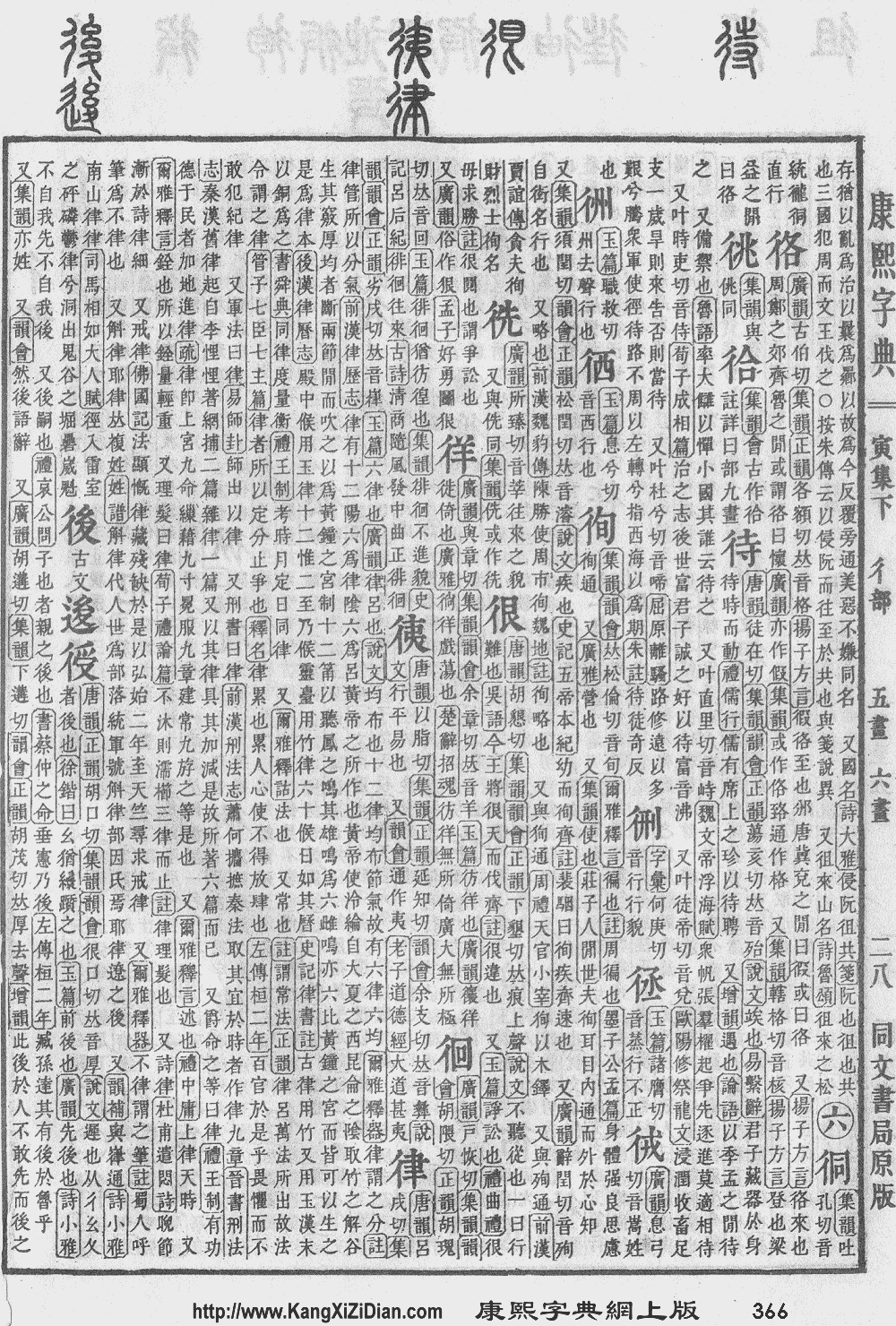
- Kangxi Dictionary: page 366, character 13
- Dai Kanwa Jiten: character 10093
- Dae Jaweon: page 687, character 7
- Hanyu Da Zidian (first edition): volume 2, page 822, character 1
- Unihan data for U+5F88
Chinese
| simp. and trad. |
很 | |
|---|---|---|
Glyph origin
Characters in the same phonetic series (艮) (Zhengzhang, 2003)
| Old Chinese | |
|---|---|
| 艱 | *krɯːn |
| 齦 | *kʰrɯːnʔ, *kʰɯːnʔ, *ŋɯn |
| 眼 | *ŋrɯːnʔ |
| 蛝 | *ɡrɯːn |
| 限 | *ɡrɯːnʔ |
| 硍 | *ɡrɯːnʔ |
| 豤 | *kʰɯːnʔ, *kʰɯːnʔ, *kʰuːn |
| 詪 | *ɡlɯːnʔ, *kɯːnʔ, *kɯːns |
| 根 | *kɯːn |
| 跟 | *kɯːn |
| 珢 | *kɯːn, *kɯːns, *ŋrɯn |
| 艮 | *kɯːns |
| 茛 | *kɯːns |
| 墾 | *kʰɯːnʔ |
| 懇 | *kʰɯːnʔ |
| 垠 | *ŋɯːn, *ŋrɯn, *ŋɯn |
| 泿 | *ŋɯːn, *ŋrɯn |
| 痕 | *ɡɯːn |
| 拫 | *ɡɯːn |
| 鞎 | *ɡɯːn |
| 很 | *ɡɯːnʔ |
| 恨 | *ɡɯːns |
| 銀 | *ŋrɯn |
| 檭 | *ŋrɯn |
Phono-semantic compound (形聲/形声, OC *ɡɯːnʔ) : semantic 彳 + phonetic 艮 (OC *kɯːns).
Etymology
“Cruel (~ 狠); to disobey; to defy” > “very; quite” (since Yuan dynasty). Compare 蠻/蛮 (mán).
Pronunciation
Definitions
很
- very; rather; quite
- (Mandarin, especially before monosyllabic adjectives) (no meaning, see usage note)
- (obsolete, original senses)
- to disobey; to defy; to be querulous
- 見過不更,聞諫愈甚,謂之很。 [Classical Chinese, trad.]
- From: Zhuangzi, circa 3rd – 2nd centuries BCE
- Jiàn guò bù gèng, wén jiàn yù shèn, wèi zhī hěn. [Pinyin]
- To see one's errors and not improve, to hear words of advice and become ever more extreme: this is called being querulous.
见过不更,闻谏愈甚,谓之很。 [Classical Chinese, simp.]
- struggle; dispute; lawsuit
- 臨財毋苟得,臨難毋苟免。很毋求勝,分毋求多。 [Classical Chinese, trad.]
- From: The Book of Rites, c. 4th – 2nd century BCE
- Lín cái wú gǒu dé, lín nán wú gǒu miǎn. Hěn wú qiú shèng, fēn wú qiú duō. [Pinyin]
- When faced with wealth, do not obtain it improperly; when faced with hardship, do not escape it improperly. As for disputes, do not seek victory; as for your share, do not seek too much.
临财毋苟得,临难毋苟免。很毋求胜,分毋求多。 [Classical Chinese, simp.]- 從耳目之欲,以為父母戮,四不孝也;好勇鬥很,以危父母,五不孝也。 [Classical Chinese, trad.]
- From: Mencius, c. 4th century BCE
- Cóng ěrmù zhī yù, yǐwéi fùmǔ lù, sì bùxiào yě; hǎo yǒng dòuhěn, yǐ wēi fùmǔ, wǔ bùxiào yě. [Pinyin]
- To follow sensual desires and cause shame for one's parents is the fourth case of filial impiety; to love recklessness and fighting and thereby imperil one's parents is the fifth case of filial impiety.
从耳目之欲,以为父母戮,四不孝也;好勇斗很,以危父母,五不孝也。 [Classical Chinese, simp.]
- to try to one's utmost
- to disobey; to defy; to be querulous
- (obsolete) Alternative form of 狠 (hěn, “cruel; savage; inhumane”).
Usage notes
- Mandarin speakers have a strong tendency to avoid monosyllabic terms. In order to satisfy this restriction, 很 is added before monosyllabic adjectives without any actual meaning. Similarly, Chinese people with monosyllabic first names will usually be addressed by their full name, even by their parents.
- Such usage of 很 is not uncommon before other adjectives as well, to the point where forming a sentence without 很 may be perceived as very unnatural. Additionally, using an adjective as a predicate without 很 might carry notions of a comparative statement, e.g. '我好' could be interpreted as 'I am good [unlike some other person that was mentioned]'.
Synonyms
- (very):
Dialectal synonyms of 很 (“very”) [map]
See also
- 太 (tài)
Japanese
Kanji
很
- This term needs a translation to English. Please help out and add a translation, then remove the text
{{rfdef}}.
Korean
Vietnamese
Han character
很: Hán Nôm readings: ngận, hẩn
- This term needs a translation to English. Please help out and add a translation, then remove the text
{{rfdef}}.
This article is issued from Wiktionary. The text is licensed under Creative Commons - Attribution - Sharealike. Additional terms may apply for the media files.