弗
| ||||||||
Translingual
| Stroke order (Sans-serif) | |||
|---|---|---|---|
 | |||
Han character
弗 (Kangxi radical 57, 弓+2, 5 strokes, cangjie input 中中弓 (LLN), four-corner 55027, composition ⿻⿰丿丨弓)
Derived characters
References
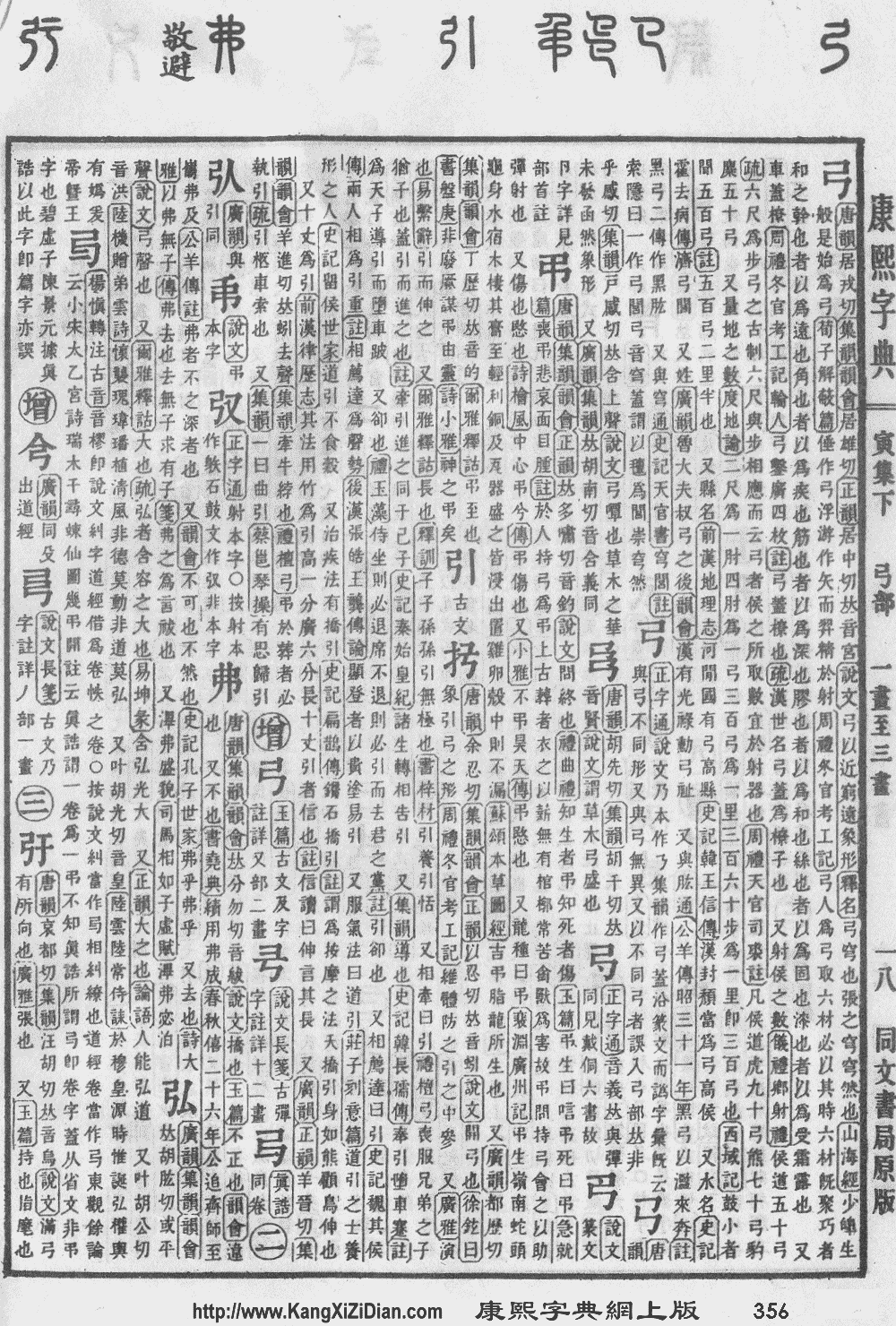
- Kangxi Dictionary: page 356, character 16
- Dai Kanwa Jiten: character 9708
- Dae Jaweon: page 673, character 1
- Hanyu Da Zidian (first edition): volume 2, page 990, character 9
- Unihan data for U+5F17
Chinese
| simp. and trad. |
弗 | |
|---|---|---|
Glyph origin
| Historical forms of the character 弗 | |
|---|---|
| Shang | Western Zhou |
| Oracle bone script | Bronze inscriptions |
 |
 |
Pictogram (象形) – two arrows, tied together to be straightened.
Later borrowed phonetically to mean “no”. The derivative 拂 (OC *pʰɯd) stands for the original word.
Etymology 1
Pronunciation
Definitions
弗
- (Classical) not
- 一簞食,一豆羹,得之則生,弗得則死。 [Classical Chinese, trad.]
- From: Mencius, c. 4th century BCE
- Yī dān sì, yī dòu gēng, dé zhī zé shēng, fú dé zé sǐ. [Pinyin]
- Here are a small basket of rice and a platter of soup; getting them will enable survival, while not getting them will result in death.
一箪食,一豆羹,得之则生,弗得则死。 [Classical Chinese, simp.]
- Used in 弗弗.
- Alternative form of 祓 (fú)
- † to straighten; to correct
- Used in transcription.
Usage notes
Compounds
Etymology 2
| simp. and trad. |
弗 | |
|---|---|---|
| alternative forms | 勿 伐 不 | |
According to Pan (2002), a labiodentalized and checked variant of 不 (OC *pɯ, *pɯʔ, *pɯ').
In certain varieties the initial has gained voicing and in some cases caused the word shifted to yang tones, either restricted to specific syntactical positions or in all contexts.
See also 勿 (veq).
Definitions
弗
Synonyms
Usage notes
- 勿, 弗 and 伐 are all characters that have been popular in representing the checked and labiodentalized series of negators, generally pronounced as /fəʔ/, /vəʔ/ or both depending on the exact variety. In historical literature, the exact choice of character varied between the topolects and the preferences of individual writers.
- In some contemporary proposals aiming to standardize cross-topolectal writing in Wu, it is preferred that the voiced variants of the negator be written with 勿 and the unvoiced variants of the negator with 弗. This is often received somewhat inconsistently, however, and the choice between the variant characters remains largely a matter of personal preference.
Compounds
- 撥弗倒/拨弗倒
- 自愧弗如 (zìkuìfúrú)
- 逃弗過/逃弗过
Etymology 3
| For pronunciation and definitions of 弗 – see 費 (“to cost; to spend; to expend; to consume; to use; to exhaust; etc.”). (This character is the second-round simplified form of 費). |
Notes:
|
Japanese
Etymology 1
| Kanji in this term |
|---|
| 弗 |
| ふつ Hyōgaiji |
| kan’on |
Originally borrowed from Middle Chinese 弗 (*pjut), meaning either “not” or “a gust of wind”. Apparently later repurposed during the later Edo period for its phonetic value in translating the Dutch fluor (“fluorine”).
Pronunciation
- IPA(key): [ɸɯ̟ᵝt͡sɨᵝ]
Usage notes
Seldom used. In chemistry contexts, almost always spelled in katakana as フツ, appearing in most compounds as フッ.
Derived terms
- 弗化 (ふっか, fukka): fluoridation; fluoro-, fluor-; fluorinated
- 弗化カルシウム (ふっかカルシウム, fukka karushiumu): calcium fluoride, CaF2
- 六弗化リン酸リチウム (ろくふっかりんさんりちうむ, roku fukka rinsan richiumu): lithium hexafluorophosphate
- 弗化水素 (ふっかすいそ, fukka suiso): hydrogen fluoride, HF
- 弗化水素酸 (ふっかすいそさん, fukka suiso san): hydrofluoric acid
- 弗化物 (ふっかぶつ, fukkabutsu): fluoride
- 六弗化硫黄 (ろくふっかいおう, ろくふっかいおう): sulfur hexafluoride
- 弗酸 (ふっさん, fussan): short for 弗化水素酸 (fukka suiso san): hydrofluoric acid
- 弗素 (ふっそ, fusso): fluorine, F
Purely phonetic uses:
Etymology 2
| Kanji in this term |
|---|
| 弗 |
| どる Hyōgaiji |
| kun’yomi |
Glyph origin
Repurposed for its visual similarity to the dollar symbol $. This reading is ultimately borrowed from Dutch dollar.[1][2]
Definitions
| For pronunciation and definitions of 弗 – see the following entry. | ||
| ||
| (This term, 弗, is an alternative spelling (obsolete) of the above term.) |
References
- Shōgaku Tosho (1988) 国語大辞典(新装版) [Unabridged Dictionary of Japanese (Revised Edition)] (in Japanese), Tōkyō: Shogakukan, →ISBN
- Matsumura, Akira, editor (2006), 大辞林 [Daijirin] (in Japanese), Third edition, Tōkyō: Sanseidō, →ISBN
