股
See also: 脵
| ||||||||
Translingual
Han character
股 (Kangxi radical 130, 肉+4, 8 strokes, cangjie input 月竹弓水 (BHNE), four-corner 77247, composition ⿰⺼殳)
Derived characters
- 𦜴, 𨵐
References
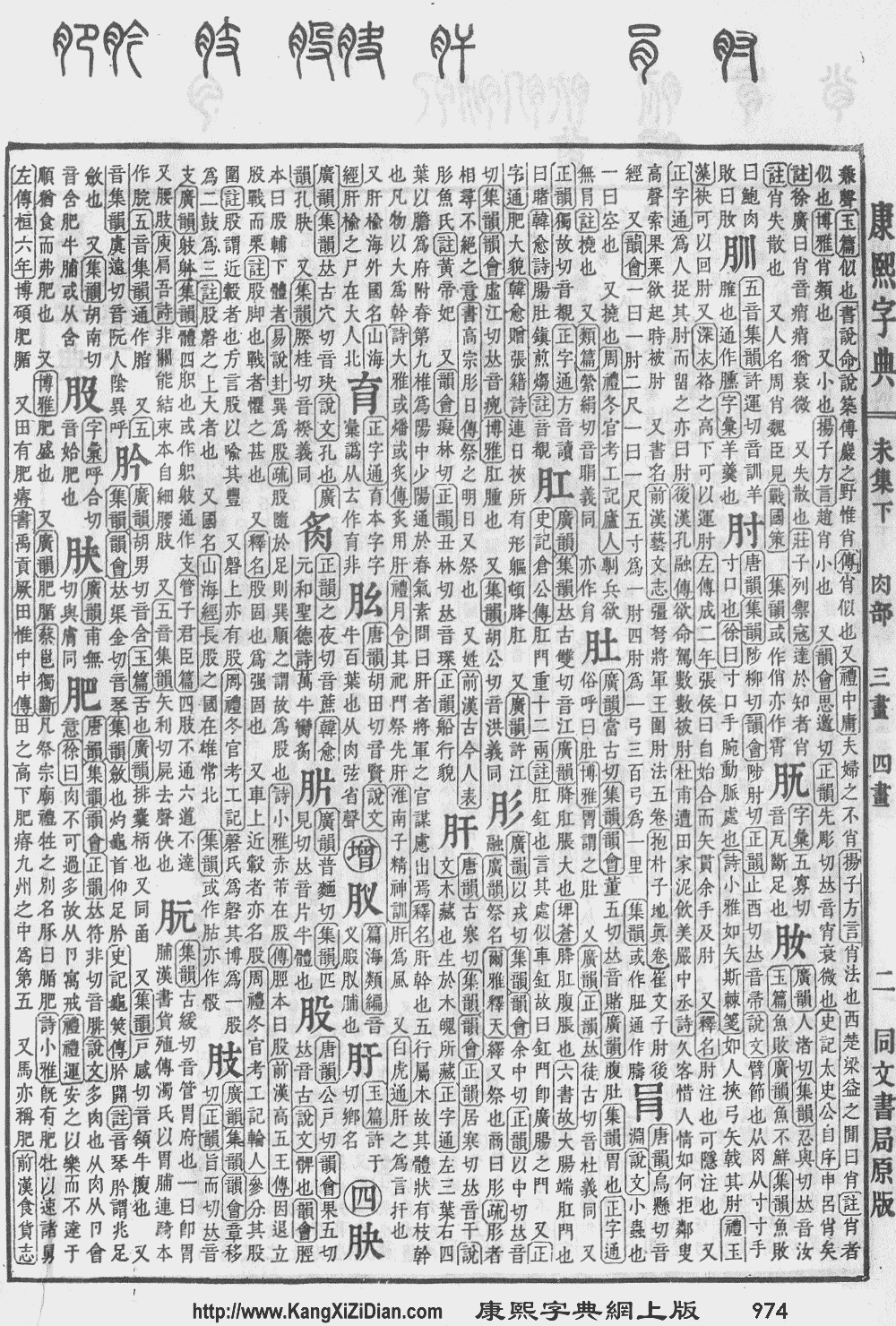
- Kangxi Dictionary: page 974, character 17
- Dai Kanwa Jiten: character 29284
- Dae Jaweon: page 1426, character 7
- Hanyu Da Zidian (first edition): volume 3, page 2051, character 7
- Unihan data for U+80A1
Chinese
| trad. | 股 | |
|---|---|---|
| simp. # | 股 | |
Glyph origin
| Historical forms of the character 股 | |
|---|---|
| Shuowen Jiezi (compiled in Han) | Liushutong (compiled in Ming) |
| Small seal script | Transcribed ancient scripts |
 |
 |
Shuowen incorrected considered it Phono-semantic compound (形聲/形声, OC *klaːʔ) : semantic 肉 (“body”) + phonetic 殳 (OC *djo, “action”) – the hips as an active part of the body.
Per 漢語多功能字庫, a later character of 夃. Phono-semantic compound (形聲/形声, OC *klaːʔ) : semantic 肉 (“body”) + phonetic 夃 (OC *kaːʔ).
Pronunciation
Definitions
股
- thigh; haunches
- strand; skein; thread
- share; portion
- (finance) share; stock (Classifier: 隻/只 c)
- (historical geometry) longer leg of a right triangle
- 勾股定理 ― gōugǔdìnglǐ ― Pythagoras' theorem
- Classifier for strength, forces.
- 歷史的天空閃爍幾顆星;人間一股英雄氣在馳騁縱橫。 [MSC, trad.]
- From: 1994, 王健 Wang Jian (lyricist), 谷建芬 Gu Jianfen (composer), "The Sky of History"《歷史的天空》
- Lìshǐ de tiānkōng shǎnshuò jǐ kē xīng; rénjiān yī gǔ yīngxióng qì zài chíchěng zònghéng. [Pinyin]
- In the sky of history blink a few stars; in the human world gallops a heroic spirit hither and thither.
历史的天空闪烁几颗星;人间一股英雄气在驰骋纵横。 [MSC, simp.]
- Classifier for smells or scent.
- Classifier for groups of people.
- Classifier for shares in a company.
- Classifier for long winding things like ropes, rivers, etc.
Synonyms
- (thigh):
Dialectal synonyms of 大腿 (“thigh”) [map]
- (stock):
Coordinate terms
- 勾 (gōu)
Compounds
- 一屁股 (yīpìgu)
- 一股 (yīgǔ)
- 一股勁兒/一股劲儿
- 一股腦兒/一股脑儿 (yīgǔnǎor)
- 七股 (Qīgǔ)
- 乾股/干股 (gāngǔ)
- 二股絃/二股弦
- 二頭股肌/二头股肌
- 五股 (Wǔgǔ)
- 仙股 (xiāngǔ)
- 光屁股
- 入股 (rùgǔ)
- 八股 (bāgǔ)
- 八股文 (bāgǔwén)
- 八股文章
- 刺股
- 刺股懸梁
- 剪子股
- 割股 (gēgǔ)
- 募股 (mùgǔ)
- 勾股 (gōugǔ)
- 叉股子話/叉股子话
- 合股 (hégǔ)
- 商股
- 報屁股/报屁股
- 墊股/垫股
- 大股東/大股东
- 夾屁股/夹屁股
- 如在股掌
- 子推割股
- 官股
- 小型股
- 屁股
- 屁股沉
- 屁股眼 (pìguyǎn)
- 平均股價/平均股价
- 引錐刺股/引锥刺股
- 心膂股肱
- 懸梁刺股 (xuánliángcìgǔ)
- 懸頭刺股/悬头刺股
- 成長股/成长股
- 打屁股 (dǎ pìgǔ)
- 投機股/投机股
- 扭股兒糖/扭股儿糖
- 招股 (zhāogǔ)
- 拆股 (chāigǔ)
- 控股公司 (kònggǔ gōngsī)
- 握股公司
- 擦屁股 (cā pìgǔ)
- 擰成一股/拧成一股
- 普通股
- 東京股市/东京股市
- 毫子股
- 汗洽股慄/汗洽股栗
- 沉屁股
- 港股 (gǎnggǔ)
- 濠賭股/濠赌股 (háodǔgǔ)
- 火燒屁股/火烧屁股
- 炒股票
- 特別股/特别股
- 狗顛屁股/狗颠屁股
- 猴子屁股
- 現金股利/现金股利
- 紅底股/红底股 (hóngdǐgǔ)
- 紅籌股/红筹股 (hóngchóugǔ)
- 細價股/细价股 (xìjiàgǔ)
- 績優股/绩优股 (jìyōugǔ)
- 美股 (měigǔ)
- 翻股
- 老八股
- 股份 (gǔfèn)
- 股份公司 (gǔfèn gōngsī)
- 股價/股价 (gǔjià)
- 股價指數/股价指数 (gǔjià zhǐshù)
- 股兒/股儿
- 股利 (gǔlì)
- 股匪
- 股友社
- 股員/股员
- 股子 (gǔzi)
- 股市 (gǔshì)
- 股息 (gǔxī)
- 股息股利
- 股慄/股栗
- 股戰/股战
- 股掌 (gǔzhǎng)
- 股掌之上 (gǔ zhǎng zhī shàng)
- 股本 (gǔběn)
- 股東/股东 (gǔdōng)
- 股東大會/股东大会
- 股東權益/股东权益
- 股栗
- 股權/股权 (gǔquán)
- 股災/股灾 (gǔzāi)
- 股癬/股癣 (gǔxuǎn)
- 股票 (gǔpiào)
- 股票價值/股票价值
- 股票分割
- 股票市場/股票市场 (gǔpiào shìchǎng)
- 股票股利
- 股肱 (gǔgōng)
- 股肱之力
- 股肱耳目
- 股金 (gǔjīn)
- 股長/股长
- 股關節/股关节
- 股關節炎/股关节炎
- 股骨 (gǔgǔ)
- 腹股溝/腹股沟 (fùgǔgōu)
- 菸屁股/烟屁股
- 藍籌股/蓝筹股 (lánchóugǔ)
- 蘇秦刺股/苏秦刺股
- 認股/认股
- 資產股/资产股
- 跟屁股
- 退股
- 釵股/钗股
- 錐股/锥股
- 離股兒/离股儿
- 零股交易
References
Japanese
Kanji
股
- This term needs a translation to English. Please help out and add a translation, then remove the text
{{rfdef}}.
Derived terms
Etymology 1
| Kanji in this term |
|---|
| 股 |
| また Grade: S |
| kun’yomi |
| Alternative spellings |
|---|
| 胯 叉 俣 |
From Old Japanese, from Proto-Japonic *mata. Cognate with Miyako 股 (また, mata), Okinawan 股 (また, mata).
Noun
股 • (momo)
References
- Matsumura, Akira, editor (2006), 大辞林 [Daijirin] (in Japanese), Third edition, Tōkyō: Sanseidō, →ISBN
Korean
Etymology
From Middle Chinese 股 (MC kuX). Recorded as Middle Korean 고〯 (kwǒ) (Yale: kwǒ) in Hunmong Jahoe (訓蒙字會 / 훈몽자회), 1527.
Pronunciation
- (SK Standard/Seoul) IPA(key): [ko̞]
- Phonetic hangul: [고]
Compounds
Vietnamese
This article is issued from Wiktionary. The text is licensed under Creative Commons - Attribution - Sharealike. Additional terms may apply for the media files.