勾
See also: 句
| ||||||||
Translingual
Han character
勾 (Kangxi radical 20, 勹+2, 4 strokes, cangjie input 心戈 (PI), four-corner 27720, composition ⿹勹厶)
Derived characters
References
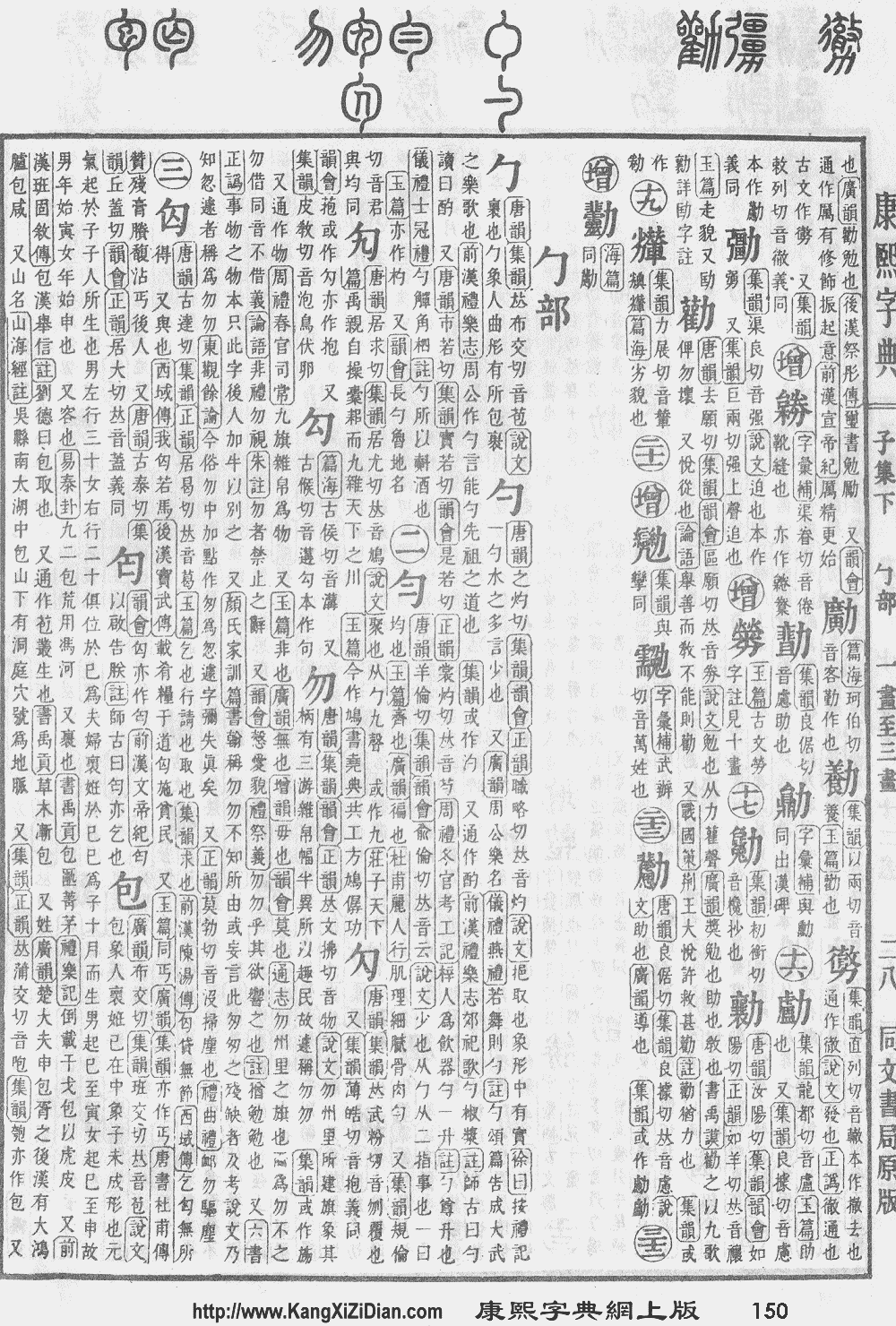
- Kangxi Dictionary: page 150, character 23
- Dai Kanwa Jiten: character 2500
- Dae Jaweon: page 339, character 13
- Hanyu Da Zidian (first edition): volume 1, page 256, character 3
- Unihan data for U+52FE
Chinese
| simp. and trad. |
勾 | |
|---|---|---|
| alternative forms | 句 | |
Glyph origin
Characters in the same phonetic series (句) (Zhengzhang, 2003)
| Old Chinese | |
|---|---|
| 勾 | *koː, *koːs |
| 鉤 | *koː |
| 鴝 | *koː, *ɡo |
| 句 | *koː, *koːs, *kos, *ɡo |
| 夠 | *koː, *koːs, *kʰoː |
| 枸 | *koː, *koːʔ, *koʔ |
| 軥 | *koː, *koːs, *ɡo |
| 狗 | *koːʔ |
| 苟 | *koːʔ |
| 岣 | *koːʔ, *ko |
| 笱 | *koːʔ |
| 玽 | *koːʔ |
| 耇 | *koːʔ |
| 豿 | *koːʔ, *qʰroːɡ |
| 敂 | *koːʔ |
| 怐 | *koːs, *kʰoːs, *qʰoːs, *kos |
| 雊 | *koːs |
| 竘 | *kʰoːʔ, *kʰoʔ |
| 齁 | *qʰoː |
| 呴 | *qʰoːʔ, *qʰos |
| 蚼 | *qʰoːʔ, *ɡo |
| 豞 | *qʰoːs |
| 訽 | *qʰoːs, *ɡoːs |
| 佝 | *qʰoːs |
| 拘 | *ko |
| 駒 | *ko |
| 眗 | *ko |
| 跔 | *ko |
| 鮈 | *ko |
| 痀 | *ko |
| 蒟 | *koʔ, *kos |
| 絇 | *kos, *ɡo |
| 邭 | *kos |
| 劬 | *ɡo |
| 朐 | *ɡo |
| 鼩 | *ɡo |
| 斪 | *ɡo |
| 翑 | *ɡo |
| 葋 | *ɡo |
| 姁 | *ɡo, *qʰo, *qʰoʔ, *qʰos |
| 欨 | *qʰo, *qʰoʔ |
| 喣 | *qʰoʔ |
| 煦 | *qʰoʔ, *qʰos |
| 昫 | *qʰos |
Pronunciation 1
Definitions
勾
- to bend; to curve; to crook; to hook
- to draw; to delineate
- to tick; to mark; to tick off
- to cut off or cut out; to strike out; to cross out
- to entice; to induce; to attract
- to smear; to apply
- (literary, or in compounds) to collude; to conspire
- (cooking, literary, or in compounds) to mix thoroughly to make something thicken
- (literary, or in compounds) to get; to call; to summon
- (literary, or in compounds) to catch; to arrest
- (historical geometry) shorter leg of a right triangle
- numeral nine (used in radio communications in aviation and by the military)
- See also: 九
- a surname
Synonyms
- (to entice):
- (to collude with):
Coordinate terms
- (geometry): 股 (gǔ)
Compounds
- 一筆勾/一笔勾
- 一筆勾斷/一笔勾断
- 一筆勾消/一笔勾消 (yībǐgōuxiāo)
- 一筆勾銷/一笔勾销 (yībǐgōuxiāo)
- 不付能勾
- 不甫能勾
- 不能勾
- 勾串
- 勾乙
- 勾使
- 勾使鬼
- 勾勒 (gōulè)
- 勾勾搭搭
- 勾司人
- 勾喚/勾唤
- 勾大引小
- 勾尺
- 勾帳/勾帐
- 勾幹/勾干
- 勾引 (gōuyǐn)
- 勾心鬥角/勾心斗角 (gōuxīndòujiǎo)
- 勾情
- 勾批
- 勾抹
- 勾拽
- 勾捉
- 勾提
- 勾搭 (gōuda)
- 勾摹
- 勾擾/勾扰
- 勾攝/勾摄
- 勾攝公事/勾摄公事
- 勾斷/勾断
- 勾欄/勾栏 (gōulán)
- 勾欄使者/勾栏使者
- 勾死人
- 勾死鬼
- 勾決/勾决
- 勾消
- 勾牽/勾牵
- 勾留 (gōuliú)
- 勾畫/勾画 (gōuhuà)
- 勾眉
- 勾稽
- 勾管
- 勾結/勾结 (gōujié)
- 勾股 (gōugǔ)
- 勾股形
- 勾肩搭背
- 勾臉/勾脸
- 勾臉譜/勾脸谱
- 勾芡 (gōuqiàn)
- 勾萌
- 勾號/勾号 (gōuhào)
- 勾軍/勾军
- 勾追
- 勾通 (gōutōng)
- 勾連/勾连 (gōulián)
- 勾銷/勾销 (gōuxiāo)
- 勾闌/勾阑
- 勾除
- 勾頭/勾头
- 勾魂
- 勾魂攝魄/勾魂摄魄
- 地府勾牌
- 官商勾結/官商勾结 (guānshānggōujié)
- 幾能勾/几能勾
- 廝勾/厮勾
- 打勾 (dǎgōu)
- 打勾勾
- 營勾/营勾
- 盼辰勾
- 管勾
- 茄勾
- 裡勾外連/里勾外连
- 贏勾/赢勾
- 辰勾
- 辰勾盼月
- 返勾
- 鷹勾鼻/鹰勾鼻
Pronunciation 2
Definitions
勾
Etymology 2
| For pronunciation and definitions of 勾 – see 鉤 (“hook; barb; sickle; etc.”). (This character is the second-round simplified form of 鉤). |
Notes:
|
References
- “勾”, in 漢語多功能字庫 (Multi-function Chinese Character Database), 香港中文大學 (the Chinese University of Hong Kong), 2014–
Japanese
Korean
Vietnamese
This article is issued from Wiktionary. The text is licensed under Creative Commons - Attribution - Sharealike. Additional terms may apply for the media files.