船
| ||||||||
Translingual
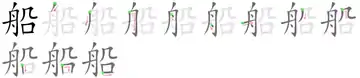
| Stroke order | |||
|---|---|---|---|
 | |||
Alternative forms
The top-right part can be either 八 or 几, depending on the script; Japanese: 船, mainland China: 船, traditional Chinese: 船, Korean: 船; see Han unification.
Han character
船 (Kangxi radical 137, 舟+5, 11 strokes, cangjie input 竹卜金口 (HYCR) or 竹卜竹弓口 (HYHNR), four-corner 28460, composition ⿰舟㕣)
Derived characters
- 𪮥 𥂟 𬜕 𬼔
References
- Kangxi Dictionary: page 1010, character 17
- Dai Kanwa Jiten: character 30407
- Dae Jaweon: page 1468, character 15
- Hanyu Da Zidian (first edition): volume 5, page 3060, character 1
- Unihan data for U+8239

Chinese
| trad. | 船 | |
|---|---|---|
| simp. # | 船 | |
| alternative forms | 舩 | |
Glyph origin
| Historical forms of the character 船 | |
|---|---|
| Western Zhou | Shuowen Jiezi (compiled in Han) |
| Bronze inscriptions | Small seal script |
 |
 |
Phono-semantic compound (形聲/形声, OC *ɦljon) : semantic 舟 (“boat”) + phonetic 㕣 (OC *lon).
Etymology
From Proto-Sino-Tibetan *m-lawŋ (“boat”). Compare Burmese လောင်း (laung:, “long and narrow boat”), and Mizo lawng (“boat or ship”).
Sagart (1999) interprets Old Chinese 船 (OC *ɦljon) as a nominal derivate of the verb 沿 (OC *lon, “to go downstream a river”). The Fangyan states that this word was commonly used in western China, but, by Han times, it had completely displaced the earlier 舟 (OC *tjɯw), used in central and eastern China.
Alternatively, the Proto-Sino-Tibetan root could be a loan from Proto-Mon-Khmer *d₂lu(u)ŋ ~ *d₂l(u)əŋ (“boat”), whence Mon ဂၠုၚ် (klɜ̀ŋ, “canoe, small boat”), perhaps a derivate of Proto-Mon-Khmer *luŋh ~ *luuŋh ~ *ləŋh (“to hollow, excavate, bore”), see Khmer លុង (lung, “to dig a hole”) and Vietnamese trũng (“concave”) (Sidwell, 2006; Schuessler, 2007).
Pronunciation
Definitions
船
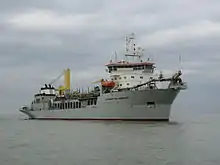
- watercraft; vessel (including ships, boats, sailing ships, hovercrafts; sometimes including submarines) (Classifier: 條/条 m; 艘 m; 隻/只 m c mn; 架 c)
- an object with a shape or function similar to watercraft
- (Hong Kong Cantonese, chiefly university slang) scholarship
- 攞船/𫽋船 [Hong Kong Cantonese] ― lo2 syun4 [Jyutping] ― to receive scholarship
- (obsolete) alcohol cup
- (obsolete) to carry by watercraft
- (obsolete, dialectal) button
- a surname: Chuan
Synonyms
- (watercraft):
Compounds
- 上水船
- 下水船
- 三船
- 下船 (xiàchuán)
- 三體船/三体船 (sāntǐchuán, “trimaran”)
- 中船
- 乘船 (chéngchuán)
- 乾貨船/干货船
- 借水推船
- 借風使船/借风使船
- 僱船/雇船
- 公船
- 兵船 (bīngchuán)
- 冷藏船
- 划船 (huáchuán)
- 刺船
- 剝船/剥船
- 包船
- 南船北馬/南船北马
- 同船濟水/同船济水
- 吃墨船兒/吃墨船儿
- 哨船
- 商船 (shāngchuán)
- 噹噹船/当当船
- 四體船/四体船 (sìtǐchuán, “quadrimaran”)
- 回船轉舵/回船转舵
- 堂客船
- 大船
- 太空船 (tàikōngchuán)
- 夾板船/夹板船
- 子母船
- 宇宙飛船/宇宙飞船 (yǔzhòu fēichuán)
- 客船 (kèchuán)
- 寶船/宝船 (bǎochuán)
- 封船
- 小渡船 (Xiǎodùchuán)
- 工作船
- 巴船
- 帆船 (fānchuán, “sailboat”)
- 快蟹船
- 快速帆船
- 戰船/战船 (zhànchuán)
- 押船
- 拖船 (tuōchuán)
- 捕鯨船/捕鲸船
- 探測船/探测船
- 採蓮船/采莲船 (cǎiliánchuán)
- 搭船 (dāchuán)
- 搖船/摇船
- 摩托船
- 撐旱船/撑旱船
- 撐硬船兒/撑硬船儿
- 撐船/撑船 (chēngchuán)
- 擺渡船/摆渡船
- 攏船/拢船
- 放船
- 救生船 (jiùshēngchuán, “lifeboat”)
- 救難船/救难船
- 旱船
- 旱船舞
- 暈船/晕船 (yùnchuán)
- 標船/标船
- 樓船/楼船 (lóuchuán)
- 橫撐船兒/横撑船儿
- 櫓帆船/橹帆船
- 民船
- 氣墊船/气垫船 (qìdiànchuán)
- 水泥船
- 水漲船高/水涨船高 (shuǐzhǎngchuángāo)
- 水翼船
- 水長船高/水长船高
- 沙船
- 汽船 (qìchuán)
- 油船 (yóuchuán)
- 法船
- 泊船
- 泥船渡河
- 浮沉船塢/浮沉船坞
- 浪船
- 浮船塢/浮船坞 (fúchuánwù)
- 淌板船
- 涼篷船/凉篷船
- 渡船 (dùchuán, “ferry”)
- 渡馬船/渡马船
- 漁政船/渔政船
- 漁船/渔船 (yúchuán)
- 滿船/满船
- 瀧船/泷船
- 灘船/滩船
- 蒸汽船 (zhēngqìchuán)
- 燒王船/烧王船
- 燈船/灯船
- 爬船
- 獨木船/独木船
- 皮船
- 看風使船/看风使船
- 破冰船 (pòbīngchuán)
- 破釜沉船
- 碰碰船
- 碾船
- 篷船
- 糧船/粮船
- 繫船樁/系船桩
- 翻船 (fānchuán)
- 腳划船
- 腳船/脚船 (jiǎochuán)
- 航船 (hángchuán)
- 船主 (chuánzhǔ)
- 船位
- 船公司
- 船務/船务
- 船匠 (chuánjiàng)
- 船口 (Chuánkǒu)
- 船員/船员 (chuányuán)
- 船埠 (chuánbù)
- 船堅炮利/船坚炮利 (chuánjiānpàolì)
- 船塢/船坞 (chuánwù)
- 船夫 (chuánfū)
- 船孃/船娘
- 船家 (chuánjiā)
- 船尾 (chuánwěi)
- 船工 (chuángōng)
- 船帆 (chuánfān)
- 船幫/船帮 (chuánbāng)
- 船底 (chuándǐ)
- 船廠/船厂 (chuánchǎng)
- 船形帽
- 船戶/船户
- 船期
- 船桅 (chuánwéi)
- 船梢
- 船樓/船楼
- 船模試驗/船模试验
- 船歌
- 船殼/船壳
- 船沉鉅鹿/船沉巨鹿
- 船深
- 船田
- 船票 (chuánpiào)
- 船篷 (chuánpéng)
- 船籍 (chuánjí)
- 船纜/船缆
- 船老大
- 船腳/船脚
- 船臺/船台
- 船舶 (chuánbó)
- 船舷 (chuánxián)
- 船艙/船舱 (chuáncāng)
- 船艦/船舰
- 船蛆
- 船資/船资
- 船身 (chuánshēn)
- 船運/船运 (chuányùn)
- 船錢/船钱
- 船錨/船锚 (chuánmáo)
- 船長/船长 (chuánzhǎng, “captain”)
- 船閘/船闸 (chuánzhá)
- 船隊/船队 (chuánduì)
- 船隻/船只 (chuánzhī)
- 船頭/船头 (chuántóu, “the bow of a ship or boat”)
- 船驥/船骥
- 船體/船体 (chuántǐ)
- 艤船/舣船
- 花船
- 苦船
- 草船
- 茶船
- 蕩船/荡船
- 虛船/虚船
- 蝕船蟲/蚀船虫
- 螺槳船/螺桨船
- 行船 (xíngchuán)
- 襪船/袜船
- 見風駛船/见风驶船
- 觥船
- 貨櫃船/货柜船 (huòguìchuán)
- 貨船/货船 (huòchuán)
- 買船/买船
- 賊船/贼船 (zéichuán)
- 趁船
- 跑旱船 (pǎohànchuán)
- 跑船
- 跳船 (tiàochuán)
- 蹼輪汽船/蹼轮汽船
- 躉船/趸船 (dǔnchuán)
- 躺船
- 輪船/轮船 (lúnchuán)
- 逆風撐船/逆风撑船
- 造船 (zàochuán)
- 造船工業/造船工业
- 造船廠/造船厂 (zàochuánchǎng)
- 遊船/游船 (yóuchuán)
- 郵船/邮船 (yóuchuán)
- 醫院船/医院船
- 釣船/钓船
- 鐵殼船/铁壳船
- 鑿船蟲/凿船虫
- 開船/开船 (kāichuán)
- 間諜船/间谍船
- 雙體船/双体船 (shuāngtǐchuán, “catamaran”)
- 順水推船/顺水推船
- 順水行船/顺水行船
- 順風駛船/顺风驶船
- 飛船/飞船 (fēichuán)
- 馬溜子船/马溜子船
- 馬船/马船 (mǎchuán)
- 駁船/驳船 (bóchuán)
- 龍船/龙船 (lóngchuán, “dragon boat”)
- 龍船花/龙船花
Japanese
| Shinjitai | 船 | |
| Kyūjitai [1] |
船󠄂 船+ 󠄂?(Adobe-Japan1) |
 |
| 船󠄄 船+ 󠄄?(Hanyo-Denshi) (Moji_Joho) | ||
| The displayed kanji may be different from the image due to your environment. See here for details. | ||
Readings
Compounds
Etymology 1
| Kanji in this term |
|---|
| 船 |
| ふね Grade: 2 |
| kun’yomi |
| For pronunciation and definitions of 船 – see the following entry. | ||
| ||
| (This term, 船, is an alternative spelling of the above term.) |
Korean
Etymology
(This etymology is missing or incomplete. Please add to it, or discuss it at the Etymology scriptorium. Particularly: “what is its historical reading?”)
Kunigami
Etymology
Inherited from Proto-Ryukyuan *pune, from Proto-Japonic *punay.
Pronunciation
- IPA(key): /pʰuniː/
Miyako
Etymology
Inherited from Proto-Ryukyuan *pune, from Proto-Japonic *punay.
Pronunciation
- IPA(key): /fu̥ni/
Okinawan
Readings
- Kun: ふに (funi)
Etymology
Inherited from Proto-Ryukyuan *pune, from Proto-Japonic *punay.
Pronunciation
- IPA(key): /ɸuni/
Yaeyama
Etymology
Inherited from Proto-Ryukyuan *pune, from Proto-Japonic *punay.
Pronunciation
- IPA(key): /ɸuni/
Yonaguni
Etymology
Inherited from Proto-Ryukyuan *pune, from Proto-Japonic *punay.
Pronunciation
- IPA(key): /nni/