荷
| ||||||||
Translingual
Han character
荷 (Kangxi radical 140, 艸+7, 10 strokes, cangjie input 廿人一口 (TOMR), four-corner 44221, composition ⿱艹何)
Derived characters
- 嗬, 𬄋
References
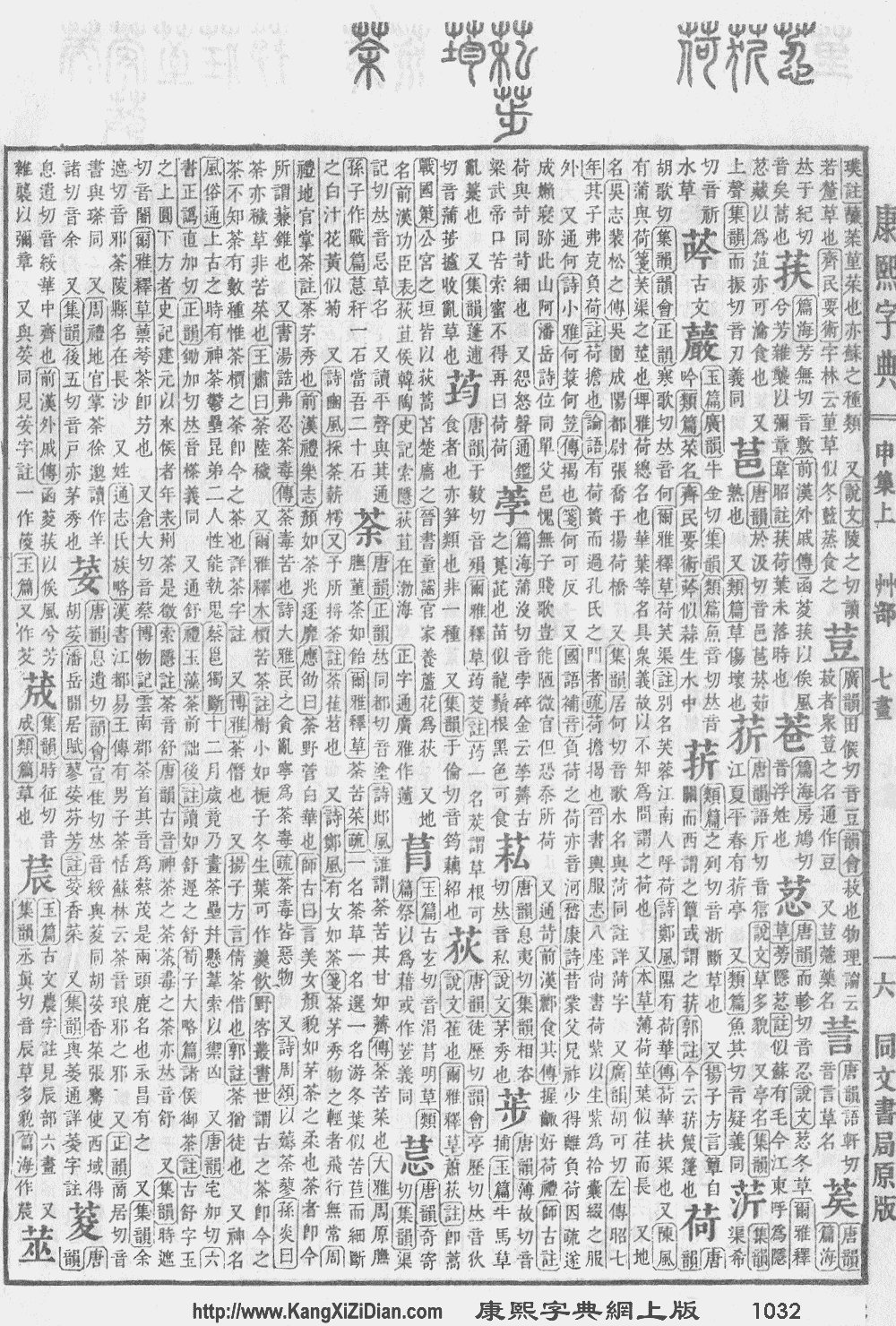
- Kangxi Dictionary: page 1032, character 13
- Dai Kanwa Jiten: character 31000
- Dae Jaweon: page 1491, character 23
- Hanyu Da Zidian (first edition): volume 5, page 3220, character 4
- Unihan data for U+8377
Chinese
Glyph origin
| Historical forms of the character 荷 |
|---|
| Shuowen Jiezi (compiled in Han) |
| Small seal script |
 |
Characters in the same phonetic series (可) (Zhengzhang, 2003)
| Old Chinese | |
|---|---|
| 砢 | *ɡ·raːlʔ |
| 柯 | *kaːl |
| 菏 | *kaːl, *ɡaːl |
| 牁 | *kaːl |
| 滒 | *kaːl |
| 哥 | *kaːl |
| 歌 | *kaːl |
| 謌 | *kaːl |
| 鴚 | *kaːl |
| 哿 | *kaːlʔ |
| 舸 | *kaːlʔ |
| 笴 | *kaːlʔ, *kaːnʔ |
| 軻 | *kʰaːl, *kʰaːlʔ, *kʰaːls |
| 珂 | *kʰaːl |
| 可 | *kʰaːlʔ |
| 岢 | *kʰaːlʔ |
| 坷 | *kʰaːlʔ, *kʰaːls |
| 蚵 | *kʰaːls, *ɡaːl |
| 呵 | *qʰaːl, *qʰaːls |
| 訶 | *qʰaːl |
| 抲 | *qʰaːl |
| 荷 | *qʰaːls, *ɡaːl, *ɡaːlʔ |
| 何 | *ɡaːl, *ɡaːlʔ |
| 河 | *ɡaːl |
| 苛 | *ɡaːl |
| 魺 | *ɡaːl |
| 袔 | *ɡaːls |
| 阿 | *qaːl |
| 妸 | *qaːl, *qaːlʔ |
| 疴 | *qaːl, *kʰraːls |
| 鈳 | *qaːl |
| 娿 | *qaːl, *qaːlʔ |
| 痾 | *qaːl |
| 跒 | *kʰraːlʔ |
| 閜 | *qʰraːlʔ |
Phono-semantic compound (形聲/形声, OC *qʰaːls, *ɡaːl, *ɡaːlʔ) : semantic 艸 (“grass; plant”) + phonetic 何 (OC *ɡaːl, *ɡaːlʔ).
Pronunciation
Compounds
- 令箭荷花
- 團荷/团荷
- 性荷爾蒙/性荷尔蒙
- 愛荷華/爱荷华 (Àihéhuá)
- 愛達荷/爱达荷 (Àidáhé)
- 煙袋荷包/烟袋荷包
- 繡荷包/绣荷包
- 芰荷
- 荷包 (hébāo)
- 荷包蛋 (hébāodàn)
- 荷塘 (hétáng)
- 荷月 (Héyuè)
- 荷爾蒙/荷尔蒙
- 荷珠配
- 荷花 (héhuā)
- 荷花出水
- 荷花堰 (Héhuāyàn)
- 荷花大少
- 荷花燈/荷花灯
- 荷荷芭 (héhébā)
- 荷葉先師/荷叶先师
- 荷葉肉/荷叶肉
- 荷蘭/荷兰 (Hélán)
- 荷蘭乳牛/荷兰乳牛
- 荷蘭水/荷兰水 (hélánshuǐ)
- 荷蘭王國/荷兰王国 (Hélán Wángguó)
- 荷蘭豆/荷兰豆 (hélándòu)
- 荷蘭豬/荷兰猪
- 荷衣
- 荷錢/荷钱
- 荷馬史詩/荷马史诗
- 菊老荷枯
- 藕荷 (ǒuhé)
- 蘘荷 (ránghé, “myoga”)
- 達荷美/达荷美 (Dáhéměi)
- 香荷包
- 墨荷
Pronunciation
Etymology 3
| trad. | 荷 | |
|---|---|---|
| simp. # | 荷 | |
| alternative forms | 何 | |
From Proto-Sino-Tibetan *m-kal ⪤ *s-gal (“back (lower); kidney; load; carry”) (STEDT). Cognate with Tibetan སྒལ་པ (sgal pa, “small of the back”), Mizo kal (“kidney”), Chepang गल् (gəl, “kidney”), Tangut 𗹼 (*khiwa¹, “kidney”), Burmese ခါး (hka:, “waist”), 可 (OC *kʰaːlʔ, “to be able to”).
Pronunciation
Definitions
荷
Compounds
Etymology 4
| For pronunciation and definitions of 荷 – see 苛 (“trifling; tedious”). (This character is an obsolete form of 苛). |
Etymology 5
| For pronunciation and definitions of 荷 – see 訶 (“to investigate; to interrogate”). (This character is an obsolete form of 訶). |
Japanese
Compounds
Korean
Etymology 1
From Middle Chinese 荷 (MC haX, “load”).
| Historical readings |
|---|
|
Pronunciation
- (SK Standard/Seoul) IPA(key): [ha̠]
- Phonetic hangul: [하]
Compounds
Etymology 2
From Middle Chinese 荷 (MC ha, “lotus”).
| Historical readings |
|---|
|
Pronunciation
- (SK Standard/Seoul) IPA(key): [ha̠]
- Phonetic hangul: [하]
Hanja
Vietnamese
This article is issued from Wiktionary. The text is licensed under Creative Commons - Attribution - Sharealike. Additional terms may apply for the media files.