蟲
| ||||||||
Translingual
Han character
蟲 (Kangxi radical 142, 虫+12, 18 strokes, cangjie input 中戈中戈戈 (LILII), four-corner 50136, composition ⿱虫䖵)
References
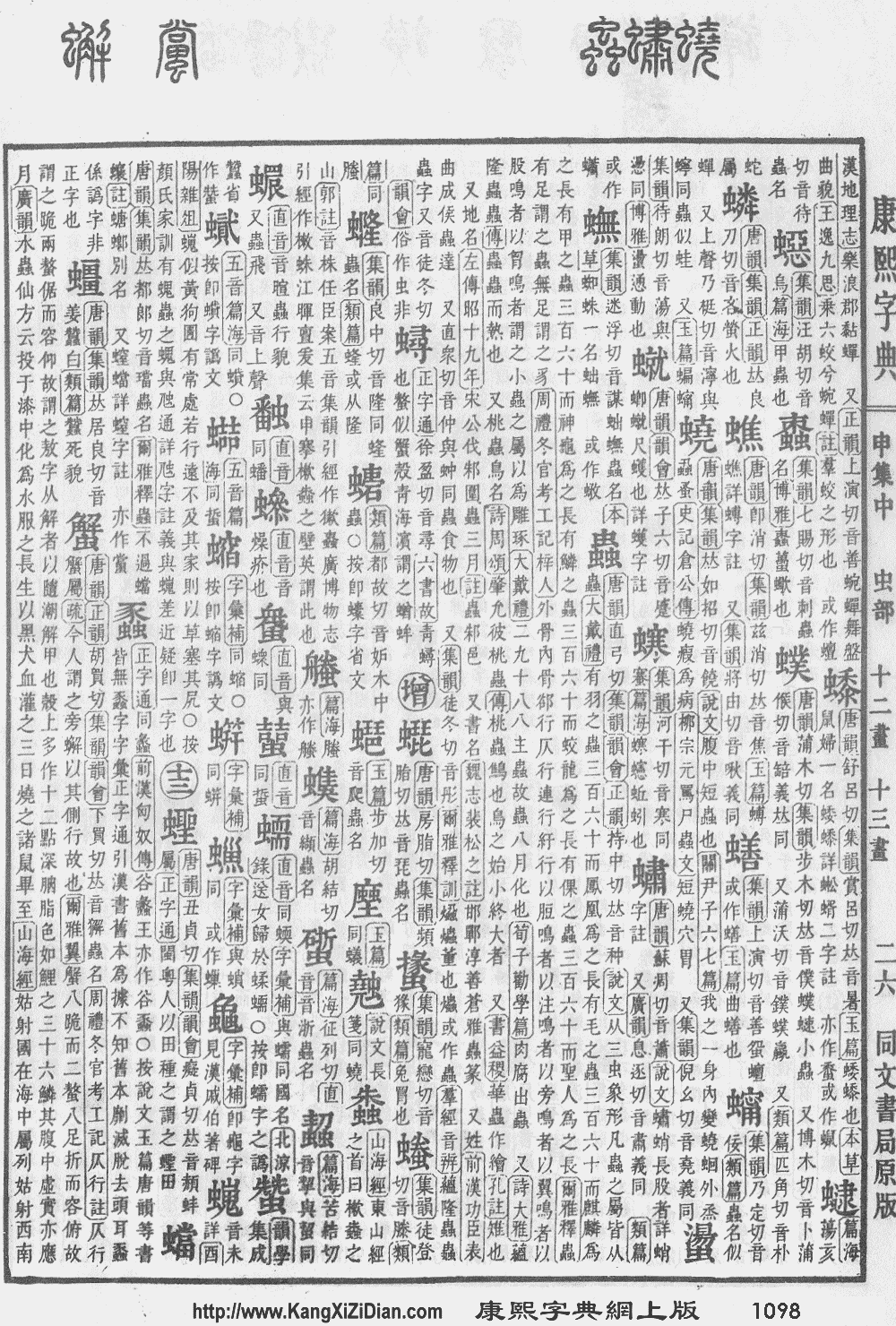
- Kangxi Dictionary: page 1098, character 16
- Dai Kanwa Jiten: character 33633
- Dae Jaweon: page 1562, character 22
- Hanyu Da Zidian (first edition): volume 4, page 2891, character 6
- Unihan data for U+87F2
Chinese
| trad. | 蟲 | |
|---|---|---|
| simp. | 虫* | |
| alternative forms | 䖝 𧈰 ⿱䖝⿰䖝䖝 | |
Glyph origin
Characters in the same phonetic series (蟲) (Zhengzhang, 2003)
Ideogrammic compound (會意/会意) : Triplication of 虫 (“snake; insect”).
Note that 虫 is also a traditional character on its own.
Etymology
From Proto-Sino-Tibetan *djuŋ (“insect; bug”) (STEDT).
Pronunciation 1
Definitions
蟲
Synonyms
Dialectal synonyms of 蟲子 (“insect; bug; worm (general term)”) [map]
Compounds
- 七星瓢蟲/七星瓢虫 (qīxīng piáochóng)
- 三化螟蟲/三化螟虫
- 三葉蟲/三叶虫 (sānyèchóng)
- 九香蟲/九香虫
- 二口蟲/二口虫
- 五倍子蟲/五倍子虫
- 五蟲/五虫
- 介殼蟲/介壳虫
- 介蟲/介虫 (jièchóng)
- 候蟲/候虫
- 倮蟲/倮虫 (luǒchóng)
- 冠子蟲/冠子虫
- 冬蟲夏草/冬虫夏草 (dōngchóngxiàcǎo)
- 可憐蟲/可怜虫 (kěliánchóng)
- 叩頭蟲/叩头虫 (kòutóuchóng)
- 吃人蟲/吃人虫
- 吸血蟲/吸血虫
- 喇叭蟲/喇叭虫
- 喜蟲兒/喜虫儿
- 塵芥蟲/尘芥虫
- 夏蟲/夏虫 (xiàchóng)
- 夏蟲朝菌/夏虫朝菌
- 夜光蟲/夜光虫
- 大蟲/大虫 (dàchóng)
- 媽蟲/妈虫
- 孖蟲/孖虫
- 孢子蟲/孢子虫
- 害人蟲/害人虫
- 害蟲/害虫 (hàichóng)
- 寄生昆蟲/寄生昆虫
- 寄生蟲/寄生虫 (jìshēngchóng)
- 寄生蟲病/寄生虫病
- 寒號蟲/寒号虫 (hánháochóng)
- 幼蟲/幼虫 (yòuchóng)
- 弓漿蟲/弓浆虫
- 彫蟲/雕虫
- 彫蟲篆刻/雕虫篆刻
- 恙蟲/恙虫
- 恙蟲病/恙虫病 (yàngchóngbìng)
- 應聲蟲/应声虫 (yìngshēngchóng)
- 懶蟲/懒虫 (lǎnchóng)
- 成蟲/成虫 (chéngchóng)
- 捕蟲堇菜/捕虫堇菜
- 捕蟲植物/捕虫植物
- 捕蟲燈/捕虫灯
- 捕蟲網/捕虫网
- 放屁蟲/放屁虫 (fàngpìchóng)
- 旋毛蟲/旋毛虫
- 昆蟲/昆虫 (kūnchóng)
- 昆蟲學/昆虫学 (kūnchóngxué)
- 昆蟲綱/昆虫纲
- 星蟲/星虫
- 書蟲/书虫 (shūchóng)
- 書蟲子/书虫子
- 有孔蟲/有孔虫
- 有鉤絛蟲/有钩绦虫
- 朽木蟲/朽木虫
- 松材線蟲/松材线虫 (sōngcáixiànchóng)
- 板殼蟲/板壳虫
- 松毛蟲/松毛虫 (sōngmáochóng)
- 松藻蟲/松藻虫
- 樹蟲子/树虫子
- 殺蟲劑/杀虫剂 (shāchóngjì)
- 殺蟲器/杀虫器
- 母大蟲/母大虫
- 毒蟲/毒虫 (dúchóng)
- 毛囊蟲/毛囊虫
- 毛毛蟲/毛毛虫
- 毛蟲/毛虫 (máochóng)
- 水斧蟲/水斧虫
- 水蠟蟲/水蜡虫
- 海藻蟲/海藻虫
- 混蟲/混虫
- 渦蟲/涡虫
- 火蟲兒/火虫儿
- 無鉤絛蟲/无钩绦虫
- 爬蟲/爬虫 (páchóng)
- 牙蟲/牙虫 (yáchóng)
- 物腐蟲生/物腐虫生
- 猿鶴沙蟲/猿鹤沙虫
- 猿鶴蟲沙/猿鹤虫沙
- 玉蟲/玉虫
- 珊瑚蟲/珊瑚虫 (shānhúchóng)
- 琵琶蟲/琵琶虫 (pípáchóng)
- 璅蟲/璅虫
- 瓢蟲/瓢虫 (piáochóng)
- 甲蟲/甲虫 (jiǎchóng)
- 疥癬蟲/疥癣虫
- 病原蟲/病原虫 (bìngyuánchóng)
- 病蟲害/病虫害 (bìngchónghài)
- 痴蟲/痴虫
- 瘧原蟲/疟原虫 (nüèyuánchóng)
- 癆蟲/痨虫
- 白蠟蟲/白蜡虫 (báilàchóng)
- 百足之蟲/百足之虫 (bǎizúzhīchóng)
- 百足蟲/百足虫 (bǎizúchóng)
- 益蟲/益虫 (yìchóng)
- 眼蟲/眼虫
- 睡病蟲/睡病虫
- 磕頭蟲/磕头虫 (kētóuchóng)
- 禾蟲/禾虫 (héchóng)
- 秋蟲/秋虫
- 竹節蟲/竹节虫 (zhújiéchóng)
- 箭蟲/箭虫
- 米蟲/米虫 (mǐchóng)
- 精蟲/精虫 (jīngchóng)
- 糊塗蟲/糊涂虫
- 紡錘蟲/纺锤虫
- 絲蟲/丝虫 (sīchóng)
- 絲蟲病/丝虫病 (sīchóngbìng)
- 絛蟲/绦虫 (tāochóng)
- 纖毛蟲/纤毛虫 (xiānmáochóng)
- 羽蟲/羽虫
- 老咬蟲/老咬虫
- 耳蟲/耳虫
- 聾蟲/聋虫
- 肝吸蟲/肝吸虫
- 肺吸蟲/肺吸虫 (fèixīchóng)
- 肥蟲蟻/肥虫蚁
- 胞子蟲/胞子虫
- 臭蟲/臭虫 (chòuchóng)
- 舉尾蟲/举尾虫
- 苞蟲/苞虫
- 若蟲/若虫
- 草履蟲/草履虫 (cǎolǚchóng)
- 茶毛蟲/茶毛虫
- 草蟲/草虫 (cǎochóng)
- 菜蟲/菜虫 (càichóng)
- 虎甲蟲/虎甲虫 (hǔjiǎchóng)
- 蚊睫之蟲/蚊睫之虫
- 蚊蟲/蚊虫 (wénchóng)
- 蚜蟲/蚜虫 (yáchóng)
- 蛀米大蟲/蛀米大虫
- 蛆蟲/蛆虫 (qūchóng)
- 蛀蟲/蛀虫 (zhùchóng)
- 蛓毛蟲/蛓毛虫
- 蛔蟲/蛔虫 (huíchóng)
- 蛔蟲症/蛔虫症
- 蛙鼓蟲吟/蛙鼓虫吟
- 蜰蟲/蜰虫 (féichóng)
- 蝕船蟲/蚀船虫
- 蝗蟲/蝗虫 (huángchóng)
- 蝗蟲過境/蝗虫过境
- 螢火蟲/萤火虫 (yínghuǒchóng)
- 螟蟲/螟虫
- 蟄蟲/蛰虫
- 蟎蟲/螨虫 (mǎnchóng)
- 蟲兒/虫儿 (chóngr)
- 蟲出/虫出
- 蟲吃牙/虫吃牙
- 蟲媒花/虫媒花
- 蟲子/虫子 (chóngzi)
- 蟲孔/虫孔
- 蟲字旁兒/虫字旁儿
- 蟲害/虫害 (chónghài)
- 蟲情/虫情
- 蟲書/虫书
- 蟲沙微類/虫沙微类
- 蟲沙猿鶴/虫沙猿鹤
- 蟲漆/虫漆
- 蟲災/虫灾 (chóngzāi)
- 蟲牙/虫牙 (chóngyá)
- 蟲癭/虫瘿
- 蟲白蠟/虫白蜡
- 蟲眼/虫眼 (chóngyǎn)
- 蟲篆/虫篆 (chóngzhuàn)
- 蟲篆之技/虫篆之技
- 蟲膠/虫胶 (chóngjiāo)
- 蟲臂鼠肝/虫臂鼠肝
- 蟲草/虫草 (chóngcǎo)
- 蟯蟲/蛲虫 (náochóng)
- 蟲蟲/虫虫
- 蟭蟟蟲/蟭蟟虫
- 蟲蟲蟻蟻/虫虫蚁蚁
- 蟲蟻/虫蚁 (chóngyǐ)
- 蟲豸/虫豸 (chóngzhì)
- 蟲霜水旱/虫霜水旱
- 蟲魚/虫鱼
- 蟲鳴水沸/虫鸣水沸
- 蠓蟲/蠓虫
- 蠟蟲/蜡虫
- 蠢蟲/蠢虫
- 蠹書蟲/蠹书虫
- 蠶蟲/蚕虫
- 蠹蟲/蠹虫 (dùchóng)
- 血吸蟲/血吸虫 (xuèxīchóng)
- 血吸蟲病/血吸虫病 (xuèxīchóngbìng)
- 誘蟲燈/诱虫灯
- 變形蟲/变形虫 (biànxíngchóng)
- 豉蟲/豉虫
- 象鼻蟲/象鼻虫 (xiàngbíchóng)
- 跟頭蟲/跟头虫 (gēntouchóng)
- 輪蟲/轮虫
- 金花蟲/金花虫
- 金蟲/金虫
- 鉤蟲/钩虫
- 錨蟲/锚虫
- 鐘形蟲/钟形虫
- 鐵甲蟲/铁甲虫
- 鑿船蟲/凿船虫
- 長蟲/长虫
- 除蟲菊/除虫菊
- 雕蟲/雕虫
- 雕蟲小技/雕虫小技 (diāochóngxiǎojì)
- 雕蟲小藝/雕虫小艺
- 雕蟲篆/雕虫篆
- 雕蟲篆刻/雕虫篆刻
- 雞蟲得失/鸡虫得失
- 青蟲/青虫 (qīngchóng)
- 鞭毛蟲/鞭毛虫
- 飛蟲/飞虫 (fēichóng)
- 食蟲植物/食虫植物
- 食蟲虻/食虫虻
- 驅蟲劑/驱虫剂
- 驅蟲效率/驱虫效率
- 魚蟲/鱼虫 (yúchóng)
- 鱗蟲/鳞虫
- 鳥蟲書/鸟虫书
- 鷙蟲/鸷虫
- 鹹蟲/咸虫
- 黑頭蟲/黑头虫
- 鼠肝蟲臂/鼠肝虫臂
- 齡蟲/龄虫
Pronunciation 3
References
- Dictionary of Chinese Character Variants (教育部異體字字典), A03683
- “蟲”, in 漢語多功能字庫 (Multi-function Chinese Character Database), 香港中文大學 (the Chinese University of Hong Kong), 2014–
- zi.tools
Korean
Etymology
From Middle Chinese 蟲 (MC drjuwng).
| Historical Readings | ||
|---|---|---|
| Dongguk Jeongun Reading | ||
| Dongguk Jeongun, 1448 | 뜌ᇰ (Yale: ttyùng) | |
| Middle Korean | ||
| Text | Eumhun | |
| Gloss (hun) | Reading | |
| Hunmong Jahoe, 1527 | 벌에〮 (Yale: pèlGéy) | 튜ᇰ (Yale: thyùng) |
Pronunciation
- (SK Standard/Seoul) IPA(key): [t͡ɕʰuŋ]
- Phonetic hangul: [충]
Compounds
Compounds
- 간충 (肝蟲, ganchung)
- 갑충 (甲蟲, gapchung)
- 곤충 (昆蟲, gonchung)
- 구충 (驅蟲, guchung)
- 기생충 (寄生蟲, gisaengchung)
- 방충 (防蟲, bangchung)
- 병충 (病蟲, byeongchung)
- 살충 (殺蟲, salchung)
- 성충 (成蟲, seongchung)
- 식충 (食蟲, sikchung)
- 엽충 (葉蟲, yeopchung)
- 유충 (幼蟲, yuchung)
- 익충 (益蟲, ikchung)
- 충치 (蟲齒, chungchi)
- 충치 (蟲豸, chungchi)
- 파충류 (爬蟲類, pachungnyu)
- 편충 (鞭蟲, pyeonchung)
- 해충 (害蟲, haechung)
- 회충 (蛔蟲, hoechung)
Vietnamese
This article is issued from Wiktionary. The text is licensed under Creative Commons - Attribution - Sharealike. Additional terms may apply for the media files.