善
| ||||||||
 | ||||||||
 | ||||||||
Translingual
Han character
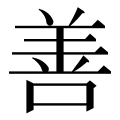
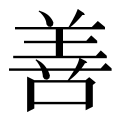
善 (Kangxi radical 30, 口+9, 12 strokes, cangjie input 廿土廿口 (TGTR) or 廿廿口 (TTR), four-corner 80605, composition ⿻羊⿱䒑口 or ⿳𦍌䒑口)
Derived characters
References
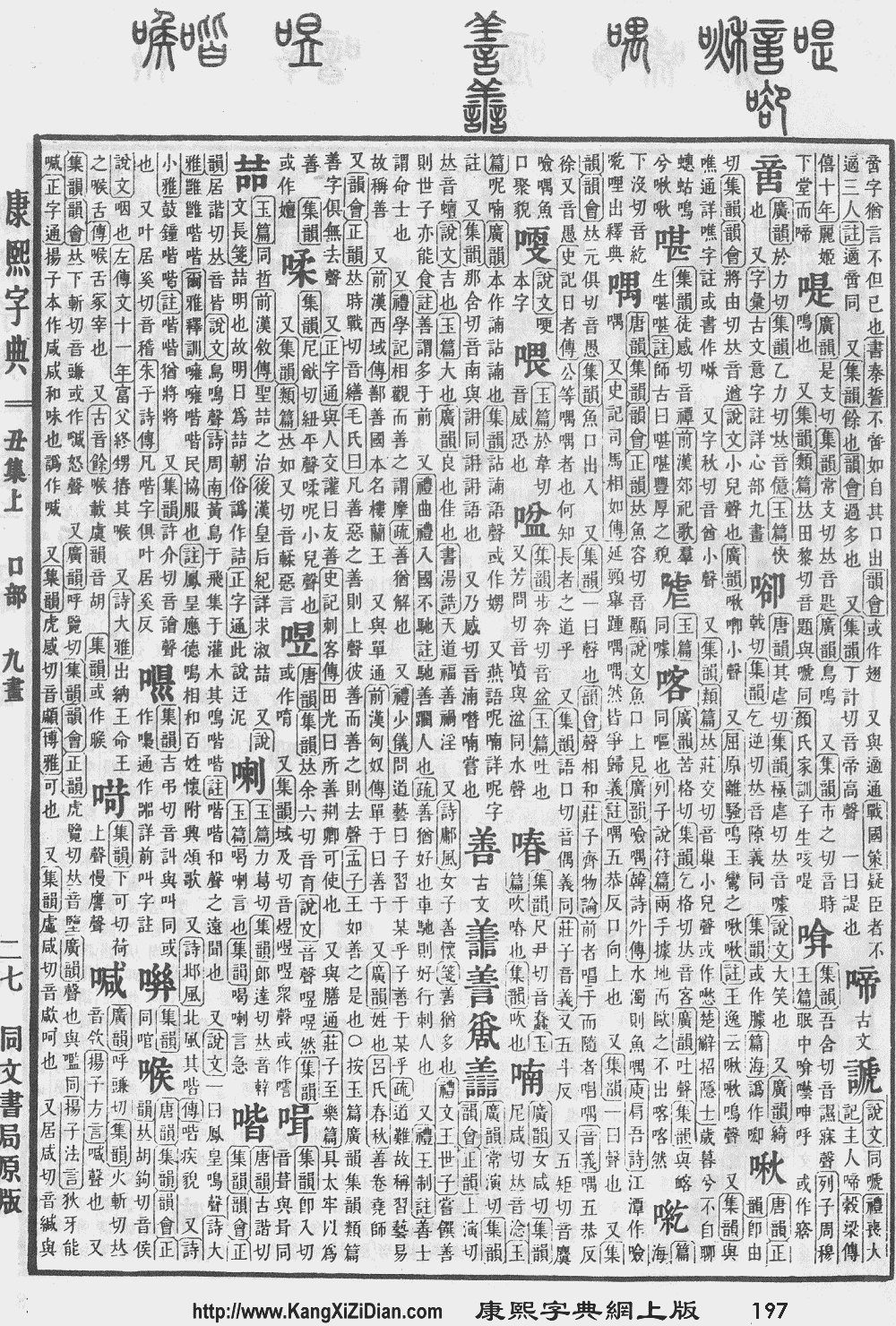
- Kangxi Dictionary: page 197, character 18
- Dai Kanwa Jiten: character 3904
- Dae Jaweon: page 418, character 38
- Hanyu Da Zidian (first edition): volume 1, page 660, character 2
- Unihan data for U+5584
- Unihan data for U+2F845
- Unihan data for U+2F846
Chinese
| trad. | 善 | |
|---|---|---|
| simp. # | 善 | |
| alternative forms | ||
Glyph origin
| Historical forms of the character 善 | |||
|---|---|---|---|
| Western Zhou | Warring States | Shuowen Jiezi (compiled in Han) | Liushutong (compiled in Ming) |
| Bronze inscriptions | Chu slip and silk script | Small seal script | Transcribed ancient scripts |
 |
 |
 |
 |
Originally written 譱 in bronze inscriptions, consisting of two 言 (OC *ŋan) and one 羊. The 言 (OC *ŋan) might have served as the phonetic component, while 羊 represented the sense "good; beautiful". The small seal script of 善 was simplified from the bronze inscription form, consisting of one 言 below one 羊.
According to Shuowen, the form 譱 is an ideogrammic compound (會意/会意) : 誩 (“to wrangle”) + 羊 (“sheep”) – good; virtuous. This interpretation may be difficult to comprehend.
Etymology
Probably related to 繕 (OC *ɡjens, “to mend; to repair”).
Pronunciation
Definitions
善
- good; virtuous; charitable; kind
- 人之初,性本善。 [Classical Chinese, trad. and simp.]
- From: Three Character Classic, circa 13th century CE
- Rén zhī chū, xìng běn shàn. [Pinyin]
- Men at their birth, are naturally good.
- 子曰:「善人為邦百年,亦可以勝殘去殺矣。誠哉是言也!」 [Classical Chinese, trad.]
- From: The Analects of Confucius, c. 475 – 221 BCE
- Zǐyuē: “Shànrén wéi bāng bǎinián, yì kěyǐ shèngcánqùshā yǐ. Chéng zāi shì yán yě!” [Pinyin]
- The Master said, "'If good men were to govern a country in succession for a hundred years, they would be able to transform the violently bad, and dispense with capital punishments.' True indeed is this saying!"
子曰:「善人为邦百年,亦可以胜残去杀矣。诚哉是言也!」 [Classical Chinese, simp.]
- good; fine; desirable
- 善策 ― shàncè ― good solution
- good deed
- 行善 ― xíngshàn ― to do good deeds
- to be good at
- easily
- appropriately; all out; earnestly
- to be friendly with; to be on friendly terms with
- (literary) to like
- (literary) Used to express agreement or commendation.; Good!
- 孟獻子曰:「請城虎牢以偪鄭。」知武子曰:「善。」 [Classical Chinese, trad.]
- From: Commentary of Zuo, c. 4th century BCE, translation from Zuozhuan: Commentary on the "Spring and Autumn Annals" (2017), by Stephen Durrant, Wai-yee Li and David Schaberg
- Mèng Xiànzǐ yuē: “Qǐng chéng Hǔláo yǐ bī Zhèng.” Zhī Wǔzǐ yuē: “Shàn.” [Pinyin]
- Meng Xianzi said, "I request that Hulao be fortified to exert pressure on Zheng." Zhi Ying said, "Excellent."
孟献子曰:「请城虎牢以偪郑。」知武子曰:「善。」 [Classical Chinese, simp.]
- (Taishanese, euphemistic) to die
- 去善 [Taishanese] ― hui1 sen5 [Wiktionary] ― go to hell
Synonyms
| Variety | Location | Words |
|---|---|---|
| Classical Chinese | 好, 良, 善, 佳 | |
| Formal (Written Standard Chinese) | 好, 良好, 美好, 佳 | |
| Mandarin | Beijing | 好, 強 |
| Taiwan | 好 | |
| Jinan | 好, 賽, 強 | |
| Xi'an | 好, 嫽 | |
| Wuhan | 好, 傲 | |
| Chengdu | 好 | |
| Yangzhou | 好 | |
| Hefei | 好, 㜺 | |
| Singapore | 好 | |
| Cantonese | Guangzhou | 好, 㜺 |
| Hong Kong | 好 | |
| Taishan | 好 | |
| Yangjiang | 好 | |
| Singapore (Guangfu) | 好 | |
| Gan | Nanchang | 好 |
| Hakka | Meixian | 好, 㜺 |
| Miaoli (N. Sixian) | 好 | |
| Pingtung (Neipu; S. Sixian) | 好 | |
| Hsinchu County (Zhudong; Hailu) | 好 | |
| Taichung (Dongshi; Dabu) | 好 | |
| Hsinchu County (Qionglin; Raoping) | 好 | |
| Yunlin (Lunbei; Zhao'an) | 好 | |
| Jin | Taiyuan | 好 |
| Northern Min | Jian'ou | 好 |
| Eastern Min | Fuzhou | 好 |
| Southern Min | Xiamen | 好 |
| Tainan | 好 | |
| Penang (Hokkien) | 好 | |
| Singapore (Hokkien) | 好 | |
| Manila (Hokkien) | 好 | |
| Chaozhou | 好 | |
| Singapore (Teochew) | 好 | |
| Singapore (Hainanese) | 好 | |
| Zhongshan Min | Shaxi (Longdu) | 好 |
| Wu | Shanghai | 好, 㜺, 靈, 嗲 |
| Suzhou | 好, 㜺 | |
| Wenzhou | 好 | |
| Xiang | Changsha | 好 |
| Shuangfeng | 好 | |
Compounds
- 三善道
- 不善 (bùshàn)
- 不得善終/不得善终 (bùdéshànzhōng)
- 乏善可陳/乏善可陈 (fáshànkěchén)
- 人善得人欺,馬善得人騎/人善得人欺,马善得人骑 (rén shàn dé rén qī, mǎ shàn dé rén qí)
- 伏善
- 伐善
- 來者不善/来者不善
- 偽善/伪善 (wěishàn)
- 公善 (gōngshàn)
- 兼善
- 兼善天下
- 勸善/劝善 (quànshàn)
- 勸善懲惡/劝善惩恶 (quànshànchéng'è)
- 勸善戒惡/劝善戒恶
- 勸善規過/劝善规过
- 勸善黜惡/劝善黜恶
- 十善
- 友善 (yǒushàn)
- 向善 (xiàngshàn)
- 和善 (héshàn)
- 善事 (shànshì)
- 善人 (shànrén)
- 善信 (shànxìn)
- 善價/善价
- 善刀而藏
- 善化 (Shànhuà)
- 善哉 (shànzāi)
- 善善從長/善善从长
- 善善惡惡/善善恶恶
- 善堂 (shàntáng)
- 善報/善报 (shànbào)
- 善士 (shànshì)
- 善女 (shànnǚ)
- 善始令終/善始令终
- 善始善終/善始善终
- 善導/善导
- 善巧便佞
- 善待 (shàndài)
- 善後/善后 (shànhòu)
- 善心 (shànxīn)
- 善心人士 (shànxīn rénshì)
- 善惡/善恶 (shàn'è)
- 善意 (shànyì)
- 善感 (shàngǎn)
- 善戰/善战 (shànzhàn)
- 善才
- 善才童子
- 善政 (shànzhèng)
- 善敗/善败
- 善於/善于 (shànyú)
- 善書/善书
- 善本 (shànběn)
- 善果 (shànguǒ)
- 善柔
- 善根 (shàngēn)
- 善棍
- 善歲/善岁
- 善氣迎人/善气迎人
- 善用 (shànyòng)
- 善男信女 (shànnán xìnnǚ)
- 善知識/善知识 (shànzhīshí)
- 善終/善终 (shànzhōng)
- 善緣/善缘
- 善罷干休
- 善罷甘休/善罢甘休 (shànbàgānxiū)
- 善自為謀/善自为谋
- 善與人交/善与人交
- 善舉/善举 (shànjǔ)
- 善良 (shànliáng)
- 善行 (shànxíng)
- 善解人意 (shànjiěrényì)
- 善變/善变 (shànbiàn)
- 善財/善财 (Shàncái)
- 善財難捨/善财难舍
- 善賈/善贾
- 善賈而沽/善贾而沽
- 善門難開/善门难开
- 善靈/善灵 (shànlíng)
- 善頌善禱/善颂善祷
- 善類/善类 (shànlèi)
- 善馬熟人/善马熟人
- 嘉言善行
- 多多益善 (duōduōyìshàn)
- 多愁善感 (duōchóushàngǎn)
- 多謀善斷/多谋善断
- 多財善賈/多财善贾
- 多錢善賈/多钱善贾
- 好善嫉惡/好善嫉恶
- 好善惡惡/好善恶恶
- 好善樂施/好善乐施
- 好施樂善/好施乐善
- 好謀善斷/好谋善断
- 妥善 (tuǒshàn)
- 妙善 (miàoshàn)
- 妙善公主
- 嫉惡好善/嫉恶好善
- 守死善道
- 完善 (wánshàn)
- 宿善
- 寸善片長/寸善片长
- 履中行善
- 巧言善色
- 平善
- 廣結善緣/广结善缘
- 廣行善事/广行善事
- 彰善癉惡/彰善瘅恶
- 從善如流/从善如流 (cóngshànrúliú)
- 從善若流/从善若流
- 循循善誘/循循善诱 (xúnxúnshànyòu)
- 心善 (xīnshàn)
- 性善說/性善说 (xìngshànshuō)
- 恂恂善誘/恂恂善诱
- 慈善 (císhàn)
- 慈善事業/慈善事业
- 慈善家 (císhànjiā)
- 慈善機構/慈善机构 (císhàn jīgòu)
- 慈眉善目
- 懲惡勸善/惩恶劝善 (chéng'èquànshàn)
- 懲惡獎善/惩恶奖善
- 扶善懲惡/扶善惩恶
- 抑惡揚善/抑恶扬善
- 掩惡揚善/掩恶扬善
- 掩賢妒善/掩贤妒善
- 推賢樂善/推贤乐善
- 推賢舉善/推贤举善
- 推賢進善/推贤进善
- 擇善固執/择善固执 (zéshàngùzhí)
- 擇善而從/择善而从
- 擇善而行/择善而行
- 攘善
- 改善 (gǎishàn)
- 改惡向善/改恶向善
- 改惡從善/改恶从善 (gǎi'ècóngshàn)
- 改惡行善/改恶行善
- 改行遷善/改行迁善
- 改過向善/改过向善
- 改過從善/改过从善
- 改過遷善/改过迁善
- 旌善懲惡/旌善惩恶
- 日行一善 (rìxíngyīshàn)
- 明德止善
- 明眸善睞/明眸善睐
- 是非善惡/是非善恶
- 服善
- 樂善/乐善 (lèshàn)
- 樂善不倦/乐善不倦
- 樂善好施/乐善好施 (lèshànhàoshī)
- 樂善好義/乐善好义
- 欺善怕惡/欺善怕恶 (qīshànpà'è)
- 止惡揚善/止恶扬善 (zhǐ'èyángshàn)
- 止於至善/止于至善 (zhǐyúzhìshàn)
- 武不善作
- 殘賢害善/残贤害善
- 洪善 (Hóngshàn)
- 淑善君子 (shū shàn jūnzǐ)
- 為善/为善 (wéishàn)
- 為善最樂/为善最乐 (wéishàn zuì lè)
- 片善
- 片善小才
- 獨善/独善
- 獨善其身/独善其身
- 疾惡好善/疾恶好善
- 癉惡彰善/瘅恶彰善
- 盡善盡美/尽善尽美 (jìnshànjìnměi)
- 盡美盡善/尽美尽善
- 真善美 (zhēn-shàn-měi)
- 眾口稱善/众口称善
- 矜功伐善
- 知人善任 (zhīrénshànrèn)
- 福善禍淫/福善祸淫 (fúshànhuòyín)
- 積善/积善 (jīshàn)
- 積善之家,必有餘慶/积善之家,必有余庆 (jīshàn zhī jiā, bì yǒu yúqìng)
- 積善餘慶/积善余庆
- 美善 (měishàn)
- 聖善/圣善
- 能文善武
- 能言善辯/能言善辩 (néngyánshànbiàn)
- 能言善道
- 能說善道/能说善道
- 至善 (zhìshàn)
- 至善至美
- 與人為善/与人为善 (yǔrénwéishàn)
- 良善 (liángshàn)
- 英勇善戰/英勇善战
- 蒲邑三善
- 行善 (xíngshàn)
- 褒善貶惡/褒善贬恶
- 親善/亲善 (qīnshàn)
- 親善大使/亲善大使
- 諄諄善誘/谆谆善诱
- 諱過稱善/讳过称善
- 謙善/谦善
- 責善/责善
- 賞善罰惡/赏善罚恶
- 贊善/赞善
- 軟善/软善
- 遏惡揚善/遏恶扬善
- 遷善/迁善
- 遷善改過/迁善改过
- 遷善遠罪/迁善远罪
- 鄯善 (Shànshàn)
- 長袖善舞/长袖善舞 (chángxiùshànwǔ)
- 除惡扶善/除恶扶善
- 隱惡揚善/隐恶扬善 (yǐn'èyángshàn)
- 面善 (miànshàn)
- 面善心惡/面善心恶
- 面善心狠 (miànshàn xīnhěn)
- 面惡心善/面恶心善 (miàn è xīn shàn)
- 首善
- 首善之區/首善之区 (shǒushànzhīqū)
- 首善之地 (shǒushànzhīdì)
- 馴善/驯善
- 騎者善墮/骑者善堕
- 點頭稱善/点头称善
References
- “善”, in 漢語多功能字庫 (Multi-function Chinese Character Database), 香港中文大學 (the Chinese University of Hong Kong), 2014–
Japanese
Noun
善 • (zen)
Derived terms
- 善に従うこと流るるが如し (zen ni shitagau koto nagaruru ga gotoshi)
- 善に強い者は悪にも強い (zen ni tsuyoi mono wa aku ni mo tsuyoi)
- 善の裏は悪 (zen no ura wa aku)
- 善の綱 (zen no tsuna)
- 善は急げ (zen wa isoge)
- 善を責むるは朋友の道なり (zen o semuru wa hōyū no michi nari)
Korean
Etymology
(This etymology is missing or incomplete. Please add to it, or discuss it at the Etymology scriptorium. Particularly: “Middle Korean readings, if any”)
Pronunciation
- (SK Standard/Seoul) IPA(key): [sʰʌ̹n]
- Phonetic hangul: [선]