霧
| ||||||||
Translingual
Han character
霧 (Kangxi radical 173, 雨+11, 19 strokes, cangjie input 一月弓竹尸 (MBNHS), four-corner 10227, composition ⿱雨務)
References
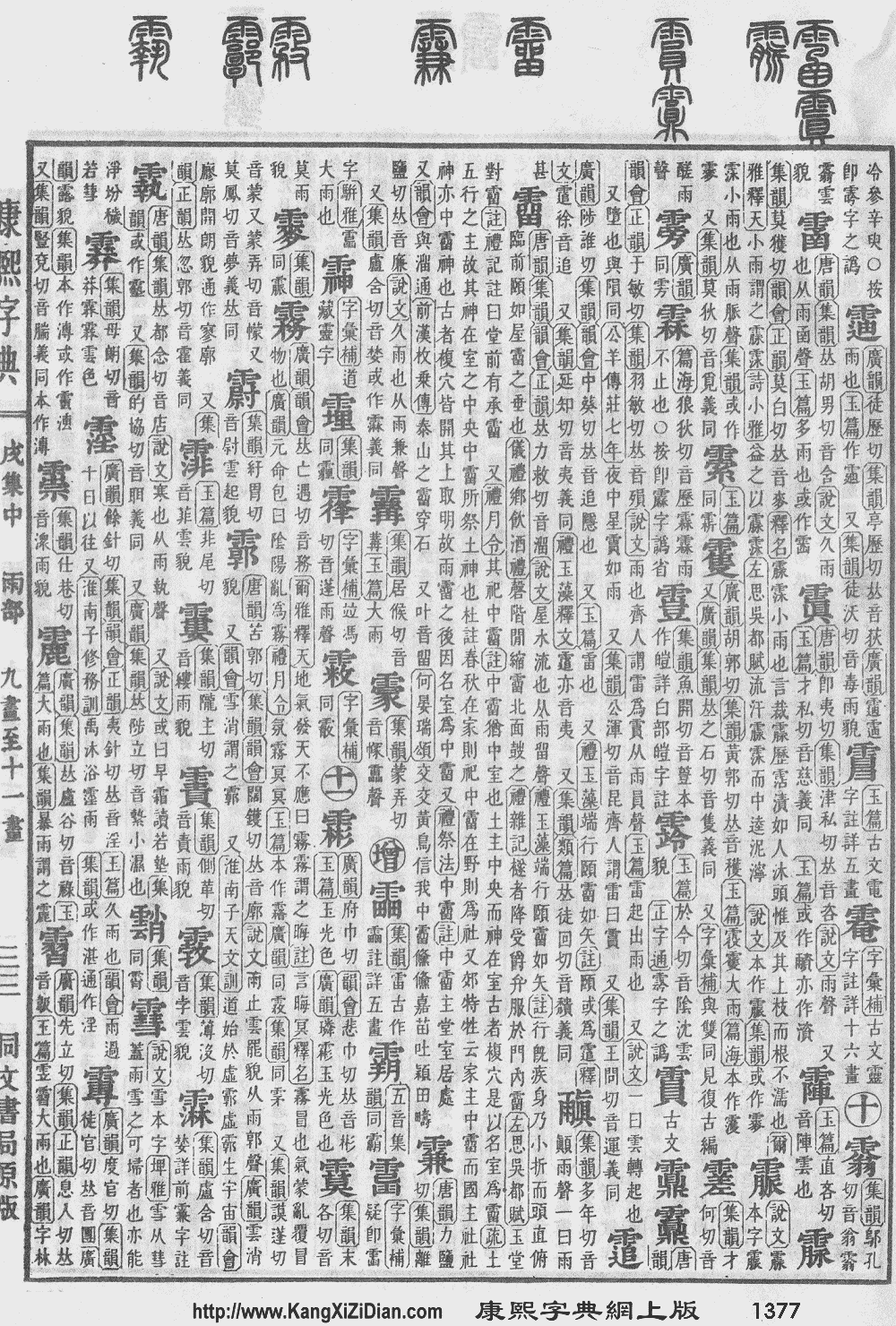
- Kangxi Dictionary: page 1377, character 36
- Dai Kanwa Jiten: character 42418
- Hanyu Da Zidian (first edition): volume 6, page 4074, character 15
- Unihan data for U+9727
Chinese
| trad. | 霧 | |
|---|---|---|
| simp. | 雾 | |
| alternative forms | 雺 霚 霿 | |
Glyph origin
Characters in the same phonetic series (矛) (Zhengzhang, 2003)
| Old Chinese | |
|---|---|
| 堥 | *muː, *mu |
| 蓩 | *muːʔ, *moːɡ |
| 猱 | *ml'uː, *mljiwʔ, *ml'us |
| 茅 | *mruː |
| 罞 | *mruː, *muːŋ |
| 蝥 | *mruː, *mu, *mo, *moɡs |
| 鶜 | *mruː |
| 瞀 | *moːɡs, *mroːɡ |
| 愗 | *moːɡs |
| 袤 | *mus |
| 雺 | *mus, *mu, *muːŋ, *muːŋs |
| 懋 | *mus |
| 楙 | *mus |
| 矛 | *mu |
| 蟊 | *mu |
| 髳 | *mu, *muːŋ |
| 鍪 | *mu |
| 鞪 | *mu, *moːɡ |
| 糅 | *ml'us |
| 腬 | *ml'us, *mlju |
| 柔 | *mlju |
| 揉 | *mju |
| 蹂 | *mju, *mjuʔ, *mjus |
| 鍒 | *mju |
| 騥 | *mju |
| 蝚 | *mju |
| 葇 | *mju, *mjuʔ |
| 鞣 | *mju, *mjus |
| 鰇 | *mju |
| 瑈 | *mju |
| 鶔 | *mju |
| 楺 | *mjuʔ |
| 煣 | *mjuʔ, *mjus |
| 輮 | *mjuʔ, *mjus |
| 韖 | *mjuʔ |
| 敄 | *moʔ, *mos |
| 務 | *moɡs |
| 鶩 | *moɡs, *moːɡ |
| 騖 | *moɡs |
| 婺 | *moɡs |
| 霚 | *moɡs, *moːŋ |
| 嵍 | *moɡs |
| 霧 | *moɡs, *moːŋ |
| 霿 | *moːŋ, *moːŋs |
| 楘 | *moːɡ |
Phono-semantic compound (形聲/形声, OC *moɡs, *moːŋ) : semantic 雨 (“rain”) + phonetic 務 (OC *moɡs).
Etymology 1
From Proto-Sino-Tibetan *muːŋ ~ r/s-muːk (“foggy; dark; sullen; menacing; thunder”) (STEDT; Schuessler, 2007) or its allofam *r-məw (“sky; heavens; clouds”) (Schuessler, 2007). Cognate with Tibetan རྨུ་བ (rmu ba, “fog”), རྨུགས་པ (rmugs pa, “dense fog”), Burmese မြူ (mru, “minute particle; haze; fog”).
Pronunciation
Definitions
霧
Synonyms
Dialectal synonyms of 霧 (“fog”) [map]
Compounds
- 一頭霧水/一头雾水 (yītóuwùshuǐ)
- 下霧/下雾 (xiàwù)
- 五里霧
- 光煙霧/光烟雾
- 冷霧/冷雾
- 南山霧豹/南山雾豹
- 含煙籠霧/含烟笼雾
- 吞雲吐霧/吞云吐雾 (tūnyúntǔwù)
- 噴雲吐霧/喷云吐雾
- 噴雲噯霧/喷云嗳雾
- 噴霧/喷雾 (pēnwù)
- 噴霧器/喷雾器 (pēnwùqì)
- 噴霧機/喷雾机
- 墮雲霧中/堕云雾中
- 如坐雲霧/如坐云雾
- 如墮煙霧/如堕烟雾
- 妖霧/妖雾
- 宿霧/宿雾 (Sùwù)
- 平流霧/平流雾
- 愁雲慘霧/愁云惨雾
- 愁霧/愁雾
- 拿雲握霧/拿云握雾
- 握雲拿霧/握云拿雾
- 握霧拿雲/握雾拿云
- 擁霧翻波/拥雾翻波
- 晨霧/晨雾 (chénwù)
- 朝霧/朝雾 (zhāowù)
- 毒霧/毒雾
- 海霧/海雾
- 涼霧/凉雾 (Liángwù)
- 濃霧/浓雾 (nóngwù)
- 煙消霧散/烟消雾散
- 煙籠霧鎖/烟笼雾锁
- 煙霏霧集/烟霏雾集
- 煙霧/烟雾 (yānwù)
- 熱霧/热雾
- 紅光紫霧/红光紫雾 (hóng guāng zǐ wù)
- 綠煙紅霧/绿烟红雾
- 興雲作霧/兴云作雾
- 興雲吐霧/兴云吐雾
- 蒼霧/苍雾
- 蒙霧露/蒙雾露
- 蓮霧/莲雾 (liánwù)
- 迷霧/迷雾 (míwù)
- 除霧器/除雾器
- 雲合霧集/云合雾集
- 雲山霧罩/云山雾罩
- 雲收霧散/云收雾散
- 雲消霧散/云消雾散 (yúnxiāo-wùsàn)
- 雲霧/云雾 (yúnwù)
- 霧化/雾化 (wùhuà)
- 霧嗄嗄/雾嗄嗄 (bū-sà-sà) (Min Nan)
- 霧峰/雾峰 (Wùfēng)
- 霧氣/雾气 (wùqì)
- 霧沉沉/雾沉沉
- 霧淞/雾淞 (wùsōng)
- 霧渡河/雾渡河 (Wùdùhé)
- 霧社/雾社
- 霧社事件/雾社事件 (Wùshè Shìjiàn)
- 霧縠/雾縠
- 霧臺/雾台 (Wùtái)
- 霧茫茫/雾茫茫
- 霧裡看花/雾里看花 (wùlǐkànhuā)
- 霧豹/雾豹
- 霧鎖雲埋/雾锁云埋
- 霧騰騰/雾腾腾
- 霧鬢/雾鬓
- 霧鬢風鬟/雾鬓风鬟
- 風言霧語/风言雾语
- 風鬟霧鬢/风鬟雾鬓
- 駕霧騰雲/驾雾腾云
- 騰雲駕霧/腾云驾雾
- 騰霧/腾雾
Descendants
Pronunciation
Definitions
霧
Usage notes
- (first definition): For the subtle difference between the synonyms, please refer to the usage notes of 澍.
- (second definition): 霧/雾 usually means overflowing due to boiling; 泏 usually means overflowing due to shaking; sōe-teⁿ means dribbling at a spout when it is nearly stopped up; 溢 is used in a general sense.
References
- “Entry #12903”, in 臺灣閩南語常用詞辭典 [Dictionary of Frequently-Used Taiwan Minnan] (overall work in Mandarin and Hokkien), Ministry of Education, R.O.C., 2023.
Pronunciation
Japanese
Compounds
Noun
霧 • (kiri)
- mist, fog
- 794, Shin'yaku Kegonkyō Ongi Shiki:
- 重霧 下奇利
- (please add an English translation of this quotation)
- 1999 March 1, “ウォーター・エレメント [Water Element]”, in BOOSTER 1, Konami:
- 水に住んでいる精霊。まわりを霧でつつみこみ視界を奪う。
- Mizu ni sundeiru seirei. Mawari o kiri de tsutsumikomi shikai o ubau.
- A spirit who lives in the water. She’ll blind you by surrounding you with mist.
- 水に住んでいる精霊。まわりを霧でつつみこみ視界を奪う。
Derived terms
References
- Takeuchi, Rizō (1962) Nara Ibun: Volume 3 (in Japanese), Tōkyō: Tōkyōdō Shuppan, →ISBN.
Korean
Etymology
From Middle Chinese 霧 (MC mjuH). Recorded as Middle Korean 무〯 (mwǔ) (Yale: mwǔ) in Hunmong Jahoe (訓蒙字會 / 훈몽자회), 1527.
Pronunciation
- (SK Standard/Seoul) IPA(key): [mu(ː)]
- Phonetic hangul: [무(ː)]
- Though still prescribed in Standard Korean, most speakers in both Koreas no longer distinguish vowel length.
Compounds
Vietnamese
This article is issued from Wiktionary. The text is licensed under Creative Commons - Attribution - Sharealike. Additional terms may apply for the media files.