乂
| ||||||||
Translingual
| Stroke order | |||
 | |||
Han character
乂 (Kangxi radical 4, 丿+1, 2 strokes, cangjie input 大 (K) or 難大 (XK), four-corner 40000, composition ⿻丿㇏)
References
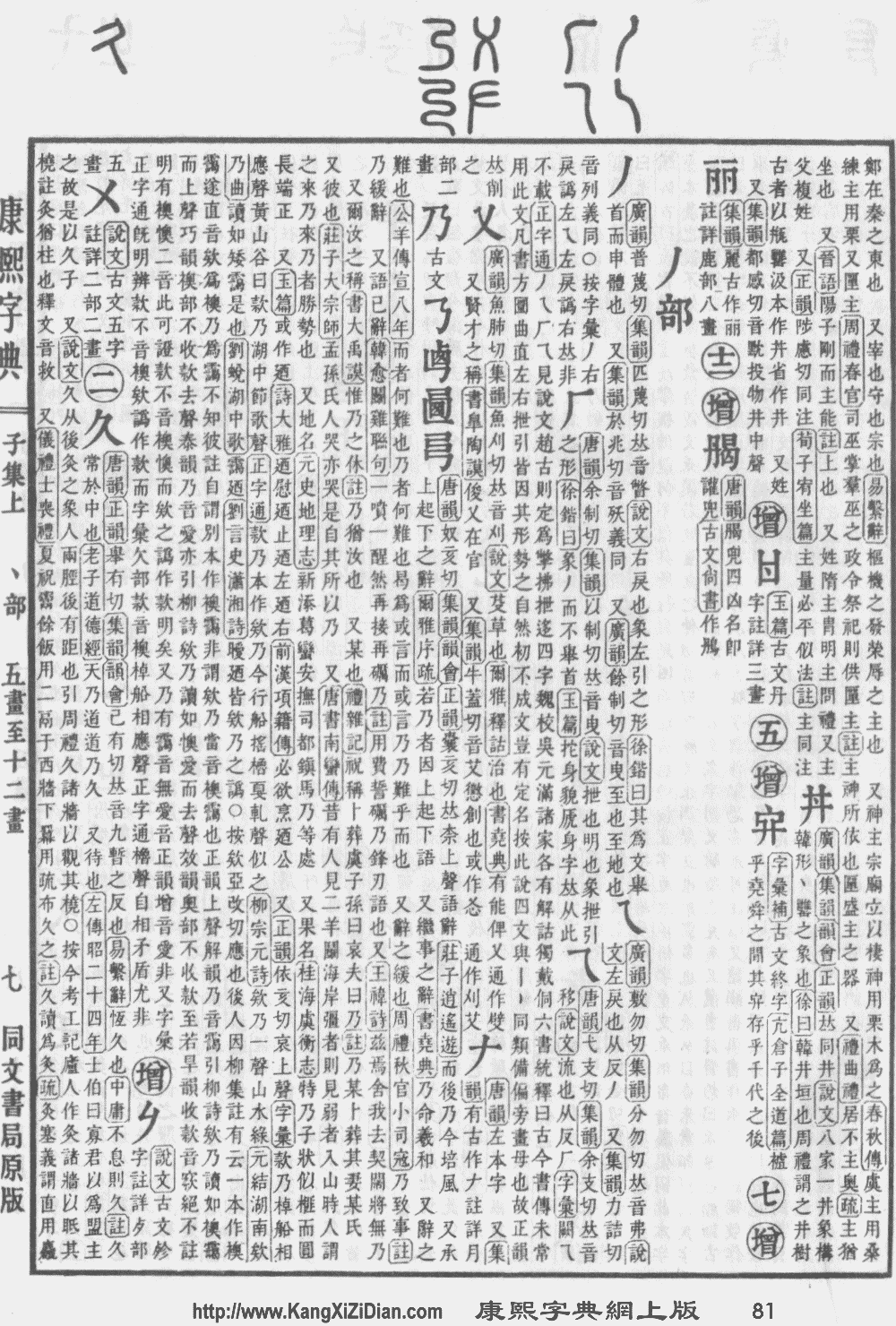
- Kangxi Dictionary: page 81, character 10
- Dai Kanwa Jiten: character 111
- Dae Jaweon: page 165, character 1
- Hanyu Da Zidian (first edition): volume 1, page 31, character 3
- Unihan data for U+4E42
Chinese
| simp. and trad. |
乂 | |
|---|---|---|
Glyph origin
| Historical forms of the character 乂 | ||||||||
|---|---|---|---|---|---|---|---|---|
| Shang | Western Zhou | Shuowen Jiezi (compiled in Han) | Liushutong (compiled in Ming) | |||||
| Oracle bone script | Bronze inscriptions | Small seal script | Transcribed ancient scripts | |||||
 |
 |
 |
 | |||||
|||
|
References: Mostly from Richard Sears' Chinese Etymology site (authorisation),
| ||||||||


Characters in the same phonetic series (乂) (Zhengzhang, 2003)
Pictogram (象形) — a tool similar to a knife (Li Xueqing, 2012).
Etymology
Sense "regulate, govern, orderly" is derived from "to mow, cut, reap"; this sense's origin is ambiguous, possibly from "to cut" > "to trim", etc. (Schuessler, 2007). If so, see 刈 (yì) for etymology.
Pronunciation 1
Definitions
乂
- Original form of 刈 (yì, “to weed; to mow”).
- to govern; to control; to manage; to regulate
- 時則物有間之,自一話一言,我則末,維成德之彥,以乂我受民。 [Classical Chinese, trad.]
- From: Wang Chong, Lun Heng (Discussive Weighing), 80 CE
- Shí zé wù yǒu jiān zhī, zì yīhuàyīyán, wǒ zé mò, wéi chéngdé zhī yàn, yǐ yì wǒ shòu mín. [Pinyin]
- Sometimes things will interfere. Then stick to your words and your speech, and let us be thinking of officers of complete virtues, and to regulate the people whom we have received.
时则物有间之,自一话一言,我则末,维成德之彦,以乂我受民。 [Classical Chinese, simp.]
- to nurture
Compounds
- 乂安 (yì'ān)
- 俊乂
- 俾乂
Pronunciation 2
Japanese
Kanji
乂
- This term needs a translation to English. Please help out and add a translation, then remove the text
{{rfdef}}.
Korean
Hanja
References
Vietnamese
This article is issued from Wiktionary. The text is licensed under Creative Commons - Attribution - Sharealike. Additional terms may apply for the media files.