話
| ||||||||
Translingual
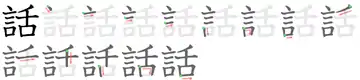
| Stroke order | |||
|---|---|---|---|
 | |||
Han character
話 (Kangxi radical 149, 言+6, 13 strokes, cangjie input 卜口竹十口 (YRHJR), four-corner 02664, composition ⿰訁舌)
Derived characters
References
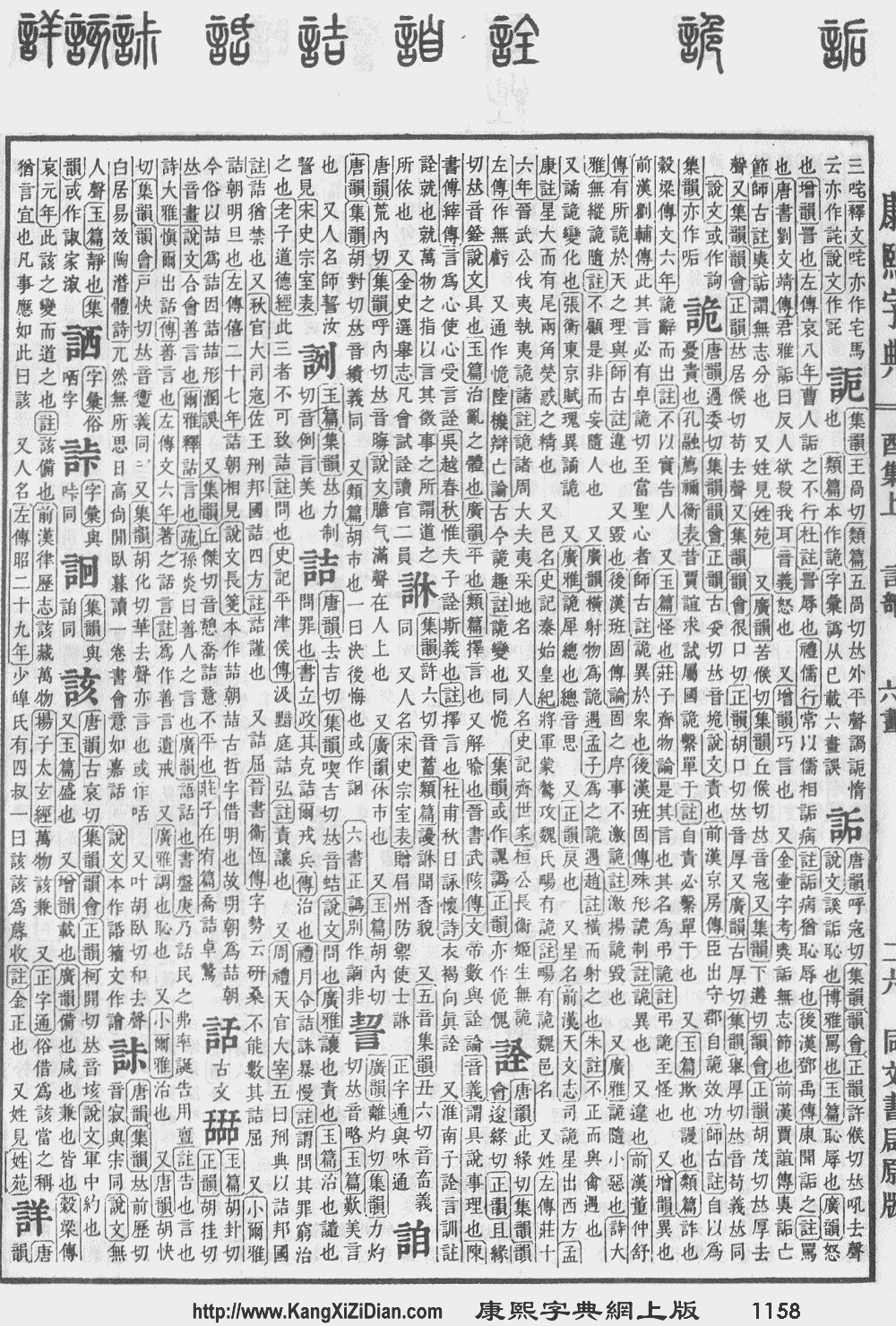
- Kangxi Dictionary: page 1158, character 10
- Dai Kanwa Jiten: character 35441
- Dae Jaweon: page 1624, character 6
- Hanyu Da Zidian (first edition): volume 6, page 3965, character 6
- Unihan data for U+8A71
Chinese
| trad. | 話 | |
|---|---|---|
| simp. | 话 | |
| alternative forms | 䛡 譮 𦧵 諙 舙 | |
Glyph origin
| Historical forms of the character 話 |
|---|
| Shuowen Jiezi (compiled in Han) |
| Small seal script |
 |
| Old Chinese | |
|---|---|
| 咶 | *qʰroːds, *qʰroːds, *ɡroːd |
| 話 | *ɡroːds |
| 刮 | *kroːd |
| 鴰 | *kroːd, *koːd |
| 趏 | *kroːd, *kʰroːd |
| 舌 | *ɡroːd, *ɦbljed |
| 姡 | *ɡroːd, *ɡoːd |
| 頢 | *ɡroːd, *koːd |
| 括 | *koːd |
| 活 | *koːd, *ɡoːd |
| 适 | *koːd, *kʰoːd |
| 栝 | *koːd, *l̥ʰeːmʔ |
| 佸 | *koːd, *ɡoːd |
| 髺 | *koːd |
| 聒 | *koːd |
| 銛 | *koːd, *slem, *l̥ʰeːmʔ |
| 葀 | *koːd |
| 懖 | *koːd |
| 筈 | *koːd, *kʰoːd |
| 萿 | *koːd |
| 蛞 | *kʰoːd |
| 闊 | *kʰoːd |
| 秳 | *ɡoːd |
Phono-semantic compound (形聲/形声, OC *ɡroːds) : semantic 言 (“word”) + phonetic 𠯑 (OC *ɡroːd). The right component is not related to 舌 (OC *ɦbljed, “tongue”).
Etymology
Cognate with 曰 (OC *ɢʷad) according to Sagart (1999); if so, it is from Proto-Sino-Tibetan *grwas (“to speak; word”), whence Tibetan གྲོས་སྡུར་བྱེད་པ (gros sdur byed pa, “to consult; to discuss”) (STEDT).
Pronunciation
Definitions
話
- words; talk; what somebody says (Classifier: 句 m mn)
- story; tale
- dialect; language
- to talk about; to discuss
- (Cantonese, Gan, Hakka, Northern Min, Wu) to say; to refer to; to talk about
- 話緊佢自己/话紧佢自己 [Cantonese] ― waa6 gan2 keoi5 zi6 gei2 [Jyutping] ― talking about himself/herself
- 都話喇!/都话喇! [Cantonese] ― dou1 waa6 laa3! [Jyutping] ― What did I tell you?
- (Cantonese, transitive) to tell (someone something)
- (Cantonese, Hakka, Gan, Wu) to tell someone off; to scold
- (Cantonese) to think; to feel; to consider; to say
- (Cantonese) Sentence-final particle used to ask someone to repeat previous information.
- (Cantonese) quotative: that
- (ACG) episode
Synonyms
- (speech):
- (to say):
- (dialect, language):
Compounds
- 一句話/一句话
- 一席話/一席话 (yīxíhuà)
- 三方通話/三方通话
- 下話/下话
- 不像話/不像话 (bùxiànghuà)
- 不在話下/不在话下 (bùzàihuàxià)
- 不好說話/不好说话
- 不成話/不成话 (bùchénghuà)
- 不打話/不打话
- 不是話/不是话
- 不是話頭/不是话头
- 不會說話/不会说话
- 不聽話/不听话
- 不象話/不象话
- 中國話/中国话 (Zhōngguóhuà)
- 乏話/乏话
- 了話/了话
- 二話/二话
- 二話不說/二话不说
- 二話沒說/二话没说
- 五色話/五色话 (wǔsèhuà)
- 京話/京话
- 亮話/亮话 (liànghuà)
- 人間詞話/人间词话
- 伶仃話/伶仃话
- 來回的話/来回的话
- 侍話/侍话
- 例話/例话
- 佳話/佳话 (jiāhuà)
- 便宜話/便宜话
- 俏皮話/俏皮话
- 俗話/俗话 (súhuà)
- 倒熟話/倒熟话
- 停話/停话
- 假話/假话 (jiǎhuà)
- 傳話/传话 (chuánhuà)
- 傻話/傻话 (shǎhuà)
- 傳話筒/传话筒
- 像話/像话 (xiànghuà)
- 兒話/儿话
- 入話/入话
- 六一詩話/六一诗话
- 公共電話/公共电话
- 公用電話/公用电话 (gōngyòng diànhuà)
- 公道話/公道话 (gōngdaohuà)
- 共話衷腸/共话衷肠
- 冷話/冷话
- 冷齋夜話/冷斋夜话
- 刁話/刁话
- 別話/别话
- 剪燈新話/剪灯新话
- 北方話/北方话 (běifānghuà)
- 厭話/厌话
- 參話頭/参话头
- 叉股子話/叉股子话
- 反話/反话 (fǎnhuà)
- 受話器/受话器 (shòuhuàqì)
- 口水話/口水话
- 口話/口话
- 口頭話/口头话
- 史話/史话 (shǐhuà)
- 古話/古话 (gǔhuà)
- 吉利話/吉利话
- 各說各話/各说各话 (gèshuōgèhuà)
- 吃閒話/吃闲话
- 呆話/呆话
- 哈話/哈话
- 哪兒的話/哪儿的话
- 唐話/唐话 (tánghuà)
- 問話/问话 (wènhuà)
- 喊話/喊话 (hǎnhuà)
- 喪話/丧话
- 喬話/乔话
- 嘉話/嘉话
- 回話/回话 (huíhuà)
- 因話隨話/因话随话
- 困話/困话
- 土話/土话 (tǔhuà)
- 報話機/报话机 (bàohuàjī)
- 塞話/塞话
- 墊話/垫话
- 壞話/坏话 (huàihuà)
- 外江話/外江话
- 外行話/外行话
- 外話/外话
- 外道話/外道话
- 多話/多话
- 夜話/夜话
- 夢話/梦话 (mènghuà)
- 大話/大话 (dàhuà)
- 大離話/大离话
- 太平話/太平话
- 天話/天话
- 夾層話/夹层话
- 夾生話/夹生话
- 奉承話/奉承话
- 套話/套话 (tàohuà)
- 套頭話/套头话
- 好話/好话 (hǎohuà)
- 好話兒/好话儿 (ho̍k-ló-fa) (Hakka)
- 好説話/好说话
- 好說話/好说话 (hǎoshuōhuà)
- 孩子話/孩子话
- 官話/官话 (guānhuà)
- 官話字母/官话字母
- 客套話/客套话 (kètàohuà)
- 客家話/客家话 (Kèjiāhuà)
- 客氣話/客气话
- 家常話/家常话
- 宵話/宵话
- 寄話筒/寄话筒
- 實話/实话 (shíhuà)
- 實話實說/实话实说 (shíhuàshíshuō)
- 寬皮話/宽皮话
- 寬皮說話/宽皮说话
- 寬話/宽话
- 對話/对话 (duìhuà)
- 小話/小话
- 尖話/尖话
- 屁話/屁话 (pìhuà)
- 巧話/巧话
- 希臘神話/希腊神话
- 常話/常话
- 平話/平话 (pínghuà)
- 廢話/废话 (fèihuà)
- 後話/后话
- 心腹話/心腹话
- 怯話/怯话
- 怪話/怪话
- 恭維話/恭维话
- 悄悄話/悄悄话 (qiāoqiāohuà)
- 情話/情话 (qínghuà)
- 愣話/愣话
- 懈話/懈话
- 應酬話/应酬话
- 成話/成话
- 戲話/戏话
- 打住話頭/打住话头
- 打官話/打官话
- 打話/打话 (dǎhuà)
- 打話不同/打话不同
- 打電話/打电话 (dǎ diànhuà)
- 把話/把话
- 扳話/扳话
- 拉話/拉话 (lāhuà)
- 拍話/拍话
- 指東話西/指东话西
- 指空話空/指空话空
- 拿話/拿话
- 指長話短/指长话短
- 挺膊子話/挺膊子话
- 排話/排话
- 換句話說/换句话说 (huànjùhuàshuō)
- 揚州評話/扬州评话
- 插話/插话 (chāhuà)
- 搭話/搭话 (dāhuà)
- 擬話本/拟话本
- 攀話/攀话
- 擺話/摆话
- 攙話接舌/搀话接舌
- 放肆話/放肆话
- 放話/放话 (fànghuà)
- 敏感話題/敏感话题
- 敘話/叙话
- 散話/散话
- 文話/文话 (wénhuà)
- 新話/新话 (Xīnhuà)
- 斷頭話/断头话
- 早期白話/早期白话
- 昏話/昏话 (hūnhuà)
- 普通話/普通话 (pǔtōnghuà)
- 暖心話/暖心话
- 暗話/暗话 (ànhuà)
- 曲話/曲话
- 會話/会话 (huìhuà)
- 有線電話/有线电话
- 有話好說/有话好说 (yǒuhuàhǎoshuō)
- 服話/服话
- 期話/期话
- 村話/村话
- 杭州評話/杭州评话
- 東洋話/东洋话
- 架話/架话
- 格林童話/格林童话
- 梯己話/梯己话
- 梯氣話/梯气话
- 橫話/横话
- 款話/款话
- 正話/正话
- 步話機/步话机 (bùhuàjī)
- 歪話/歪话 (wāihuà)
- 歹話/歹话
- 毛子話/毛子话
- 江湖話/江湖话
- 沒二話/没二话
- 沒有的話/没有的话
- 沒話說/没话说
- 泛話/泛话
- 洋涇話/洋泾话
- 流言混話/流言混话
- 活話/活话
- 洋話/洋话 (yánghuà)
- 浮話/浮话
- 海話/海话
- 混帳話/混帐话
- 清平話/清平话
- 清茶淡話/清茶淡话
- 淨話/净话
- 清話/清话
- 混話/混话 (hùnhuà)
- 淡話/淡话 (dànhuà)
- 淺話/浅话
- 渾話/浑话
- 滄浪詩話/沧浪诗话
- 準話/准话
- 溲話/溲话
- 漂亮話/漂亮话 (piàolianghuà)
- 滿話/满话
- 漢話/汉话 (hànhuà)
- 激話/激话
- 澹話/澹话
- 無生話/无生话
- 無線電話/无线电话 (wúxiàn diànhuà)
- 無話不談/无话不谈 (wúhuàbùtán)
- 無話可說/无话可说 (wúhuàkěshuō)
- 照例話/照例话
- 煉話/炼话
- 熟話/熟话
- 熱話/热话 (rèhuà)
- 熱鬧話/热闹话
- 片兒湯話/片儿汤话
- 狂話/狂话 (kuánghuà)
- 狼煙大話/狼烟大话
- 獃話/獃话
- 玩話/玩话
- 現成話/现成话
- 瑣話/琐话
- 甜話兒/甜话儿
- 甩閑話/甩闲话
- 留話/留话 (liúhuà)
- 畲話/畲话 (Shēhuà)
- 痞話/痞话
- 瘋話/疯话 (fēnghuà)
- 癡話/痴话
- 發話/发话
- 發話器/发话器
- 白話/白话
- 白話八股/白话八股
- 白話小說/白话小说
- 白話戲/白话戏
- 白話文/白话文 (báihuàwén)
- 白話文學/白话文学 (pe̍h-chha̍t-ōe) (Min Nan)
- 白話舌兒/白话舌儿
- 白話詩/白话诗 (báihuàshī)
- 盡頭話/尽头话
- 盤話/盘话
- 直話/直话
- 直話直說/直话直说
- 看圖說話/看图说话
- 看笑話/看笑话 (kànxiàohuà)
- 看話禪/看话禅
- 真心話/真心话 (zhēnxīnhuà)
- 真話/真话 (zhēnhuà)
- 瞎三話四/瞎三话四
- 瞎話/瞎话 (xiāhuà)
- 知己話/知己话
- 知心話/知心话 (zhīxīnhuà)
- 短話/短话
- 破話/破话
- 破頭話/破头话
- 硬話/硬话
- 碎話/碎话
- 磣話/碜话
- 神話/神话 (shénhuà)
- 神說鬼話/神说鬼话
- 福佬話/福佬话 (Fúlǎohuà)
- 福州評話/福州评话
- 禪話/禅话
- 私心話/私心话
- 私房話/私房话 (sīfánghuà)
- 私話/私话 (sīhuà)
- 秘話/秘话
- 空話/空话 (kōnghuà)
- 空頭話/空头话
- 童話/童话 (tónghuà)
- 童話劇/童话剧
- 笑話/笑话 (xiàohuà)
- 笑話兒/笑话儿 (xiàohuàr)
- 笑話奇談/笑话奇谈
- 答話/答话 (dáhuà)
- 粗話/粗话 (cūhuà)
- 細話/细话
- 絕話/绝话
- 緊話/紧话
- 罵話/骂话
- 美話/美话
- 老實話/老实话
- 老橛話兒/老橛话儿
- 老話/老话 (lǎohuà)
- 老話題/老话题
- 耍話/耍话
- 耽話/耽话
- 聽話/听话 (tīnghuà)
- 胡話/胡话 (húhuà)
- 自動電話/自动电话
- 自說自話/自说自话
- 自説自話/自说自话
- 興頭話/兴头话
- 舊話/旧话
- 良心話/良心话
- 花話/花话
- 茶話/茶话 (cháhuà)
- 茶話會/茶话会 (cháhuàhuì)
- 茶餘客話/茶余客话
- 葷笑話/荤笑话
- 落話/落话
- 蕙風詞話/蕙风词话
- 藍青官話/蓝青官话 (lánqīng guānhuà)
- 虛話/虚话
- 蠢話/蠢话 (chǔnhuà)
- 蠻話/蛮话
- 行動電話/行动电话 (xíngdòng diànhuà)
- 行家話/行家话
- 行話/行话 (hánghuà)
- 衷腸話/衷肠话
- 西湖佳話/西湖佳话
- 西風的話/西风的话
- 見話/见话
- 言話/言话 (xiánhuà)
- 討話/讨话
- 訓話/训话 (xùnhuà)
- 訪話/访话
- 評話/评话 (pínghuà)
- 詞話/词话
- 話下/话下
- 話不投機/话不投机
- 話不相投/话不相投
- 話不虛傳/话不虚传
- 話中帶刺/话中带刺
- 話中有話/话中有话 (huàzhōngyǒuhuà)
- 話事/话事
- 話亭/话亭
- 話休絮煩/话休絮烦
- 話信/话信
- 話兒/话儿 (huàr)
- 話冷雞窗/话冷鸡窗
- 話分兩頭/话分两头
- 話別/话别
- 話劇/话剧 (huàjù)
- 話務員/话务员
- 話匣子/话匣子 (huàxiázi)
- 話口/话口
- 話口兒/话口儿 (huàkǒur)
- 話口袋子/话口袋子
- 話名/话名
- 話夜/话夜
- 話家常/话家常 (huà jiācháng)
- 話尾/话尾
- 話岔兒/话岔儿
- 話差/话差
- 話巴/话巴
- 話巴戲/话巴戏
- 話弄/话弄
- 話心/话心
- 話意/话意
- 話把/话把 (huàbà)
- 話把戲/话把戏
- 話拉兒/话拉儿
- 話拉拉兒/话拉拉儿
- 話拳/话拳
- 話文/话文
- 話料/话料
- 話本/话本 (huàběn)
- 話材/话材
- 話柄/话柄
- 話梅/话梅 (huàméi)
- 話機/话机
- 話次/话次
- 話法/话法
- 話泉/话泉
- 話流/话流
- 話癆/话痨 (huàláo)
- 話白/话白
- 話盒子/话盒子
- 話眼/话眼
- 話碴/话碴
- 話私/话私
- 話端/话端
- 話筒/话筒 (huàtǒng)
- 話箱/话箱
- 話簍子/话篓子
- 話絮/话絮
- 話緒/话绪
- 話者/话者
- 話聲/话声
- 話胚/话胚
- 話舊/话旧 (huàjiù)
- 話茬/话茬
- 話茬兒/话茬儿 (huàchár)
- 話表/话表
- 話裡套話/话里套话
- 話裏帶刺/话里带刺
- 話裏有刺/话里有刺
- 話裏有話/话里有话
- 話裡有話/话里有话
- 話裡藏鬮/话里藏阄
- 話裏藏鬮/话里藏阄
- 話言/话言
- 話言話語/话言话语
- 詩話/诗话 (shīhuà)
- 詭話/诡话
- 話說/话说 (huàshuō)
- 話語/话语 (huàyǔ)
- 話談/话谈
- 話論/话论
- 話資/话资
- 話賬/话账
- 話趕話/话赶话
- 話路/话路
- 話鋒/话锋 (huàfēng)
- 話長/话长
- 話長短/话长短
- 話長說短/话长说短
- 話闊/话阔
- 話雖如此/话虽如此 (huàsuīrúcǐ)
- 話雨/话雨
- 話靶/话靶 (huàbǎ)
- 話靶戲/话靶戏
- 話音/话音 (huàyīn)
- 話頭/话头 (huàtóu)
- 話題/话题 (huàtí)
- 話風/话风 (huàfēng)
- 說來話長/说来话长 (shuōláihuàcháng)
- 說古話/说古话
- 說夢話/说梦话 (shuō mènghuà)
- 說大話/说大话 (shuō dàhuà)
- 說朝南話/说朝南话
- 說淡話/说淡话
- 說清話/说清话
- 說滿話/说满话
- 說瞎話/说瞎话
- 說矮話/说矮话
- 說笑話/说笑话
- 說話/说话 (shuōhuà)
- 語話/语话
- 誒話/诶话 (ê̄huà)
- 誑話/诳话 (kuánghuà)
- 說話中間/说话中间
- 說話之間/说话之间
- 說話人/说话人
- 說話兒/说话儿
- 說詩啐話/说诗啐话
- 說話客/说话客
- 說話的/说话的
- 說話算話/说话算话
- 說諢話/说诨话
- 說那裏話/说那里话
- 說長話短/说长话短
- 說閑話/说闲话
- 說閒話/说闲话
- 說閒話兒/说闲话儿
- 說響話/说响话
- 說風涼話/说风凉话
- 說風話/说风话
- 說鬼話/说鬼话
- 調皮話/调皮话
- 談話/谈话 (tánhuà)
- 調話/调话
- 談話會/谈话会
- 諢話/诨话
- 謔浪話頭/谑浪话头
- 謊話/谎话 (huǎnghuà)
- 講話/讲话 (jiǎnghuà)
- 謊話連篇/谎话连篇
- 譯話/译话
- 讌話/宴话
- 讓話/让话
- 費話/费话
- 貳話/贰话
- 賊話兒/贼话儿
- 賦話/赋话
- 賠話/赔话
- 贅話/赘话
- 走話/走话
- 越洋電話/越洋电话
- 趣話/趣话
- 軟話/软话
- 軼話/轶话
- 轉話/转话
- 農話/农话
- 迷湯話/迷汤话
- 送話/送话
- 送話器/送话器 (sònghuàqì)
- 通話/通话 (tōnghuà)
- 逸話/逸话 (yìhuà)
- 過話/过话 (guòhuà)
- 道話/道话
- 過頭話/过头话
- 遠話/远话
- 遺話/遗话
- 那話兒/那话儿 (nàhuàr)
- 酒話/酒话 (jiǔhuà)
- 醉話/醉话 (zuìhuà)
- 醜話/丑话 (chǒuhuà)
- 醫話/医话
- 重話/重话 (zhònghuà)
- 野話/野话
- 鋪頭話/铺头话
- 錯話/错话
- 錄音電話/录音电话 (lùyīn diànhuà)
- 長話/长话 (chánghuà)
- 長話短說/长话短说 (chánghuàduǎnshuō)
- 長途電話/长途电话 (chángtú diànhuà)
- 門面話/门面话
- 閒話/闲话 (xiánhuà)
- 開話/开话
- 閒話家常/闲话家常
- 閩北話/闽北话
- 閩南話/闽南话 (mǐnnánhuà)
- 陪話/陪话 (péihuà)
- 隔壁聽話/隔壁听话
- 隨園詩話/随园诗话
- 雜話/杂话
- 難說話/难说话
- 雨村曲話/雨村曲话
- 電視電話/电视电话
- 電話/电话 (diànhuà)
- 電話亭/电话亭 (diànhuàtíng)
- 電話傳真/电话传真
- 電話卡/电话卡 (diànhuàkǎ)
- 電話國碼/电话国码
- 電話局/电话局
- 電話會議/电话会议 (diànhuà huìyì)
- 電話本/电话本
- 電話機/电话机 (diànhuàjī)
- 電話祕書/电话秘书
- 電話筒/电话筒
- 電話簿/电话簿 (diànhuàbù)
- 電話線/电话线 (diànhuàxiàn)
- 電話號碼/电话号码 (diànhuà hàomǎ)
- 電話訪問/电话访问
- 電話費/电话费
- 電話錄音/电话录音
- 面子話/面子话
- 響亮話/响亮话
- 順口話/顺口话
- 頑話/顽话
- 題外話/题外话 (tíwàihuà)
- 風凉話/风凉话
- 風流話靶/风流话靶
- 風涼話/风凉话 (fēngliánghuà)
- 風話/风话
- 體己話/体己话
- 髒話/脏话 (zānghuà)
- 高話/高话
- 鬆話/松话
- 鬥話/斗话
- 鬧笑話/闹笑话 (nào xiàohuà)
- 鬼話/鬼话 (guǐhuà)
- 鬼話連篇/鬼话连篇 (guǐhuàliánpiān)
- 魘話/魇话
- 黃話/黄话
- 黑話/黑话 (hēihuà)
Descendants
Others:
References
- Dictionary of Chinese Character Variants (教育部異體字字典), A03824
- “Entry #10081”, in 臺灣閩南語常用詞辭典 [Dictionary of Frequently-Used Taiwan Minnan] (overall work in Mandarin and Hokkien), Ministry of Education, R.O.C., 2023.
- “話”, in 漢語多功能字庫 (Multi-function Chinese Character Database), 香港中文大學 (the Chinese University of Hong Kong), 2014–
Japanese
Readings
Etymology 1
| Kanji in this term |
|---|
| 話 |
| はなし Grade: 2 |
| kun’yomi |
| Alternative spellings |
|---|
| 話し (informal or proscribed) 噺 (especially rakugo) 咄 (especially rakugo) |
From Old Japanese, from Proto-Japonic *panas-.
Noun
話 • (hanashi)
- talking; speaking; speech; conversation
- 何の話をしてるの?
- Nan no hanashi o shiteru no?
- What are you guys talking about?
- 何の話をしてるの?
- story; tale; narrative
- 「ざしき童子のはなし」
- “Zashiki-bokko no Hanashi”
- The Story of the Zashiki-bokko
- 「ざしき童子のはなし」
- a topic; a subject; that which is spoken about
- rumors; rumours
- negotiation; consultation; discussion
- lecture; speech
Etymology 2
| Kanji in this term |
|---|
| 話 |
| わ Grade: 2 |
| kan’yōon |
(This etymology is missing or incomplete. Please add to it, or discuss it at the Etymology scriptorium.)
References
- Matsumura, Akira, editor (2006), 大辞林 [Daijirin] (in Japanese), Third edition, Tōkyō: Sanseidō, →ISBN
Korean
Etymology
From Middle Chinese 話 (MC hwaejH).
| Historical readings |
|---|
|
Pronunciation
- (SK Standard/Seoul) IPA(key): [ɸwa̠]
- Phonetic hangul: [화]
Compounds
Kunigami
Alternative forms
Etymology
From Proto-Ryukyuan *panas-, from Proto-Japonic *panas-.
Pronunciation
- IPA(key): /pʰanaːɕiː/
Miyako
Alternative forms
Etymology
From Proto-Ryukyuan *panas-, from Proto-Japonic *panas-.
Pronunciation
- IPA(key): /panass̩/
Okinawan
Etymology
From Proto-Ryukyuan *panas-, from Proto-Japonic *panas-.
Alternative forms
Etymology
| Kanji in this term |
|---|
| 話 |
| はなし Grade: 2 |
| kun’yomi |
Pronunciation
- IPA(key): /hanaɕi/
Vietnamese
Yaeyama
Alternative forms
Etymology
From Proto-Ryukyuan *panas-, from Proto-Japonic *panas-.
Pronunciation
- IPA(key): /panasɨ/