狗
| ||||||||
Translingual
| Stroke order | |||
|---|---|---|---|
 | |||
| Stroke order | |||
|---|---|---|---|
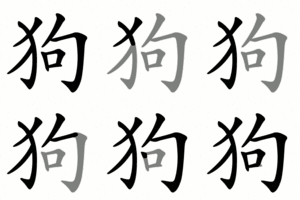 | |||
Han character
狗 (Kangxi radical 94, 犬+5, 8 strokes, cangjie input 大竹心口 (KHPR), four-corner 47220, composition ⿰犭句)
Derived characters
- 𭲉, 𬍉, 𬍌, 𮏛, 𤟳
References
- Kangxi Dictionary: page 709, character 12
- Dai Kanwa Jiten: character 20345
- Dae Jaweon: page 1121, character 22
- Hanyu Da Zidian (first edition): volume 2, page 1341, character 5
- Unihan data for U+72D7

Chinese
| simp. and trad. |
狗 | |
|---|---|---|
| alternative forms | 豿 “cub” 㺃 | |
Glyph origin
| Historical forms of the character 狗 | ||
|---|---|---|
| Warring States | Shuowen Jiezi (compiled in Han) | Liushutong (compiled in Ming) |
| Chu slip and silk script | Small seal script | Transcribed ancient scripts |
 |
 |
 |
| Old Chinese | |
|---|---|
| 勾 | *koː, *koːs |
| 鉤 | *koː |
| 鴝 | *koː, *ɡo |
| 句 | *koː, *koːs, *kos, *ɡo |
| 夠 | *koː, *koːs, *kʰoː |
| 枸 | *koː, *koːʔ, *koʔ |
| 軥 | *koː, *koːs, *ɡo |
| 狗 | *koːʔ |
| 苟 | *koːʔ |
| 岣 | *koːʔ, *ko |
| 笱 | *koːʔ |
| 玽 | *koːʔ |
| 耇 | *koːʔ |
| 豿 | *koːʔ, *qʰroːɡ |
| 敂 | *koːʔ |
| 怐 | *koːs, *kʰoːs, *qʰoːs, *kos |
| 雊 | *koːs |
| 竘 | *kʰoːʔ, *kʰoʔ |
| 齁 | *qʰoː |
| 呴 | *qʰoːʔ, *qʰos |
| 蚼 | *qʰoːʔ, *ɡo |
| 豞 | *qʰoːs |
| 訽 | *qʰoːs, *ɡoːs |
| 佝 | *qʰoːs |
| 拘 | *ko |
| 駒 | *ko |
| 眗 | *ko |
| 跔 | *ko |
| 鮈 | *ko |
| 痀 | *ko |
| 蒟 | *koʔ, *kos |
| 絇 | *kos, *ɡo |
| 邭 | *kos |
| 劬 | *ɡo |
| 朐 | *ɡo |
| 鼩 | *ɡo |
| 斪 | *ɡo |
| 翑 | *ɡo |
| 葋 | *ɡo |
| 姁 | *ɡo, *qʰo, *qʰoʔ, *qʰos |
| 欨 | *qʰo, *qʰoʔ |
| 喣 | *qʰoʔ |
| 煦 | *qʰoʔ, *qʰos |
| 昫 | *qʰos |
Phono-semantic compound (形聲/形声, OC *koːʔ) : semantic 犬 (“dog”) + phonetic 句 (OC *koː, *koːs, *kos, *ɡo).
Etymology
From some language ancestral to modern Hmong-Mien languages, from Proto-Hmong-Mien *qluwˣ (“dog”), perhaps from Proto-Austronesian *(u-)(ŋ)kuɣkuɣ (“dog”) (Norman, 1988; Benedict, 1996).
Alternatively, STEDT derives this from Proto-Sino-Tibetan *d-kʷəj-n (“dog”), whence also 犬 (OC *kʰʷeːnʔ).
Less likely, it may be related to 駒 (OC *ko, “foal”), 羔 (OC *kluː, “lamb”), 𤘽 (“calf”) (Wang, 1982).
Pronunciation
Definitions
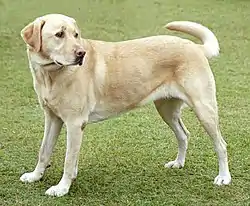
狗
- dog (Classifier: 隻/只 m c mn; 條/条 m)
- (derogatory) something or someone unpleasant
- Used as an attributive.
- (self-deprecatory) a miserable person (used in compounds)
- (Hong Kong, neologism, derogatory) police; pig; po-po
- (chiefly Beijing Mandarin) to flatter
- (Cantonese) cunning
- (obsolete) cub; young bear or tiger
- a surname
Synonyms
- (dog):
- (Hong Kong: police): 警犬 (jǐngquǎn)
Compounds
- 一塊羊肉落在狗口裡/一块羊肉落在狗口里
- 人急懸梁,狗急跳牆/人急悬梁,狗急跳墙
- 人模狗樣/人模狗样 (rénmógǒuyàng)
- 偷狗戲雞/偷狗戏鸡
- 偷貓遞狗/偷猫递狗
- 偷雞吊狗/偷鸡吊狗
- 偷雞摸狗/偷鸡摸狗 (tōujīmōgǒu)
- 偷雞盜狗/偷鸡盗狗
- 兔死狗烹 (tùsǐgǒupēng)
- 兔盡狗烹/兔尽狗烹
- 功人功狗
- 功狗
- 功狗功人
- 北京狗 (běijīnggǒu)
- 咬人狗
- 咬人的狗兒不露齒/咬人的狗儿不露齿
- 哈巴狗
- 哈巴狗咬虼蚤
- 唔食狗肉撈狗汁/唔食狗肉捞狗汁
- 喪家之狗/丧家之狗 (sàngjiāzhīgǒu)
- 喪家狗/丧家狗
- 國狗/国狗
- 土狗 (tǔgǒu)
- 土龍芻狗/土龙刍狗
- 塞狗洞
- 大丹狗
- 天狗 (tiāngǒu)
- 天狗吃月
- 天狗吞月
- 天狗熱/天狗热 (tiāngǒurè)
- 天狗螺
- 天狗食月 (tiāngǒu shíyuè)
- 天落饅頭狗造化/天落馒头狗造化
- 嫁狗隨狗/嫁狗随狗
- 嫁雞隨雞,嫁狗隨狗/嫁鸡随鸡,嫁狗随狗 (jià jī suí jī, jià gǒu suí gǒu)
- 寧塞城門,不填狗洞/宁塞城门,不填狗洞
- 小奶狗 (xiǎonǎigǒu)
- 屠狗
- 屠狗之輩/屠狗之辈
- 巴兒狗/巴儿狗 (bārgǒu)
- 幫狗吃食/帮狗吃食
- 弄狗相咬
- 引狗入寨
- 懸羊頭賣狗肉/悬羊头卖狗肉 (xuán yángtóu mài gǒuròu)
- 打人罵狗/打人骂狗
- 打狗 (Dǎgǒu)
- 打落水狗 (dǎluòshuǐgǒu)
- 拖狗皮
- 指豬罵狗/指猪骂狗
- 指雞罵狗/指鸡骂狗
- 捉雞罵狗/捉鸡骂狗
- 掛羊頭煮狗肉/挂羊头煮狗肉
- 掛羊頭賣狗肉/挂羊头卖狗肉 (guà yángtóu mài gǒuròu)
- 摸雞偷狗/摸鸡偷狗
- 攬狗屎/揽狗屎
- 替狗奪食/替狗夺食
- 死狗
- 殺狗勸夫/杀狗劝夫
- 殺狗記/杀狗记
- 母狗 (mǔgǒu)
- 泥豬瓦狗/泥猪瓦狗
- 流浪狗 (liúlànggǒu)
- 海狗 (hǎigǒu)
- 烏狗吃食,白狗當災/乌狗吃食,白狗当灾
- 無聲狗咬死人/无声狗咬死人
- 熱狗/热狗 (règǒu)
- 牛黃狗寶/牛黄狗宝
- 狗仔 (gǒuzǎi)
- 狗仗人勢/狗仗人势
- 狗仗官勢/狗仗官势
- 狗偷鼠竊/狗偷鼠窃
- 狗兔聽提/狗兔听提
- 狗刨 (gǒupáo)
- 狗刨兒/狗刨儿
- 狗口裡吐不出象牙/狗口里吐不出象牙
- 狗吃屎
- 狗吃熱屎/狗吃热屎
- 狗吠之警
- 狗吠之驚/狗吠之惊
- 狗吠非主
- 狗命
- 狗咬 (gǒuyǎo)
- 狗咬呂洞賓/狗咬吕洞宾 (gǒu yǎo Lǚ Dòngbīn)
- 狗咬呂洞賓——不識好人心/狗咬吕洞宾——不识好人心 (gǒu yǎo Lǚ Dòngbīn, bùshí hǎorén xīn)
- 狗咬狗 (gǒuyǎogǒu)
- 狗咬狗骨
- 狗嘴裡吐不出象牙/狗嘴里吐不出象牙 (gǒu zuǐ lǐ tǔ bù chū xiàngyá)
- 狗嘴裡還有象牙/狗嘴里还有象牙
- 狗嘴長不出象牙/狗嘴长不出象牙
- 狗套頭/狗套头
- 狗子 (gǒuzi)
- 狗子夾尾巴/狗子夹尾巴
- 狗官 (gǒuguān)
- 狗寶/狗宝
- 狗屁 (gǒupì)
- 狗屁不通 (gǒupìbùtōng)
- 狗屁倒灶 (gǒupìdǎozào)
- 狗尾續貂/狗尾续貂 (gǒuwěixùdiāo)
- 狗尾草 (gǒuwěicǎo)
- 狗屎 (gǒushǐ)
- 狗屋 (gǒuwū)
- 狗屎堆 (gǒushǐduī)
- 狗屠
- 狗屠角牴/狗屠角抵
- 狗崽子 (gǒuzǎizi)
- 狗彘
- 狗彘不如
- 狗彘不若 (gǒuzhìbùruò)
- 狗彘不食
- 狗心狗行
- 狗急跳牆/狗急跳墙 (gǒujítiàoqiáng)
- 狗才
- 狗拿耗子
- 狗探湯/狗探汤
- 狗攬三堆屎/狗揽三堆屎
- 狗改不了吃屎 (gǒu gǎi bùliǎo chī shǐ)
- 狐朋狗友 (húpénggǒuyǒu)
- 狐朋狗黨/狐朋狗党
- 狗材
- 狗毛
- 狗氣/狗气
- 狗氣殺/狗气杀
- 狗洞
- 狗烹錡釜/狗烹锜釜
- 狗熊 (gǒuxióng)
- 狗爪子
- 狗牌 (gǒupái)
- 狐狸狗
- 狗獾 (gǒuhuān)
- 狗瘦主人羞
- 狗皮倒灶
- 狗皮膏藥/狗皮膏药
- 狗盜/狗盗
- 狗盜雞鳴/狗盗鸡鸣
- 狗盜鼠竊/狗盗鼠窃
- 狗監/狗监
- 狗眼看人低 (gǒuyǎn kàn rén dī)
- 狗矢
- 狗窩/狗窝 (gǒuwō)
- 狗竇/狗窦 (gǒudòu)
- 狗竇大開/狗窦大开
- 狗站
- 狗續貂尾/狗续貂尾
- 狐群狗黨/狐群狗党 (húqún-gǒudǎng)
- 狗肉 (gǒuròu)
- 狗肺狼心 (gǒufèilángxīn)
- 狗腿 (gǒutuǐ)
- 狗腿子 (gǒutuǐzi)
- 狗膽包天/狗胆包天
- 狗臉生六月之霜/狗脸生六月之霜
- 狗苟
- 狗苟蠅營/狗苟蝇营
- 狗蚤
- 狗蝨/狗虱 (gǒushī)
- 狗血 (gǒuxuè)
- 狗血噴臉/狗血喷脸
- 狗血噴頭/狗血喷头 (gǒuxuèpēntóu)
- 狗血淋頭/狗血淋头 (gǒuxuèlíntóu)
- 狗行狼心
- 狗衝/狗冲
- 狗豆子
- 狗賊/狗贼
- 狗追耗子
- 狗長尾巴尖兒/狗长尾巴尖儿
- 狗雜種/狗杂种 (gǒuzázhǒng)
- 狗頭上生角/狗头上生角
- 狗頭軍師/狗头军师 (gǒutóujūnshī)
- 狗顛兒/狗颠儿
- 狗顛屁股/狗颠屁股
- 狗食
- 狗馬/狗马
- 狗馬之心/狗马之心
- 狗馬聲色/狗马声色
- 狗骨頭/狗骨头
- 狐鳴狗盜/狐鸣狗盗
- 狗黨狐群/狗党狐群
- 狡兔死,良狗烹
- 狼心狗幸 (lángxīn gǒu xìng)
- 狼心狗肺 (lángxīngǒufèi)
- 狼心狗行 (láng xīn gǒu xíng)
- 狼狗 (lánggǒu)
- 獅子狗/狮子狗 (shīzigǒu)
- 獵狗/猎狗 (liègǒu)
- 獾狗
- 畫虎成狗/画虎成狗
- 畫虎類狗/画虎类狗
- 痟狗湧/痟狗涌 (siáu-káu-éng)
- 痟狗舂墓壙/痟狗舂墓圹 (siáu káu cheng bōng-khòng)
- 瘈狗
- 瘋狗/疯狗 (fēnggǒu)
- 瘋狗浪/疯狗浪 (fēnggǒulàng)
- 瘋狗潮/疯狗潮
- 癩皮狗/癞皮狗 (làipígǒu)
- 白衣蒼狗/白衣苍狗 (báiyī-cānggǒu)
- 白雲蒼狗/白云苍狗 (báiyún-cānggǒu)
- 看家狗
- 笨狗
- 羊肉落在狗嘴裡/羊肉落在狗嘴里
- 羊頭狗肉/羊头狗肉 (yángtóugǒuròu)
- 耍死狗
- 耍狗熊
- 耷尾狗
- 聲色狗馬/声色狗马
- 肉包子打狗 (ròubāozi dǎ gǒu)
- 臘腸狗/腊肠狗
- 舔狗 (tiǎngǒu)
- 芻狗/刍狗 (chúgǒu)
- 莠狗尾草
- 落水狗
- 落水狗上岸
- 落水狗上岸——窮抖/落水狗上岸——穷抖
- 落狗屎
- 落閘放狗/落闸放狗
- 蠅營狗苟/蝇营狗苟 (yíngyínggǒugǒu)
- 行同狗彘
- 行同狗豨
- 行若狗彘 (xíngruògǒuzhì)
- 見兔呼狗/见兔呼狗
- 豬兄狗弟/猪兄狗弟
- 豬朋狗友/猪朋狗友 (zhūpénggǒuyǒu)
- 豬毋大,大對狗去/猪毋大,大对狗去 (ti m̄ tōa, tōa tùi káu khì) (Min Nan)
- 豬狗不如/猪狗不如 (zhūgǒubùrú)
- 賣狗懸羊/卖狗悬羊
- 赤狗日
- 走狗 (zǒugǒu)
- 走狗烹
- 跖狗吠堯/跖狗吠尧
- 跑狗場/跑狗场
- 跟尾狗
- 踏狗尾
- 踹狗尾
- 遛狗 (liùgǒu)
- 金窩銀窩不如自己的狗窩/金窝银窝不如自己的狗窝
- 鑽狗洞/钻狗洞
- 關門打狗,無路可走/关门打狗,无路可走
- 阿崩叫狗,越叫越走
- 阿崩咬狗虱,唔死有排慌
- 阿狗阿貓/阿狗阿猫 (āgǒu'āmāo)
- 阿豬阿狗/阿猪阿狗
- 阿貓阿狗/阿猫阿狗 (āmāo'āgǒu)
- 雞零狗碎/鸡零狗碎
- 雞飛狗走/鸡飞狗走 (jīfēigǒuzǒu)
- 雞飛狗跳/鸡飞狗跳 (jīfēigǒutiào)
- 雞鳴狗吠/鸡鸣狗吠
- 雞鳴狗盜/鸡鸣狗盗 (jīmínggǒudào)
- 飛鷹走狗/飞鹰走狗
- 餓狗搶屎/饿狗抢屎
- 驢心狗肺/驴心狗肺
- 鬣狗 (liègǒu)
- 鬥雞走狗/斗鸡走狗
- 魚狗/鱼狗 (yúgǒu)
- 鳥不生蛋,狗不拉屎/鸟不生蛋,狗不拉屎
- 黑狗子
- 鼠竊狗偷/鼠窃狗偷
- 鼠竊狗盜/鼠窃狗盗
See also
References
- “Entry #4345”, in 臺灣閩南語常用詞辭典 [Dictionary of Frequently-Used Taiwan Minnan] (overall work in Mandarin and Hokkien), Ministry of Education, R.O.C., 2023.
- Peyraube, Alain. "Ancient Chinese." The Cambridge Encyclopedia of the World's Ancient Languages. Ed. Roger D. Woodard. Cambridge UP, 2004. 1012.
Japanese
Compounds
Etymology 1
| Kanji in this term |
|---|
| 狗 |
| いぬ Hyōgaiji |
| kun’yomi |
| For pronunciation and definitions of 狗 – see the following entry. | ||
| ||
| (This term, 狗, is an alternative spelling of the above term.) |
Etymology 2
| Kanji in this term |
|---|
| 狗 |
| えぬ Hyōgaiji |
| kun’yomi |
First cited to the Wamyō Ruijushō of 934 CE.[1]
Ultimate derivation uncertain. Theories include a fusion of わ (*wa-, diminutive prefix?) + 犬 (inu, “dog”), an ancient nativized borrowing from Old Chinese 犬 (OC *kʰʷeːnʔ, “dog”), in turn, from Proto-Sino-Tibetan *d-kʷəj-n, or an unraised vowel extension of Proto-Japonic *enu (“dog”). (Can this(+) etymology be sourced?)
Pronunciation
- IPA(key): [e̞nɯ̟ᵝ]
Usage notes
Obsolete. Not listed in most dictionaries.
References
- “狗”, in 日本国語大辞典 (Nihon Kokugo Daijiten, “Nihon Kokugo Daijiten”) (in Japanese), concise edition, Tōkyō: Shogakukan, 2000
Vietnamese
Han character
狗: Hán Việt readings: cẩu (
狗: Nôm readings: cẩu[1][3][5]
- This term needs a translation to English. Please help out and add a translation, then remove the text
{{rfdef}}.
References
- Nguyễn et al. (2009).
- Trần (2004).
- Bonet (1899).
- Génibrel (1898).
- Taberd & Pigneau de Béhaine (1838).