嫌
| ||||||||
Translingual
Han character
嫌 (Kangxi radical 38, 女+10, 13 strokes, cangjie input 女廿難金 (VTXC), four-corner 48437, composition ⿰女兼)
Derived characters
- 𥽎, 𫅸
References
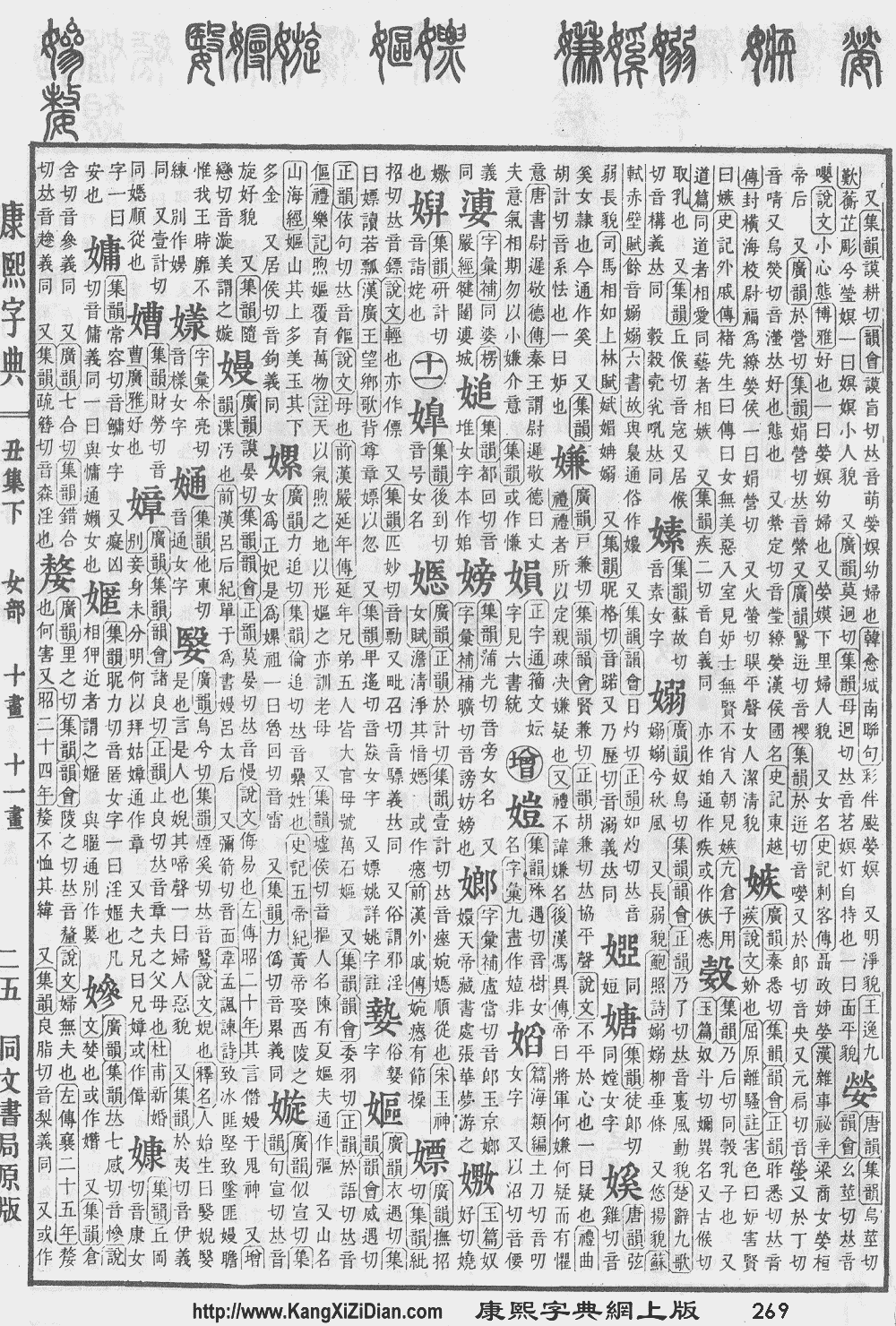
- Kangxi Dictionary: page 269, character 9
- Dai Kanwa Jiten: character 6618
- Dae Jaweon: page 536, character 20
- Hanyu Da Zidian (first edition): volume 2, page 1073, character 8
- Unihan data for U+5ACC
Chinese
| trad. | 嫌 | |
|---|---|---|
| simp. # | 嫌 | |
| 2nd round simp. | 𢙝 | |
Glyph origin
| Historical forms of the character 嫌 |
|---|
| Shuowen Jiezi (compiled in Han) |
| Small seal script |
 |
Characters in the same phonetic series (兼) (Zhengzhang, 2003)
| Old Chinese | |
|---|---|
| 譧 | *r'eːms |
| 賺 | *r'eːms |
| 尲 | *kreːm |
| 鹻 | *kreːmʔ |
| 歉 | *kʰreːms, *kʰreːmʔ, *kʰeːmʔ, *kʰeːms |
| 槏 | *kʰreːmʔ |
| 鰜 | *ɡreːm, *keːm |
| 稴 | *ɡreːm, *ɡ·reːm, *ɡ·reːmʔ, *ɡ·reːms, *ɡeːm |
| 豏 | *ɡreːmʔ, *ɡreːms |
| 甉 | *ɡreːmʔ, *ɡraːm |
| 廉 | *ɡ·rem |
| 鎌 | *ɡ·rem |
| 鬑 | *ɡ·rem, *ɡ·reːm |
| 鐮 | *ɡ·rem |
| 簾 | *ɡ·rem |
| 薕 | *ɡ·rem, *ɡ·reːm |
| 蠊 | *ɡ·rem |
| 嬚 | *ɡ·remʔ |
| 溓 | *ɡ·remʔ, *ɡ·reːm, *ɡ·reːmʔ |
| 嵰 | *kʰremʔ |
| 隒 | *ŋɡremʔ |
| 熑 | *ɡ·reːm |
| 濂 | *ɡ·reːm |
| 燫 | *ɡ·reːm |
| 兼 | *keːm, *keːms |
| 縑 | *keːm |
| 鶼 | *keːm |
| 蒹 | *keːm |
| 搛 | *keːm |
| 謙 | *kʰeːm |
| 膁 | *kʰeːmʔ |
| 嗛 | *kʰeːmʔ |
| 慊 | *kʰeːmʔ, *kʰeːb |
| 傔 | *kʰeːms |
| 馦 | *qʰeːm |
| 嫌 | *ɡeːm |
| 鼸 | *ɡeːmʔ |
| 尷 | *kreːm |
Phono-semantic compound (形聲/形声, OC *ɡeːm) : semantic 女 (“woman”) + phonetic 兼 (OC *keːm, *keːms).
Pronunciation
Definitions
嫌
- to be sick of; to be tired of; to be fed up with
- (Cantonese, transitive) to mind; to dislike; to be dissatisfied of
- (literary, or in compounds) hatred; enmity; resentment; grudge
- (literary, or in compounds) to doubt; to suspect
- (literary, or in compounds) suspicion (the state of being suspected)
- (literary, or in compounds) to be similar to; to be about the same as; to approximate
- (literary, or in compounds) to guess; to surmise; to conjecture
Synonyms
- (to doubt):
- (suspicion):
- (to be similar to):
- (to guess):
- 估計/估计 (gūjì)
- 估量
- 假定 (jiǎdìng)
- 假想 (jiǎxiǎng)
- 假設/假设 (jiǎshè)
- 商量 (shāngliàng) (Classical Chinese)
- 忖度 (cǔnduó) (literary)
- 思裁 (sīcái) (literary)
- 想象 (xiǎngxiàng)
- 懸/悬 (xuán) (literary, or in compounds)
- 懸想/悬想 (xuánxiǎng)
- 懷疑/怀疑 (huáiyí)
- 打估 (Southern Pinghua)
- 推想 (tuīxiǎng)
- 推測/推测 (tuīcè)
- 掠算 (Xiamen Hokkien, Zhangzhou Hokkien)
- 揣度 (formal)
- 擬/拟 (nǐ)
- 母量 (mu3 liong) (Gan)
- 派胚 (Hokkien)
- 測/测 (cè) (literary, or in compounds)
- 測估/测估 (cègū)
- 測度/测度 (cèduó)
- 測算/测算 (cèsuàn)
- 猜 (cāi)
- 猜度 (cāiduó)
- 猜想 (cāixiǎng)
- 猜摸 (cāimo)
- 猜料 (cāiliào)
- 猜測/猜测 (cāicè)
- 猜詳/猜详 (cāixiáng)
- 算 (suàn)
- 算計/算计 (suànjì)
- 約摸/约摸 (yuēmo)
- 臭疑 (Hokkien)
- 臭青疑 (Hokkien)
- 虛擬/虚拟 (xūnǐ)
- 要約/要约 (iau3 ieh4) (Jin)
- 設/设 (shè)
- 設想/设想 (shèxiǎng)
- 跋胚 (Zhangzhou Hokkien)
- 辦胚/办胚 (Zhangzhou Hokkien)
- 阿合 (Quanzhou Hokkien, Xiamen Hokkien)
- 青疑 (Hokkien)
- 預計/预计 (yùjì)
Compounds
- 不嫌
- 不避嫌疑
- 主嫌
- 仇嫌
- 休嫌
- 兇嫌/凶嫌 (xiōngxián)
- 冒嫌
- 別嫌/别嫌
- 前嫌 (qiánxián)
- 取嫌
- 可嫌
- 嗤嫌
- 嗔嫌
- 多嫌
- 嫌三嫌四
- 嫌乎
- 嫌厭/嫌厌 (xiányàn)
- 嫌名
- 嫌唬
- 嫌好
- 嫌好道惡/嫌好道恶
- 嫌好道歉
- 嫌好道醜/嫌好道丑
- 嫌微
- 嫌忌
- 嫌怨
- 嫌怕
- 嫌恨
- 嫌惑
- 嫌惎
- 嫌惡/嫌恶 (xiánwù)
- 嫌憎 (xiánzēng)
- 嫌棄/嫌弃 (xiánqì)
- 嫌犯 (xiánfàn)
- 嫌猜
- 嫌疑 (xiányí)
- 嫌疑分子
- 嫌疑犯 (xiányífàn)
- 嫌疵
- 嫌舋
- 嫌責/嫌责
- 嫌貧愛富/嫌贫爱富
- 嫌貳/嫌贰
- 嫌郤
- 嫌鄙 (xiánbǐ)
- 嫌釁/嫌衅
- 嫌錢腥/嫌钱腥
- 嫌長道短/嫌长道短
- 嫌間/嫌间
- 嫌閒/嫌闲
- 嫌隙 (xiánxì)
- 嫌難/嫌难
- 嫌韻/嫌韵
- 宿嫌
- 小嫌
- 引嫌
- 微嫌
- 怪嫌
- 怨嫌
- 恨嫌
- 惡嫌/恶嫌 (wùxián)
- 愛富嫌貧/爱富嫌贫
- 憎嫌
- 挑三嫌四
- 挾嫌/挟嫌 (xiéxián)
- 搆嫌/构嫌
- 搶嫌/抢嫌
- 昵嫌
- 時嫌/时嫌
- 暱嫌/昵嫌
- 曲嫌
- 棄嫌/弃嫌 (qìxián)
- 決嫌/决嫌
- 涉嫌 (shèxián)
- 無嫌/无嫌
- 煩嫌/烦嫌
- 特嫌
- 猜嫌 (cāixián)
- 瓜李之嫌
- 瓜田之嫌
- 疏嫌
- 疑嫌
- 睚眥之嫌/睚眦之嫌
- 瞋嫌
- 私嫌
- 竊嫌/窃嫌
- 罪嫌 (zuìxián)
- 自嫌
- 衽席之嫌
- 親嫌/亲嫌
- 討人嫌/讨人嫌 (tǎorénxián)
- 討嫌/讨嫌 (tǎoxián)
- 說好嫌歹/说好嫌歹
- 譏嫌/讥嫌
- 讎嫌/雠嫌
- 變嫌/变嫌
- 責嫌/责嫌
- 辟嫌
- 遠嫌/远嫌
- 避嫌 (bìxián)
- 避李嫌瓜
- 釋嫌/释嫌
- 重嫌
- 防嫌
- 隙嫌
- 齒馬之嫌/齿马之嫌
Japanese
| Shinjitai | 嫌 | |
| Kyūjitai [1] |
嫌󠄁 嫌+ 󠄁?(Adobe-Japan1) |
 |
| 嫌󠄃 嫌+ 󠄃?(Hanyo-Denshi) (Moji_Joho) | ||
| The displayed kanji may be different from the image due to your environment. See here for details. | ||
Readings
Etymology
| Kanji in this term |
|---|
| 嫌 |
| いや Grade: S |
| kun’yomi |
| For pronunciation and definitions of 嫌 – see the following entry. | ||
| ||
| (This term, 嫌, is an alternative spelling of the above term.) |
References
- “嫌”, in 漢字ぺディア (Kanjipedia) (in Japanese), 日本漢字能力検定協会, 2015–2024
Korean
Etymology
From Middle Chinese 嫌 (MC hem).
| Historical readings |
|---|
|
Pronunciation
- (SK Standard/Seoul) IPA(key): [çʌ̹m]
- Phonetic hangul: [혐]
Compounds
Vietnamese
This article is issued from Wiktionary. The text is licensed under Creative Commons - Attribution - Sharealike. Additional terms may apply for the media files.