兼
| ||||||||
Translingual
| Traditional | 兼 |
|---|---|
| Simplified | 兼 |
| Japanese | 兼 |
| Korean | 兼 |
Han character
兼 (Kangxi radical 12, 八+8, 10 strokes, cangjie input 廿難金 (TXC), four-corner 80237, composition ⿱䒑⿻⿻コ卄八(GHTJV) or ⿳八一⿻⿻コ卄八(K))
Derived characters
Related characters
References
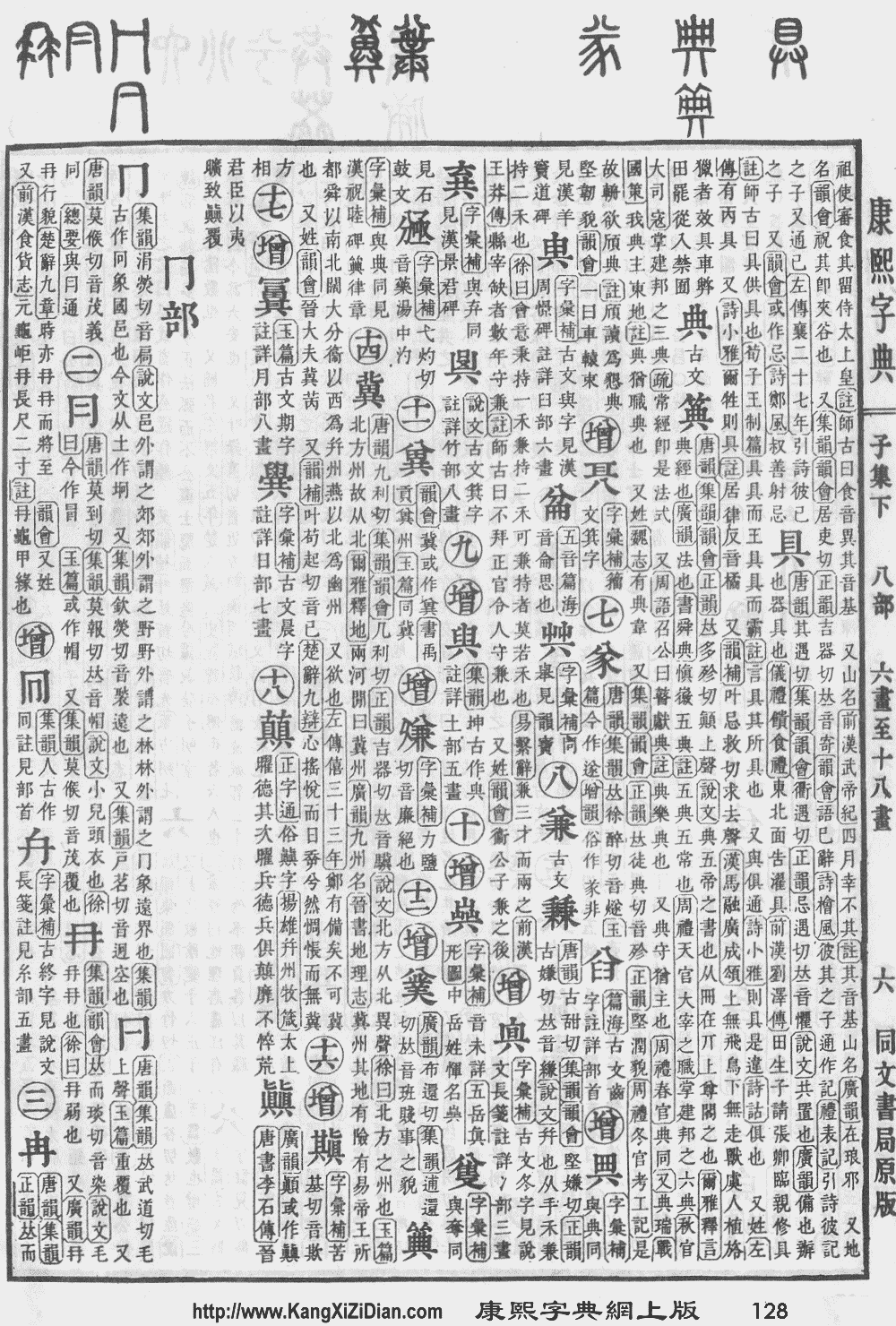
- Kangxi Dictionary: page 128, character 11
- Dai Kanwa Jiten: character 1483
- Dae Jaweon: page 288, character 14
- Hanyu Da Zidian (first edition): volume 1, page 249, character 8
- Unihan data for U+517C
Chinese
| simp. and trad. |
兼 | |
|---|---|---|
| alternative forms | ||
Glyph origin
| Historical forms of the character 兼 | ||||||||||||||||
|---|---|---|---|---|---|---|---|---|---|---|---|---|---|---|---|---|
| Spring and Autumn | Shuowen Jiezi (compiled in Han) | Liushutong (compiled in Ming) | ||||||||||||||
| Bronze inscriptions | Small seal script | Transcribed ancient scripts | ||||||||||||||
 |
 |
 | ||||||||||||||
||
|
References: Mostly from Richard Sears' Chinese Etymology site (authorisation),
| ||||||||||||||||


Characters in the same phonetic series (兼) (Zhengzhang, 2003)
| Old Chinese | |
|---|---|
| 譧 | *r'eːms |
| 賺 | *r'eːms |
| 尲 | *kreːm |
| 鹻 | *kreːmʔ |
| 歉 | *kʰreːms, *kʰreːmʔ, *kʰeːmʔ, *kʰeːms |
| 槏 | *kʰreːmʔ |
| 鰜 | *ɡreːm, *keːm |
| 稴 | *ɡreːm, *ɡ·reːm, *ɡ·reːmʔ, *ɡ·reːms, *ɡeːm |
| 豏 | *ɡreːmʔ, *ɡreːms |
| 甉 | *ɡreːmʔ, *ɡraːm |
| 廉 | *ɡ·rem |
| 鎌 | *ɡ·rem |
| 鬑 | *ɡ·rem, *ɡ·reːm |
| 鐮 | *ɡ·rem |
| 簾 | *ɡ·rem |
| 薕 | *ɡ·rem, *ɡ·reːm |
| 蠊 | *ɡ·rem |
| 嬚 | *ɡ·remʔ |
| 溓 | *ɡ·remʔ, *ɡ·reːm, *ɡ·reːmʔ |
| 嵰 | *kʰremʔ |
| 隒 | *ŋɡremʔ |
| 熑 | *ɡ·reːm |
| 濂 | *ɡ·reːm |
| 燫 | *ɡ·reːm |
| 兼 | *keːm, *keːms |
| 縑 | *keːm |
| 鶼 | *keːm |
| 蒹 | *keːm |
| 搛 | *keːm |
| 謙 | *kʰeːm |
| 膁 | *kʰeːmʔ |
| 嗛 | *kʰeːmʔ |
| 慊 | *kʰeːmʔ, *kʰeːb |
| 傔 | *kʰeːms |
| 馦 | *qʰeːm |
| 嫌 | *ɡeːm |
| 鼸 | *ɡeːmʔ |
| 尷 | *kreːm |
Ideogrammic compound (會意/会意) : Hand 又 (as in 肀) holding two grain stalks 禾. Compare: 秉 (bǐng), a hand holding one plant.
Etymology
Austroasiatic (Schuessler, 2007); compare Proto-Mon-Khmer *ckiəm ~ ckəm ~ ckam ~ ckaim (“to grasp, to hold”).
Pronunciation
Definitions
兼
- to do two or more things simultaneously; to hold a concurrent post or role; to combine
- 教練兼隊員/教练兼队员 ― jiàoliàn jiān duìyuán ― player-coach; playing coach
- 兼管 ― jiānguǎn ― to concurrently be in charge of
- 魚,我所欲也;熊掌,亦我所欲也,二者不可得兼,舍魚而取熊掌者也。生,亦我所欲也;義,亦我所欲也,二者不可得兼,舍生而取義者也。 [Classical Chinese, trad.]
- From: Mencius, c. 4th century BCE, translated based on James Legge's version
- Yú, wǒ suǒyù yě; xióngzhǎng, yì wǒ suǒyù yě, èr zhě bùkě dé jiān, shě yú ér qǔ xióngzhǎng zhě yě. Shēng, yì wǒ suǒyù yě; yì, yì wǒ suǒyù yě, èr zhě bùkě dé jiān, shě shēng ér qǔ yì zhě yě. [Pinyin]
- I like fish, and I also like bear's paws. If I cannot have the two together, I will let the fish go, and take the bear's paws. So, I like life, and I also like justice. If I cannot keep the two together, I will let life go, and choose justice.
鱼,我所欲也;熊掌,亦我所欲也,二者不可得兼,舍鱼而取熊掌者也。生,亦我所欲也;义,亦我所欲也,二者不可得兼,舍生而取义者也。 [Classical Chinese, simp.]
- concurrently; simultaneously; combining; both
- † double
- 子曰:「求也退,故進之;由也兼人,故退之。」 [Classical Chinese, trad.]
- From: The Analects of Confucius, c. 475 – 221 BCE
- Zǐyuē: “Qiú yě tuì, gù jìn zhī; Yóu yě jiān rén, gù tuì zhī.” [Pinyin]
- The Master said: "(Ran) Qiu holds himself back. It is for this reason that I tried to urge him on. (Zhong) You has the energy of two men. It is for this reason that I tried to hold him back."
子曰:「求也退,故进之;由也兼人,故退之。」 [Classical Chinese, simp.]
- to amalgamate, to merge
- 約從離衡,兼韓、魏、燕、楚、齊、趙、宋、衛、中山之眾。 [MSC, trad.]
- From: 賈誼 (Jia Yi),《過秦論》("Discourse on Qin's Faults")
- Yuē cóng lí héng, jiān Hán, Wèi, Yān, Chǔ, Qí, Zhào, Sòng, Wèi, Zhōngshān zhī zhòng. [Pinyin]
- They formed the Vertical Alliance and spurned the Horizontal Alliance, amalgamating the multitudes of Hán, Wèi, Yān, Chǔ, Zhào, Sòng, Wèy, and Zhōngshān.
约从离衡,兼韩、魏、燕、楚、齐、赵、宋、卫、中山之众。 [MSC, simp.]
- to annex, to absorb
- 萬乘之主有能服術行法,以為亡徵之君風雨者,其兼天下不難矣。 [Classical Chinese, trad.]
- From: Han Feizi, circa 2nd century BCE, translated based on W. K. Liao's version
- Wànchéng zhī zhǔ yǒunéng fú shù xíngfǎ, yǐ wéi wángzhēng zhī jūn fēngyǔ zhě, qí jiāntiānxià bùnán yǐ. [Pinyin]
- If the sovereign of ten thousand chariots can exercise tact and enforce law and thereby function as gale and rain to rulers having portents of ruin, his annexation of All-under-Heaven will not be difficult.
万乘之主有能服术行法,以为亡征之君风雨者,其兼天下不难矣。 [Classical Chinese, simp.]- 富者兼地數萬畝,貧者無容足之居。 [MSC, trad.]
- From: 794 CE', 陸贄 (Lu Zhi), 均節賦稅恤百姓六條 (Six Proposals to Reform Taxation and to Help Out the Common People)
- Fùzhě jiāndì shù wàn mǔ, pínzhě wú róngzú zhī jū. [Pinyin]
- The rich enclose several myriad acres of lands; the poor have no spot to dwell and stand their feet.
富者兼地数万亩,贫者无容足之居。 [MSC, simp.]
- a surname
Compounds
- 併兼/并兼
- 倍道兼行
- 倍道兼進/倍道兼进
- 公私兼顧/公私兼顾 (gōngsījiāngù)
- 兼之 (jiānzhī)
- 兼人
- 兼任 (jiānrèn)
- 兼併/兼并 (jiānbìng)
- 兼併/兼并 (jiānbìng)
- 兼倍
- 兼修 (jiānxiū)
- 兼備/兼备 (jiānbèi)
- 兼具 (jiānjù)
- 兼味
- 兼善
- 兼善天下
- 兼容並蓄/兼容并蓄
- 兼容并包
- 兼差 (jiānchāi)
- 兼弱攻昧
- 兼愛/兼爱 (jiān'ài)
- 兼掌
- 兼收並蓄/兼收并蓄 (jiānshōubìngxù)
- 兼旬 (jiānxún)
- 兼權熟計/兼权熟计
- 兼毫
- 兼濟/兼济
- 兼營/兼营
- 兼用 (jiānyòng)
- 兼祧 (jiāntiāo)
- 兼程 (jiānchéng)
- 兼管 (jiānguǎn)
- 兼籌並顧/兼筹并顾
- 兼署
- 兼而有之 (jiān'éryǒuzhī)
- 兼職/兼职 (jiānzhí)
- 兼聽/兼听
- 兼行
- 兼課/兼课 (jiānkè)
- 兼辦/兼办
- 兼通
- 兼金
- 兼顧/兼顾 (jiāngù)
- 剿撫兼施
- 勦撫兼施/剿抚兼施
- 名利兼收
- 品學兼優/品学兼优 (pǐnxuéjiānyōu)
- 威德兼施
- 并兼
- 德容兼備/德容兼备
- 德才兼備/德才兼备 (décáijiānbèi)
- 悲喜兼集
- 愁懼兼心/愁惧兼心
- 才兼文武
- 才勇兼優/才勇兼优
- 才學兼優/才学兼优
- 才德兼備/才德兼备 (cáidéjiānbèi)
- 文武兼備/文武兼备
- 文武兼濟/文武兼济
- 文武兼資/文武兼资
- 方面兼圻
- 晝夜兼行/昼夜兼行
- 智勇兼全
- 材能兼備/材能兼备
- 術德兼修/术德兼修
- 衣不兼采
- 謀勇兼備/谋勇兼备
- 軟硬兼施/软硬兼施 (ruǎn-yìng jiānshī)
- 食不兼味
Japanese
| Shinjitai | 兼 | |
| Kyūjitai [1] |
兼󠄁 兼+ 󠄁?(Adobe-Japan1) |
 |
| 兼󠄄 兼+ 󠄄?(Hanyo-Denshi) (Moji_Joho) | ||
| The displayed kanji may be different from the image due to your environment. See here for details. | ||
Readings
Etymology
| Kanji in this term |
|---|
| 兼 |
| けん Grade: S |
| on’yomi |
/kem/ → /kemʉ/ → /keɴ/
From Middle Chinese 兼 (MC kem|kemH).
Noun
兼 • (ken)
- doing two or more things at the same time
- holding two or more government offices at the same time
Derived terms
- 兼す (kensu), 兼ず (kenzu)
References
- “兼”, in 漢字ぺディア (Kanjipedia) (in Japanese), 日本漢字能力検定協会, 2015–2024
- Matsumura, Akira, editor (2006), 大辞林 [Daijirin] (in Japanese), Third edition, Tōkyō: Sanseidō, →ISBN
Vietnamese
This article is issued from Wiktionary. The text is licensed under Creative Commons - Attribution - Sharealike. Additional terms may apply for the media files.