難
| ||||||||
 | ||||||||
| ||||||||
Translingual
| Traditional | 難 |
|---|---|
| Simplified | 难 |
| Japanese | 難 |
| Korean | 難 |
Alternative forms
- In traditional Chinese, Japanese kyūjitai, Korean hanja and Vietnamese Nôm, the component
 for this character is written with 廿 on top. Note that the bottom portion is written 口 overlapped by 夫 and not 中 on top of 天.
- In Japanese shinjitai, the component
 is written with 艹 on top and has one stroke less. Due to Han unification, both traditional Chinese and Japanese forms are encoded under the same code point. The appearance of this character will differ according to the font used.
- In simplified Chinese, the component is simplified to 又 instead, giving the character 难 (
U+96BE). - Two compatibility ideographs exist for this character.
U+FA68corresponds to the kyūjitai form of this character whileU+FAC7corresponds to the alternative Korean form which is similar to Japanese shinjitai.
Han character
難 (Kangxi radical 172, 隹+11 in Chinese and Korean, 隹+10 in Japanese, 19 strokes in Chinese and Korean, 18 strokes in Japanese, cangjie input 廿人人土 (TOOG) or 廿戈人土 (TIOG), four-corner 40514, composition ⿰⿱廿⿻口夫隹(GHTKV or U+FA68) or ⿰𦰩隹(J or U+FAC7))
Derived characters
Related characters
References
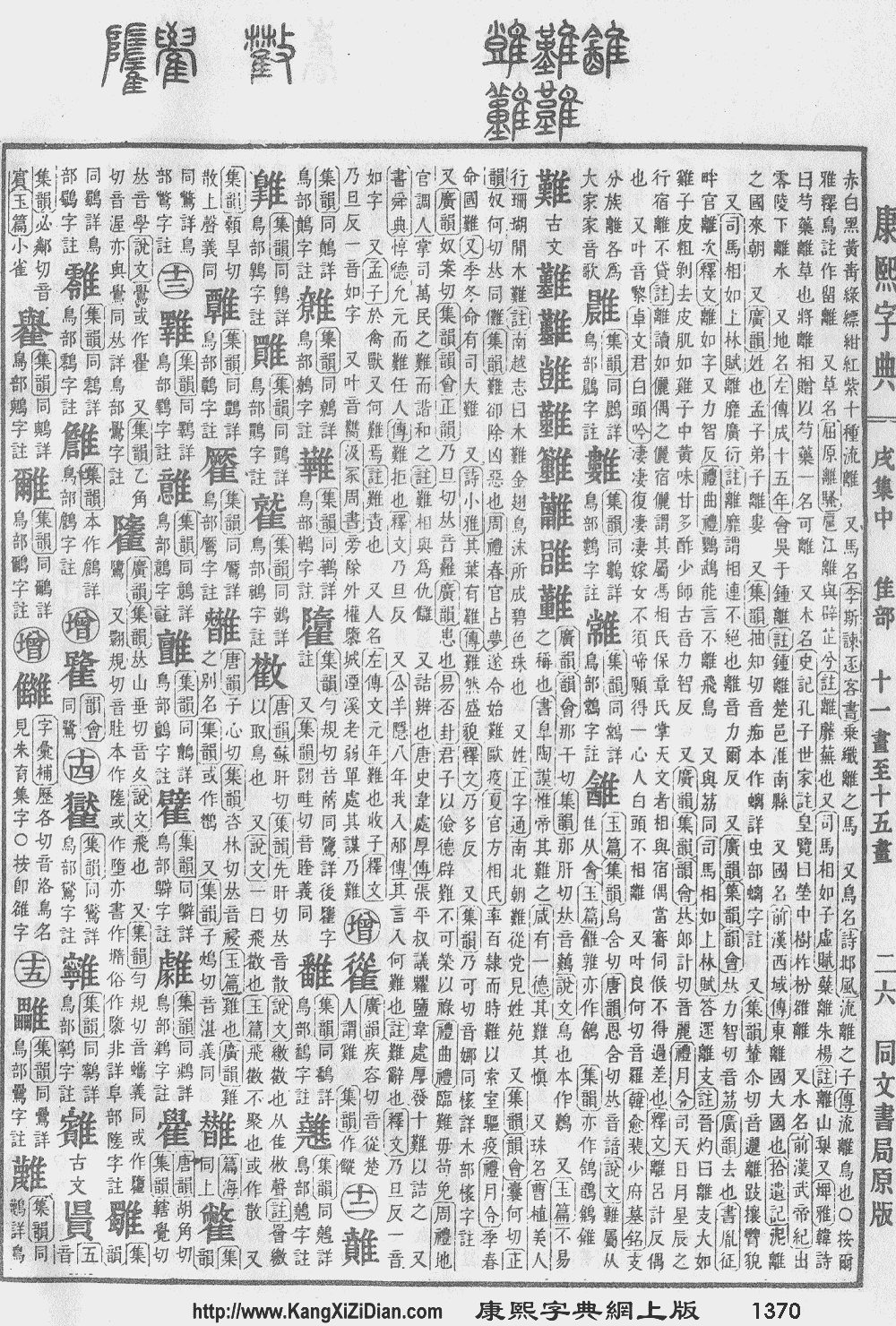
- Kangxi Dictionary: page 1370, character 5
- Dai Kanwa Jiten: character 42128
- Dae Jaweon: page 1876, character 2
- Hanyu Da Zidian (first edition): volume 6, page 4108, character 5
- Unihan data for U+96E3
- Unihan data for U+FA68
- Unihan data for U+FAC7
Chinese
| trad. | 難 | |
|---|---|---|
| simp. | 难 | |
| alternative forms | 𨿻 𩀏 𩀙 𩀡 𩀤 𨿻 𩀏 𩀙 𩀡 𩀤 𩁘 𩁚 𩁢 𩁣 𩁤 𩁩 𩁪 𩁬 𩁮 𩁲 𩁳 𪄿 𪅀 𪇠 𪇼 | |
Glyph origin
Phono-semantic compound (形聲/形声, OC *n̥ʰaːn, *naːns) : abbreviated phonetic 暵 (OC *hnaːnʔ, *hnaːns) + semantic 隹 (“bird”) – a type of bird. Phonetically borrowed for other senses.
Etymology
From Proto-Sino-Tibetan *na-n/t (“ill, pain, difficult, evil spirit”).
Cognate with Tibetan མནར (mnar, “to suffer; suffering”), ན (na, “to be sick, ill”), ནན་ཏེ (nan te, “sick, ill”), ནད (nad, “disease, suffering”), Burmese နာ (na, “to suffer pain, to be ill”), နတ် (nat, “nat (spirit), evil spirit”).
Pronunciation 1
Definitions
難
- difficult; hard; troublesome
- Antonym: 易 (yì)
- bad; unpleasant
- to feel difficult; to find difficult
- 皋陶曰:「都!在知人,在安民。」禹曰:「吁!咸若時,惟帝其難之。」 [Classical Chinese, trad.]
- From: The Book of Documents, circa 4th – 3rd century BCE
- Gāoyáo yuē: “Dōu! Zài zhīrén, zài ānmín.” Yǔ yuē: “Xū! Xián ruò shí, wéi Dì qí nán zhī.” [Pinyin]
- Gaoyao continued, "Oh! it lies in knowing men, and giving repose to the people." Yu said, "Alas! to attain to both these things might well be a difficulty even to the [deity] Di."
皋陶曰:「都!在知人,在安民。」禹曰:「吁!咸若时,惟帝其难之。」 [Classical Chinese, simp.]
- to make things difficult for; to put someone in a difficult position
- difficulty; something which is difficult; issue
- 責難於君謂之恭,陳善閉邪謂之敬。 [Classical Chinese, trad.]
- From: Mencius, c. 4th century BCE
- Zé nán yú jūn wèi zhī gōng, chén shàn bì xié wèi zhī jìng. [Pinyin]
- To urge one's sovereign to difficult achievements may be called showing respect for him. To set before him what is good and repress his perversities may be called showing reverence for him.
责难于君谓之恭,陈善闭邪谓之敬。 [Classical Chinese, simp.]
- 79th tetragram of the Taixuanjing; "difficulties" (𝍔)
- Alternative form of 戁/𫺷 (nǎn, “to dread; to fear”)
- Alternative form of 攤/摊 (“sacrificial rites for getting rid of bogeys”)
Synonyms
Antonyms
- (antonym(s) of “easy”): 容易 (róngyì)
Compounds
- 一木難扶/一木难扶
- 一木難支/一木难支 (yīmùnánzhī)
- 一票難求/一票难求
- 一言難盡/一言难尽 (yīyánnánjìn)
- 一言難罄/一言难罄
- 不為難/不为难
- 不難/不难
- 世事難料/世事难料 (shìshìnánliào)
- 二難/二难
- 作難/作难
- 依依難捨/依依难舍
- 個性難改/个性难改
- 先難後獲/先难后获
- 克難/克难
- 克難運動/克难运动
- 兩處為難/两处为难
- 兩難/两难 (liǎngnán)
- 兩難論證/两难论证
- 八難/八难
- 公道難明/公道难明
- 凜然難犯/凛然难犯
- 出難題/出难题 (chū nántí)
- 刁難/刁难 (diāonàn)
- 力竭難支/力竭难支
- 勉為其難/勉为其难 (miǎnwéiqínán)
- 匪難/匪难
- 千載難逢/千载难逢 (qiānzǎinánféng)
- 千難萬險/千难万险
- 千難萬難/千难万难 (qiānnánwànnán)
- 厭難折衝/厌难折冲
- 名高難副/名高难副
- 哽噎難言/哽噎难言
- 善財難捨/善财难舍
- 善門難開/善门难开
- 器鼠難投/器鼠难投
- 四難/四难
- 因難見巧/因难见巧
- 國步艱難/国步艰难
- 在劫難逃/在劫难逃 (zàijiénántáo)
- 在所難免/在所难免 (zàisuǒnánmiǎn)
- 天理難容/天理难容 (tiānlǐnánróng)
- 女大難留/女大难留
- 好人難做/好人难做
- 好夢難圓/好梦难圆
- 好夢難成/好梦难成
- 孤力難為/孤力难为 (gū lì nán wéi)
- 孤掌難鳴/孤掌难鸣
- 定數難逃/定数难逃
- 家賊難防/家贼难防 (jiāzéinánfáng)
- 寢食難安/寝食难安 (qǐnshínán'ān)
- 寶貨難售/宝货难售
- 寸步難移/寸步难移
- 寸步難行/寸步难行 (cùnbùnánxíng)
- 專欲難成/专欲难成
- 小鬼難纏/小鬼难缠
- 尾大難掉/尾大难掉
- 左右兩難/左右两难
- 左右為難/左右为难 (zuǒyòuwéinán)
- 強人所難/强人所难 (qiǎngrénsuǒnán)
- 後會難期/后会难期
- 心癢難揉/心痒难揉
- 心癢難搔/心痒难搔
- 心癢難撓/心痒难挠
- 心癢難撾/心痒难挝
- 心癢難熬/心痒难熬
- 情理難容/情理难容
- 慾壑難填/欲壑难填
- 戀土難移/恋土难移
- 戀戀難捨/恋恋难舍
- 才大難用/才大难用
- 才難/才难
- 折衝厭難/折冲厌难
- 排除萬難/排除万难 (páichúwànnán)
- 插翅難逃/插翅难逃 (chāchìnántáo)
- 插翅難飛/插翅难飞 (chāchìnánfēi)
- 撥煩理難/拨烦理难
- 擢髮難數/擢发难数 (zhuófànánshǔ)
- 故土難移/故土难移
- 斡難河/斡难河
- 斷難從命/断难从命
- 早難道/早难道
- 易守難攻/易守难攻
- 暗箭難防/暗箭难防
- 更僕難數/更仆难数
- 月缺難圓/月缺难圆
- 有口難分/有口难分 (yǒukǒunánfēn)
- 有口難言/有口难言 (yǒukǒunányán)
- 有口難辨/有口难辨
- 有國難投/有国难投
- 有家難奔/有家难奔
- 有志難酬/有志难酬
- 有翅難飛/有翅难飞
- 有苦難言/有苦难言
- 朝夕難保/朝夕难保 (zhāoxīnánbǎo)
- 木難/木难 (mùnán)
- 本性難移/本性难移
- 末路之難/末路之难
- 朱紫難別/朱紫难别
- 材大難用/材大难用
- 李廣難封/李广难封
- 桀驁難馴/桀骜难驯
- 欲壑難填/欲壑难填
- 欲壑難飽/欲壑难饱
- 氣憤難平/气愤难平
- 水覆難收/水覆难收
- 永生難忘/永生难忘
- 沒世難忘/没世难忘
- 沒齒難忘/没齿难忘 (mòchǐnánwàng)
- 沒齒難泯/没齿难泯
- 河清難俟/河清难俟
- 法網難逃/法网难逃
- 海水難量/海水难量
- 滋蔓難圖/滋蔓难图
- 潑水難收/泼水难收
- 為難/为难 (wéinán)
- 為難之處/为难之处
- 煩難/烦难 (fánnán)
- 獨力難持/独力难持
- 獨力難支/独力难支
- 獨木難支/独木难支
- 畏難/畏难 (wèinán)
- 畏難苟安/畏难苟安 (wèinángǒu'ān)
- 畢生難忘/毕生难忘 (bìshēngnánwàng)
- 疑難/疑难 (yínán)
- 疑難雜症/疑难杂症 (yínán zázhèng)
- 百世難期/百世难期
- 百口難分/百口难分
- 百般刁難/百般刁难 (bǎibān diāonàn)
- 盛名難副/盛名难副
- 盛情難卻/盛情难却
- 盛筵難再/盛筵难再
- 眾口難調/众口难调
- 眾寡難敵/众寡难敌
- 眾怒難任/众怒难任
- 眾怒難犯/众怒难犯
- 知易行難/知易行难
- 知難而行/知难而行
- 知難而退/知难而退 (zhīnán'értuì)
- 知難行易/知难行易
- 礙難/碍难 (àinán)
- 礙難照辦/碍难照办
- 神鬼難測/神鬼难测
- 稼穡艱難/稼穑艰难
- 積習難改/积习难改 (jīxínángǎi)
- 積重難返/积重难返 (jīzhòngnánfǎn)
- 窒礙難行/窒碍难行
- 窮坑難滿/穷坑难满
- 筆楮難窮/笔楮难穷
- 絕難/绝难
- 繁難/繁难 (fánnán)
- 繾綣難捨/缱绻难舍
- 罄竹難書/罄竹难书 (qìngzhúnánshū)
- 美夢難圓/美梦难圆
- 羞刀難入/羞刀难入
- 老大難/老大难
- 自身難保/自身难保 (zìshēnnánbǎo)
- 舊病難醫/旧病难医
- 艱難/艰难 (jiānnán)
- 艱難險阻/艰难险阻 (jiānnánxiǎnzǔ)
- 莫難道/莫难道
- 落落難合/落落难合
- 藏舟難固/藏舟难固
- 蜀道難/蜀道难
- 蝸步難移/蜗步难移
- 行路難/行路难
- 覆水難收/覆水难收 (fùshuǐnánshōu)
- 覆盆難照/覆盆难照
- 覆盤難照/覆盘难照
- 見難/见难
- 解難排憂/解难排忧
- 貧難/贫难
- 進退兩難/进退两难 (jìntuìliǎngnán)
- 避難就易/避难就易
- 阻難/阻难 (zǔnàn)
- 險阻艱難/险阻艰难
- 難上加難/难上加难 (nánshàngjiānán)
- 難不倒/难不倒
- 難不成/难不成
- 難乎為繼/难乎为继 (nánhūwéijì)
- 難事/难事 (nánshì)
- 難人/难人
- 難以估計/难以估计
- 難以兩全/难以两全
- 難以名狀/难以名状
- 難以忍受/难以忍受
- 難以想像/难以想像
- 難以招架/难以招架
- 難以捉摸/难以捉摸
- 難以消受/难以消受
- 難以為情/难以为情
- 難以為繼/难以为继 (nányǐwéijì)
- 難以置信/难以置信 (nányǐzhìxìn)
- 難以言喻/难以言喻 (nányǐyányù)
- 難任/难任
- 難保/难保 (nánbǎo)
- 難償所願/难偿所愿
- 難免/难免 (nánmiǎn)
- 難出手心/难出手心
- 難分難捨/难分难舍
- 難分難解/难分难解 (nánfēnnánjiě)
- 難分高下/难分高下
- 難受/难受 (nánshòu)
- 難堪/难堪 (nánkān)
- 難字/难字 (nánzì)
- 難存濟/难存济
- 難容/难容
- 難度/难度 (nándù)
- 難得/难得 (nándé)
- 難得一見/难得一见
- 難得糊塗/难得糊涂
- 難忍/难忍 (nánrěn)
- 難忘/难忘 (nánwàng)
- 難怪/难怪 (nánguài)
- 難拿/难拿
- 難捉鼻/难捉鼻
- 難掩/难掩
- 難捨難分/难舍难分
- 難敵/难敌
- 難於上天/难于上天
- 難施面目/难施面目
- 難易/难易 (nányì)
- 難易適中/难易适中
- 難望項背/难望项背
- 難測/难测 (náncè)
- 難為/难为
- 難為情/难为情 (nánwéiqíng)
- 難為狀/难为状
- 難熬/难熬 (nán'áo)
- 難產/难产 (nánchǎn)
- 難當/难当 (nándāng)
- 難當重任/难当重任
- 難看/难看 (nánkàn)
- 難纏/难缠 (nánchán)
- 難耐/难耐
- 難聞/难闻 (nánwén)
- 難聽/难听 (nántīng)
- 難能/难能
- 難能可貴/难能可贵 (nánnéngkěguì)
- 難與抗衡/难与抗衡
- 難色/难色 (nánsè)
- 難若登天/难若登天 (nánruòdēngtiān)
- 難處/难处
- 難行/难行
- 難解/难解 (nánjiě)
- 難解難分/难解难分 (nánjiěnánfēn)
- 難言之隱/难言之隐 (nányánzhīyǐn)
- 難說/难说 (nánshuō)
- 難說話/难说话
- 難說難言/难说难言
- 難買難賣/难买难卖
- 難走/难走
- 難越雷池/难越雷池
- 難辭其咎/难辞其咎 (náncíqíjiù)
- 難逃法網/难逃法网
- 難過/难过 (nánguò)
- 難道/难道 (nándào)
- 難竟全功/难竟全功
- 難題/难题 (nántí)
- 難點/难点 (nándiǎn)
- 面有難色/面有难色 (miànyǒunánsè)
- 頭難/头难
- 駟馬難追/驷马难追 (sìmǎnánzhuī)
- 騎虎難下/骑虎难下 (qíhǔnánxià)
- 高難度/高难度
Pronunciation 2
Definitions
難
Compounds
- 三災八難/三灾八难
- 內難/内难 (nèinàn)
- 共患難/共患难 (gònghuànnàn)
- 兵難/兵难
- 冒險犯難/冒险犯难
- 劫難/劫难 (jiénàn)
- 危難/危难 (wēinàn)
- 厄難/厄难 (ènàn)
- 受難/受难 (shòunàn)
- 受難曲/受难曲 (shòunànqǔ)
- 受難節/受难节 (Shòunànjié)
- 問難/问难
- 國難/国难 (guónàn)
- 執經問難/执经问难
- 多災多難/多灾多难 (duōzāiduōnàn)
- 多難/多难
- 多難興邦/多难兴邦 (duōnànxīngbāng)
- 大災難/大灾难
- 大難/大难 (dànàn)
- 大難不死/大难不死 (dànànbùsǐ)
- 大難臨頭/大难临头 (dànànlíntóu)
- 安難/安难
- 屯難/屯难
- 山難/山难 (shānnàn)
- 急人之難/急人之难
- 急難/急难 (jínàn)
- 患難/患难 (huànnàn)
- 患難之交/患难之交 (huànnànzhījiāo)
- 患難夫妻/患难夫妻
- 患難相恤/患难相恤
- 患難相扶/患难相扶
- 患難相死/患难相死
- 患難與共/患难与共 (huànnànyǔgòng)
- 捐軀濟難/捐躯济难
- 捐軀赴難/捐躯赴难
- 捍難之功/捍难之功
- 排難解憂/排难解忧
- 排難解紛/排难解纷
- 政治避難/政治避难 (zhèngzhì bìnàn)
- 救苦救難/救苦救难
- 救難/救难 (jiùnàn)
- 救難船/救难船
- 橫難/横难
- 此問彼難/此问彼难
- 死難/死难 (sǐnàn)
- 殉難/殉难 (xùnnàn)
- 毀家紓難/毁家纾难 (huǐjiāshūnàn)
- 母難日/母难日
- 海上救難/海上救难
- 海難/海难 (hǎinàn)
- 災難/灾难 (zāinàn)
- 犯難/犯难
- 留難/留难
- 發難/发难 (fānàn)
- 矢石之難/矢石之难
- 磨難/磨难 (mónàn)
- 萬難/万难 (wànnán)
- 空難/空难 (kōngnàn)
- 經濟難民/经济难民
- 罹難/罹难 (línàn)
- 義不辭難/义不辞难
- 脫難/脱难
- 臨難/临难 (línnàn)
- 臨難不屈/临难不屈
- 臨難不恐/临难不恐 (línnànbùkǒng)
- 臨難不懾/临难不慑
- 臨難不懼/临难不惧 (línnànbùjù)
- 臨難不避/临难不避
- 臨難無懾/临难无慑
- 臨難苟免/临难苟免 (línnàngǒumiǎn)
- 臨難鑄兵/临难铸兵
- 苦難/苦难 (kǔnàn)
- 落難/落难 (luònàn)
- 蒙難/蒙难 (méngnàn)
- 解難/解难
- 詰難/诘难 (jiénàn)
- 論難/论难
- 責難/责难 (zénàn)
- 質疑問難/质疑问难
- 赴難/赴难 (fùnàn)
- 輕災浮難/轻灾浮难
- 辯難/辩难 (biànnàn)
- 逃災躲難/逃灾躲难
- 逃災避難/逃灾避难
- 逃難/逃难 (táonàn)
- 遇難/遇难 (yùnàn)
- 遇難成祥/遇难成祥
- 遭難/遭难 (zāonàn)
- 避難/避难 (bìnàn)
- 避難所/避难所 (bìnànsuǒ)
- 難中人/难中人
- 難住了/难住了
- 難僑/难侨 (nànqiáo)
- 難兄難弟/难兄难弟
- 難友/难友 (nànyǒu)
- 難廕/难荫
- 難民/难民 (nànmín)
- 難民營/难民营 (nànmínyíng)
- 難胞/难胞
- 難關/难关
- 靖康之難/靖康之难
- 靖難/靖难
- 靖難之變/靖难之变
- 非難/非难 (fēinàn)
- 駁難/驳难 (bónàn)
- 魔難/魔难 (mónàn)
References
- “難”, in 漢語多功能字庫 (Multi-function Chinese Character Database), 香港中文大學 (the Chinese University of Hong Kong), 2014–
- Dictionary of Chinese Character Variants (教育部異體字字典), A04467
Japanese
| Shinjitai | 難 | |
| Kyūjitai [1][2] |
難 難or 難+ ︀? |
|
| 難󠄀 難+ 󠄀?(Adobe-Japan1) | ||
| 難󠄄 難+ 󠄄?(Hanyo-Denshi) (Moji_Joho) | ||
| The displayed kanji may be different from the image due to your environment. See here for details. | ||
Readings
From Middle Chinese 難 (MC nan|nanH):
From Middle Chinese; compare Mandarin 難/难 (nuó):
From native Japanese roots:
- Kun: かたい (katai, 難い, Jōyō)←かたし (katasi, 難し, historical); むずかしい (muzukashii, 難しい, Jōyō)←むづかしい (mudukasii, 難しい, historical); うれい (urei, 難い)←うれひ (urefi, 難ひ, historical); かたき (kataki, 難き); がたし (gatashi, 難し); かたんず (katanzu, 難んず); なじる (najiru, 難る); むつかしい (mutsukashii, 難しい)←むつかし (mutukasi, 難し, historical); わざわい (wazawai, 難い)←わざはひ (wazafafi, 難ひ, historical); にくい (nikui, 難い)
Compounds
Etymology
| Kanji in this term |
|---|
| 難 |
| なん Grade: 6 |
| on’yomi |
| Alternative spelling |
|---|
| 難 (kyūjitai) |
From Middle Chinese 難 (MC nan).
References
- “難”, in 漢字ぺディア (Kanjipedia) (in Japanese), 日本漢字能力検定協会, 2015–2024
- Haga, Gōtarō (1914) 漢和大辞書 [The Great Kanji-Japanese Dictionary] (in Japanese), Fourth edition, Tōkyō: Kōbunsha, , page 2268 (paper), page 1186 (digital)
- Matsumura, Akira, editor (2006), 大辞林 [Daijirin] (in Japanese), Third edition, Tōkyō: Sanseidō, →ISBN