纛
| ||||||||
Translingual
Han character
纛 (Kangxi radical 120, 糸+19, 25 strokes, cangjie input 手一田卜火 (QMWYF), four-corner 50993, composition ⿱毒縣)
References
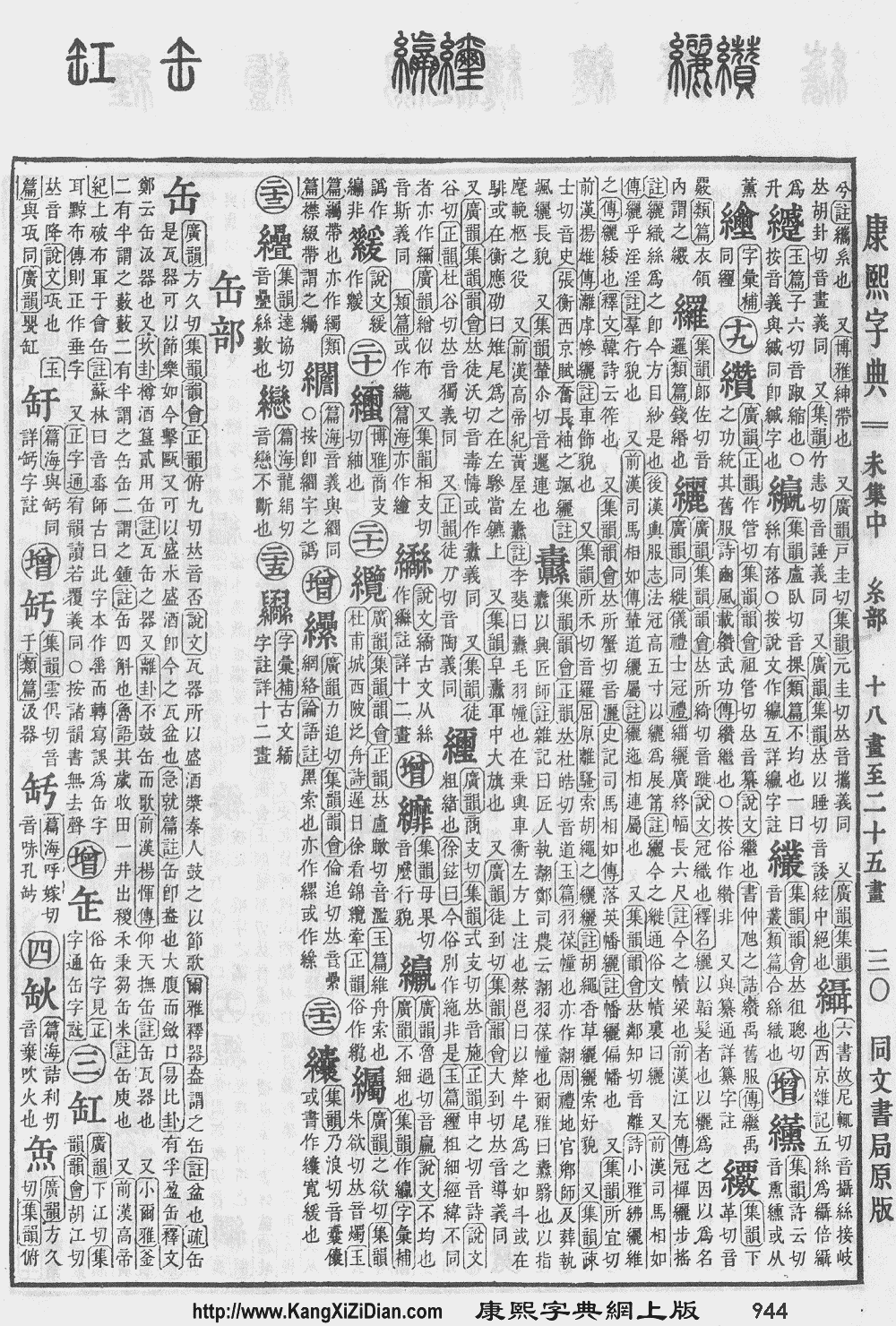
- Kangxi Dictionary: page 944, character 11
- Dai Kanwa Jiten: character 28080
- Dae Jaweon: page 1384, character 19
- Hanyu Da Zidian (first edition): volume 5, page 3470, character 16
- Unihan data for U+7E9B
Chinese
| trad. | 纛 | |
|---|---|---|
| simp. # | 纛 | |
| alternative forms | 𦒛 𢃶 𦑢 | |
Glyph origin
Characters in the same phonetic series (毒) (Zhengzhang, 2003)
Phono-semantic compound (形聲/形声, OC *duːɡs, *duːɡ) : phonetic 毒 (OC *l'uːɡ) + semantic 縣
Etymology
Attested late, earliest extant instance being in Rites of Zhou:
- 鄉師之職:……大喪用役,則帥其民而至,遂治之。及葬,執纛,以與匠帥御柩而治役。及窆,執斧以蒞匠師。 [Classical Chinese, trad.]
- From: Rites of Zhou, circa 3rd century BCE
- Xiāngshī zhī zhí:...... Dàsàng yòng yì, zé shuài qí mín ér zhì, suì zhì zhī. Jí zàng, zhí dào, yǐ yǔ jiàngshuài yù jiù ér zhì yì. Jí biǎn, zhí fǔ yǐ lì jiàngshī. [Pinyin]
- The duties of the leaders of the interior districts: [...] When employing draftees for major funerals, he'll go ahead of his men and directs their tasks. During burials, he'll hold a feather-standard while conducting the coffin procession alongsides the wrights' leader and also directing the draftees. While the coffin is being lowered, he'll hold an ax while standing besides the wrights' leader.
乡师之职:……大丧用役,则帅其民而至,遂治之。及葬,执纛,以与匠帅御柩而治役。及窆,执斧以莅匠师。 [Classical Chinese, simp.]
Pronunciation
Definitions
纛
Compounds
- 作纛旗兒/作纛旗儿
- 坐纛旂兒/坐纛旗儿
- 大纛
- 大纛高牙
- 左纛
- 纛旗
- 高牙大纛
Descendants
References
- “纛”, in 漢語多功能字庫 (Multi-function Chinese Character Database), 香港中文大學 (the Chinese University of Hong Kong), 2014–
- Clauson, Gerard (1972). An Etymological Dictionary of Pre-13th Century Turkish. Oxford University Press. p. 464
Japanese
Kanji
纛
- This term needs a translation to English. Please help out and add a translation, then remove the text
{{rfdef}}.
Etymology
| Kanji in this term |
|---|
| 纛 |
| Hyōgaiji |
| on’yomi |
Noun
- This term needs a translation to English. Please help out and add a translation, then remove the text
{{rfdef}}.
References
- Matsumura, Akira, editor (2006), 大辞林 [Daijirin] (in Japanese), Third edition, Tōkyō: Sanseidō, →ISBN
Korean
Etymology 1
From Middle Chinese 纛 (MC dawH).
Hanja
纛 (eum 도 (do))
- This term needs a translation to English. Please help out and add a translation, then remove the text
{{rfdef}}.
Etymology 2
From Middle Chinese 纛 (MC dowk).
Hanja
纛 (eum 독 (dok))
- This term needs a translation to English. Please help out and add a translation, then remove the text
{{rfdef}}.
This article is issued from Wiktionary. The text is licensed under Creative Commons - Attribution - Sharealike. Additional terms may apply for the media files.