贏
See also: 赢
| ||||||||
Translingual
Han character
贏 (Kangxi radical 154, 貝+13, 20 strokes, cangjie input 卜弓月山金 (YNBUC) or 卜口月月弓 (YRBBN), four-corner 00217, composition ⿵𣎆貝)
References
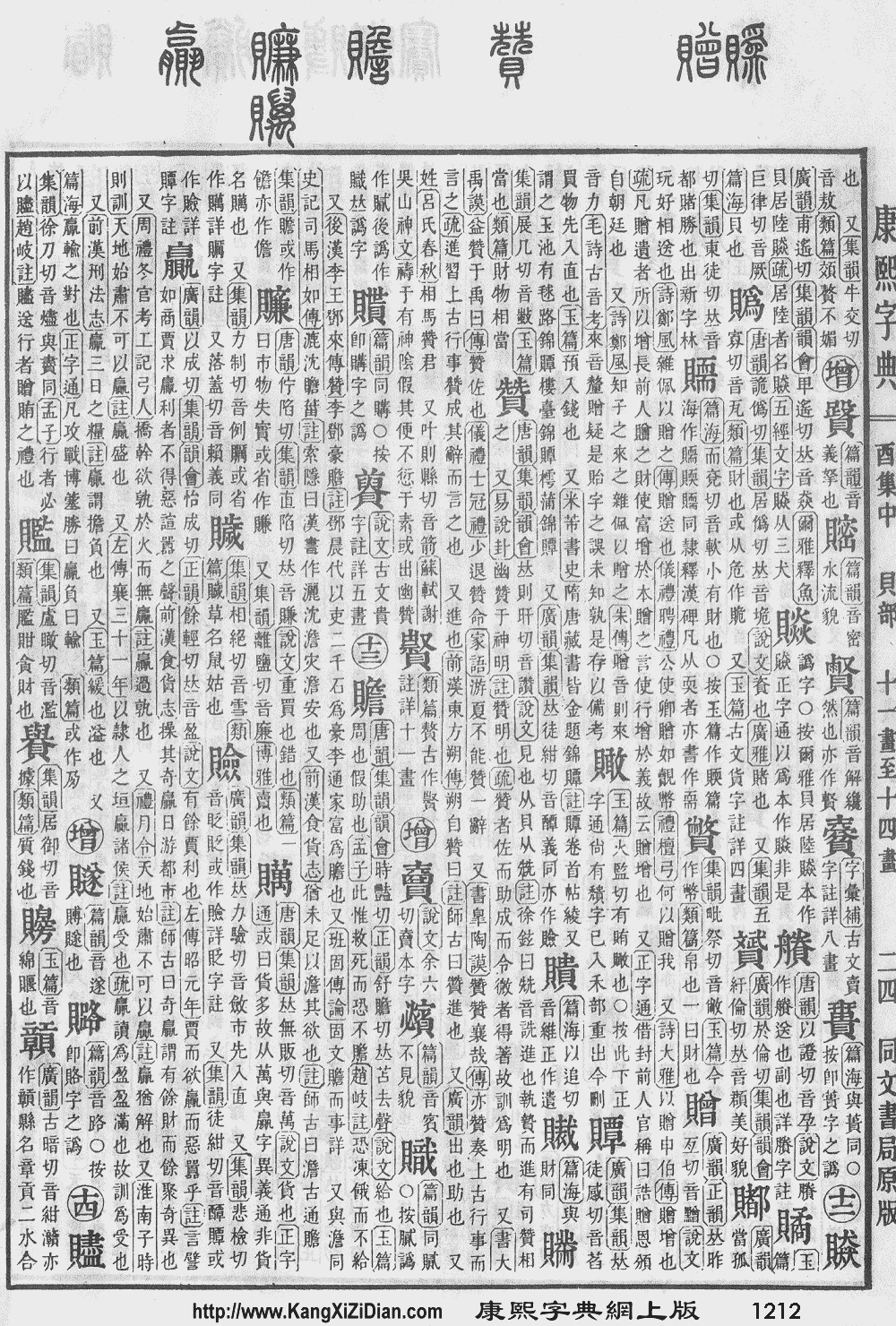
- Kangxi Dictionary: page 1212, character 33
- Dai Kanwa Jiten: character 36950
- Dae Jaweon: page 1679, character 5
- Hanyu Da Zidian (first edition): volume 3, page 2125, character 2
- Unihan data for U+8D0F
Chinese
| trad. | 贏 | |
|---|---|---|
| simp. | 赢 | |
| 2nd round simp. | ⿱夃𠀃 | |
| alternative forms | 𦢼 ⿱夃𠀃 2nd round simp. (1977) ⿱亡⿵𠘨贝 2nd round simp. (1981) | |
Glyph origin
| Historical forms of the character 贏 | ||
|---|---|---|
| Western Zhou | Shuowen Jiezi (compiled in Han) | Liushutong (compiled in Ming) |
| Bronze inscriptions | Small seal script | Transcribed ancient scripts |
 |
 |
 |
Characters in the same phonetic series (贏) (Zhengzhang, 2003)
Phono-semantic compound (形聲/形声, OC *leŋ) : phonetic 𣎆 () + semantic 貝 (“cowry; money”).
Pronunciation
Definitions
贏
- to win; to triumph; to be victorious
- to beat; to defeat (someone); to triumph over
- to make a profit
- Basic Law of the Macao Special Administrative Region, Article 49 (excerpt):
- 澳門特別行政區行政長官在任職期內不得具有外國居留權,不得從事私人贏利活動。 [MSC, trad.]
- Àomén tèbiéxíngzhèngqū xíngzhèngchángguān zài rènzhí qī nèi bùdé jùyǒu wàiguó jūliúquán, bùdé cóngshì sīrén yínglì huódòng. [Pinyin]
- The Chief Executive of the Macao Special Administrative Region, during his or her term of office, shall have no right of abode in any foreign country and shall not engage in any activities for his or her personal gains.
澳门特别行政区行政长官在任职期内不得具有外国居留权,不得从事私人赢利活动。 [MSC, simp.]
- Basic Law of the Macao Special Administrative Region, Article 49 (excerpt):
- (Gan, Xiang) Used with 不 or 得 to express capability.
Compounds
- 不見輸贏/不见输赢
- 共贏/共赢 (gòngyíng)
- 執贏/执赢
- 大贏家/大赢家
- 奇贏/奇赢
- 打贏/打赢 (dǎyíng)
- 操奇計贏/操奇计赢
- 時絀舉贏/时绌举赢
- 獨贏/独赢
- 讀贏/读赢
- 買贏/买赢
- 贏利/赢利 (yínglì)
- 贏利幅度/赢利幅度
- 贏利年度/赢利年度
- 贏利率/赢利率
- 贏利稅/赢利税
- 贏利能力/赢利能力
- 贏利表/赢利表
- 贏勾/赢勾
- 贏取/赢取 (yíngqǔ)
- 贏姦賣俏/赢奸卖俏
- 贏家/赢家 (yíngjiā)
- 贏得/赢得 (yíngdé)
- 贏手/赢手
- 贏糧/赢粮
- 贏縮/赢缩
- 贏錢/赢钱
- 贏面/赢面 (yíngmiàn)
- 贏餘/赢余 (yíngyú)
- 輸贏/输赢 (shūyíng)
- 連贏/连赢
- 錬贏/𲇷赢
- 雙贏/双赢 (shuāngyíng)
- 雙贏局面/双赢局面
- 非贏利/非赢利
- 非贏利組織/非赢利组织
Japanese
Korean
Hanja
贏 • (yeong) (hangeul 영, McCune–Reischauer yŏng, Yale yeng)
- This term needs a translation to English. Please help out and add a translation, then remove the text
{{rfdef}}.
Vietnamese
Han character
贏: Hán Nôm readings: doanh
- This term needs a translation to English. Please help out and add a translation, then remove the text
{{rfdef}}.
References
This article is issued from Wiktionary. The text is licensed under Creative Commons - Attribution - Sharealike. Additional terms may apply for the media files.