期
See also: 朞
| ||||||||
Translingual
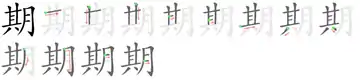
| Stroke order | |||
|---|---|---|---|
 | |||
Han character
期 (Kangxi radical 74, 月+8, 12 strokes, cangjie input 廿金月 (TCB), four-corner 47820, composition ⿰其月)
Derived characters
- 𠎞 𫂣 𭊫 𭢘 𬄙
References
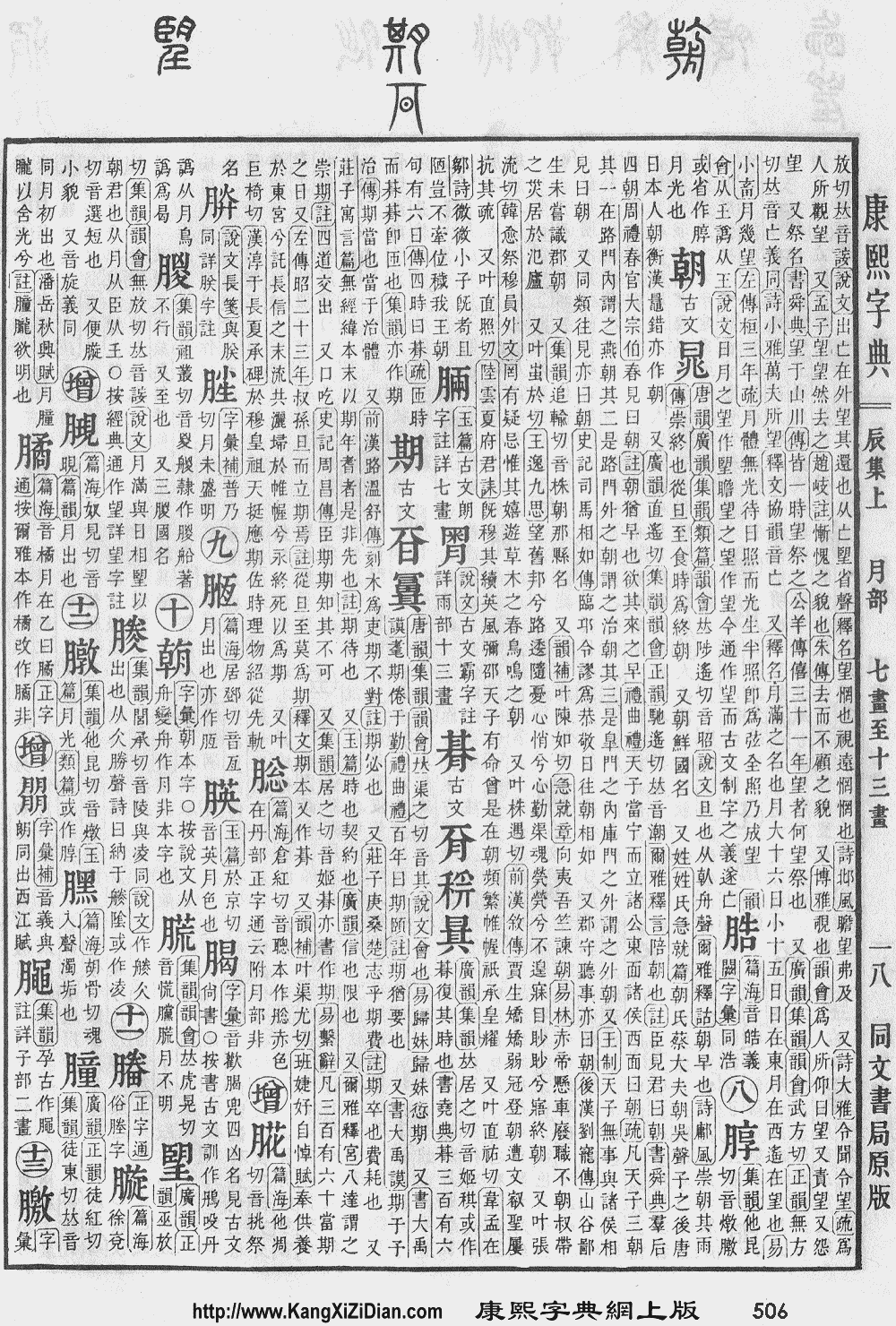
- Kangxi Dictionary: page 506, character 11
- Dai Kanwa Jiten: character 14378
- Dae Jaweon: page 887, character 4
- Hanyu Da Zidian (first edition): volume 3, page 2083, character 7
- Unihan data for U+671F
Chinese
| simp. and trad. |
期 | |
|---|---|---|
| alternative forms | ||
Glyph origin
| Historical forms of the character 期 | |||
|---|---|---|---|
| Western Zhou | Warring States | Shuowen Jiezi (compiled in Han) | Liushutong (compiled in Ming) |
| Bronze inscriptions | Chu slip and silk script | Small seal script | Transcribed ancient scripts |
 |
 |
 |
 |
Characters in the same phonetic series (其) (Zhengzhang, 2003)
Phono-semantic compound (形聲/形声, OC *kɯ, *ɡɯ) : phonetic 其 (OC *kɯ, *ɡɯ) + semantic 月 (“moon”) – changing moon marks the passage of time, hence a period of time.
Etymology
Cognate with 其 (OC *kɯ, “should; probably”) (Schuessler, 2007).
Pronunciation 1
Definitions
期
- to arrange a time; to engage; to arrange to meet
- 不期而遇 ― bùqī'éryù ― to meet unexpectedly or by chance
- 期我乎桑中,要我乎上宮,送我乎淇之上矣。 [Pre-Classical Chinese, trad.]
- From: The Classic of Poetry, c. 11th – 7th centuries BCE, translated based on James Legge's version
- Qī wǒ hū sāng zhōng, yào wǒ hū shàng gōng, sòng wǒ hū Qí zhī shàng yǐ. [Pinyin]
- She made an appontment with me in Sangzhong;
She will meet me in Shanggong;
She will accompany me to Qishang.
期我乎桑中,要我乎上宫,送我乎淇之上矣。 [Pre-Classical Chinese, simp.]
- (literary) to meet; to gather
- to hope; to wish; to expect
- date; specific day; scheduled time (Classifier: 個/个 c)
- 限期 ― xiànqī ― deadline
- (Cantonese) time slots; schedule
- period of time; stage
- (geology) age (geochronologic unit)
- Classifier for periods of time or stages of a project.
- (obsolete) undoubtedly; certainly
- (obsolete) limit
- (obsolete) good fortune; chance
Pronunciation 2
Definitions
期
Compounds
- 不可期
- 不期 (bùqī)
- 不期然 (bùqīrán)
- 不期而會/不期而会 (bùqī'érhuì)
- 不期而然 (bùqī'érrán)
- 不期而遇 (bùqī'éryù)
- 不杖期夫
- 中年時期/中年时期
- 中期 (zhōngqī)
- 九七期限
- 乞期
- 任期 (rènqī)
- 休眠期
- 何期
- 來期/来期
- 佳期 (jiāqī)
- 保固期
- 偷期
- 假期 (jiàqī)
- 偷期暗會/偷期暗会
- 光周期
- 先期 (xiānqī)
- 光期性
- 冰河時期/冰河时期 (bīnghé shíqī)
- 分期付款 (fēnqī fùkuǎn)
- 刊期
- 刑期 (xíngqī)
- 刑期無刑/刑期无刑
- 初期 (chūqī)
- 到期 (dàoqī)
- 刻期 (kèqī)
- 剋期/克期 (kèqī)
- 前期 (qiánqī)
- 務期/务期 (wùqī)
- 半衰期 (bànshuāiqī)
- 危險期/危险期
- 即期匯票/即期汇票
- 反抗期
- 及期
- 口腔期
- 同期 (tóngqī)
- 吉期 (jíqī)
- 同期錄音/同期录音
- 周期彗星
- 場期/场期
- 大比之期
- 失期
- 如期 (rúqī)
- 婚期 (hūnqī)
- 孕期 (yùnqī)
- 孵化期
- 學期/学期 (xuéqī)
- 安全期
- 安期生
- 定期 (dìngqī)
- 定期保險/定期保险
- 定期存款 (dìngqī cúnkuǎn)
- 定期票
- 將臨期/将临期 (jiānglínqī)
- 屆期/届期
- 展期
- 工期 (gōngqī)
- 平水期
- 幽期 (yōuqī)
- 幽期密約/幽期密约
- 延期 (yánqī)
- 役期
- 後會可期/后会可期
- 後會有期/后会有期 (hòuhuìyǒuqī)
- 後會難期/后会难期
- 待期
- 後期/后期 (hòuqī)
- 復甦期/复苏期
- 心期
- 思春期 (sīchūnqī)
- 恆星週期/恒星周期
- 愆期 (qiānqī)
- 憲政時期/宪政时期
- 成年期
- 成熟期 (chéngshúqī)
- 按期 (ànqī)
- 排卵期 (páiluǎnqī)
- 撫期/抚期
- 撞牆期/撞墙期
- 擇期/择期 (zéqī)
- 改期 (gǎiqī)
- 日期 (rìqī)
- 早期 (zǎoqī)
- 星期 (xīngqī, “days of the week”)
- 星期報/星期报
- 星期天
- 星期日 (xīngqīrì)
- 時期/时期 (shíqī)
- 晚期 (wǎnqī)
- 暑期 (shǔqī)
- 暑期學校/暑期学校 (shǔqī xuéxiào)
- 更年期 (gēngniánqī)
- 會合周期/会合周期
- 會期/会期 (huìqī)
- 月約星期/月约星期
- 有效期 (yǒuxiàoqī)
- 有期徒刑 (yǒuqī túxíng)
- 期中考 (qīzhōngkǎo)
- 期中選舉/期中选举
- 期刊 (qīkān)
- 期功
- 期勉
- 期年
- 期待 (qīdài)
- 期成
- 期指 (qīzhǐ)
- 期日 (qīrì)
- 期會/期会
- 期月
- 期月有成
- 期服
- 期望 (qīwàng)
- 期望值 (qīwàngzhí)
- 期期
- 期期艾艾 (qīqī'ài'ài)
- 期末 (qīmò)
- 期末考 (qīmòkǎo)
- 期權/期权 (qīquán)
- 期歲/期岁
- 期求 (qīqiú)
- 期油 (qīyóu)
- 期滿/期满 (qīmǎn)
- 期盼 (qīpàn)
- 期票
- 期程
- 期約/期约
- 期終考試/期终考试 (qīzhōng kǎoshì)
- 期考 (qīkǎo)
- 期艾
- 期許/期许 (qīxǔ)
- 期貨/期货 (qīhuò)
- 期運/期运
- 期金 (qījīn)
- 期門/期门
- 期間/期间 (qījiān)
- 期限 (qīxiàn)
- 期頤/期颐 (qīyí)
- 期頤之壽/期颐之寿
- 期頤偕老/期颐偕老
- 末期 (mòqī)
- 杖期
- 杖期夫
- 枯水期
- 樊於期/樊于期
- 檔期/档期
- 歸期/归期 (guīqī)
- 死期 (sǐqī)
- 汛期 (xùnqī)
- 沒了期/没了期
- 沈佺期
- 波浪週期/波浪周期
- 活期 (huóqī)
- 活期存款 (huóqī cúnkuǎn)
- 活期放款
- 滯育期/滞育期
- 潛伏期/潜伏期 (qiánfúqī)
- 濾泡期/滤泡期
- 為期/为期 (wéiqī)
- 為期不遠/为期不远
- 無期徒刑/无期徒刑 (wúqī túxíng)
- 無霜期/无霜期 (wúshuāngqī)
- 燈期/灯期
- 燕約鶯期/燕约莺期
- 牛女佳期
- 現期/现期
- 瓜期
- 生命週期/生命周期 (shēngmìng zhōuqī)
- 生長期/生长期 (shēngzhǎngqī)
- 產褥期/产褥期 (chǎnrùqī)
- 癸期
- 發情期/发情期 (fāqíngqī)
- 百世難期/百世难期
- 盛果期
- 相期 (xiāngqī)
- 短期 (duǎnqī)
- 短期投資/短期投资
- 秋期
- 租期 (zūqī)
- 空窗期 (kōngchuāngqī)
- 等期
- 約期/约期 (yuēqī)
- 終期/终期
- 細胞週期/细胞周期 (xìbāo zhōuqī)
- 經期/经期 (jīngqī)
- 線上期刊/线上期刊
- 緩期/缓期 (huǎnqī)
- 羅馬假期/罗马假期
- 老年時期/老年时期
- 老年期 (lǎoniánqī)
- 考期
- 耄期
- 脫期/脱期 (tuōqī)
- 臨期/临期 (línqī)
- 臨期失誤/临期失误
- 自我期許/自我期许
- 船期
- 花期 (huāqī)
- 花燭之期/花烛之期
- 蜜月期
- 行期 (xíngqī)
- 行經期/行经期
- 訓政時期/训政时期
- 誤期/误期 (wùqī)
- 請期/请期
- 變聲期/变声期 (biànshēngqī)
- 豈期/岂期
- 豐水期/丰水期
- 軍政時期/军政时期
- 轉型期/转型期
- 近期 (jìnqī)
- 週期/周期 (zhōuqī)
- 週期律/周期律
- 週期性/周期性 (zhōuqīxìng)
- 週期表/周期表 (zhōuqībiǎo)
- 過期/过期 (guòqī)
- 逾期 (yúqī)
- 過渡時期/过渡时期
- 遙不可期/遥不可期
- 遠期外匯/远期外汇
- 遠期支票/远期支票
- 遙遙無期/遥遥无期 (yáoyáowúqī)
- 鍾子期/钟子期
- 鍾期/钟期
- 長期/长期 (chángqī)
- 長期投資/长期投资
- 長期趨勢/长期趋势
- 長期飯票/长期饭票
- 開花期/开花期
- 關鍵期/关键期
- 限期 (xiànqī)
- 雨約雲期/雨约云期
- 青年期 (qīngniánqī)
- 青春期 (qīngchūnqī)
- 非常時期/非常时期 (fēicháng shíqī)
- 預期/预期 (yùqī)
- 預產期/预产期 (yùchǎnqī)
- 騫期/骞期
- 高原期
- 麥口期/麦口期
- 齡期/龄期
Japanese
Suffix
期 • (-ki)
- period (of time)
- 反抗期
- hankōki
- rebellious phase
- 反抗期
- (television show) season
- 「進撃の巨人」の二期
- “Shingeki no Kyojin” no niki
- the second season of Attack on Titan
- 「進撃の巨人」の二期
- geological age
Korean
Vietnamese
This article is issued from Wiktionary. The text is licensed under Creative Commons - Attribution - Sharealike. Additional terms may apply for the media files.