遞
| ||||||||
Translingual
| Traditional | 遞 |
|---|---|
| Shinjitai | 逓 |
| Simplified | 递 |
Han character
遞 (Kangxi radical 162, 辵+10, 14 strokes, cangjie input 卜竹卜山 (YHYU), four-corner 32301, composition ⿺辶虒)
References
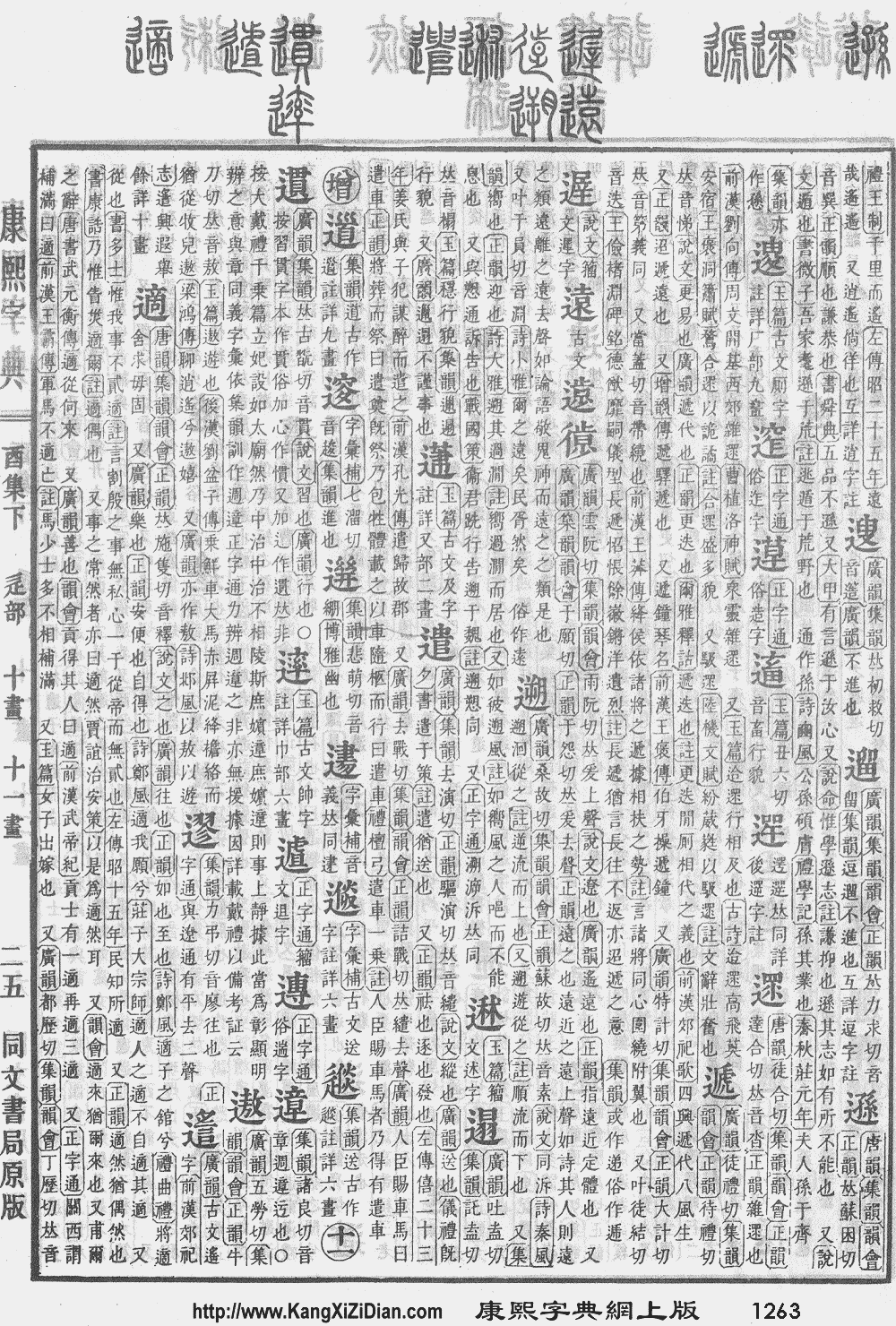
- Kangxi Dictionary: page 1263, character 10
- Dai Kanwa Jiten: character 39045
- Dae Jaweon: page 1757, character 13
- Hanyu Da Zidian (first edition): volume 6, page 3872, character 8
- Unihan data for U+905E
Chinese
| trad. | 遞 | |
|---|---|---|
| simp. | 递 | |
| alternative forms | ||
Glyph origin
Characters in the same phonetic series (虒) (Zhengzhang, 2003)
Phono-semantic compound (形聲/形声, OC *l'eːʔ, *l'eːs) : semantic 辶 + phonetic 虒 (OC *sle).
Pronunciation 1
Definitions
遞
- † to take turns; to do something in turns; to alternate; to substitute
- to pass; to hand over; to deliver; to transmit
- (literary, or in compounds) in succession; in order; successively; progressively
- † posthouse; post carriage
- (Cantonese) to lift; to raise
Compounds
- 一遞/一递
- 一遞裡/一递里
- 偷貓遞狗/偷猫递狗
- 傳遞/传递 (chuándì)
- 呈遞/呈递 (chéngdì)
- 報酬遞減定律/报酬递减定律 (bàochóu dìjiǎn dìnglǜ)
- 嬗遞/嬗递
- 寄遞/寄递
- 層遞/层递
- 快遞/快递 (kuàidì)
- 急腳遞/急脚递 (jíjiǎodì)
- 急遞鋪/急递铺
- 投遞/投递 (tóudì)
- 投遞員/投递员 (tóudìyuán)
- 搬脣遞舌/搬唇递舌
- 更遞/更递
- 流遞/流递
- 演遞/演递
- 火遞/火递
- 短遞/短递
- 總包寄遞/总包寄递
- 航空郵遞/航空邮递
- 衰遞/衰递
- 西遞/西递 (Xīdì)
- 輪遞/轮递
- 迢遞/迢递 (tiáodì)
- 速遞/速递 (sùdì)
- 遞交/递交 (dìjiāo)
- 遞來/递来
- 遞加/递加 (dìjiā)
- 遞包袱/递包袱
- 遞化/递化
- 遞呈紙/递呈纸
- 遞回/递回
- 遞增/递增 (dìzēng)
- 遞嬗/递嬗 (dìshàn)
- 遞局/递局
- 遞延/递延
- 遞手貨/递手货
- 遞散/递散
- 遞昇/递升
- 遞春/递春
- 遞服務/递服务
- 遞次/递次
- 遞歸/递归 (dìguī)
- 遞流/递流
- 遞減/递减 (dìjiǎn)
- 遞盤/递盘
- 遞眼色/递眼色
- 遞系詞/递系词
- 遞興/递兴
- 遞衰/递衰
- 遞補/递补 (dìbǔ)
- 遞解/递解 (dìjiè)
- 遞解出境/递解出境
- 遞訓/递训
- 遞變/递变
- 遞述/递述
- 遞送/递送 (dìsòng)
- 遞遞/递递
- 遞鋪/递铺
- 遞鍾/递钟
- 遞降/递降
- 遞降解/递降解
- 郵遞/邮递 (yóudì)
- 郵遞區號/邮递区号 (yóudì qūhào)
- 郵遞員/邮递员 (yóudìyuán)
- 配遞/配递
- 鋪遞/铺递
- 關山迢遞/关山迢递
- 電子郵遞/电子邮递
- 飛遞/飞递
- 馬遞/马递
- 驛遞/驿递
Pronunciation 2
Pronunciation 3
References
- “遞”, in 漢語多功能字庫 (Multi-function Chinese Character Database), 香港中文大學 (the Chinese University of Hong Kong), 2014–
- Dictionary of Chinese Character Variants (教育部異體字字典), A04177
Japanese
| 逓 | |
| 遞 |
Kanji
遞
(uncommon “Hyōgai” kanji, kyūjitai kanji, shinjitai form 逓)
- This term needs a translation to English. Please help out and add a translation, then remove the text
{{rfdef}}.
Korean
Vietnamese
This article is issued from Wiktionary. The text is licensed under Creative Commons - Attribution - Sharealike. Additional terms may apply for the media files.