紙
| ||||||||
Translingual
Han character
紙 (Kangxi radical 120, 糸+4, 10 strokes, cangjie input 女火竹女心 (VFHVP), four-corner 22940, composition ⿰糹氏)
References
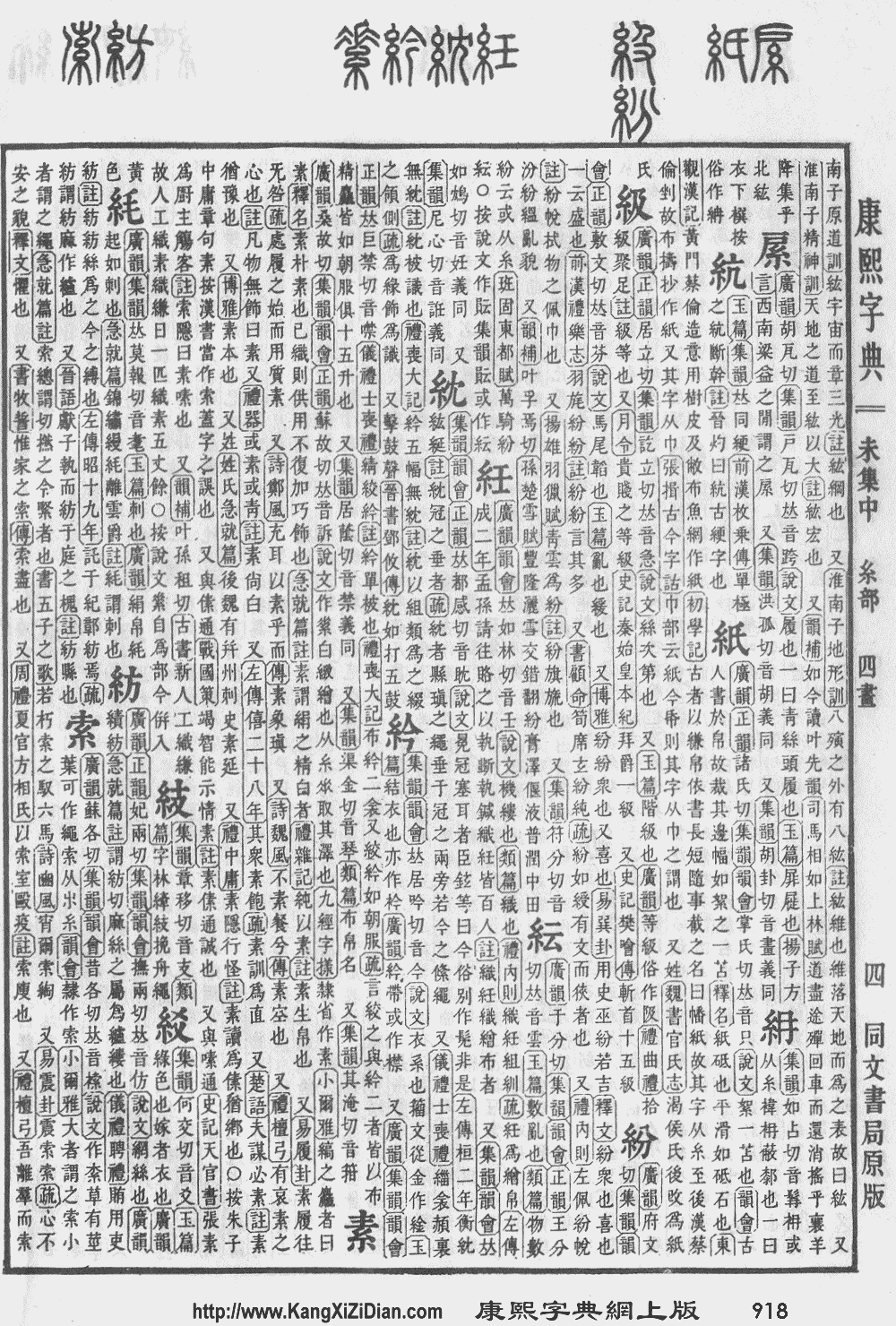
- Kangxi Dictionary: page 918, character 4
- Dai Kanwa Jiten: character 27293
- Dae Jaweon: page 1347, character 13
- Hanyu Da Zidian (first edition): volume 5, page 3375, character 12
- Unihan data for U+7D19
Chinese
| trad. | 紙 | |
|---|---|---|
| simp. | 纸 | |
| alternative forms | 帋 𦀦 𥾬 | |
Glyph origin
| Historical forms of the character 紙 | |
|---|---|
| Shuowen Jiezi (compiled in Han) | Liushutong (compiled in Ming) |
| Small seal script | Transcribed ancient scripts |
 |
 |
Phono-semantic compound (形聲/形声, OC *kjeʔ) : semantic 糸 (“silk”) + phonetic 氏 (OC *skeŋ, *kje, *ɡjeʔ).
Etymology
Unknown. It has been connected to Vietnamese giấy (< Proto-Vietic *k-cajʔ).
Pronunciation
Definitions
紙
- (countable) paper (Classifier: 張/张)
- 自古書契多編以竹簡,其用縑帛者謂之為紙。縑貴而簡重,並不便於人。倫乃造意,用樹膚、麻頭及敝布、魚網以為紙。元興元年奏上之,帝善其能,自是莫不從用焉,故天下咸稱「蔡侯紙」。 [Classical Chinese, trad.]
- From: The Book of the Later Han, circa 5th century CE
- Zìgǔ shūqì duō biān yǐ zhújiǎn, qí yòng jiānbó zhě wèi zhī wéi zhǐ. Jiān guì ér jiǎn zhòng, bìng bù biàn yú rén. Lún nǎi zàoyì, yòng shùfū, mátóu jí bìbù, yúwǎng yǐ wéi zhǐ. Yuánxìng yuánnián zòu shàng zhī, dì shàn qí néng, zì shì mò bù cóng yòng yān, gù tiānxià xián chēng “Cài hóu zhǐ”. [Pinyin]
- In ancient times writings and inscriptions were generally made on tablets of bamboo or on pieces of silk called zhi. But silk being costly and bamboos heavy they were not convenient to use. Cai Lun then initiated the idea of making paper from the bark of trees, remnants of hemp, rags of cloth and fishing nets. He submitted the process to the emperor in the first year of Yuanxing and received praise for his ability. From this time, paper has been in use everywhere and is universally called "the paper of Marquis Cai".
自古书契多编以竹简,其用缣帛者谓之为纸。缣贵而简重,并不便于人。伦乃造意,用树肤、麻头及敝布、鱼网以为纸。元兴元年奏上之,帝善其能,自是莫不从用焉,故天下咸称「蔡侯纸」。 [Classical Chinese, simp.]
- (chiefly Cantonese) currency
- (Cantonese, countable) banknote; bill (Classifier: 張/张 c)
- Classifier for document and letters.
- Short for 紙錢/纸钱 (zhǐqián, “paper made to resemble money and burnt as an offering to the dead”).
- (Mandarin, neologism, slang) Pronunciation spelling of 子 (zǐ).
- a surname
Synonyms
Compounds
- 一紙空文/一纸空文 (yīzhǐkōngwén)
- 上紙/上纸 (shàngzhǐ)
- 三紙無驢/三纸无驴
- 丟紙扇/丢纸扇
- 五福紙/五福纸
- 仿宣紙/仿宣纸
- 仿紙/仿纸 (fǎngzhǐ)
- 仿羊皮紙/仿羊皮纸
- 仿連史紙/仿连史纸
- 便條紙/便条纸
- 信紙/信纸 (xìnzhǐ)
- 側理紙/侧理纸
- 元書紙/元书纸
- 再生紙/再生纸 (zàishēngzhǐ)
- 再製紙/再制纸
- 冥紙/冥纸
- 冰翼紙/冰翼纸
- 剪紙/剪纸 (jiǎnzhǐ)
- 力透紙背/力透纸背
- 包裝紙/包装纸 (bāozhuāngzhǐ)
- 化紙/化纸
- 卡紙/卡纸
- 印像紙/印像纸
- 印相紙/印相纸
- 卷紙/卷纸
- 名紙/名纸
- 吸墨紙/吸墨纸 (xīmòzhǐ)
- 命如紙/命如纸
- 嚼墨噴紙/嚼墨喷纸
- 四六版紙/四六版纸
- 圖紙/图纸 (túzhǐ)
- 報紙/报纸 (bàozhǐ)
- 壁報紙/壁报纸
- 壁紙/壁纸 (bìzhǐ)
- 姚黃紙/姚黄纸
- 字紙/字纸 (zìzhǐ)
- 字紙簍/字纸篓 (zìzhǐlǒu)
- 學書紙/学书纸
- 官情紙薄/官情纸薄
- 宣紙/宣纸 (xuānzhǐ)
- 布紋紙/布纹纸
- 年紙/年纸
- 廁紙/厕纸 (cèzhǐ)
- 廣用試紙/广用试纸
- 廢紙/废纸 (fèizhǐ)
- 弔紙/吊纸
- 情長紙短/情长纸短
- 感光紙/感光纸 (gǎnguāngzhǐ)
- 手紙/手纸 (shǒuzhǐ)
- 打孔紙帶/打孔纸带
- 打字紙/打字纸
- 抗溼紙/抗湿纸
- 抄紙/抄纸
- 折紙/折纸 (zhézhǐ)
- 投身紙/投身纸
- 招紙/招纸
- 拍紙簿/拍纸簿 (pāizhǐbù)
- 拷貝紙/拷贝纸
- 捕蠅紙/捕蝇纸 (bǔyíngzhǐ)
- 掛紙/挂纸
- 摺紙/折纸 (zhézhǐ)
- 撒紙錢/撒纸钱
- 撿字紙/捡字纸
- 故紙/故纸
- 故紙堆/故纸堆 (gùzhǐduī)
- 新聞紙/新闻纸 (xīnwénzhǐ)
- 斷幅殘紙/断幅残纸
- 斷紙餘墨/断纸余墨 (duànzhǐyúmò)
- 方格紙/方格纸
- 書面紙/书面纸
- 有光紙/有光纸
- 東昌紙/东昌纸
- 松花紙/松花纸
- 柏油紙/柏油纸
- 染翰操紙/染翰操纸
- 格子紙/格子纸
- 桑皮紙/桑皮纸
- 桃花紙/桃花纸
- 棉紙/棉纸
- 楮紙/楮纸 (chǔzhǐ)
- 模造紙/模造纸
- 毛太紙/毛太纸
- 毛紙/毛纸
- 毛邊紙/毛边纸 (máobiānzhǐ)
- 毛頭紙/毛头纸
- 江東紙/江东纸
- 油倣紙/油仿纸
- 油紙/油纸 (yóuzhǐ)
- 油紙傘/油纸伞
- 油紙扇/油纸扇
- 油紙捻子/油纸捻子
- 洋紙/洋纸
- 洛陽紙貴/洛阳纸贵 (luòyángzhǐguì)
- 活頁紙/活页纸
- 澄心堂紙/澄心堂纸
- 濾紙/滤纸 (lǜzhǐ)
- 火紙/火纸
- 火紙煤兒/火纸煤儿
- 火紙筒子/火纸筒子
- 炭精紙/炭精纸
- 烈紙/烈纸
- 烈紙錢/烈纸钱
- 照相紙/照相纸
- 熏草紙
- 熟紙/熟纸
- 燒紙/烧纸 (shāozhǐ)
- 燒紙引鬼/烧纸引鬼
- 片紙隻字/片纸只字
- 牋紙/笺纸
- 牛皮紙/牛皮纸 (niúpízhǐ)
- 狀紙/状纸 (zhuàngzhǐ)
- 玉版紙/玉版纸
- 玻璃紙/玻璃纸
- 瓦楞紙/瓦楞纸
- 生紙/生纸
- 白報紙/白报纸 (báibàozhǐ)
- 白紙/白纸 (báizhǐ)
- 白紙黑字/白纸黑字 (báizhǐhēizì)
- 白鹿紙/白鹿纸
- 皮紙/皮纸
- 相紙/相纸
- 石蕊試紙/石蕊试纸 (shíruǐ shìzhǐ)
- 砂紙/砂纸 (shāzhǐ)
- 神紙/神纸
- 神紙馬兒/神纸马儿
- 稿紙/稿纸 (gǎozhǐ)
- 窗戶紙/窗户纸
- 窗紙/窗纸
- 竹紙/竹纸
- 筆墨紙硯/笔墨纸砚 (bǐmòzhǐyàn)
- 箋紙/笺纸 (jiānzhǐ)
- 粉紙/粉纸
- 糊紙/糊纸
- 糙紙/糙纸
- 糯米紙/糯米纸
- 紙上作業/纸上作业
- 紙上封鎖/纸上封锁
- 紙上空談/纸上空谈
- 紙上談兵/纸上谈兵 (zhǐshàngtánbīng)
- 紙上電影/纸上电影
- 紙人/纸人 (zhǐrén)
- 紙傘/纸伞
- 紙劄/纸劄
- 紙包/纸包
- 紙半張/纸半张
- 紙坊/纸坊 (zhǐfáng)
- 紙坊沖/纸坊冲 (Zhǐfángchōng)
- 紙套/纸套
- 紙婚/纸婚
- 紙尿布/纸尿布
- 紙尿片/纸尿片 (zhǐniàopiàn)
- 紙尿褲/纸尿裤 (zhǐniàokù)
- 紙屑/纸屑 (zhǐxiè)
- 紙工/纸工
- 紙巾/纸巾 (zhǐjīn)
- 紙幣/纸币 (zhǐbì)
- 紙幡兒/纸幡儿
- 紙廠河/纸厂河 (Zhǐchǎnghé)
- 紙張/纸张 (zhǐzhāng)
- 紙彈/纸弹
- 紙扇/纸扇
- 紙捻兒/纸捻儿
- 紙撚兒/纸撚儿
- 紙枋/纸枋 (chóa-pang) (Min Nan)
- 紙條/纸条 (zhǐtiáo)
- 紙業/纸业
- 紙楣子/纸楣子
- 紙標兒/纸标儿
- 紙漿/纸浆 (zhǐjiāng)
- 紙灰/纸灰
- 紙煤子/纸煤子
- 紙煤管子/纸煤管子
- 紙燈/纸灯 (zhǐdēng)
- 紙片/纸片 (zhǐpiàn)
- 紙版/纸版
- 紙牌/纸牌 (zhǐpái)
- 紙短情長/纸短情长
- 紙窗/纸窗
- 紙筆/纸笔 (zhǐbǐ)
- 紙箱/纸箱 (zhǐxiāng)
- 紙糊頭/纸糊头
- 紙紮/纸扎 (zhǐzhá)
- 紙紮店/纸扎店
- 紙老虎/纸老虎 (zhǐlǎohǔ)
- 紙背/纸背 (zhǐbèi)
- 紙草/纸草 (zhǐcǎo)
- 紙菸/纸烟 (zhǐyān)
- 紙蝴蝶/纸蝴蝶
- 紙袋/纸袋 (zhǐdài)
- 紙被/纸被
- 紙醉金迷/纸醉金迷 (zhǐzuìjīnmí)
- 紙鈔/纸钞 (zhǐchāo)
- 紙錢/纸钱 (zhǐqián)
- 紙鎮/纸镇 (zhǐzhèn)
- 紙雕/纸雕
- 紙面/纸面
- 紙飯碗/纸饭碗
- 紙馬/纸马 (zhǐmǎ)
- 紙馬鋪/纸马铺
- 紙鳶/纸鸢 (zhǐyuān)
- 紙鷂/纸鹞 (zhǐyào)
- 紙黏土/纸黏土
- 絮紙/絮纸
- 經紙/经纸
- 綿紙/绵纸
- 綢紋紙/绸纹纸
- 練習紙/练习纸
- 繭紙/茧纸
- 罫紙/罫纸
- 羊皮紙/羊皮纸 (yángpízhǐ)
- 聖經紙/圣经纸
- 膠紙/胶纸 (jiāozhǐ)
- 茅紙/茅纸
- 苔紙/苔纸
- 草紙/草纸 (cǎozhǐ)
- 菸紙店/烟纸店
- 落紙如飛/落纸如飞
- 蒼蠅紙/苍蝇纸 (cāngyingzhǐ)
- 蔡侯紙/蔡侯纸
- 藤紙/藤纸
- 蠟光紙/蜡光纸
- 蠟紙/蜡纸 (làzhǐ)
- 蠶紙/蚕纸 (cánzhǐ)
- 衛生紙/卫生纸 (wèishēngzhǐ)
- 表紙/表纸
- 複寫紙/复写纸 (fùxiězhǐ)
- 襯紙/衬纸 (chènzhǐ)
- 試紙/试纸 (shìzhǐ)
- 象皮紙/象皮纸 (xiàngpízhǐ)
- 貼紙/贴纸 (tiēzhǐ)
- 貼紙圖案/贴纸图案
- 躍然紙上/跃然纸上 (yuèránzhǐshàng)
- 轉印紙/转印纸
- 退送紙/退送纸
- 連史紙/连史纸
- 連四紙/连四纸
- 造紙/造纸 (zàozhǐ)
- 通草紙/通草纸
- 道林紙/道林纸
- 遞呈紙/递呈纸
- 金箔紙/金箔纸
- 金糕紙/金糕纸
- 金迷紙醉/金迷纸醉
- 金銀紙/金银纸 (jīnyínzhǐ)
- 銅版紙/铜版纸
- 銀紙/银纸 (yínzhǐ)
- 鋪紙/铺纸
- 銷金紙/销金纸
- 錫箔紙/锡箔纸
- 錫紙/锡纸 (xīzhǐ)
- 錢紙/钱纸
- 鋼紙/钢纸
- 鎮紙/镇纸 (zhènzhǐ)
- 鑽故紙/钻故纸
- 隔音紙/隔音纸
- 雪連紙/雪连纸
- 面如白紙/面如白纸
- 面如金紙/面如金纸
- 面紙/面纸
- 香紙/香纸
- 香蠟紙馬/香蜡纸马
- 馬糞紙/马粪纸 (mǎfènzhǐ)
- 高麗紙/高丽纸
- 鳳紙/凤纸
- 麻紙/麻纸
- 黃同紙/黄同纸
- 黃紙/黄纸
- 黃表紙/黄表纸
- 點紙/点纸
- 點紙畫字/点纸画字
- 點紙節/点纸节
Descendants
Others:
References
- “紙”, in 漢語多功能字庫 (Multi-function Chinese Character Database), 香港中文大學 (the Chinese University of Hong Kong), 2014–
- Dictionary of Chinese Character Variants (教育部異體字字典), A03100
Japanese
Compounds
Etymology 1
| Kanji in this term |
|---|
| 紙 |
| かみ Grade: 2 |
| kun’yomi |
Cited to manuscript kana glosses in the Nihon Shoki of 720 CE.[1]
Appears to be a shift in pronunciation from the Middle Chinese term 簡 (MC keanX), borrowed into Old Japanese with the pronunciation kan.[2]
- /kaɴ/ → */kamu/ → /kami/
Earlier Japanese writing was ambiguous regarding the final n sound spelled ん in modern Japanese, with this sound often spelled (and possibly pronounced) as む (mu) instead. Compare the similar appearance of an excrescent final -i in the derivation of 文 (fumi) from borrowed bun or pun.
Derived terms
- 紙パック (kamipakku)
Pronunciation
- IPA(key): [ɕi]
Audio (file)
References
- “紙”, in 日本国語大辞典 (Nihon Kokugo Daijiten, “Nihon Kokugo Daijiten”) (in Japanese), concise edition, Tōkyō: Shogakukan, 2000
- “紙”, in デジタル大辞泉 [Digital Daijisen] (in Japanese), Tōkyō: Shogakukan, updated roughly every four months
- Matsumura, Akira, editor (2006), 大辞林 [Daijirin] (in Japanese), Third edition, Tōkyō: Sanseidō, →ISBN
- Kindaichi, Kyōsuke et al., editors (1997), 新明解国語辞典 [Shin Meikai Kokugo Jiten] (in Japanese), Fifth edition, Tōkyō: Sanseidō, →ISBN
- NHK Broadcasting Culture Research Institute, editor (1998), NHK日本語発音アクセント辞典 [NHK Japanese Pronunciation Accent Dictionary] (in Japanese), Tōkyō: NHK Publishing, →ISBN
Korean
Etymology
(This etymology is missing or incomplete. Please add to it, or discuss it at the Etymology scriptorium. Particularly: “Middle Korean readings, if any”)
Pronunciation
- (SK Standard/Seoul) IPA(key): [t͡ɕi]
- Phonetic hangul: [지]
Old Japanese
Noun
紙 (*KAMI₁)
Reconstruction notes
The reconstruction as *KAMI₁ and not **KAMI₂ is because Ainu would have loaned this word as *kambUy, not kambi. Note that Old Japanese "voiced stops" are recognized as pre-nasalized voiced stops, and this is supported by Ainu loans from Old Japanese.
Descendants
- Japanese: 紙 (kami)
- → Ainu: カムビ (kambi) (< *kabi₁, see also Proto-Ryukyuan *kabi)