釋
| ||||||||
Translingual
| Traditional | 釋 |
|---|---|
| Shinjitai | 釈 |
| Simplified | 释 |
Han character
釋 (Kangxi radical 165, 釆+13, 20 strokes, cangjie input 竹木田中十 (HDWLJ), four-corner 26941, composition ⿰釆睪)
Derived characters
- 𡅵 𨰪
References
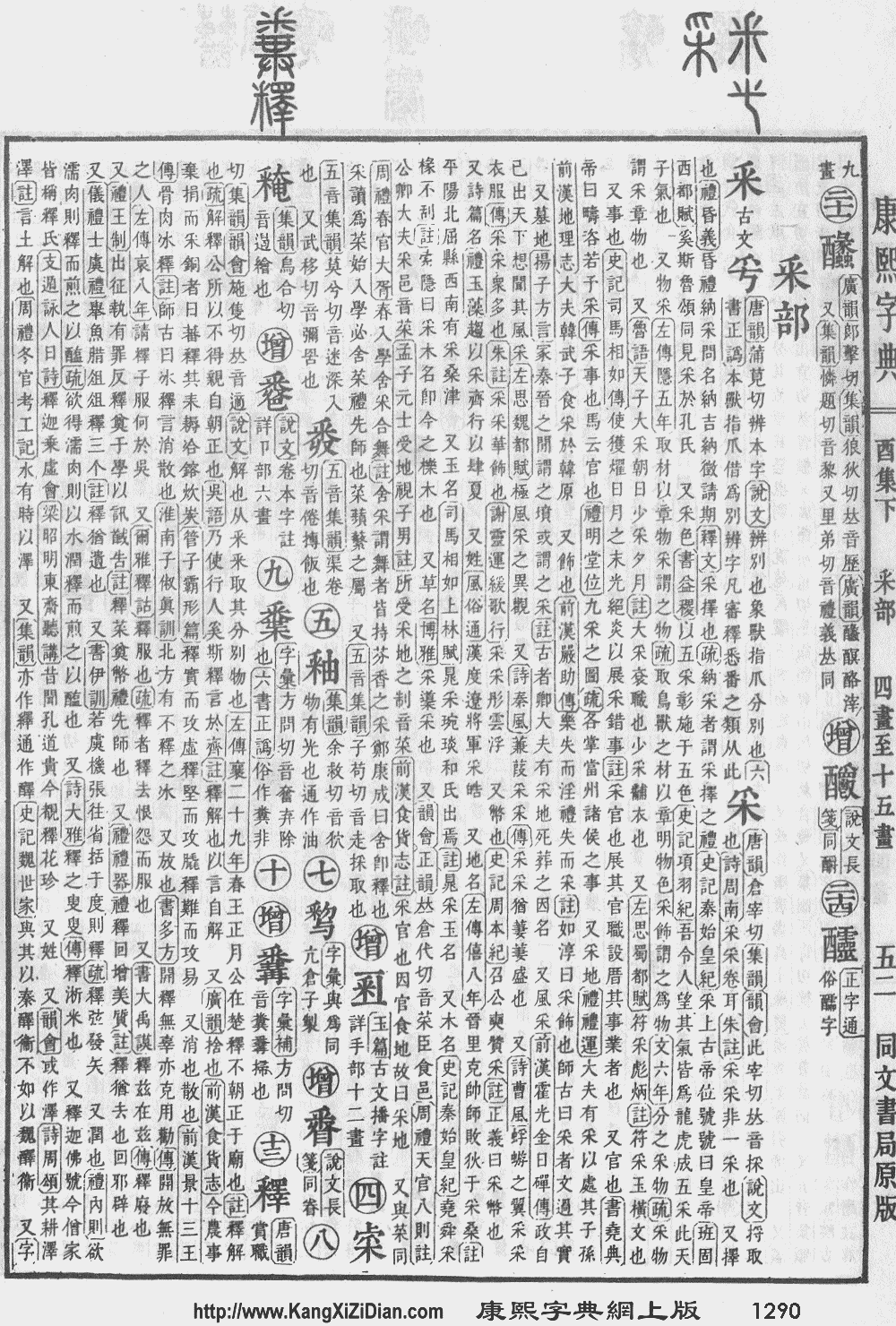
- Kangxi Dictionary: page 1290, character 17
- Dai Kanwa Jiten: character 40129
- Dae Jaweon: page 1791, character 4
- Hanyu Da Zidian (first edition): volume 6, page 3900, character 6
- Unihan data for U+91CB
Chinese
| trad. | 釋 | |
|---|---|---|
| simp. | 释 | |
Glyph origin
Characters in the same phonetic series (睪) (Zhengzhang, 2003)
Phono-semantic compound (形聲/形声, OC *hljaɡ) : semantic 釆 (“distinguish”) + phonetic 睪 (OC *neb, *laːɡ, *kuː).
Etymology
- Buddhist monastic surname
Popularized by Dao'an as a common surname for all Buddhist monastics by taking the first character of Śākyamuni Buddha's transliterated Chinese name, 釋迦牟尼/释迦牟尼 (Shìjiāmóuní).
- 初魏晉沙門依師為姓,故姓各不同,安以為大師之本,莫尊釋迦,乃以釋命氏。 [Classical Chinese, trad.]
- From: 高僧傳
- Chū Wèi Jìn shāmén yī shī wèi xìng, gù xìng gè bùtóng, Ān yǐwèi dàshī zhī běn, mò zūn Shìjiā, nǎi yǐ Shì mìng shì. [Pinyin]
- At the beginning of the Wei and Jin, śramaṇas all took their surname from their teachers, and thus their surnames were all different. Dao'an believed that the archetype of all great teachers could not be anyone other than Śākya[muni], and thus gave Shi as their lineage.
初魏晋沙门依师为姓,故姓各不同,安以为大师之本,莫尊释迦,乃以释命氏。 [Classical Chinese, simp.]
Pronunciation
Definitions
釋
Compounds
- 不忍釋手/不忍释手
- 不釋/不释
- 不釋口/不释口
- 保釋/保释 (bǎoshì)
- 假釋/假释 (jiǎshì)
- 冰消凍釋/冰消冻释
- 冰解凍釋/冰解冻释
- 冰釋/冰释 (bīngshì)
- 凍解冰釋/冻解冰释
- 剖釋/剖释
- 如釋重負/如释重负 (rúshìzhòngfù)
- 帝釋天/帝释天 (Dìshìtiān)
- 愛不忍釋/爱不忍释
- 愛不釋手/爱不释手 (àibùshìshǒu)
- 手不釋卷/手不释卷 (shǒubùshìjuàn)
- 擴充解釋/扩充解释
- 易通釋/易通释
- 注釋 (zhùshì)
- 沿革解釋/沿革解释
- 消愁釋悶/消愁释闷
- 消愁釋憒/消愁释愦
- 消釋/消释 (xiāoshì)
- 渙然冰釋/涣然冰释
- 無罪開釋/无罪开释
- 煙消冰釋/烟消冰释
- 煥然冰釋/焕然冰释
- 獲釋/获释 (huòshì)
- 稀釋/稀释 (xīshì)
- 稀釋劑/稀释剂 (xīshìjì)
- 簡釋/简释
- 經典釋文/经典释文
- 考釋/考释 (kǎoshì)
- 若釋重負/若释重负
- 解兵釋甲/解兵释甲
- 解甲釋兵/解甲释兵
- 解疑釋結/解疑释结
- 解釋/解释 (jiěshì)
- 評釋/评释
- 詮釋/诠释 (quánshì)
- 釋例/释例 (shìlì)
- 釋典/释典 (shìdiǎn)
- 釋出/释出 (shìchū)
- 釋卷/释卷 (shìjuàn)
- 釋口/释口
- 釋名/释名 (Shìmíng)
- 釋奠/释奠 (shìdiàn)
- 釋子/释子 (shìzǐ)
- 釋家/释家 (shìjiā)
- 釋憲/释宪 (shìxiàn)
- 釋憾/释憾 (shìhàn)
- 釋懷/释怀 (shìhuái)
- 釋手/释手
- 釋提桓因/释提桓因 (Shìtíhuányīn)
- 釋放/释放 (shìfàng)
- 釋教/释教 (shìjiào)
- 釋文/释文 (shìwén)
- 釋氏/释氏
- 釋法/释法 (shìfǎ)
- 釋然/释然 (shìrán)
- 釋疑/释疑 (shìyí)
- 釋義/释义 (shìyì)
- 釋老/释老
- 釋菜/释菜
- 釋藏/释藏
- 釋褐/释褐
- 釋言/释言
- 釋迦/释迦 (shìjiā)
- 釋迦果/释迦果 (shìjiāguǒ)
- 釋迦牟尼/释迦牟尼 (Shìjiāmóuní)
- 釋部/释部
- 釋門/释门
- 開釋/开释 (kāishì)
- 闡釋/阐释 (chǎnshì)
- 陽儒陰釋/阳儒阴释
- 隸釋/隶释
Descendants
Japanese
| 釈 | |
| 釋 |
Kanji
釋
(uncommon “Hyōgai” kanji, kyūjitai kanji, shinjitai form 釈)
- This term needs a translation to English. Please help out and add a translation, then remove the text
{{rfdef}}.
Korean
Hanja
釋 • (seok) (hangeul 석)
- This term needs a translation to English. Please help out and add a translation, then remove the text
{{rfdef}}.
Vietnamese
This article is issued from Wiktionary. The text is licensed under Creative Commons - Attribution - Sharealike. Additional terms may apply for the media files.