鳥
| ||||||||
| ||||||||
Translingual
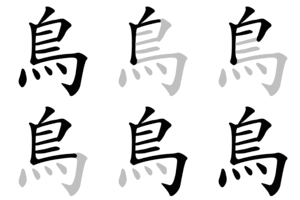
| Stroke order | |||
|---|---|---|---|
 | |||
Han character
鳥 (Kangxi radical 196, 鳥+0, 11 strokes, cangjie input 竹日卜火 (HAYF), four-corner 27327, composition ⿴烏一)
- Kangxi radical #196, ⿃.
Derived characters
References
- Kangxi Dictionary: page 1480, character 52
- Dai Kanwa Jiten: character 46634
- Dae Jaweon: page 2012, character 25
- Hanyu Da Zidian (first edition): volume 7, page 4613, character 1
- Unihan data for U+9CE5
Chinese
| trad. | 鳥 | |
|---|---|---|
| simp. | 鸟 | |

Glyph origin
| Historical forms of the character 鳥 | ||
|---|---|---|
| Shang | Western Zhou | Shuowen Jiezi (compiled in Han) |
| Oracle bone script | Bronze inscriptions | Small seal script |
 |
 |
 |
Pictogram (象形) : a bird with a dangling tail.
Compare 烏, which is very similar, of similar origin, and 隹, which originated from a similar image of a bird, but is today rather more abstract and less recognizable. Compare to Egyptian 𓄿
Etymology
Originally pronounced with a /t-/ initial (compare 島 (OC *tuːwʔ, “island”)). In many dialects, it changed to a /n-/ initial to avoid homophony with the vulgar word 屌 (diǎo, “penis”), which may ultimately have developed from the sense “bird”. Birds/fowl are characteristically associated with Chinese slang for genitalia; compare 雀 (“sparrow > penis”) and 雞 (“chicken > penis”).
Alternatively, Schuessler (2007) hypothesised that the /n-/ initial form for “bird” may be unrelated to the /t-/ form. Instead, it may be connected with the Tai-Kadai word for bird; compare Proto-Tai *C̬.nokᴰ (“bird”), whence Thai นก (nók).
The /t-/ form may be derived from Proto-Sino-Tibetan *daw (“bird”), cognate with Proto-Karen *thoᴮ (“bird”) and Proto-Bodo-Garo *tao² (“bird”).
Pronunciation 1
Definitions
鳥
Synonyms
Compounds
- 一石二鳥/一石二鸟 (yīshí'èrniǎo)
- 一石兩鳥/一石两鸟
- 丹鳥/丹鸟
- 九官鳥/九官鸟 (jiǔguānniǎo)
- 九頭鳥/九头鸟
- 了鳥/了鸟
- 人為財死,鳥為食亡/人为财死,鸟为食亡 (rén wèi cái sǐ, niǎo wèi shí wáng)
- 伯勞鳥/伯劳鸟 (bóláoniǎo)
- 伺晨鳥/伺晨鸟
- 伽藍鳥/伽蓝鸟 (qiélánniǎo)
- 保護鳥/保护鸟
- 信鳥/信鸟
- 候鳥/候鸟 (hòuniǎo)
- 倦鳥知返/倦鸟知返
- 傷弓之鳥/伤弓之鸟
- 催明鳥/催明鸟
- 八色鳥/八色鸟
- 共命鳥/共命鸟 (gòngmìngniǎo)
- 出籠鳥/出笼鸟
- 出頭鳥/出头鸟
- 反舌鳥/反舌鸟
- 同命鳥/同命鸟
- 同林鳥/同林鸟
- 呆鳥/呆鸟
- 啄木鳥/啄木鸟 (zhuómùniǎo)
- 坌鳥先飛/坌鸟先飞 (bènniǎoxiānfēi)
- 夏候鳥/夏候鸟
- 天堂鳥/天堂鸟 (tiāntángniǎo)
- 太陽鳥/太阳鸟
- 好鳥/好鸟 (hǎoniǎo)
- 如鳥獸散/如鸟兽散
- 始祖鳥/始祖鸟 (shǐzǔniǎo)
- 孝鳥/孝鸟
- 孤鳥/孤鸟
- 害鳥/害鸟 (hàiniǎo)
- 小鳥依人/小鸟依人 (xiǎoniǎoyīrén)
- 屁鳥人/屁鸟人
- 崎嶇鳥道/崎岖鸟道
- 布穀鳥/布谷鸟 (bùgǔniǎo)
- 干鳥
- 干鳥氣/干鸟气
- 恐鳥/恐鸟 (kǒngniǎo)
- 撮鳥/撮鸟
- 攛哄鳥亂/撺哄鸟乱
- 文鳥/文鸟
- 暗光鳥/暗光鸟 (àm-kong-chiáu) (Min Nan)
- 朱鳥/朱鸟
- 梟鳥/枭鸟 (xiāoniǎo)
- 極樂鳥/极乐鸟 (jílèniǎo)
- 橿鳥/橿鸟 (jiāngniǎo)
- 檻猿籠鳥/槛猿笼鸟
- 比翼鳥/比翼鸟 (bǐyìniǎo)
- 水鳥/水鸟 (shuǐniǎo)
- 池魚籠鳥/池鱼笼鸟
- 漂鳥/漂鸟
- 火鳥/火鸟
- 烏鳥之情/乌鸟之情
- 烏鳥私情/乌鸟私情
- 無翼鳥/无翼鸟 (wúyìniǎo)
- 熊經鳥申/熊经鸟申
- 犀鳥/犀鸟 (xīniǎo)
- 獸聚鳥散/兽聚鸟散
- 獵鳥/猎鸟
- 玄鳥/玄鸟
- 玄鳥氏/玄鸟氏
- 琴鳥/琴鸟 (qínniǎo)
- 留鳥/留鸟 (liúniǎo)
- 白鳥/白鸟 (báiniǎo)
- 百靈鳥/百灵鸟 (bǎilíngniǎo)
- 百鳥/百鸟 (bǎiniǎo)
- 百鳥朝鳳/百鸟朝凤 (bǎiniǎocháofèng)
- 益鳥/益鸟 (yìniǎo)
- 相思鳥/相思鸟
- 知更鳥/知更鸟 (zhīgēngniǎo)
- 禽息鳥視/禽息鸟视
- 禽鳥/禽鸟 (qínniǎo)
- 窮鳥入懷/穷鸟入怀
- 笨鳥先飛/笨鸟先飞 (bènniǎoxiānfēi)
- 籠中之鳥/笼中之鸟
- 籠中窮鳥/笼中穷鸟
- 籠中鳥/笼中鸟
- 籠鳥檻猿/笼鸟槛猿
- 粉鳥/粉鸟 (hún-chiáu) (Min Nan)
- 精鳥賬/精鸟账
- 綬帶鳥/绶带鸟
- 羅含夢鳥/罗含梦鸟
- 羊腸鳥道/羊肠鸟道
- 翠鳥/翠鸟 (cuìniǎo)
- 翳鳥/翳鸟
- 老鳥/老鸟 (lǎoniǎo)
- 能言鳥/能言鸟 (néngyánniǎo)
- 花香鳥語/花香鸟语
- 花鳥使/花鸟使
- 花鳥畫/花鸟画
- 菜鳥/菜鸟 (càiniǎo)
- 蒼鳥/苍鸟
- 蜂鳥/蜂鸟 (fēngniǎo)
- 象鳥/象鸟
- 越鳥/越鸟 (yuèniǎo)
- 越鳥南棲/越鸟南栖
- 軍艦鳥/军舰鸟
- 遛鳥/遛鸟 (liùniǎo)
- 野鳥/野鸟 (yěniǎo)
- 錦花鳥/锦花鸟
- 鐵鳥/铁鸟 (tiěniǎo)
- 長頸鳥喙/长颈鸟喙
- 陽鳥/阳鸟
- 隴鳥/陇鸟
- 雛鳥/雏鸟 (chúniǎo)
- 雷鳥/雷鸟 (léiniǎo)
- 青鳥/青鸟
- 韓朋鳥/韩朋鸟
- 飛鳥/飞鸟 (fēiniǎo)
- 飛鳥使/飞鸟使
- 飛鳥依人/飞鸟依人
- 駝鳥/驼鸟 (tuóniǎo)
- 駝鳥政策/驼鸟政策
- 驚弓之鳥/惊弓之鸟 (jīnggōngzhīniǎo)
- 魚潰鳥散/鱼溃鸟散
- 魚驚鳥散/鱼惊鸟散
- 魚鳥/鱼鸟
- 鰹鳥/鲣鸟 (jiānniǎo)
- 鱉鳥/鳖鸟
- 鳥人/鸟人
- 鳥信/鸟信
- 鳥卜/鸟卜
- 鳥喙/鸟喙 (niǎohuì)
- 鳥嘴銃/鸟嘴铳
- 鳥囀/鸟啭
- 鳥園/鸟园
- 鳥夷/鸟夷
- 鳥媒花/鸟媒花
- 鳥尾花/鸟尾花
- 鳥屋/鸟屋
- 鳥嶼/鸟屿 (Niǎoyǔ)
- 鳥巢/鸟巢 (niǎocháo)
- 鳥庭/鸟庭
- 鳥房/鸟房
- 鳥散/鸟散
- 鳥散魚潰/鸟散鱼溃
- 鳥松/鸟松 (Niǎosōng)
- 鳥梨/鸟梨
- 鳥槍/鸟枪 (niǎoqiāng)
- 鳥爪/鸟爪
- 鳥獸/鸟兽 (niǎoshòu)
- 鳥獸散/鸟兽散 (niǎoshòusàn)
- 鳥獸行/鸟兽行
- 鳥王/鸟王
- 鳥盡弓藏/鸟尽弓藏 (niǎojìngōngcáng)
- 鳥瞰/鸟瞰 (niǎokàn)
- 鳥窩/鸟窝 (niǎowō)
- 鳥篆/鸟篆
- 鳥籠/鸟笼 (niǎolóng)
- 鳥糞層/鸟粪层
- 鳥紋/鸟纹
- 鳥舉/鸟举
- 鳥葬/鸟葬
- 鳥蟲書/鸟虫书
- 鳥裡鳥氣/鸟里鸟气
- 鳥語/鸟语 (niǎoyǔ)
- 鳥語花香/鸟语花香 (niǎoyǔhuāxiāng)
- 鳥道/鸟道
- 鳥道羊腸/鸟道羊肠
- 鳥銃/鸟铳 (niǎochòng)
- 鳥集鱗萃/鸟集鳞萃
- 鳥面鵠形/鸟面鹄形
- 鳥革翬飛/鸟革翚飞
- 鳥類/鸟类 (niǎolèi)
- 鳥食/鸟食
- 鳥驚魚潰/鸟惊鱼溃
- 鳥鼠/鸟鼠 (niáu-chhí) (Min Nan)
- 鴇鳥/鸨鸟
- 鴕鳥/鸵鸟 (tuóniǎo)
- 鴕鳥蛋/鸵鸟蛋
- 鵠面鳥形/鹄面鸟形
- 鶉鳥/鹑鸟
- 鷙鳥/鸷鸟 (zhìniǎo)
- 鷙鳥不群/鸷鸟不群
- 鷗鳥忘機/鸥鸟忘机
- 黃鳥/黄鸟 (huángniǎo)
- 龜文鳥跡/龟文鸟迹
Descendants
- → Thai: เจี๊ยว (jíao)
Pronunciation 2
Definitions
鳥
Japanese
Readings
Compounds
- 鳥瞰 (chōkan)
- 鳥瞰図 (chōkanzu)
- 鳥獣 (chōjū)
- 鳥葬 (chōsō)
- 鳥類 (chōrui, “bird, birds; avian”)
- 愛鳥 (aichō, “beloved bird; love for birds”)
- 益鳥 (ekichō, “beneficial bird”)
- 害鳥 (gaichō, “harmful bird”)
- 伽藍鳥 (karanchō, “pelican”)
- 七面鳥 (shichimenchō, “turkey”)
- 慈鳥 (jichō, “crow, raven”)
- 人鳥 (jinchō, “penguin”)
- 駝鳥 (dachō, “ostrich”)
- 火の鳥 (hi no tori, “phoenix”, in Western mythology)
- 不死鳥 (fushichō, “undying bird”)
- 雷鳥 (raichō, “ptarmigan, a snow grouse”)
- 雷神鳥 (raijinchō, “thunderbird”)
Etymology 1

| Kanji in this term |
|---|
| 鳥 |
| とり Grade: 2 |
| kun’yomi |
⟨to2ri⟩ → /tori/
From Old Japanese, from Proto-Japonic *təri. Probably cognate with Middle Korean ᄃᆞᆰ (tolk), modern Korean 닭 (dak, “fowl; chicken”).
May also be related to the verb 飛ぶ (tobu, “to fly”).
Noun
鳥 • (tori)
- a bird
- 1999 July 5, “タクヒ [Takuhi]”, in BOOSTER 3, Konami:
- このトリが現れた時は、何か不吉な事が起こる前ぶれ。
- Kono tori ga arawareta toki wa, nani ka fukitsu na koto ga okoru maebure.
- This bird brings bad luck to wherever it comes.
- このトリが現れた時は、何か不吉な事が起こる前ぶれ。
- 1999 August 26, “セイント・バード [Saint Bird]”, in BOOSTER 4, Konami:
- 非常に尾の長い鳥。全身から聖なる光を発する。
- Hijō ni o no nagai tori. Zenshin kara seinaru hikari o hassuru.
- A bird with an unusually long tail. It illuminates with holy light.
- 非常に尾の長い鳥。全身から聖なる光を発する。
- a chicken
- 1086, Goshūi Wakashū (book 16, poem 939; also Hyakunin Isshu, poem 62)
- fowl or chicken meat
Derived terms
- 酉 (Tori): the Cock in the Chinese zodiac
- 鳥居 (torī, “torii gate”, literally "bird stand, bird perch")
- 鳥インフルエンザ (tori infuruenza, “avian influenza, bird flu”)
- 鳥籠 (torikago, “birdcage”)
- 鳥刺し (torisashi, “chicken sashimi, raw chicken meat”)
- 信天翁 (ahōdori, “albatross”)
- 臼辺鳥 (usubedori): chicken (bird)
- 鴛鴦 (oshidori, “mandarin duck”)
- 鶏 (niwatori, “chicken”)
Etymology 2
| Kanji in this term |
|---|
| 鳥 |
| と Grade: 2 |
| kun’yomi |
⟨to2ri⟩ → ⟨*to2⟩ → /to/
From Old Japanese.[4][5] Appears to be a shift from tori above.
Pronunciation
- IPA(key): [to̞]
- The pitch accent is determined by the entire word.
Usage notes
- Appears in old compounds. Does not appear to be productive in modern Japanese.
Derived terms
References
- NHK Broadcasting Culture Research Institute, editor (1998), NHK日本語発音アクセント辞典 [NHK Japanese Pronunciation Accent Dictionary] (in Japanese), Tōkyō: NHK Publishing, →ISBN
- Matsumura, Akira, editor (2006), 大辞林 [Daijirin] (in Japanese), Third edition, Tōkyō: Sanseidō, →ISBN
- Steven D. Carter (1991) Traditional Japanese Poetry: An Anthology, illustrated edition, Stanford University Press, →ISBN, page 225
- Shōgaku Tosho (1988) 国語大辞典(新装版) [Unabridged Dictionary of Japanese (Revised Edition)] (in Japanese), Tōkyō: Shogakukan, →ISBN
- Matsumura, Akira (1995) 大辞泉 [Daijisen] (in Japanese), First edition, Tōkyō: Shogakukan, →ISBN
Korean
Etymology
From Middle Chinese 鳥 (MC tewX).
| Historical Readings | ||
|---|---|---|
| Dongguk Jeongun Reading | ||
| Dongguk Jeongun, 1448 | 됴ᇢ〯 (Yale: tyǒw) | |
| Middle Korean | ||
| Text | Eumhun | |
| Gloss (hun) | Reading | |
| Hunmong Jahoe, 1527 | 새〯 (Yale: sǎy) | 됴〮 (Yale: tyó) |
Pronunciation
- (SK Standard/Seoul) IPA(key): [t͡ɕo̞]
- Phonetic hangul: [조]
Okinawan
Etymology
| Kanji in this term |
|---|
| 鳥 |
| とぅい Grade: 2 |
| kun’yomi |
From Proto-Ryukyuan *tori, from Proto-Japonic *təri. Cognate with Japanese 鳥 (tori).
Pronunciation
- IPA(key): [tui]
References
- “とぅい【鳥】” in JLect - Japonic Languages and Dialects Database Dictionary, 2019.