忒
| ||||||||
Translingual
Han character
忒 (Kangxi radical 61, 心+3, 7 strokes, cangjie input 戈心心 (IPP) or 難難戈心心 (XXIPP), four-corner 43300, composition ⿹弋心)
References
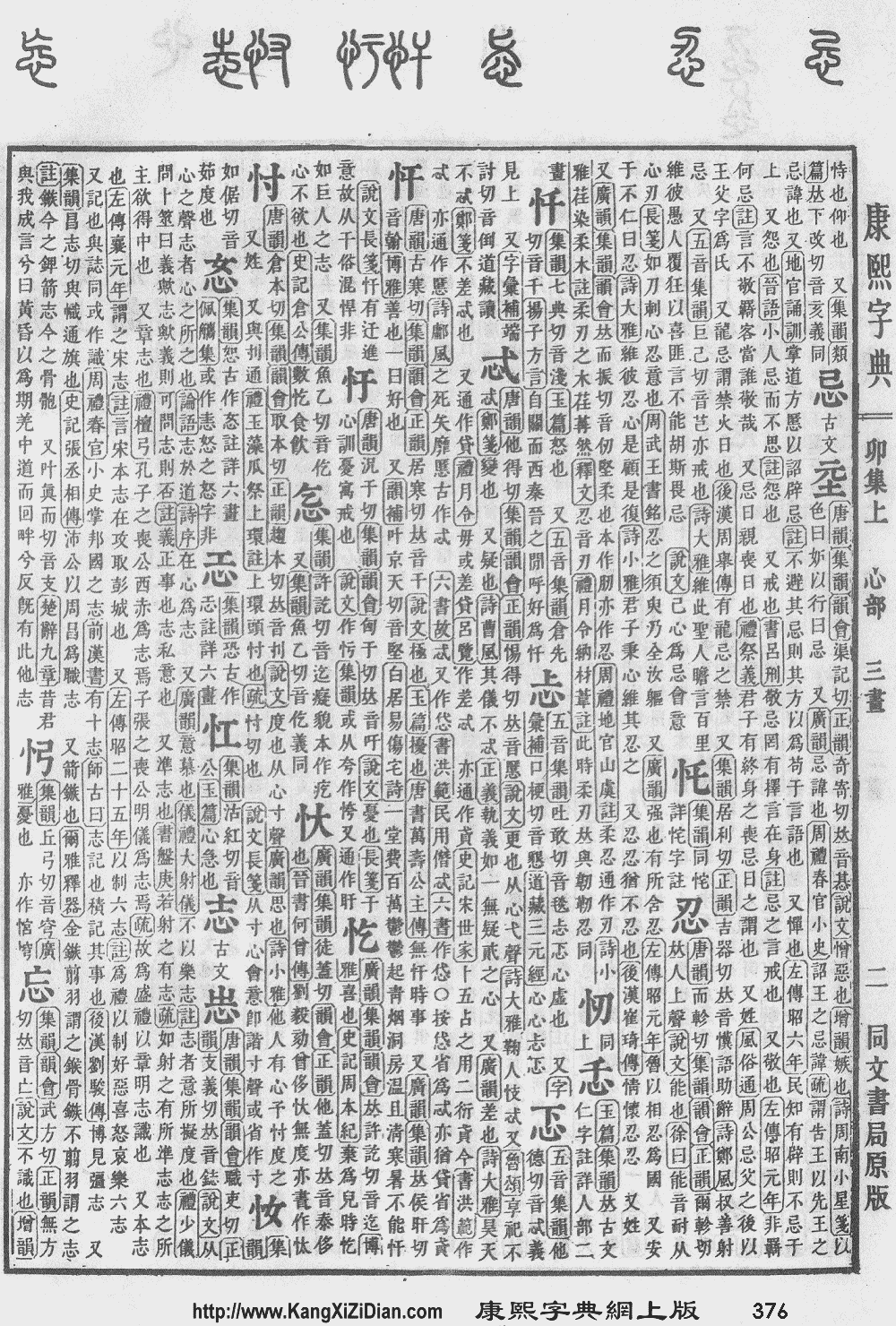
- Kangxi Dictionary: page 376, character 10
- Dai Kanwa Jiten: character 10319
- Dae Jaweon: page 702, character 19
- Hanyu Da Zidian (first edition): volume 4, page 2269, character 7
- Unihan data for U+5FD2
Chinese
| simp. and trad. |
忒 | |
|---|---|---|
Glyph origin
Characters in the same phonetic series (弋) (Zhengzhang, 2003)
| Old Chinese | |
|---|---|
| 戴 | *ʔl'ɯːɡs |
| 襶 | *tɯːɡs |
| 貸 | *l̥ʰɯːɡs |
| 代 | *l'ɯːɡs |
| 袋 | *l'ɯːɡs |
| 岱 | *l'ɯːɡs |
| 黛 | *l'ɯːɡs |
| 玳 | *l'ɯːɡs |
| 帒 | *l'ɯːɡs |
| 甙 | *l'ɯːɡs |
| 酨 | *l'ɯːs, *zlɯːs |
| 試 | *hljɯɡs |
| 弒 | *hljɯɡs |
| 忒 | *l̥ʰɯːɡ |
| 貣 | *l̥ʰɯːɡ, *l'ɯːɡ |
| 鴏 | *l'ɯːɡ |
| 栻 | *l̥ʰɯɡ, *hljɯɡ |
| 侙 | *l̥ʰɯɡ |
| 恜 | *l̥ʰɯɡ |
| 式 | *hljɯɡ |
| 軾 | *hljɯɡ |
| 拭 | *hljɯɡ |
| 鉽 | *hljɯɡ |
| 烒 | *hljɯɡ |
| 弋 | *lɯɡ |
| 芅 | *lɯɡ |
| 黓 | *lɯɡ |
| 隿 | *lɯɡ |
| 杙 | *lɯɡ |
| 釴 | *lɯɡ |
Phono-semantic compound (形聲/形声, OC *l̥ʰɯːɡ) : phonetic 弋 (OC *lɯɡ) + semantic 心.
Etymology 1
Cognate with 代 (OC *l'ɯːɡs, “to substitute”) (Schuessler, 2007).
Pronunciation
Definitions
忒
Etymology 2
(This etymology is missing or incomplete. Please add to it, or discuss it at the Etymology scriptorium. Particularly: “Related to 太?”)
Pronunciation
Definitions
忒
- (dialectal) to an excessive degree; too
- 蛋糕忒大,食唔撇。 [Meixian Hakka, trad. and simp.]
- tan4 gau1 tiêd5 tai4, sed6 m2 pêd5. [Hakka Transliteration Scheme]
- The cake is too big to eat up.
- 你也忒胡鬧了。 [Written Vernacular Chinese, trad.]
- From: Cao Xueqin, Dream of the Red Chamber, mid-18th century CE
- Nǐ yě tuī húnào le. [Pinyin]
- You're too wild-acting.
你也忒胡闹了。 [Written Vernacular Chinese, simp.]
Usage notes
In Shanghainese, *勿忒 does not exist. For "not too", use 勿大.
Synonyms
Dialectal synonyms of 太 (“too; excessively”) [map]
Japanese
Kanji
忒
- This term needs a translation to English. Please help out and add a translation, then remove the text
{{rfdef}}.
Korean
Hanja
忒 (eum 특 (teuk))
- This term needs a translation to English. Please help out and add a translation, then remove the text
{{rfdef}}.
Vietnamese
This article is issued from Wiktionary. The text is licensed under Creative Commons - Attribution - Sharealike. Additional terms may apply for the media files.