佮
| ||||||||
Translingual
Han character
佮 (Kangxi radical 9, 人+6, 8 strokes, cangjie input 人人一口 (OOMR), four-corner 28261, composition ⿰亻合)
References
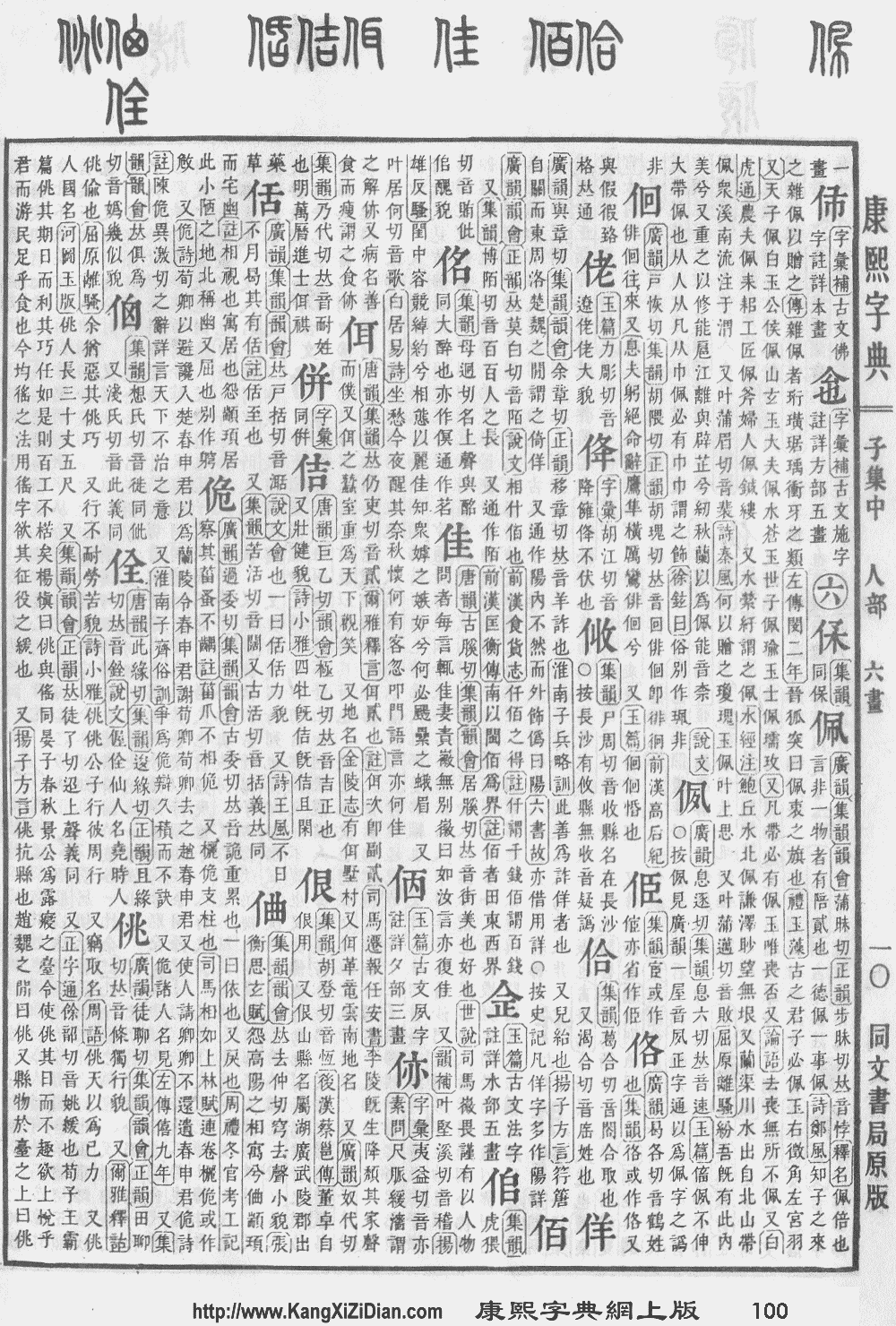
- Kangxi Dictionary: page 100, character 12
- Dai Kanwa Jiten: character 551
- Dae Jaweon: page 212, character 7
- Hanyu Da Zidian (first edition): volume 1, page 150, character 4
- Unihan data for U+4F6E
Chinese
Glyph origin
| Historical forms of the character 佮 |
|---|
| Shuowen Jiezi (compiled in Han) |
| Small seal script |
 |
| Old Chinese | |
|---|---|
| 龕 | *kʰuːm |
| 媕 | *quːm, *qromʔ, *qɯːm, *qramʔ, *qɯːb |
| 頜 | *ɡuːmʔ, *kuːb |
| 答 | *tkuːb |
| 畣 | *tkuːb |
| 荅 | *tkuːb |
| 嗒 | *tuːb, *tʰoːb |
| 褡 | *tuːb, *toːb |
| 撘 | *tuːb |
| 搭 | *tuːb, *tʰoːb |
| 榙 | *tkuːb, *ɡuːb |
| 佮 | *tkʰuːb, *kuːb, *quːb, *quːb |
| 蛤 | *kuːb |
| 鴿 | *kuːb |
| 合 | *kuːb, *ɡuːb |
| 郃 | *kuːb, *ɡuːb |
| 匌 | *kuːb, *kʰuːb |
| 鉿 | *kuːb |
| 閤 | *kuːb |
| 鞈 | *kuːb, *kruːb |
| 韐 | *kuːb, *kruːb |
| 鮯 | *kuːb |
| 哈 | *ŋɡuːb |
| 姶 | *quːb, *quːb |
| 欱 | *qʰuːb, *qʰruːb |
| 盒 | *ɡuːb |
| 耠 | *ɡuːb |
| 詥 | *ɡuːb |
| 塔 | *tʰuːb |
| 鞳 | *tʰoːb |
| 劄 | *rtuːb |
| 跲 | *kruːb, *kob, *ɡob |
| 袷 | *kruːb, *ŋkob |
| 餄 | *kruːb |
| 恰 | *kʰruːb |
| 帢 | *kʰruːb |
| 洽 | *ɡruːb |
| 祫 | *ɡruːb |
| 珨 | *ɡruːb |
| 烚 | *ɡruːb |
| 歙 | *qʰjob, *qʰrub |
| 湁 | *tkʰub |
| 拾 | *ɡjub |
| 給 | *krub |
| 翕 | *qʰrub |
| 噏 | *qʰrub |
| 潝 | *qʰrub |
| 熻 | *qʰrub |
| 嬆 | *qʰrub |
| 翖 | *qʰrub |
| 闟 | *qʰrub |
Phono-semantic compound (形聲/形声, OC *tkʰuːb, *kuːb, *quːb, *quːb) : semantic 人 (“person”) + phonetic 合 (OC *kuːb, *ɡuːb).
Etymology 1
| simp. and trad. |
佮 | |
|---|---|---|
| alternative forms | 合 | |
Related to 合 (OC *kuːb, *ɡuːb).
This etymology is incomplete. You can help Wiktionary by elaborating on the origins of this term.
Pronunciation
Definitions
佮
Synonyms
Further reading
- “Entry #3539”, in 臺灣閩南語常用詞辭典 [Dictionary of Frequently-Used Taiwan Minnan] (overall work in Mandarin and Hokkien), Ministry of Education, R.O.C., 2023.
Etymology 2
| simp. and trad. |
佮 | |
|---|---|---|
| alternative forms | 𠹛 咔 卡 | |
(This etymology is missing or incomplete. Please add to it, or discuss it at the Etymology scriptorium. Particularly: “related to Eastern Min 恰 (kák), Hokkien khah?”)
Compare Hokkien 較/较 (khà / khah, “comparatively; relatively”).
Pronunciation
Definitions
佮
Synonyms
Pronunciation
Pronunciation
Definitions
佮
Etymology 5
| simp. and trad. |
佮 | |
|---|---|---|
(This etymology is missing or incomplete. Please add to it, or discuss it at the Etymology scriptorium.)
Pronunciation
Definitions
佮
- (Cantonese) This term needs a translation to English. Please help out and add a translation, then remove the text
{{rfdef}}.
Compounds
- 佮佮冚
- 佮佮掂
Etymology 6
| simp. and trad. |
佮 | |
|---|---|---|
| alternative forms | 合 | |
Potentially from 合 (MC kop). Compare also Northern Wu 軋/轧 (gaq8).
(This etymology is missing or incomplete. Please add to it, or discuss it at the Etymology scriptorium.)
Pronunciation
Definitions
佮
- (Northern Wu) to couple up; to share; to chip in
- (Northern Wu) to form allegiance; to come together; to become partner
- (Northern Wu) to set out an arrangement; to invite on a date
- (Northern Wu) to match up; to compound; to make up (medicine, etc.)
- (Northern Wu) to make; to fashion (a coffin, tenon, etc.)
Compounds
- 伴佮
- 佮八字
- 佮夥/佮伙
- 佮家
- 佮家住
- 佮幫/佮帮
- 佮淘
- 佮漏
- 佮着
- 佮股子
- 佮角
- 佮道佮隊/佮道佮队
- 打佮
- 雜佮/杂佮
- 雜佮亂拌/杂佮乱拌
- 雜佮倫登/杂佮伦登
- 雜佮賴太/杂佮赖太
- 雜佮隆咚/杂佮隆咚
- 雜里雜佮/杂里杂佮
Japanese
Kanji
- This term needs a translation to English. Please help out and add a translation, then remove the text
{{rfdef}}.
Korean
Hanja
佮 • (hap) (hangeul 합, revised hap, McCune–Reischauer hap, Yale hap)
- This term needs a translation to English. Please help out and add a translation, then remove the text
{{rfdef}}.