恕
| ||||||||
Translingual
Han character
恕 (Kangxi radical 61, 心+6, 10 strokes, cangjie input 女口心 (VRP), four-corner 46330, composition ⿱如心)
Derived characters
- 𫉅
References
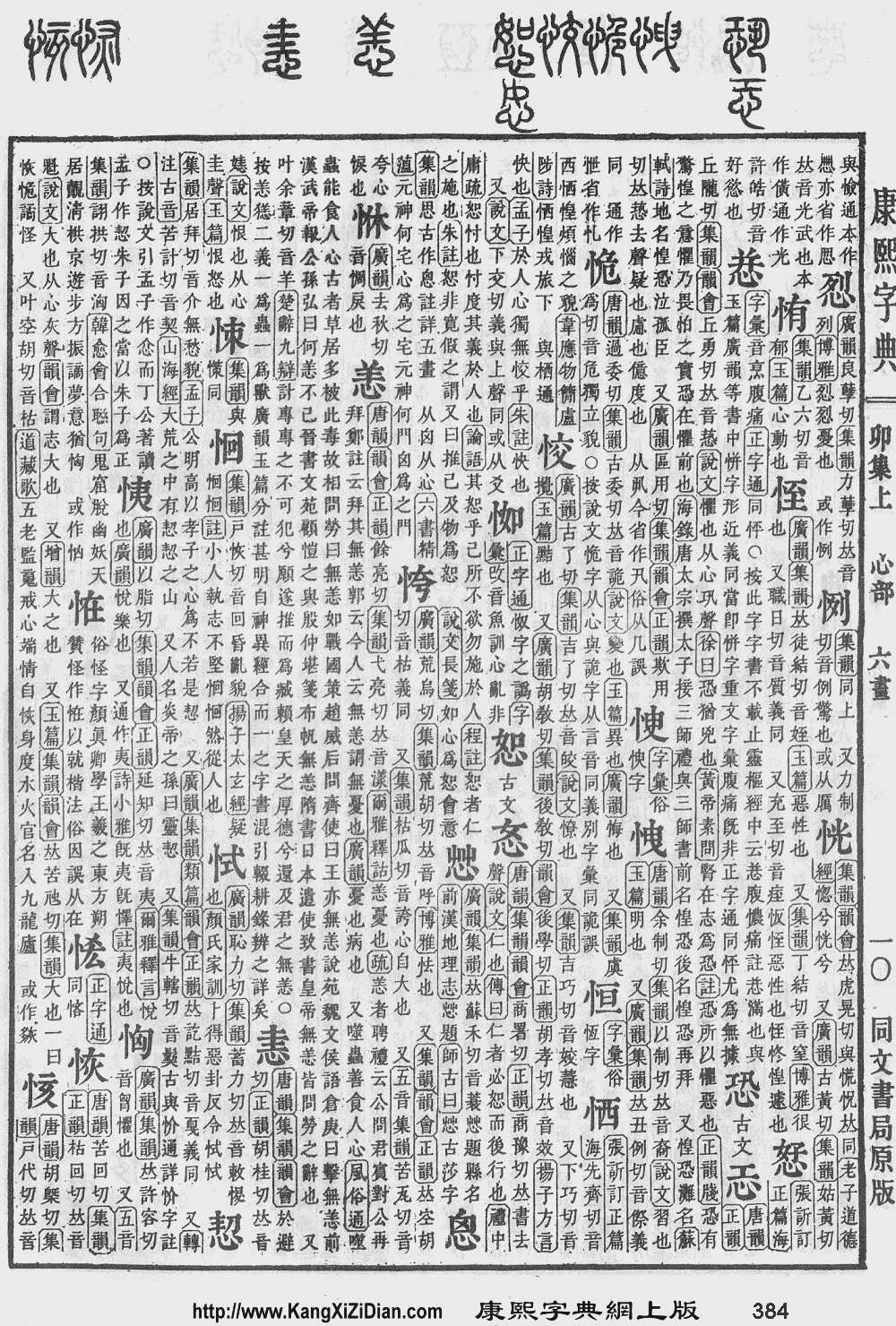
- Kangxi Dictionary: page 384, character 17
- Dai Kanwa Jiten: character 10560
- Dae Jaweon: page 715, character 1
- Hanyu Da Zidian (first edition): volume 4, page 2293, character 9
- Unihan data for U+6055
Chinese
| trad. | 恕 | |
|---|---|---|
| simp. # | 恕 | |
| alternative forms | 㣽 | |
Glyph origin
Characters in the same phonetic series (女) (Zhengzhang, 2003)
| Old Chinese | |
|---|---|
| 拿 | *rnaː |
| 拏 | *rnaː |
| 詉 | *rnaː |
| 蒘 | *rnaː, *na |
| 笯 | *rnaː, *naː, *naːs |
| 挐 | *rnaː, *na |
| 絮 | *rnaːs, *nas, *snas, *nas |
| 呶 | *rnaːw |
| 怓 | *rnaːw |
| 帑 | *n̥ʰaːŋʔ, *naː |
| 奴 | *naː |
| 砮 | *naː, *naːʔ |
| 駑 | *naː |
| 孥 | *naː |
| 努 | *naːʔ |
| 弩 | *naːʔ |
| 怒 | *naːʔ, *naːs |
| 袽 | *na |
| 帤 | *na |
| 女 | *naʔ, *nas |
| 籹 | *naʔ |
| 恕 | *hnjas |
| 如 | *nja, *njas |
| 茹 | *nja, *njaʔ, *njas |
| 洳 | *nja, *njas |
| 鴽 | *nja |
| 蕠 | *nja |
| 汝 | *njaʔ |
| 肗 | *njaʔ |
Phono-semantic compound (形聲/形声, OC *hnjas) : phonetic 如 (OC *nja, *njas) + semantic 心 (“heart”).
Pronunciation
Definitions
恕
- to show consideration for others; to put oneself in someone's shoes
- 子貢問曰:「有一言而可以終身行之者乎?」子曰:「其恕乎!己所不欲,勿施於人。」 [Classical Chinese, trad.]
- From: The Analects of Confucius, c. 475 – 221 BCE, translated based on James Legge's version
- Zǐgòng wèn yuē: “Yǒu yī yán ér kě yǐ zhōngshēn xíng zhī zhě hū?” Zǐ yuē: “Qí shù hū! Jǐ suǒ bù yù, wù shī yú rén.” [Pinyin]
- Zi Gong asked, saying, "Is there one word which may serve as a rule of practice for all one's life?" The Master said, "Is not RECIPROCITY / EMPATHY such a word? What you do not want done to yourself, do not do to others."
子贡问曰:「有一言而可以终身行之者乎?」子曰:「其恕乎!己所不欲,勿施于人。」 [Classical Chinese, simp.]
- to forgive; to pardon; to show mercy
- excuse me
Compounds
References
- Dictionary of Chinese Character Variants (教育部異體字字典), A01349
- “恕”, in 漢語多功能字庫 (Multi-function Chinese Character Database), 香港中文大學 (the Chinese University of Hong Kong), 2014–
- “Query for 恕”, in 臺灣閩南語常用詞辭典 [Dictionary of Frequently-Used Taiwan Minnan] (overall work in Hokkien and Mandarin), Ministry of Education, R.O.C., 2023.
- Lippiello, Tiziana. (2010). “A Confucian Adage for Life: Empathy (Shu) in the Analects.” In Light a Candle: Encounters and Friendship with China. Festschrift in Honour of Angelo Lazzarotto P.I.M.E., edited by Roman Malek S.V.D. and Gianni Criveller. Sankt Augustin: Monumenta Serica.
Japanese
Kanji
恕
(“Jinmeiyō” kanji used for names)
- This term needs a translation to English. Please help out and add a translation, then remove the text
{{rfdef}}.
Readings
Korean
Hanja
恕 • (seo) (hangeul 서, revised seo, McCune–Reischauer sŏ, Yale se)
- This term needs a translation to English. Please help out and add a translation, then remove the text
{{rfdef}}.
Vietnamese
Han character
恕: Hán Việt readings: thứ
恕: Nôm readings: thứ
- This term needs a translation to English. Please help out and add a translation, then remove the text
{{rfdef}}.
References
This article is issued from Wiktionary. The text is licensed under Creative Commons - Attribution - Sharealike. Additional terms may apply for the media files.