茹
| ||||||||
Translingual
Han character
茹 (Kangxi radical 140, 艸+6, 12 strokes, cangjie input 廿女口 (TVR), four-corner 44460, composition ⿱艹如)
- roots
- vegetables
- eat
- to bear; withstand
Derived characters
- 𣺾, 𦷸
References
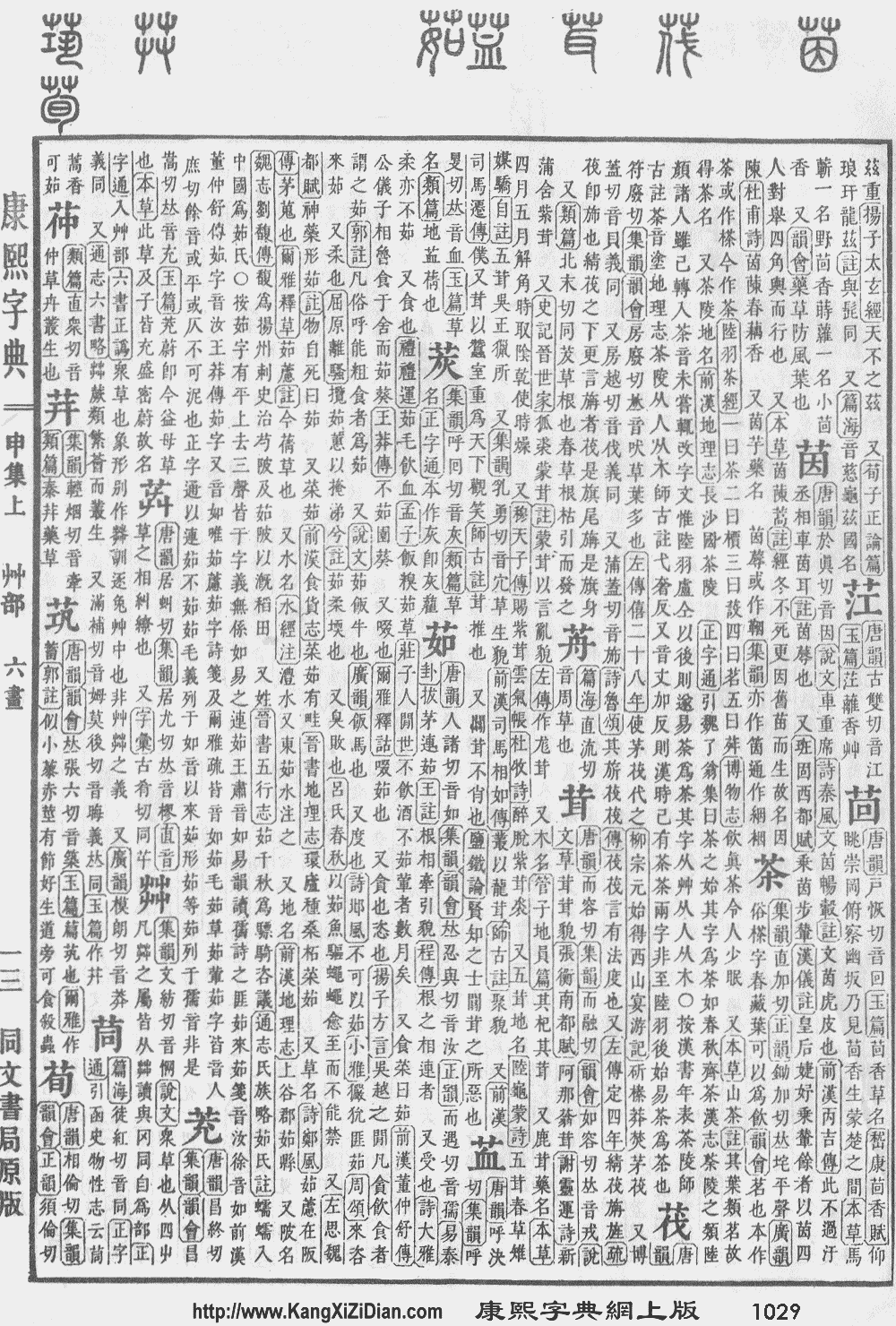
- Kangxi Dictionary: page 1029, character 10
- Dai Kanwa Jiten: character 30921
- Dae Jaweon: page 1488, character 4
- Hanyu Da Zidian (first edition): volume 5, page 3211, character 11
- Unihan data for U+8339
Chinese
| trad. | 茹 | |
|---|---|---|
| simp. # | 茹 | |
Glyph origin
Characters in the same phonetic series (女) (Zhengzhang, 2003)
| Old Chinese | |
|---|---|
| 拿 | *rnaː |
| 拏 | *rnaː |
| 詉 | *rnaː |
| 蒘 | *rnaː, *na |
| 笯 | *rnaː, *naː, *naːs |
| 挐 | *rnaː, *na |
| 絮 | *rnaːs, *nas, *snas, *nas |
| 呶 | *rnaːw |
| 怓 | *rnaːw |
| 帑 | *n̥ʰaːŋʔ, *naː |
| 奴 | *naː |
| 砮 | *naː, *naːʔ |
| 駑 | *naː |
| 孥 | *naː |
| 努 | *naːʔ |
| 弩 | *naːʔ |
| 怒 | *naːʔ, *naːs |
| 袽 | *na |
| 帤 | *na |
| 女 | *naʔ, *nas |
| 籹 | *naʔ |
| 恕 | *hnjas |
| 如 | *nja, *njas |
| 茹 | *nja, *njaʔ, *njas |
| 洳 | *nja, *njas |
| 鴽 | *nja |
| 蕠 | *nja |
| 汝 | *njaʔ |
| 肗 | *njaʔ |
Phono-semantic compound (形聲/形声, OC *nja, *njaʔ, *njas) : semantic 艹 (“grass, plants”) + phonetic 如 (OC *nja, *njas) – plant roots, part of a plant.
Etymology 1
Schuessler (2007) proposes an Austroasiatic origin; compare Kharia [script needed] (ɲoʔ, “to eat”) and Proto-Vietic *s-nja:ʔ (“to chew, to masticate”) (> Vietnamese nhá). Schuessler (2003) also compares 茹 with Jingpho noʔ¹ 'to eat' and Proto-Mienic *ʔnəkD 'to swallow'.
Pronunciation
Definitions
茹
- to eat
- 未有火化,食草木之實,鳥獸之肉,飲其血,茹其毛。 [Classical Chinese, trad.]
- From: The Book of Rites, c. 4th – 2nd century BCE
- Wèi yǒu huǒhuà, shí cǎomù zhī shí, niǎoshòu zhī ròu, yǐn qí xuè, rú qí máo. [Pinyin]
- They knew not yet the transforming power of fire, but ate the fruits of plants and trees, and the flesh of birds and beasts, drinking their blood, and swallowing (also) the hair and feathers.
未有火化,食草木之实,鸟兽之肉,饮其血,茹其毛。 [Classical Chinese, simp.]
- (literary) to bear
- 含辛茹苦 ― hánxīnrúkǔ ― to suffer hardships
- 有詩賦銘誄書表啟疏二十卷,吾兄弟始在草土,並未得編次,便遭火盪盡,竟不傳於世。銜酷茹恨,徹於心髓! [Literary Chinese, trad.]
- From: Yan Zhitui, The Family Instructions of Master Yan, 6th century CE
- Yǒu shīfù mínglěi shū biǎo qǐ shū èrshí juǎn, wú xiōngdì shǐ zài cǎotǔ, bìng wèi dé biāncì, biàn zāo huǒ dàng jìn, jìng bù chuán yú shì. Xián kù rú hèn, chè yú xīnsuǐ! [Pinyin]
- (please add an English translation of this quotation)
有诗赋铭诔书表启疏二十卷,吾兄弟始在草土,并未得编次,便遭火荡尽,竟不传于世。衔酷茹恨,彻于心髓! [Literary Chinese, simp.]
- (literary) to guess
- 我心匪鑒,不可以茹。 [Pre-Classical Chinese, trad.]
- From: The Classic of Poetry, c. 11th – 7th centuries BCE, translated based on James Legge's version
- Wǒ xīn fěi jiàn, bù kěyǐ rú. [Pinyin]
- (please add an English translation of this quotation)
我心匪鉴,不可以茹。 [Pre-Classical Chinese, simp.]
- (literary) soft
- (literary) corrupted
- (literary) vegetables
- a surname
- (organic chemistry) rubicene
Compounds
References
- “茹”, in 漢語多功能字庫 (Multi-function Chinese Character Database), 香港中文大學 (the Chinese University of Hong Kong), 2014–
Etymology 2
| For pronunciation and definitions of 茹 – see 挐 (“(Southern Min) chaotic; messy; disorderly”). (This character is a variant form of 挐). |
Japanese
Korean
Hanja
茹 • (yeo) (hangeul 여, revised yeo, McCune–Reischauer yŏ, Yale ye)
- This term needs a translation to English. Please help out and add a translation, then remove the text
{{rfdef}}.
Vietnamese
Han character
茹: Hán Việt readings: như[1][2], nhự[3]
茹: Nôm readings: nhà[1][2][3][4], nhờ[1], nhựa[3], nhừa[3], nhu[5]
References
- Nguyễn (2014).
- Nguyễn et al. (2009).
- Trần (2004).
- Taberd & Pigneau de Béhaine (1838).
- Hồ (1976).
This article is issued from Wiktionary. The text is licensed under Creative Commons - Attribution - Sharealike. Additional terms may apply for the media files.