損
See also: 损
| ||||||||
Translingual
Han character
損 (Kangxi radical 64, 手+10, 13 strokes, cangjie input 手口月金 (QRBC), four-corner 56086, composition ⿰扌員)
Derived characters
- 𨆥
References
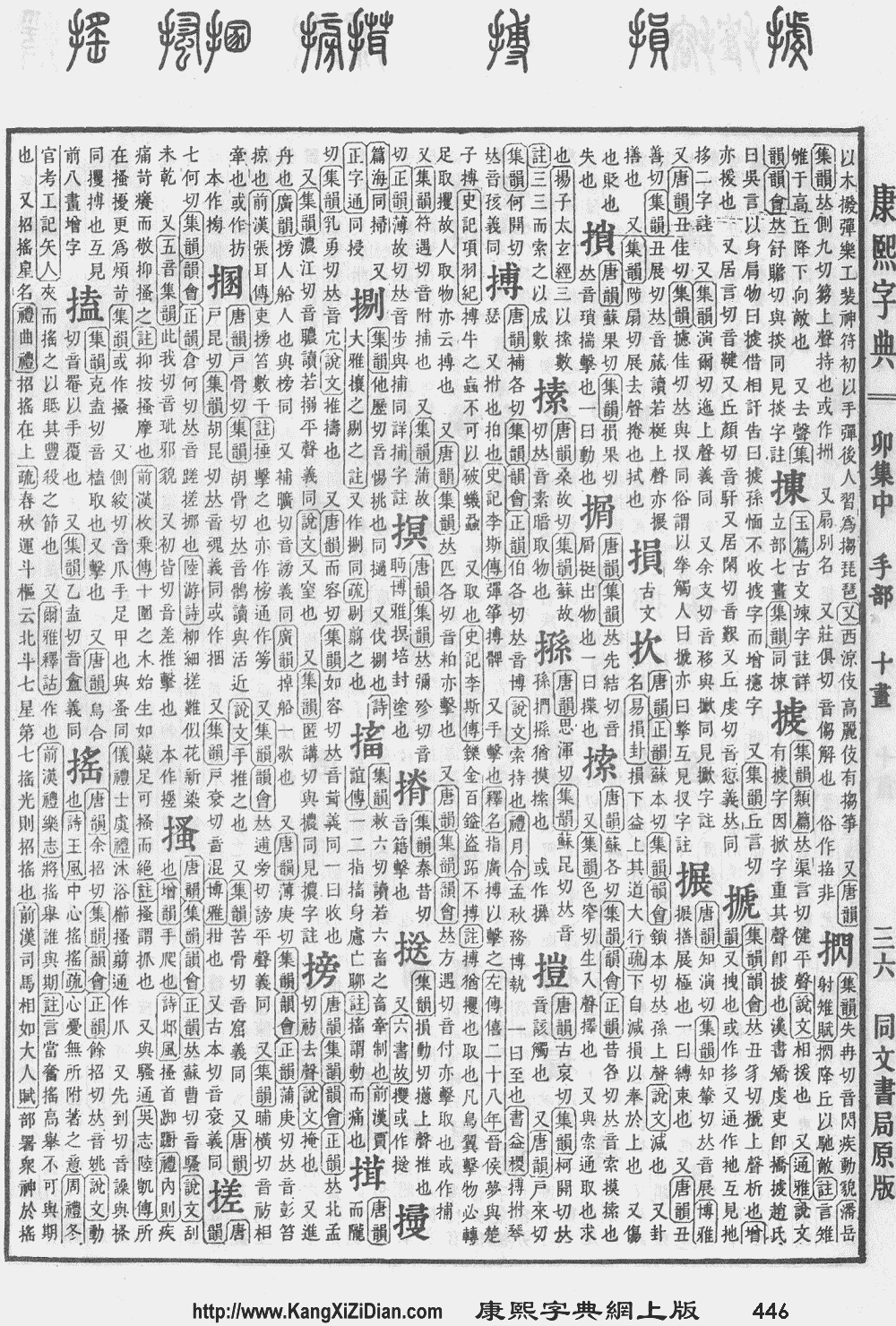
- Kangxi Dictionary: page 446, character 6
- Dai Kanwa Jiten: character 12459
- Dae Jaweon: page 796, character 27
- Hanyu Da Zidian (first edition): volume 3, page 1931, character 10
- Unihan data for U+640D
Chinese
| trad. | 損 | |
|---|---|---|
| simp. | 损 | |
| alternative forms | 扻 ancient | |
Glyph origin
Characters in the same phonetic series (員) (Zhengzhang, 2003)
Phono-semantic compound (形聲/形声, OC *sqʰuːnʔ) : semantic 手 (“hand”) + phonetic 員 (OC *ɢon, *ɢun)
Pronunciation
Definitions
損
- to reduce; to decrease; to cut; to diminish
- Antonym: 益 (yì)
- to harm; to cause destruction to; to damage
- to lose; to forfeit
- loss; decrease; reduction
- 滿招損,謙受益。 [Classical Chinese, trad.]
- From: The Book of Documents, circa 4th – 3rd century BCE, translated based on James Legge's version
- Mǎn zhāo sǔn, qiān shòu yì. [Pinyin]
- Pride brings loss, and humility receives increase.
满招损,谦受益。 [Classical Chinese, simp.]
- (colloquial) to make sarcastic remarks; to act meanly; to mock
- (colloquial, chiefly of remarks) acrimonious; caustic; biting; mean (Can we add an example for this sense?) (especially Min Nan)
- (Cantonese) to be injured, in the form of an abrasion
Synonyms
- (to reduce):
- (to harm):
- (to lose):
- (to make sarcastic remarks):
- 作弄 (zuònòng)
- 僝僽 (chánzhòu) (literary)
- 刺 (literary, or in compounds)
- 刺溪 (chié-*kă̤) (Eastern Min)
- 創弄/创弄 (Hokkien)
- 創景/创景 (Hokkien)
- 創治/创治 (chhòng-tī) (Hokkien)
- 剾損/𠛅损 (Hokkien)
- 剾洗/𠛅洗 (khau-sé) (Hokkien)
- 剾洗/𠛅洗 (Hokkien)
- 剾褻/𠛅亵 (Hokkien)
- 𠢕滾/𠢕滚 (Hokkien)
- 取樂/取乐 (qǔlè)
- 取笑 (qǔxiào)
- 呾笑話/呾笑话 (Teochew)
- 呾耍笑 (Teochew)
- 嗤笑 (chīxiào)
- 嘲弄 (cháonòng)
- 嘲笑 (cháoxiào)
- 嘲訕/嘲讪 (cháoshàn)
- 嘲諷/嘲讽 (cháofěng)
- 嘲謔/嘲谑 (cháoxuè)
- 奚落 (xīluò)
- 尋開心/寻开心 (6zhin-khe-shin) (Wu)
- 巴銳/巴锐 (Hokkien)
- 恥笑/耻笑 (chǐxiào)
- 戲弄/戏弄 (xìnòng)
- 戲謔/戏谑 (xìxuè)
- 挖苦 (wākǔ)
- 捉弄 (zhuōnòng)
- 撩 (Hakka)
- 撚化 (nan2 faa3) (Cantonese)
- 撮弄 (cuōnòng) (literary)
- 擺弄/摆弄
- 消遣 (xiāoqiǎn)
- 湊趣/凑趣 (còuqù)
- 𤊶人 (Hakka)
- 玩 (colloquial)
- 玩弄
- 笑 (xiào)
- 笑話/笑话 (xiàohuà)
- 耍 (shuǎ)
- 耍弄 (shuǎnòng)
- 耍忽 (sua2 huah4) (Jin)
- 落八 (Xiamen Hokkien)
- 見笑/见笑 (jiànxiào)
- 訕笑/讪笑 (shànxiào)
- 詼謔/诙谑 (huīxuè)
- 說風涼話/说风凉话 (shuō fēngliánghuà)
- 調笑/调笑 (tiáoxiào)
- 諦/谛 (dai3) (Cantonese)
- 諷刺/讽刺 (fěngcì)
- 謔潲/谑潲 (Hokkien)
- 謔燒/谑烧 (Hokkien)
- 講笑/讲笑 (Cantonese, Hakka, Hokkien)
- 講耍笑/讲耍笑 (Hokkien)
- 譏刺/讥刺 (jīcì)
- 譏嘲/讥嘲 (jīcháo)
- 譏笑/讥笑 (jīxiào)
- 譏誚/讥诮 (jīqiào) (literary)
- 譏諷/讥讽 (jīfěng)
- 變弄/变弄 (Hokkien)
- 𧮙 (Wu)
- 起鬨/起哄 (qǐhòng)
- 輕體/轻体 (Hokkien)
- 逗 (dòu)
- 逗弄
- 鄙笑 (Hokkien)
- 酸笑 (Hokkien)
- 鈍/钝 (Wu)
- 開心/开心 (kāixīn)
- 開涮/开涮 (kāishuàn) (colloquial)
- 開玩笑/开玩笑 (kāi wánxiào)
- 鬧玩笑/闹玩笑 (nào wánxiào)
- (acrimonious):
Compounds
- 七損八傷/七损八伤
- 佞徒損友/佞徒损友
- 傷損/伤损
- 分毫無損/分毫无损
- 受損/受损 (shòusǔn)
- 增損/增损
- 役損/役损
- 悶損/闷损
- 抑損/抑损
- 折損/折损
- 拍損/拍损 (phah-sńg) (Min Nan)
- 損上益下/损上益下
- 損事/损事
- 損人/损人
- 損人利己/损人利己 (sǔnrénlìjǐ)
- 損人安己/损人安己
- 損人益己/损人益己
- 損人肥己/损人肥己
- 損傷/损伤 (sǔnshāng)
- 損兵折將/损兵折将
- 損到家/损到家
- 損友/损友 (sǔnyǒu)
- 損壞/损坏 (sǔnhuài)
- 損壽/损寿
- 損失/损失 (sǔnshī)
- 損害/损害 (sǔnhài)
- 損害賠償/损害赔偿
- 損將折兵/损将折兵
- 損己利物/损己利物
- 損年/损年
- 損德/损德
- 損折/损折 (sǔnzhé)
- 損挹/损挹
- 損書/损书
- 損本逐末/损本逐末
- 損毀/损毁 (sǔnhuǐ)
- 損燬/损毁
- 損益/损益 (sǔnyì)
- 損者三友/损者三友
- 損者三樂/损者三乐
- 損耗/损耗 (sǔnhào)
- 損蝕/损蚀
- 損軍折將/损军折将
- 損陰壞德/损阴坏德
- 損陰騭/损阴骘
- 敗損/败损
- 斟酌損益/斟酌损益
- 有增無損/有增无损
- 有形損耗/有形损耗
- 有損無益/有损无益
- 欲益反損/欲益反损
- 毀損/毁损 (huǐsǔn)
- 毀損罪/毁损罪
- 毫髮無損/毫发无损
- 求益反損/求益反损
- 汙損/污损 (wūsǔn)
- 海損/海损
- 減損/减损 (jiǎnsǔn)
- 火災損失/火灾损失
- 無損/无损 (wúsǔn)
- 瘦損/瘦损
- 益上損下/益上损下
- 破損/破损 (pòsǔn)
- 磨損/磨损 (mósǔn)
- 純損/纯损
- 繁華損枝/繁华损枝
- 罨損/罨损
- 耗損/耗损 (hàosǔn)
- 虧損/亏损 (kuīsǔn)
- 蝕損/蚀损
- 裁損/裁损
- 貶損/贬损 (biǎnsǔn)
- 費日損功/费日损功
- 跌打損傷/跌打损伤 (diēdǎsǔnshāng)
- 香消玉損/香消玉损
Japanese
Readings
Affix
損 • (son)
- This term needs a translation to English. Please help out and add a translation, then remove the text
{{rfdef}}.
References
- Matsumura, Akira, editor (2006), 大辞林 [Daijirin] (in Japanese), Third edition, Tōkyō: Sanseidō, →ISBN
Vietnamese
This article is issued from Wiktionary. The text is licensed under Creative Commons - Attribution - Sharealike. Additional terms may apply for the media files.