沼
| ||||||||
Translingual
Han character
| Stroke order | |||
|---|---|---|---|
 | |||
沼 (Kangxi radical 85, 水+5, 8 strokes, cangjie input 水尸竹口 (ESHR), four-corner 37162, composition ⿰氵召)
References
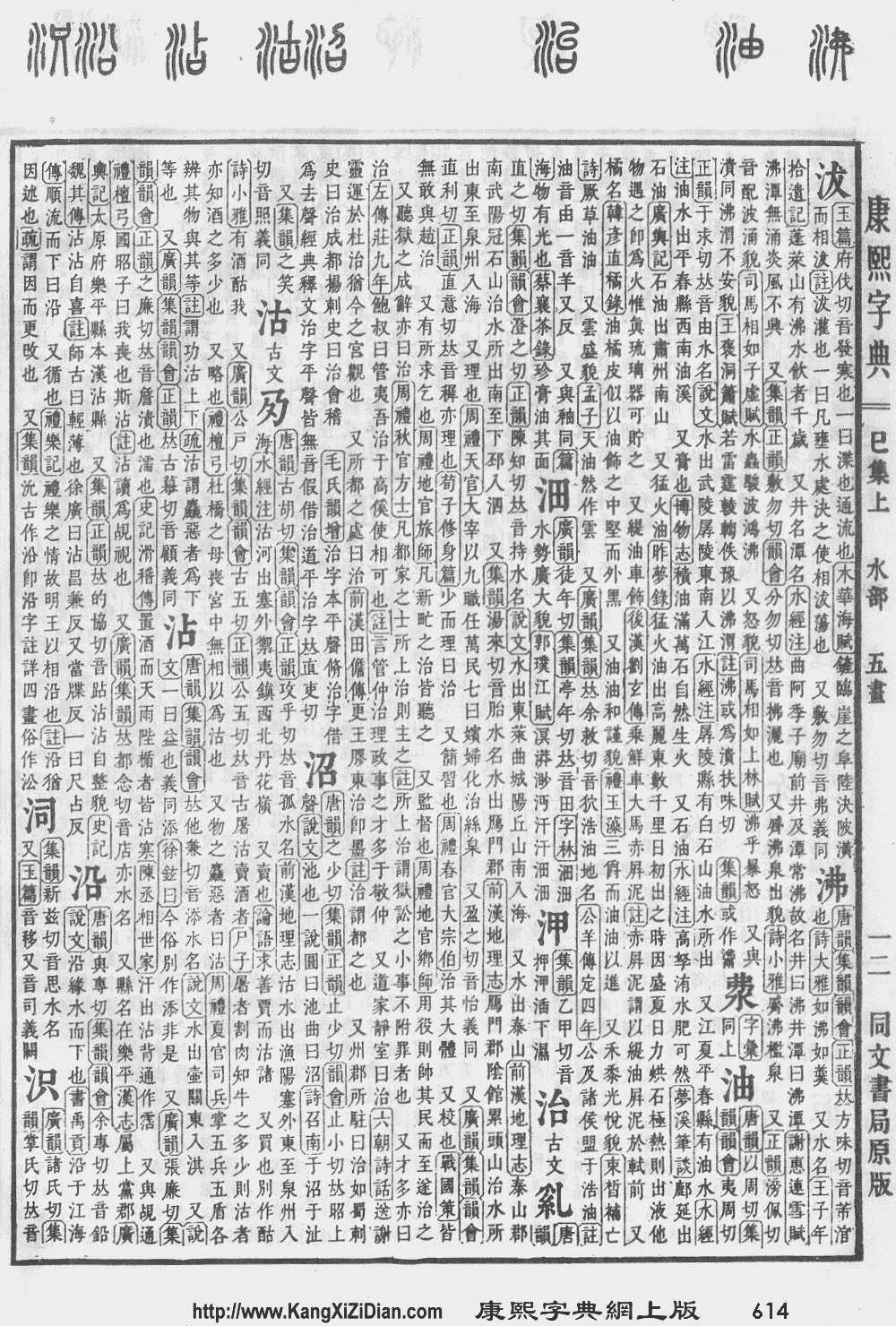
- Kangxi Dictionary: page 614, character 9
- Dai Kanwa Jiten: character 17257
- Dae Jaweon: page 1008, character 1
- Hanyu Da Zidian (first edition): volume 3, page 1597, character 5
- Unihan data for U+6CBC
Chinese
| simp. and trad. |
沼 | |
|---|---|---|
Glyph origin
| Old Chinese | |
|---|---|
| 刀 | *taːw |
| 忉 | *taːw |
| 魛 | *taːw |
| 舠 | *taːw |
| 朷 | *taːw, *moːɡ |
| 叨 | *tuːw, *l̥ʰaːw |
| 倒 | *taːwʔ, *taːws |
| 到 | *taːws |
| 菿 | *taːws, *rtaːwɢ |
| 鞀 | *deːw |
| 鳭 | *rteːw, *teːw |
| 灱 | *hreːw |
| 菬 | *sdew, *tjewʔ |
| 超 | *tʰew |
| 怊 | *tʰew, *tʰjew |
| 欩 | *tʰew |
| 召 | *dews, *djews |
| 昭 | *tjew |
| 招 | *tjew |
| 鉊 | *tjew |
| 沼 | *tjewʔ |
| 照 | *tjews |
| 詔 | *tjews |
| 炤 | *tjews |
| 弨 | *tʰjew, *tʰjewʔ |
| 眧 | *tʰjewʔ |
| 韶 | *djew |
| 佋 | *djew, *djewʔ |
| 軺 | *djew, *lew |
| 玿 | *djew |
| 柖 | *djew |
| 紹 | *djewʔ |
| 袑 | *djewʔ |
| 綤 | *djewʔ |
| 邵 | *djews |
| 劭 | *djews |
| 卲 | *djews |
| 刁 | *teːw |
| 芀 | *teːw, *deːw |
| 貂 | *teːw |
| 蛁 | *teːw |
| 迢 | *deːw |
| 苕 | *deːw |
| 髫 | *deːw |
| 岧 | *deːw |
Pronunciation
Definitions
沼
- pool; pond
- 王立於沼上,顧鴻雁麋鹿,曰:「賢者亦樂此乎?」 [Classical Chinese, trad.]
- From: Mencius, c. 4th century BCE
- Wáng lì yú zhǎo shàng, gù hóngyàn mílù, yuē: “Xián zhě yì yuè cǐ hū?” [Pinyin]
- The king went and stood with him by a pond, and, looking round at the large geese and deer, said, 'Do wise and good princes also find pleasure in these things?'
王立于沼上,顾鸿雁麋鹿,曰:「贤者亦乐此乎?」 [Classical Chinese, simp.]
Compounds
References
- “沼”, in 漢語多功能字庫 (Multi-function Chinese Character Database), 香港中文大學 (the Chinese University of Hong Kong), 2014–
Japanese
Readings
Etymology 1
| Kanji in this term |
|---|
| 沼 |
| ぬ Grade: S |
| kun’yomi |
From Old Japanese. Root of the Old Japanese verb ぬる (nuru, “to become loose; to become wet”) and modern Japanese 濡れる (nureru, “to become wet”), adverb ぬるぬる (nurunuru, “loosely; lukewarmly; oozingly”).
May be cognate with Korean 늪 (neup, “swamp, bog, marsh”), Ainu nup (“flat land, plain; fen”), Mongolian нам (nam, “low-lying”), намаг (namag, “swamp, bog, marsh”), норох (norox, “to become wet”).
Pronunciation
- IPA(key): [nɯ̟ᵝ]
Etymology 2

| Kanji in this term |
|---|
| 沼 |
| ぬま Grade: S |
| kun’yomi |
Appears to be a compound of 沼 (nu, “swamp”) + 間 (ma, “space, area”).
Noun
沼 • (numa)
Derived terms
Etymology 3
| Kanji in this term |
|---|
| 沼 |
| しょう Grade: S |
| on’yomi |
/seu/ → /ɕeu/ → /ɕʲoː/
From Middle Chinese 沼 (tsyewX, “swamp”). Compare modern Mandarin 沼 (zhǎo).
Only ever used in compounds.
Pronunciation
- IPA(key): [ɕo̞ː]
Derived terms
References
- Shōgaku Tosho (1988) 国語大辞典(新装版) [Unabridged Dictionary of Japanese (Revised Edition)] (in Japanese), Tōkyō: Shogakukan, →ISBN
- Matsumura, Akira, editor (2006), 大辞林 [Daijirin] (in Japanese), Third edition, Tōkyō: Sanseidō, →ISBN
- NHK Broadcasting Culture Research Institute, editor (1998), NHK日本語発音アクセント辞典 [NHK Japanese Pronunciation Accent Dictionary] (in Japanese), Tōkyō: NHK Publishing, →ISBN
- Kindaichi, Kyōsuke et al., editors (1997), 新明解国語辞典 [Shin Meikai Kokugo Jiten] (in Japanese), Fifth edition, Tōkyō: Sanseidō, →ISBN
Korean
Etymology
From Middle Chinese 沼 (MC tsyewX). Recorded as Middle Korean 쇼〯 (syǒ) (Yale: syo) in Hunmong Jahoe (訓蒙字會 / 훈몽자회), 1527.
Vietnamese
Han character
沼: Hán Nôm readings: trẻo
- This term needs a translation to English. Please help out and add a translation, then remove the text
{{rfdef}}.