曉
| ||||||||
Translingual
| Traditional | 曉 |
|---|---|
| Shinjitai | 暁 |
| Simplified | 晓 |
Han character
曉 (Kangxi radical 72, 日+12, 16 strokes, cangjie input 日土土山 (AGGU), four-corner 64011, composition ⿰日堯)
Derived characters
Related characters
- 暁 (Japanese shinjitai)
- 晓 (Simplified Chinese)
References
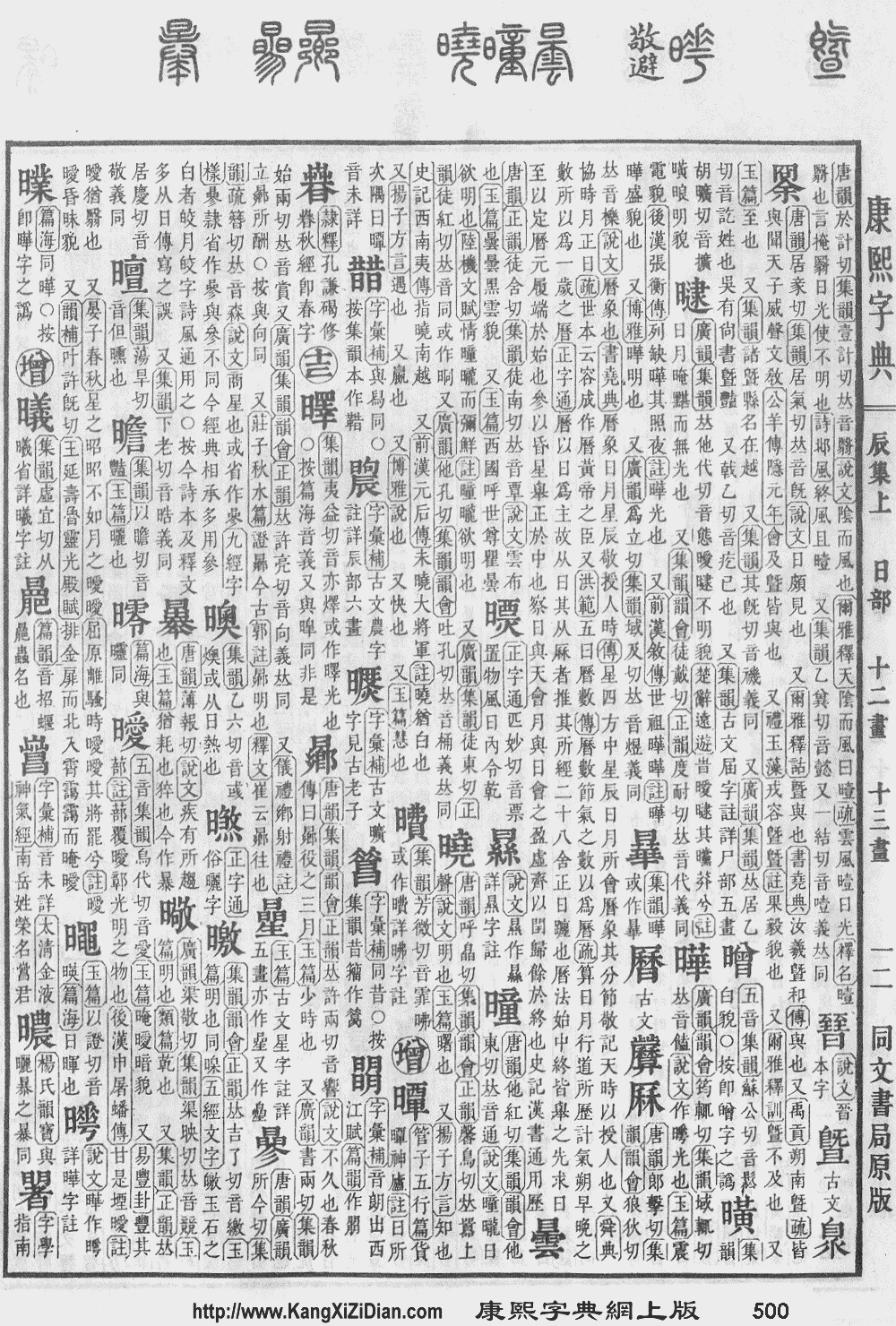
- Kangxi Dictionary: page 500, character 17
- Dai Kanwa Jiten: character 14176
- Dae Jaweon: page 870, character 12
- Hanyu Da Zidian (first edition): volume 2, page 1535, character 1
- Unihan data for U+66C9
Chinese
| trad. | 曉 | |
|---|---|---|
| simp. | 晓 | |
Glyph origin
Characters in the same phonetic series (垚) (Zhengzhang, 2003)
| Old Chinese | |
|---|---|
| 撓 | *hŋaːw, *rŋaːw, *rnaːwʔ |
| 鐃 | *rŋaːw |
| 譊 | *rŋaːw |
| 橈 | *rŋaːws, *ŋjew |
| 磽 | *ŋ̊ʰreːw, *ŋreːws, *ŋ̊ʰeːwʔ |
| 墝 | *ŋ̊ʰreːw |
| 穘 | *hŋreːw |
| 顤 | *hŋreːw, *ŋeːws |
| 燒 | *hŋjew, *hŋjaws |
| 饒 | *ŋjew, *ŋjaws |
| 蟯 | *ŋjew, *ʔŋew |
| 蕘 | *ŋjew |
| 襓 | *ŋjew |
| 繞 | *ŋjewʔ, *ŋjaws |
| 遶 | *ŋjewʔ |
| 嬈 | *njewʔ, *neːwʔ, *hŋeːws |
| 趬 | *ŋ̊ʰew, *ŋ̊ʰews |
| 蹺 | *ŋ̊ʰew |
| 翹 | *ɡew, *ɡews |
| 澆 | *ŋkeːw, *ŋeːws |
| 驍 | *ŋkeːw |
| 僥 | *kŋeːwʔ, *ŋeːw |
| 堯 | *ŋeːw |
| 垚 | *ŋeːw |
| 嶢 | *ŋeːw |
| 獟 | *ŋeːws |
| 膮 | *hŋeːw, *hŋeːwʔ |
| 嘵 | *hŋeːw |
| 憢 | *hŋeːw |
| 曉 | *hŋeːwʔ |
| 皢 | *hŋeːwʔ |
Phono-semantic compound (形聲/形声, OC *hŋeːwʔ) : semantic 日 (“sun”) + phonetic 堯 (OC *ŋeːw).
Pronunciation
Definitions
曉
- dawn; daybreak
- to know; to understand; to get
- (Hakka, including Huiyang Hakka, Huicheng dialect) will; would
- a surname
Synonyms
Dialectal synonyms of 會 (“to know how to; to be able to”) [map]
Compounds
- 不分不曉/不分不晓
- 不分曉/不分晓
- 不曉事/不晓事
- 不曉得/不晓得
- 侵曉/侵晓 (qīnxiǎo)
- 分分曉曉/分分晓晓
- 分曉/分晓 (fēnxiǎo)
- 向曉/向晓
- 報曉/报晓 (bàoxiǎo)
- 夜住曉行/夜住晓行
- 夜宿曉行/夜宿晓行
- 天曉/天晓
- 天曉得/天晓得
- 失曉/失晓
- 家喻戶曉/家喻户晓 (jiāyùhùxiǎo)
- 家至戶曉/家至户晓
- 戶告人曉/户告人晓
- 拂曉/拂晓 (fúxiǎo)
- 揭曉/揭晓 (jiēxiǎo)
- 明曉/明晓
- 昏曉/昏晓
- 春曉/春晓 (chūnxiǎo)
- 曉事/晓事 (xiǎoshì)
- 曉人/晓人
- 曉以大義/晓以大义
- 曉伏夜行/晓伏夜行
- 曉市/晓市
- 曉得/晓得 (xiǎode)
- 曉悟/晓悟
- 曉星/晓星
- 曉暢/晓畅 (xiǎochàng)
- 曉會/晓会
- 曉澳/晓澳 (Xiǎo'ào)
- 曉示/晓示
- 曉籌/晓筹
- 曉色/晓色
- 曉行夜宿/晓行夜宿
- 曉諭/晓谕 (xiǎoyù)
- 曉譬/晓譬
- 曉關/晓关 (Xiǎoguān)
- 曉風/晓风
- 曉風殘月/晓风残月
- 會曉/会晓 (ē-hiáu)
- 沒分曉/没分晓
- 洞曉/洞晓
- 清曉/清晓
- 無所不曉/无所不晓
- 盧溝曉月/卢沟晓月
- 知曉/知晓 (zhīxiǎo)
- 破曉/破晓 (pòxiǎo)
- 精曉/精晓
- 老不曉事/老不晓事
- 花塢春曉/花坞春晓
- 薄曉/薄晓
- 袂曉/袂晓 (bē-hiáu)
- 見分曉/见分晓
- 討個分曉/讨个分晓
- 討分曉/讨分晓
- 通曉/通晓 (tōngxiǎo)
- 雌雞報曉/雌鸡报晓
Korean
Etymology
From Middle Chinese 曉 (MC xewX).
| Historical readings |
|---|
|
Pronunciation
- (SK Standard/Seoul) IPA(key): [ço(ː)]
- Phonetic hangul: [효(ː)]
- Though still prescribed in Standard Korean, most speakers in both Koreas no longer distinguish vowel length.
Compounds
Compounds
- 효성 (曉星, hyoseong)
- 원효 (元曉, wonhyo)
- 효연 (曉然, hyoyeon)
Old Japanese
Etymology
From 明か (aka, the 未然形 (mizenkei, “incomplete form”) of verb 明く (aku), “to open”) + 時 (to2ki1, “time, moment, hour”).[1][2]
Noun
曉 (akato2ki1) (kana あかとき)
Coordinate terms
Derived terms
- 曉降ち (akato2ki1kudati)
- 曉月夜 (akato2ki1-dukuyo1)
- 曉露 (akato2ki1tuyu)
- 曉闇 (akato2ki1yami2)
Descendants
- Japanese: 暁 (akatsuki)
References
- Matsumura, Akira (1995) 大辞泉 [Daijisen] (in Japanese), First edition, Tōkyō: Shogakukan, →ISBN
- Matsumura, Akira, editor (2006), 大辞林 [Daijirin] (in Japanese), Third edition, Tōkyō: Sanseidō, →ISBN
Vietnamese
This article is issued from Wiktionary. The text is licensed under Creative Commons - Attribution - Sharealike. Additional terms may apply for the media files.