住
| ||||||||
Translingual
| Stroke order | |||
Chinese Japanese  Japanese (variant)  | |||
Han character
住 (Kangxi radical 9, 人+5, 7 strokes, cangjie input 人卜土 (OYG), four-corner 20214, composition ⿰亻主)
Derived characters
- 𡸌, 𣁑, 𪝲, 𬷗, 𭰠, 𥇁
References
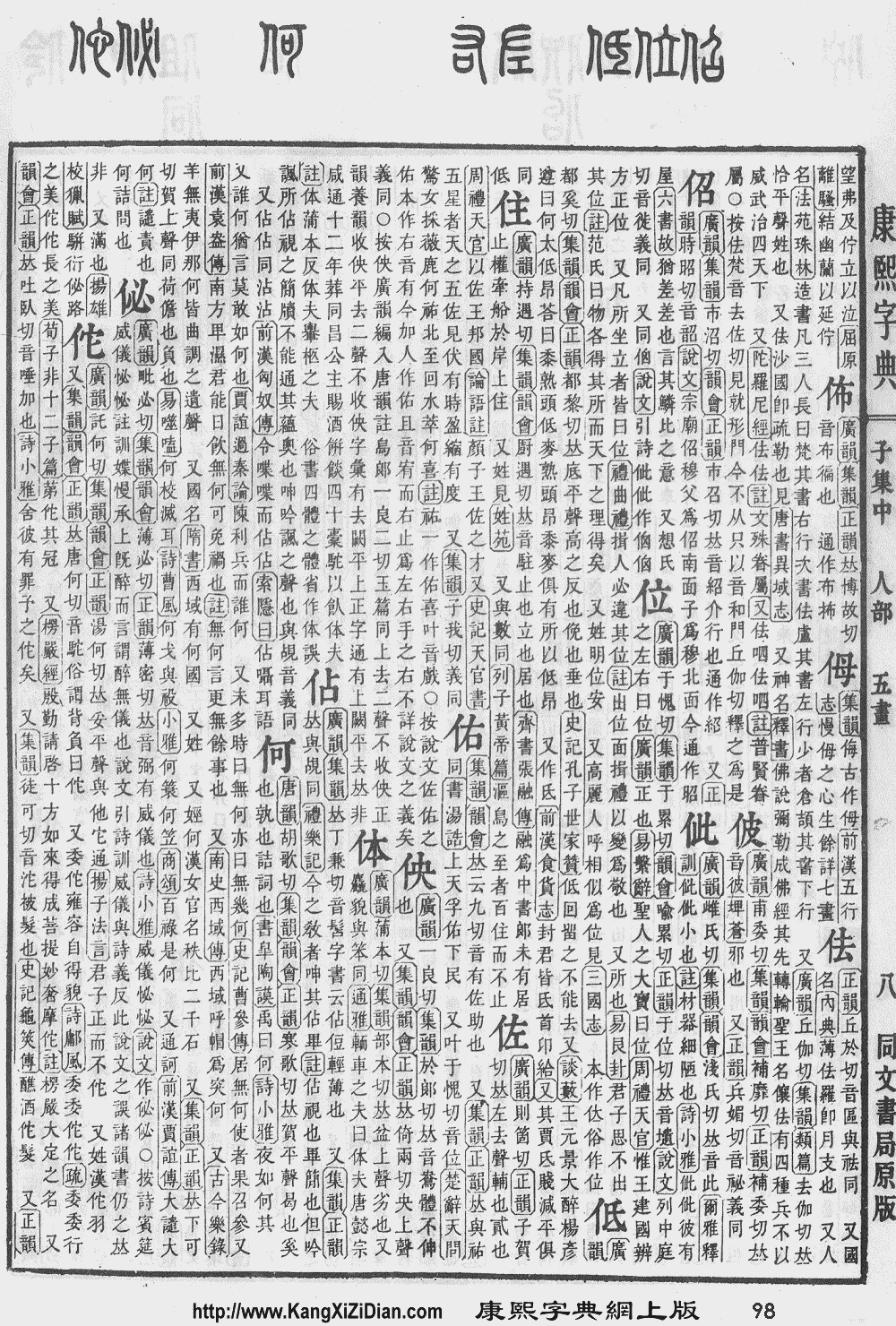
- Kangxi Dictionary: page 98, character 9
- Dai Kanwa Jiten: character 505
- Dae Jaweon: page 207, character 2
- Hanyu Da Zidian (first edition): volume 1, page 137, character 9
- Unihan data for U+4F4F
Chinese
| simp. and trad. |
住 | |
|---|---|---|
Glyph origin
Characters in the same phonetic series (主) (Zhengzhang, 2003)
Phono-semantic compound (形聲/形声, OC *tos, *dos) : semantic 亻 + phonetic 主 (OC *tjoʔ).
Pronunciation
Definitions
住
- to live; to dwell; to reside
- to stay
- to stop; to cease
- Verb suffix indicating firmness, steadiness or coming to a halt.
- 契丹分明是被金帛買住了。 [Written Vernacular Chinese, trad.]
- From: c. 13th century, various editors, A Collection of Conversations of Master Zhu (《朱子語類》)
- Qìdān fēnmíng shì bèi jīnbó mǎizhù le. [Pinyin]
- It's clear that the Khitans were totally bought off with the money and goods.
契丹分明是被金帛买住了。 [Written Vernacular Chinese, simp.]
- (Cantonese) Verb suffix indicating ongoing action's status.
Synonyms
Dialectal synonyms of 住 (“to live; to reside; to stay”) [map]
| Variety | Location | Words |
|---|---|---|
| Formal (Written Standard Chinese) | 住, 居住 | |
| Mandarin | Beijing | 住 |
| Taiwan | 住 | |
| Malaysia | 住 | |
| Singapore | 住 | |
| Cantonese | Guangzhou | 住 |
| Hong Kong | 住 | |
| Kuala Lumpur (Guangfu) | 住 | |
| Singapore (Guangfu) | 住 | |
| Ho Chi Minh City (Guangfu) | 住 | |
| Hakka | Meixian | 住 |
| Miaoli (N. Sixian) | 歇, 蹛 | |
| Pingtung (Neipu; S. Sixian) | 歇, 蹛 | |
| Hsinchu County (Zhudong; Hailu) | 蹛 | |
| Taichung (Dongshi; Dabu) | 蹛, 歇 | |
| Hsinchu County (Qionglin; Raoping) | 蹛 | |
| Yunlin (Lunbei; Zhao'an) | 蹛 | |
| Hong Kong | 住 | |
| Southern Min | Xiamen | 徛, 蹛, 徛起, 徛跤, 壏 |
| Quanzhou | 徛, 蹛, 徛起, 徛跤, 壏 | |
| Zhangzhou | 徛, 蹛, 徛起, 徛跤 | |
| Dongshan | 蹛 | |
| Tainan | 蹛, 徛起 | |
| Penang (Hokkien) | 蹛 | |
| Singapore (Hokkien) | 徛, 蹛 | |
| Manila (Hokkien) | 徛, 徛起 | |
| Chaozhou | 徛 | |
| Shantou | 徛起, 住 | |
| Jieyang | 徛起, 徛, 住 | |
| Bangkok (Teochew) | 徛 | |
| Singapore (Teochew) | 徛, 蹛 | |
| Leizhou | 徛 | |
| Wenchang | 徛 | |
| Haikou | 徛 | |
| Qionghai | 徛 | |
| Singapore (Hainanese) | 徛 | |
| Zhongshan Min | Shaxi (Longdu) | 住 |
| Wu | Shanghai | 住 |
| Suzhou | 住 | |
See also
(Verb suffix indicating ongoing action's status):
(Verb suffix indicating firmness, steadiness or coming to a halt):
- (Hokkien) 牢 (tiâu)
Compounds
- 不住 (bùzhù)
- 不住口
- 不住嘴
- 不住眼
- 不停住
- 且住
- 久停久住
- 住口 (zhùkǒu)
- 住嘴 (zhùzuǐ)
- 住址 (zhùzhǐ)
- 住坐
- 住宅 (zhùzhái)
- 住宅區/住宅区 (zhùzháiqū)
- 住宅單元/住宅单元
- 住宅旅社
- 住客 (zhùkè)
- 住家 (zhùjiā)
- 住宿 (zhùsù)
- 住屋 (zhùwū)
- 住店 (zhùdiàn)
- 住戶/住户 (zhùhù)
- 住所 (zhùsuǒ)
- 住手 (zhùshǒu)
- 住持 (zhùchí)
- 住民 (zhùmín)
- 住紮/住扎
- 住腳/住脚
- 住處/住处 (zhùchù)
- 住閒/住闲
- 住院 (zhùyuàn)
- 住院醫師/住院医师 (zhùyuàn yīshī)
- 保不住 (bǎobuzhù)
- 保住 (bǎozhù)
- 借住 (jièzhù)
- 停住 (tíngzhù)
- 僵住
- 凍住/冻住
- 勒住
- 原住民 (yuánzhùmín)
- 去住
- 去住無門/去住无门
- 吃不住 (chībùzhù)
- 吃得住 (chīdezhù)
- 呆住 (dāizhù)
- 咬住
- 問住/问住
- 喝住 (hèzhù)
- 噤住
- 嚇住/吓住
- 嚥住/咽住
- 困住 (kùnzhù)
- 國民住宅/国民住宅
- 圍住/围住 (wéizhù)
- 團團圍住/团团围住
- 坐不住 (zuò bu zhù)
- 塞住
- 壓不住/压不住
- 壓住/压住
- 夜住曉行/夜住晓行
- 安住 (ānzhù)
- 寬住/宽住
- 封住
- 對不住/对不住 (duìbùzhù)
- 小住 (xiǎozhù)
- 就此打住
- 居住 (jūzhù)
- 居住密度
- 居住環境/居住环境
- 居住自由
- 常住 (chángzhù)
- 幫住/帮住
- 平價住宅/平价住宅
- 忍不住 (rěnbùzhù)
- 怔住
- 愣住 (lèngzhù)
- 憋不住
- 截住 (jiézhù)
- 戳得住
- 扎住 (zhāzhù)
- 打住 (dǎzhù)
- 打住話頭/打住话头
- 把不住
- 扶住
- 把住 (bǎzhù)
- 抓住 (zhuāzhù)
- 扯住 (chězhù)
- 把持不住
- 把腳不住/把脚不住
- 抵不住
- 抵住 (dǐzhù)
- 招架不住 (zhāojià bùzhù)
- 拿不住
- 拴住
- 拿住
- 拿得住
- 拿把不住
- 按捺不住 (ànnàbùzhù)
- 捉住
- 挺住 (tǐngzhù)
- 捉腳不住/捉脚不住
- 捉身不住
- 掩不住
- 掌不住
- 掛不住/挂不住
- 掩住
- 捧住
- 掐住
- 摀不住/𰓆不住
- 摀住/𰓆住 (wǔzhù)
- 摟住/搂住 (lǒuzhù)
- 摳住/抠住 (kōuzhù)
- 撐不住/撑不住
- 撐得住/撑得住
- 擋不住/挡不住
- 擋住/挡住 (dǎngzhù)
- 擱不住/搁不住
- 擱得住/搁得住
- 攔住/拦住 (lánzhù)
- 攫住
- 架不住
- 楞住
- 款住
- 止不住
- 止住 (zhǐzhù)
- 沉不住氣/沉不住气
- 沉住氣/沉住气 (chénzhùqì)
- 沒住頭/没住头
- 沉得住氣/沉得住气
- 煞住
- 熬不住
- 留住 (liúzhù)
- 留客住
- 白住
- 白吃白住
- 瞞住/瞒住
- 矇住/蒙住
- 禁不住
- 禁得住
- 移住 (yízhù)
- 穩住/稳住 (wěnzhù)
- 立不住腳/立不住脚
- 站不住
- 站不住腳/站不住脚 (zhànbùzhùjiǎo)
- 站住 (zhànzhù)
- 站住腳/站住脚
- 站得住 (zhàndezhù)
- 管不住
- 絆住/绊住
- 給我記住/给我记住
- 綁住/绑住
- 縛住/缚住 (fùzhù)
- 繫住/系住
- 纏住/缠住
- 罩不住
- 罩得住
- 耐不住
- 蓋住/盖住
- 蒙住
- 衣食住行 (yīshízhùxíng)
- 裹住
- 記住/记住 (jìzhù)
- 貧民住宅/贫民住宅
- 起住
- 迷住 (mízhu)
- 遮住
- 遲行早住/迟行早住
- 長住/长住 (chángzhù)
- 閒住/闲住 (xiánzhù)
- 閣不住/阁不住
- 限制住居
- 隔不住
- 難住了/难住了
- 靠不住
- 靠得住 (kàodezhù)
- 頂針捱住/顶针捱住
- 食衣住行
- 養不住/养不住
- 鯁住/鲠住
- 黏住
References
- “住”, in 漢語多功能字庫 (Multi-function Chinese Character Database), 香港中文大學 (the Chinese University of Hong Kong), 2014–
Japanese
| Shinjitai | 住 |  |
| Kyūjitai [1][2][3] |
住󠄁 住+ 󠄁?(Adobe-Japan1) |
 |
| 住󠄃 住+ 󠄃?(Hanyo-Denshi) (Moji_Joho) | ||
| The displayed kanji may be different from the image due to your environment. See here for details. | ||
Readings
Compounds
Etymology 1
| Kanji in this term |
|---|
| 住 |
| じゅう Grade: 3 |
| goon |
From Middle Chinese 住 (MC drjuH).
The goon pronunciation, so likely the initial borrowing.
Noun
Etymology 2
| Kanji in this term |
|---|
| 住 |
| す(まい) Grade: 3 |
| kun’yomi |
| Alternative spellings |
|---|
| 住居 住い (uncommon) |
| For pronunciation and definitions of 住 – see the following entry. | ||
| ||
| (This term, 住, is an alternative spelling (less common) of the above term.) |
References
- 白川静 (Shirakawa Shizuka) (2014) “住”, in 字通 (Jitsū) (in Japanese), popular edition, Tōkyō: Heibonsha, →ISBN
- Haga, Gōtarō (1914) 漢和大辞書 [The Great Kanji-Japanese Dictionary] (in Japanese), Fourth edition, Tōkyō: Kōbunsha, , page 136 (paper), page 118 (digital)
- Shōundō Henshūjo, editor (1927), 新漢和辞典 [The New Kanji-Japanese Dictionary] (in Japanese), Ōsaka: Shōundō, , page 110 (paper), page 67 (digital)
- Matsumura, Akira, editor (2006), 大辞林 [Daijirin] (in Japanese), Third edition, Tōkyō: Sanseidō, →ISBN
- Yamada, Tadao et al., editors (2011), 新明解国語辞典 [Shin Meikai Kokugo Jiten] (in Japanese), Seventh edition, Tōkyō: Sanseidō, →ISBN
- Shōgaku Tosho (1988) 国語大辞典(新装版) [Unabridged Dictionary of Japanese (Revised Edition)] (in Japanese), Tōkyō: Shogakukan, →ISBN
Korean
Etymology
From Middle Chinese 住 (MC drjuH|trjuH).
Pronunciation
- (SK Standard/Seoul) IPA(key): [t͡ɕu]
- Phonetic hangul: [주]
Compounds
- 주가 (住家, juga)
- 주거 (住居, jugeo)
- 주겁 (住劫, jugeop)
- 주공 (住公, jugong)
- 주민 (住民, jumin)
- 주소 (住所, juso)
- 주승 (住僧, juseung)
- 주신 (住信, jusin)
- 주점 (住占, jujeom)
- 주접 (住接, jujeop)
- 주종 (住種, jujong)
- 주지 (住地, juji)
- 주지 (住持, juji)
- 주직 (住職, jujik)
- 주착 (住着, juchak)
- 주택 (住宅, jutaek)
- 주필 (住蹕, jupil)
- 주활 (住活, juhwal)
- 거주 (居住, geoju)
- 구주 (久住, guju)
- 근주 (近住, geunju)
- 기주 (寄住, giju)
- 내주 (內住, naeju)
- 내주 (來住, naeju)
- 늑주 (勒住, neukju)
- 동주 (同住, dongju)
- 등주 (燈住, deungju)
- 만주 (挽住, manju)
- 무주 (無住, muju)
- 법주 (法住, beopju)
- 사주 (私住, saju)
- 상주 (常住, sangju)
- 속주 (束住, sokju)
- 숙주 (宿住, sukju)
- 십주 (十住, sipju)
- 안주 (安住, anju)
- 염주 (念住, yeomju)
- 영주 (永住, yeongju)
- 원주 (原住, wonju)
- 유주 (留住, yuju)
- 의식주 (衣食住, uisikju)
- 이주 (移住, iju)
- 입주 (入住, ipju)
- 재주 (在住, jaeju)
- 적주 (賊住, jeokju)
- 전주 (前住, jeonju)
- 전주 (轉住, jeonju)
- 정주 (定住, jeongju)
- 정주 (停住/停駐, jeongju)
- 정주 (碇住, jeongju)
- 지주 (止住, jiju)
- 추주 (楸住, chuju)
- 파주 (把住, paju)
- 한주 (閑住, hanju)
- 현주 (現住, hyeonju)
- 환주 (還住, hwanju)
References
Vietnamese
Han character
住: Hán Nôm readings: trú, trọ, giọ
- This term needs a translation to English. Please help out and add a translation, then remove the text
{{rfdef}}.
References
This article is issued from Wiktionary. The text is licensed under Creative Commons - Attribution - Sharealike. Additional terms may apply for the media files.