駕
See also: 驾
| ||||||||
Translingual
Han character
駕 (Kangxi radical 187, 馬+5, 15 strokes, cangjie input 大口尸手火 (KRSQF), four-corner 46327, composition ⿱加馬)
Derived characters
- 𡃉 𪯀
References
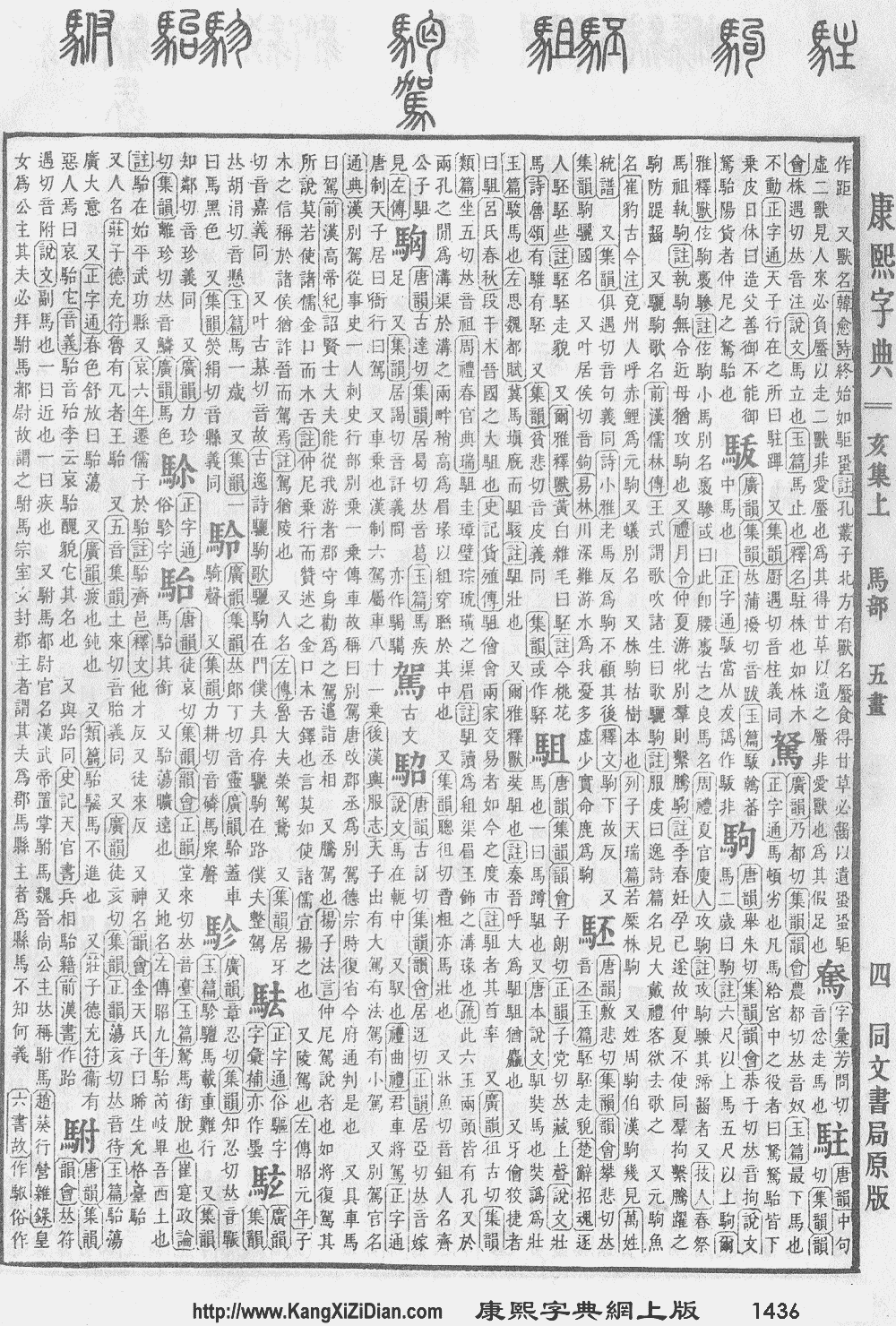
- Kangxi Dictionary: page 1436, character 9
- Dai Kanwa Jiten: character 44667
- Dae Jaweon: page 1960, character 34
- Hanyu Da Zidian (first edition): volume 7, page 4550, character 9
- Unihan data for U+99D5
Chinese
| trad. | 駕 | |
|---|---|---|
| simp. | 驾 | |
| alternative forms | 𩢟 𪯀 | |
Glyph origin
| Historical forms of the character 駕 | ||
|---|---|---|
| Warring States | Shuowen Jiezi (compiled in Han) | Liushutong (compiled in Ming) |
| Chu slip and silk script | Small seal script | Transcribed ancient scripts |
 |
 |
 |
Characters in the same phonetic series (加) (Zhengzhang, 2003)
Phono-semantic compound (形聲/形声, OC *kraːls) : phonetic 加 (OC *kraːl) + semantic 馬.
Etymology
The exopassive of 加 (OC *kraːl, “to add; to attach”). Cognate with Tibetan ཁྲལ (khral, “to impose a tax”) (Schuessler, 2007).
Pronunciation
Definitions
駕
- to harness; to yoke (an animal, e.g. to a cart)
- 今乘輿已駕矣,有司未知所之。敢請。 [Classical Chinese, trad.]
- From: Mencius, c. 4th century BCE
- Jīn chéngyú yǐ jià yǐ, yǒusī wèi zhī suǒ zhī. Gǎn qǐng. [Pinyin]
- Now, the horses have been put to the carriage, and the officers do not yet know where you are going. I venture to ask.
今乘舆已驾矣,有司未知所之。敢请。 [Classical Chinese, simp.]
- to drive (a vehicle); to sail (a ship); to fly (a plane)
- to direct; to control; to harness
- (historical) cart; carriage
- (historical) emperor's carriage
- (figurative) emperor (especially on a journey)
- (Classical) distance a horse travels in a day
- giddyup (interjection)
Synonyms
- (to control):
- 主宰 (zhǔzǎi)
- 主張/主张 (zhǔzhāng) (archaic)
- 克制 (kèzhì)
- 克治 (kèzhì) (literary)
- 制禦/制御 (zhìyù) (literary)
- 制約/制约 (zhìyuē)
- 君 (jūn) (literary)
- 執掌/执掌 (zhízhǎng)
- 壓制/压制 (yāzhì)
- 局 (Zhangzhou Hokkien)
- 局限 (júxiàn)
- 左右 (zuǒyòu)
- 把
- 抑制 (yìzhì)
- 把持 (bǎchí)
- 把控 (bǎkòng)
- 把攬/把揽 (bǎlǎn)
- 抵制 (dǐzhì)
- 拘束 (jūshù)
- 按 (àn)
- 按捺 (ànnà) (usually in the negative)
- 控 (literary, or in compounds)
- 控制 (kòngzhì)
- 掌控 (zhǎngkòng)
- 掌握 (zhǎngwò)
- 提控 (tíkòng) (literary)
- 撥弄/拨弄 (bōnòng)
- 撙節/撙节 (zǔnjié)
- 操控 (cāokòng)
- 操縱/操纵 (cāozòng)
- 擺佈/摆布 (bǎibù)
- 擺治/摆治 (bǎizhì) (regional)
- 支配 (zhīpèi)
- 收斂/收敛 (shōuliǎn)
- 束 (literary, or in compounds)
- 束縛/束缚 (shùfù)
- 柄 (literary, or in compounds)
- 框 (kuàng)
- 禁錮/禁锢 (jìngù) (figurative)
- 積壓/积压 (jīyā) (figurative)
- 節制/节制 (jiézhì)
- 節撙/节撙 (Quanzhou Hokkien, Xiamen Hokkien)
- 管制 (guǎnzhì)
- 管束 (guǎnshù)
- 約束/约束 (yuēshù)
- 統御/统御 (tǒngyù) (literary)
- 統治/统治 (tǒngzhì)
- 羈束/羁束 (jīshù) (literary)
- 裁 (cái) (literary, or in compounds)
- 遏抑 (èyì) (literary)
- 鎮/镇 (zhèn)
- 限 (xiàn)
- 限乏 (Xiamen Hokkien)
- 限制 (xiànzhì)
- 駕馭/驾驭 (jiàyù) (figurative)
Compounds
- 並駕/并驾
- 並駕齊驅/并驾齐驱 (bìngjiàqíqū)
- 乘鶴駕雲/乘鹤驾云
- 保駕/保驾 (bǎojià)
- 光駕/光驾
- 凌駕 (língjià)
- 別駕/别驾 (biéjià)
- 勞駕/劳驾 (láojià)
- 勸駕/劝驾
- 千里命駕
- 半朝鑾駕/半朝銮驾
- 命駕/命驾
- 嚴駕/严驾
- 國際駕照/国际驾照
- 夙駕/夙驾
- 大駕/大驾 (dàjià)
- 大駕光臨/大驾光临
- 宮車晏駕/宫车晏驾
- 尊駕/尊驾 (zūnjià)
- 屈駕/屈驾 (qūjià)
- 崩駕/崩驾
- 征駕
- 御駕/御驾 (yùjià)
- 御駕親征/御驾亲征 (yùjiàqīnzhēng)
- 扈駕/扈驾
- 打鑾駕/打銮驾
- 接駕/接驾
- 搗謊駕舌/捣谎驾舌
- 擎天駕海/擎天驾海 (qíngtiān jià hǎi)
- 擋駕/挡驾 (dǎngjià)
- 救駕/救驾 (jiùjià)
- 方駕/方驾
- 方駕齊驅/方驾齐驱
- 星言夙駕/星言夙驾
- 星陳夙駕/星陈夙驾
- 星駕/星驾
- 晏駕/晏驾 (yànjià)
- 東曦既駕/东曦既驾
- 枉駕/枉驾
- 柯駕/柯驾
- 法駕/法驾 (fǎjià)
- 泛駕/泛驾
- 泛駕之馬/泛驾之马
- 無照駕駛/无照驾驶
- 移駕/移驾 (yíjià)
- 稅駕/税驾
- 羽駕/羽驾
- 聖駕/圣驾 (shèngjià)
- 臺駕/台驾
- 覂駕/覂驾
- 見駕/见驾 (jiànjià)
- 親駕/亲驾
- 誑駕/诳驾
- 護駕/护驾 (hùjià)
- 起駕/起驾 (qǐjià)
- 車駕/车驾 (jūjià)
- 軒駕/轩驾
- 速駕/速驾
- 鑾駕/銮驾 (luánjià)
- 面駕/面驾
- 頂喪駕靈/顶丧驾灵
- 駕上人/驾上人
- 駕凌
- 駕娘/驾娘
- 駕崩/驾崩 (jiàbēng)
- 駕帖/驾帖
- 駕御/驾御 (jiàyù)
- 駕照/驾照 (jiàzhào)
- 駕臨/驾临 (jiàlín)
- 駕說/驾说
- 駕車/驾车 (jiàchē)
- 駕輕就熟/驾轻就熟 (jiàqīngjiùshú)
- 駕返瑤池/驾返瑶池
- 駕長/驾长
- 駕霧騰雲/驾雾腾云
- 駕靈/驾灵
- 駕頭/驾头
- 駑馬十駕/驽马十驾
- 駕馭/驾驭 (jiàyù)
- 駕駛/驾驶 (jiàshǐ)
- 駙駕/驸驾
- 駕駛執照/驾驶执照 (jiàshǐ zhízhào)
- 駕駛盤/驾驶盘
- 駕鶴西歸/驾鹤西归
- 騰雲駕霧/腾云驾雾
- 驚駕/惊驾
- 鶴駕/鹤驾
- 鸞駕/鸾驾
- 齊驅並駕/齐驱并驾
- 龍駕/龙驾
References
- “駕”, in 漢語多功能字庫 (Multi-function Chinese Character Database), 香港中文大學 (the Chinese University of Hong Kong), 2014–
Japanese
Readings
Etymology
| Kanji in this term |
|---|
| 駕 |
| が Jinmeiyō |
| on’yomi |
(This etymology is missing or incomplete. Please add to it, or discuss it at the Etymology scriptorium.)
Idioms
- 駕を枉げる (ga o mageru)
References
- Matsumura, Akira, editor (2006), 大辞林 [Daijirin] (in Japanese), Third edition, Tōkyō: Sanseidō, →ISBN
Korean
Etymology
From Middle Chinese 駕 (MC kaeH). Recorded as Middle Korean 가〯 (kǎ) (Yale: ka) in Hunmong Jahoe (訓蒙字會 / 훈몽자회), 1527.
Compounds
Compounds
- 능가 (凌駕, neungga, “excelling; surpassing; outdoing”)
- 가락국 (駕洛國, Garakguk, “Geumgwan Gaya”)
Vietnamese
This article is issued from Wiktionary. The text is licensed under Creative Commons - Attribution - Sharealike. Additional terms may apply for the media files.