往
| ||||||||
Translingual
| Stroke order | |||
|---|---|---|---|
 | |||
Han character
往 (Kangxi radical 60, 彳+5, 8 strokes, cangjie input 竹人卜土 (HOYG), four-corner 20214, composition ⿰彳主)
References
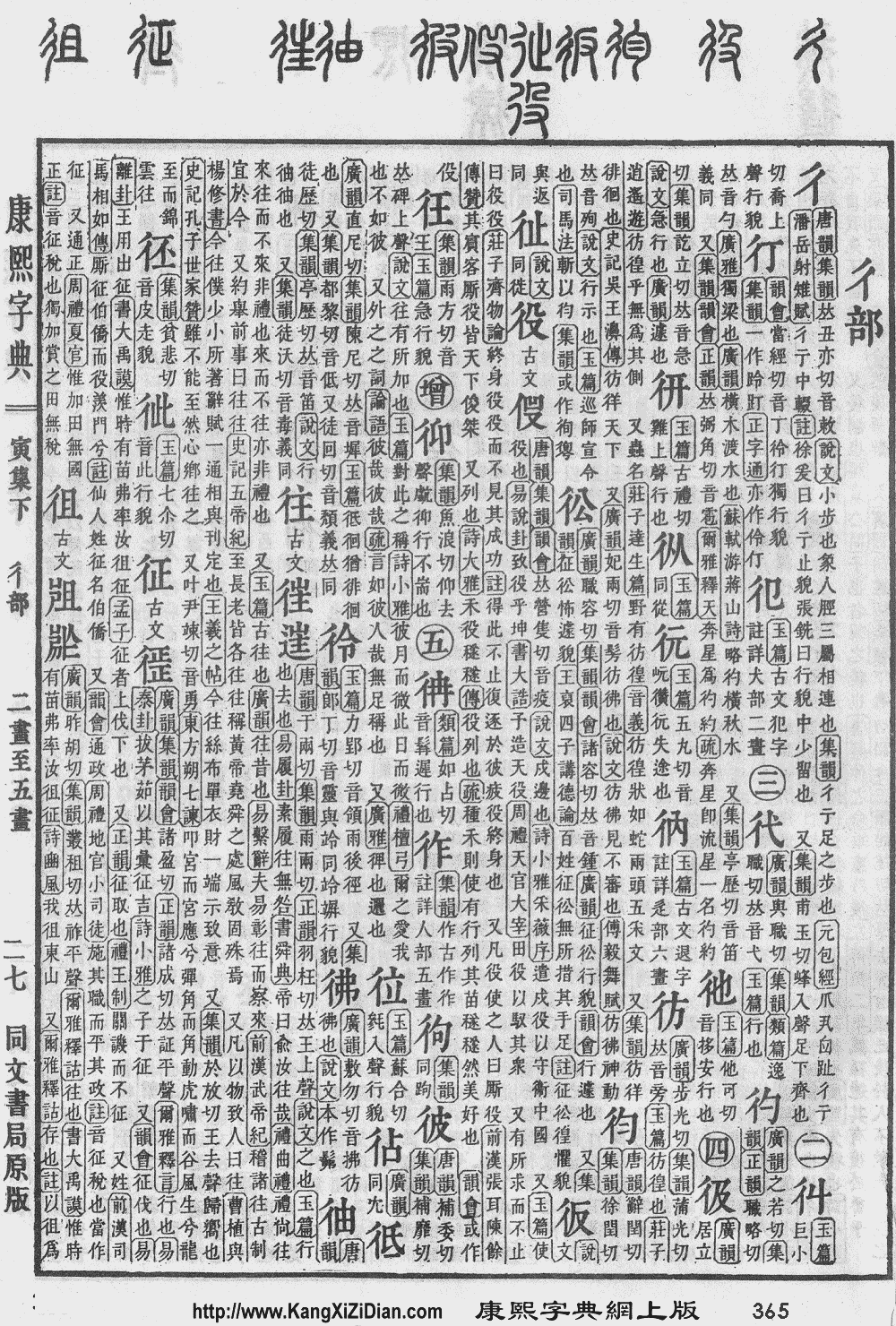
- Kangxi Dictionary: page 365, character 32
- Dai Kanwa Jiten: character 10073
- Dae Jaweon: page 685, character 23
- Hanyu Da Zidian (first edition): volume 2, page 817, character 6
- Unihan data for U+5F80
Chinese
Glyph origin
| Historical forms of the character 往 | ||||||
|---|---|---|---|---|---|---|
| Shang | Western Zhou | Spring and Autumn | Warring States | Shuowen Jiezi (compiled in Han) | ||
| Oracle bone script | Bronze inscriptions | Bronze inscriptions | Chu slip and silk script | Qin slip script | Ancient script | Small seal script |
 |
 |
 |
 |
 |
 |
 |
Originally phono-semantic compound (形聲/形声, OC *ɢʷaŋ) : semantic 止 (“foot”) + phonetic 王 (OC *ɢʷaŋ, *ɢʷaŋs). Later 彳 was added to form phono-semantic compound (形聲/形声, OC *ɢʷaŋ) : semantic 彳 (“walk”) + semantic 止 (“foot”) + phonetic 王 (OC *ɢʷaŋ, *ɢʷaŋs).
Etymology 1
| simp. and trad. |
往 | |
|---|---|---|
| alternative forms | ||
From Proto-Sino-Tibetan *s-wa-ŋ (“to go; to come”). Cognate with Burmese ဝင် (wang, “to come in; to enter”), Tibetan འོང ('ong, “to come”), ཡོང (yong, “to come”). Related to 于 (OC *ɢʷa, “to go”).
Pronunciation
Definitions
往
Synonyms
- 向 (xiàng)
Compounds
- 一來一往/一来一往 (yīláiyīwǎng)
- 一如既往 (yīrújìwǎng)
- 一往情深 (yīwǎngqíngshēn)
- 一往無前/一往无前 (yīwǎngwúqián)
- 一往直前 (yīwǎngzhíqián)
- 不咎既往 (bùjiùjìwǎng)
- 不溯既往
- 不相來往/不相来往
- 不相往來/不相往来
- 交往 (jiāowǎng)
- 人來人往/人来人往
- 人來客往/人来客往
- 今來古往/今来古往
- 令人神往
- 以往 (yǐwǎng)
- 以往鑒來/以往鉴来
- 你來我往/你来我往
- 來來往往/来来往往
- 來往/来往 (láiwǎng)
- 倏來忽往/倏来忽往
- 前塵往事/前尘往事 (qiánchénwǎngshì)
- 前往 (qiánwǎng)
- 勇往直前 (yǒngwǎngzhíqián)
- 南來北往/南来北往
- 古往今來/古往今来 (gǔwǎngjīnlái)
- 向往 (xiàngwǎng)
- 否往泰來/否往泰来
- 嚮往/向往 (xiàngwǎng)
- 夙心往志
- 夢往神遊/梦往神游
- 大來大往/大来大往
- 寒來暑往/寒来暑往
- 小往大來/小往大来
- 已往 (yǐwǎng)
- 彰往察來/彰往察来
- 往事 (wǎngshì)
- 往來/往来 (wǎnglái)
- 往例
- 往來如織/往来如织
- 往初
- 往前 (wǎngqián)
- 往古
- 往古來今/往古来今
- 往哲 (wǎngzhé)
- 往常 (wǎngcháng)
- 往常間/往常间
- 往年 (wǎngnián)
- 往往 (wǎngwǎng)
- 往後/往后 (wǎnghòu)
- 往復/往复 (wǎngfù)
- 往日 (wǎngrì)
- 往昔 (wǎngxī)
- 往時/往时 (wǎngshí)
- 往生 (wǎngshēng)
- 往生論/往生论
- 往者 (wǎngzhě)
- 往返 (wǎngfǎn)
- 往還/往还
- 徒勞往返/徒劳往返
- 心嚮往之/心向往之
- 心往神馳/心往神驰
- 心馳神往/心驰神往
- 悠然神往
- 意往神馳/意往神驰
- 拔來報往/拔来报往
- 數往知來/数往知来
- 斷絕往來/断绝往来
- 既往不咎 (jìwǎngbùjiù)
- 日往月來/日往月来
- 日浹往來/日浃往来
- 明來暗往/明来暗往
- 暑來寒往/暑来寒往
- 暑往寒來/暑往寒来
- 有來有往/有来有往 (yǒuláiyǒuwǎng)
- 泰來否往/泰来否往
- 無往不利/无往不利 (wúwǎngbùlì)
- 熙來攘往/熙来攘往
- 獨來獨往/独来独往 (dúláidúwǎng)
- 獨往/独往
- 獨往獨來/独往独来
- 發往/发往
- 直來直往/直来直往
- 知來藏往/知来藏往
- 知往鑒今/知往鉴今
- 神往 (shénwǎng)
- 禮尚往來/礼尚往来 (lǐshàngwǎnglái)
- 禮節往來/礼节往来
- 繼往開來/继往开来 (jìwǎngkāilái)
- 英姿邁往/英姿迈往
- 英特邁往/英特迈往
- 虛往實歸/虚往实归
- 親往/亲往 (qīnwǎng)
- 觀往知來/观往知来
- 躬往
- 迎來送往/迎来送往
- 送往事居
- 送往迎來/送往迎来
- 通往 (tōngwǎng)
- 過往/过往 (guòwǎng)
- 過此以往/过此以往
- 邁往/迈往
- 鑒往知來/鉴往知来
- 鑑往知來/鉴往知来
- 長此以往/长此以往 (chángcǐyǐwǎng)
- 飛往/飞往
Pronunciation
Definitions
往
- (Hakka) towards
- 2019 December 13, “徙”, 陳美燕 [Mei-Yen Chen], 邱廉欽 [Kim Chiu], Uncle Willow, Regina Grounded (lyrics), 邱廉欽 [Kim Chiu] and 賴威成 [Andres Lai] (music)performed by 愛客樂 [iColor]:
- 徙往下 過河壩 跋山崗 艱辛出外莊 再徙往出 過大江 尋一隻 有好耕種个地方 [Hailu Hakka, trad.]
- sai´ gong` ha`, goˇ ho baˇ, bag san` gong`, gan` sin` chud ngoi⁺ zong`, zaiˇ sai´ gong` chud, goˇ tai⁺ gong`, cim rhid zhag rhiu` ho´ gang` zhungˇ gaiˇ ti⁺ fong` [Taiwanese Hakka Romanization System]
- Migrating down, crossing rivers, climbing mountains, going out of the village with difficulty; then migrating out, crossing big rivers to look for a place good for farming
徙往下 过河坝 跋山岗 艰辛出外庄 再徙往出 过大江 寻一只 有好耕种个地方 [Hailu Hakka, simp.]
Usage notes
It is used after a verb and before a directional term, such as 上 (“up”), 下 (“down”), 出 (“out”).
References
- “往”, in 漢語多功能字庫 (Multi-function Chinese Character Database), 香港中文大學 (the Chinese University of Hong Kong), 2014–
Japanese
| Shinjitai | 往 |  |
| Kyūjitai [1][2][3] |
往󠄁 往+ 󠄁?(Adobe-Japan1) |
 |
| 往󠄃 往+ 󠄃?(Hanyo-Denshi) (Moji_Joho) | ||
| The displayed kanji may be different from the image due to your environment. See here for details. | ||
Readings
Etymology
| Kanji in this term |
|---|
| 往 |
| おう Grade: 5 |
| on’yomi |
*/waŋ/ → /wau/ → /ɔː/ → /oː/
From Middle Chinese 往 (MC hjwangX).
Pronunciation
- IPA(key): [o̞ː]
References
- 白川静 (Shirakawa Shizuka) (2014) “往”, in 字通 (Jitsū) (in Japanese), popular edition, Tōkyō: Heibonsha, →ISBN
- Haga, Gōtarō (1914) 漢和大辞書 [The Great Kanji-Japanese Dictionary] (in Japanese), Fourth edition, Tōkyō: Kōbunsha, , page 822 (paper), page 461 (digital)
- Shōundō Henshūjo, editor (1927), 新漢和辞典 [The New Kanji-Japanese Dictionary] (in Japanese), Ōsaka: Shōundō, , page 520 (paper), page 273 (digital)
Korean
Vietnamese
Han character
往: Hán Nôm readings: vãng, vạng, vảng, vởn, váng, vãn
- This term needs a translation to English. Please help out and add a translation, then remove the text
{{rfdef}}.