勞
| ||||||||
| ||||||||
Translingual
| Traditional | 勞 |
|---|---|
| Shinjitai | 労 |
| Simplified | 劳 |
Han character
勞 (Kangxi radical 19, 力+10, 12 strokes, cangjie input 火火月大尸 (FFBKS), four-corner 99427, composition ⿱𤇾力)
Derived characters
References
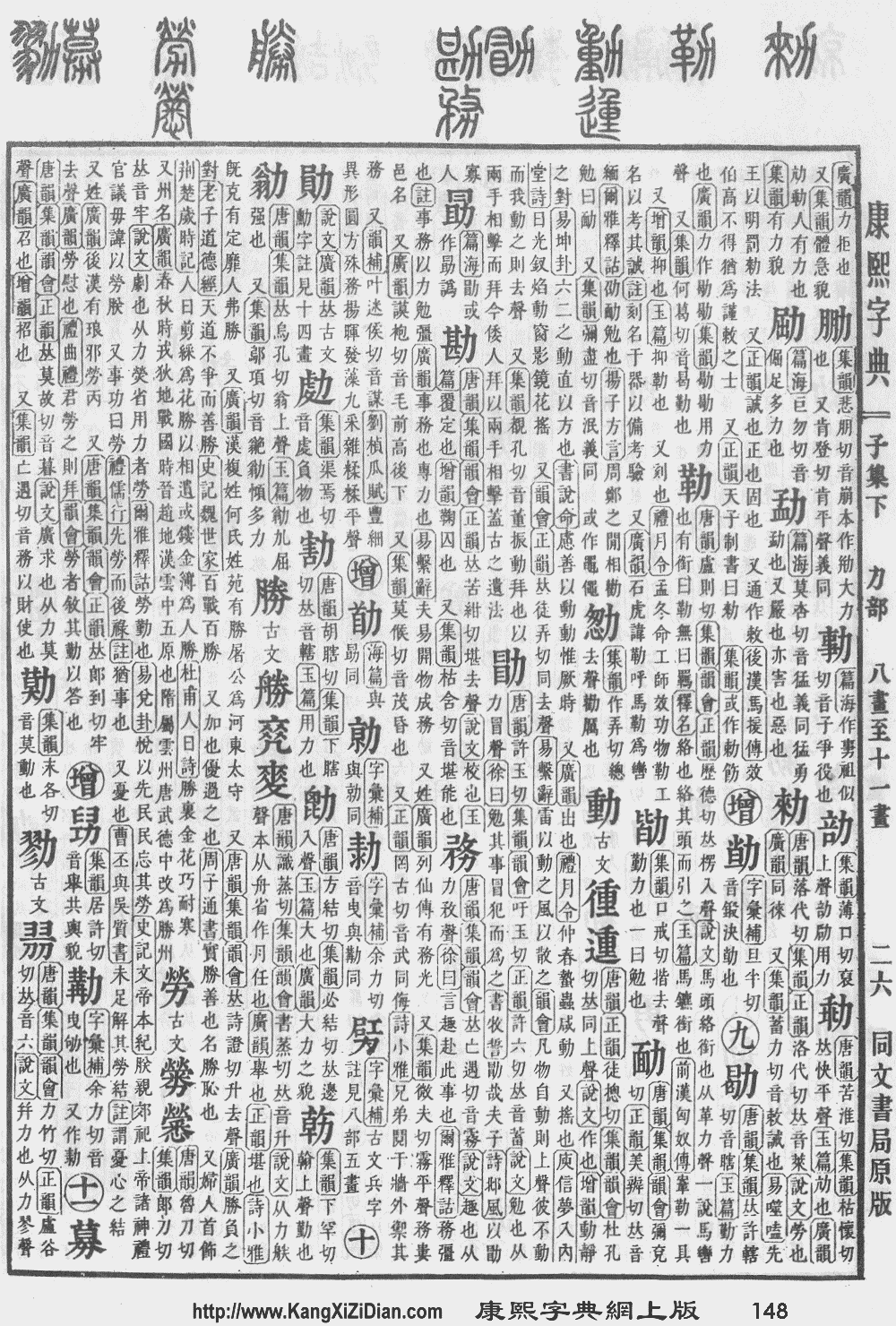
- Kangxi Dictionary: page 148, character 35
- Dai Kanwa Jiten: character 2410
- Dae Jaweon: page 335, character 11
- Hanyu Da Zidian (first edition): volume 1, page 376, character 17
- Unihan data for U+52DE
- Unihan data for U+F92F
Chinese
Pronunciation 1
Definitions
勞
Compounds
- 一勞久逸/一劳久逸
- 一勞永逸/一劳永逸 (yīláoyǒngyì)
- 不勞/不劳 (bùláo)
- 不勞而獲/不劳而获 (bùláo'érhuò)
- 不敢告勞/不敢告劳
- 不辭勞怨/不辞劳怨
- 不辭勞苦/不辞劳苦 (bùcíláokǔ)
- 不辭辛勞/不辞辛劳
- 五勞七傷/五劳七伤 (wǔláoqīshāng)
- 以佚待勞/以佚待劳
- 代勞/代劳
- 以逸待勞/以逸待劳 (yǐyìdàiláo)
- 以逸擊勞/以逸击劳
- 伯勞/伯劳 (bóláo)
- 伯勞飛燕/伯劳飞燕
- 伯勞鳥/伯劳鸟 (bóláoniǎo)
- 偏勞/偏劳 (piānláo)
- 分憂解勞/分忧解劳
- 刻苦耐勞/刻苦耐劳
- 功勞/功劳 (gōngláo)
- 功勞簿/功劳簿
- 劬勞/劬劳 (qúláo)
- 劬勞顧復/劬劳顾复
- 動勞/动劳
- 動眾勞師/动众劳师
- 勞乏/劳乏
- 勞人費馬/劳人费马
- 勞什子/劳什子 (láoshízi)
- 勞什骨子/劳什骨子
- 勞作/劳作 (láozuò)
- 勞保/劳保 (láobǎo)
- 勞保局/劳保局
- 勞倦/劳倦
- 勞倫斯/劳伦斯 (Láolúnsī)
- 勞傷/劳伤
- 勞力/劳力 (láolì)
- 勞力士/劳力士 (Láolìshì)
- 勞力密集/劳力密集
- 勞務/劳务 (láowù)
- 勞動/劳动
- 勞動保險/劳动保险
- 勞務出口/劳务出口
- 勞動力/劳动力 (láodònglì)
- 勞動契約/劳动契约
- 勞動教養/劳动教养 (láodòng jiàoyǎng)
- 勞動日/劳动日
- 勞動服務/劳动服务
- 勞動條件/劳动条件 (láodòng tiáojiàn)
- 勞動節/劳动节 (láodòngjié)
- 勞動者/劳动者 (láodòngzhě)
- 勞勞/劳劳 (láoláo)
- 勛勞/勋劳
- 勞勞叨叨/劳劳叨叨
- 勞嘈/劳嘈
- 勞困/劳困
- 勞基法/劳基法 (láojīfǎ)
- 勞委會/劳委会 (láowěihuì)
- 勞尊重/劳尊重
- 勞工/劳工 (láogōng)
- 勞工問題/劳工问题
- 勞工團體/劳工团体
- 勞工政策/劳工政策
- 勞工教育/劳工教育
- 勞工法庭/劳工法庭
- 勞工福利/劳工福利
- 勞工立法/劳工立法
- 勞工管理/劳工管理
- 勞工運動/劳工运动
- 勞師動眾/劳师动众 (láoshīdòngzhòng)
- 勞師襲遠/劳师袭远
- 勞形/劳形
- 勞役/劳役 (láoyì)
- 勞心/劳心 (láoxīn)
- 勞心焦思/劳心焦思
- 勞心者治人,勞力者治於人/劳心者治人,劳力者治于人 (láoxīnzhězhìrén, láolìzhězhìyúrén)
- 勞怯/劳怯
- 勞成/劳成
- 勞承/劳承
- 勞攘/劳攘
- 勞改/劳改 (láogǎi)
- 勞改場/劳改场
- 勞改營/劳改营 (láogǎiyíng)
- 勞教/劳教 (láojiào)
- 勞斯萊斯/劳斯莱斯 (Láosīláisī)
- 勞方/劳方 (láofāng)
- 勞步/劳步
- 勞民傷財/劳民伤财 (láomínshāngcái)
- 勞燕分飛/劳燕分飞 (láoyànfēnfēi)
- 勞生/劳生
- 勞瘁/劳瘁
- 勞發/劳发
- 勞碌/劳碌 (láolù)
- 勞碌命/劳碌命
- 勞神/劳神 (láoshén)
- 勞神費力/劳神费力
- 勞籠/劳笼
- 勞累/劳累 (láolèi)
- 勞結/劳结
- 勞績/劳绩 (láojì)
- 勞而無功/劳而无功
- 勞臺重/劳台重
- 勞苦功高/劳苦功高 (láokǔgōnggāo)
- 勞落/劳落
- 勞費/劳费
- 勞資/劳资 (láozī)
- 勞資合作/劳资合作
- 勞資爭議/劳资争议
- 勞資糾紛/劳资纠纷
- 勞資關係/劳资关系 (láozī guānxi)
- 勞身焦思/劳身焦思
- 勞逸不均/劳逸不均
- 勞金/劳金
- 勞頓/劳顿 (láodùn)
- 勞駕/劳驾 (láojià)
- 勤勞/勤劳 (qínláo)
- 史特勞斯/史特劳斯
- 吃勞金/吃劳金
- 吃苦耐勞/吃苦耐劳 (chīkǔnàiláo)
- 告勞/告劳
- 塵勞/尘劳
- 外勞/外劳 (wàiláo)
- 外籍勞工/外籍劳工
- 夢勞魂想/梦劳魂想
- 夢斷魂勞/梦断魂劳
- 大陸勞工/大陆劳工
- 奉勞/奉劳
- 奔波勞碌/奔波劳碌
- 好逸惡勞/好逸恶劳 (hàoyìwùláo)
- 宣勞/宣劳
- 宵旰憂勞/宵旰忧劳 (xiāo gàn yōu láo)
- 宵旰焦勞/宵旰焦劳
- 帶甲之勞/带甲之劳
- 年勞/年劳
- 徒勞/徒劳 (túláo)
- 徒勞往返/徒劳往返
- 徒勞無功/徒劳无功 (túláowúgōng)
- 徒勞無益/徒劳无益
- 心勞意冗/心劳意冗
- 心勞意攘/心劳意攘
- 心勞日拙/心劳日拙 (xīnláorìzhuō)
- 思勞/思劳
- 恤勞/恤劳
- 意攘心勞/意攘心劳
- 憂勞/忧劳
- 憚勞/惮劳
- 打勤勞/打勤劳
- 操勞/操劳 (cāoláo)
- 效勞/效劳 (xiàoláo)
- 施勞/施劳
- 旰食之勞/旰食之劳
- 暫勞永逸/暂劳永逸
- 有勞/有劳 (yǒuláo)
- 有勞有逸/有劳有逸
- 案牘勞形/案牍劳形
- 案牘勞煩/案牍劳烦
- 民勞/民劳
- 汗馬之勞/汗马之劳
- 汗馬功勞/汗马功劳 (hànmǎgōngláo)
- 汗馬勛勞/汗马勋劳
- 沙勞越/沙劳越
- 泰國勞工/泰国劳工
- 焦勞/焦劳
- 焦心勞思/焦心劳思
- 煩勞/烦劳 (fánláo)
- 犬馬之勞/犬马之劳 (quǎnmǎzhīláo)
- 生我劬勞/生我劬劳
- 用逸待勞/用逸待劳
- 當勞之急/当劳之急
- 疲勞/疲劳 (píláo)
- 疲勞試驗/疲劳试验
- 疲勞轟炸/疲劳轰炸 (píláohōngzhà)
- 疲勞限/疲劳限
- 白領勞工/白领劳工
- 神勞形瘁/神劳形瘁
- 積勞/积劳
- 積勞成疾/积劳成疾 (jīláochéngjí)
- 積勞成病/积劳成病
- 空勞/空劳
- 空勞神思/空劳神思
- 紅尾伯勞/红尾伯劳
- 罷勞/罢劳
- 美勞/美劳
- 耐勞/耐劳 (nàiláo)
- 能者多勞/能者多劳 (néngzhěduōláo)
- 舉手之勞/举手之劳 (jǔshǒuzhīláo)
- 舟車勞頓/舟车劳顿 (zhōuchēláodùn)
- 虛勞/虚劳
- 蚊虻之勞/蚊虻之劳
- 計勞納封/计劳纳封
- 費力勞心/费力劳心
- 費心勞力/费心劳力
- 費財勞民/费财劳民
- 賢勞/贤劳
- 車馬之勞/车马之劳
- 辛勞/辛劳 (xīnláo)
- 逸以待勞/逸以待劳
- 過勞死/过劳死 (guòláosǐ)
- 酬勞/酬劳 (chóuláo)
- 金屬疲勞/金属疲劳
- 阿保之勞/阿保之劳
- 鞍馬勞倦/鞍马劳倦
- 鞍馬勞神/鞍马劳神
- 鞍馬勞頓/鞍马劳顿 (ānmǎláodùn)
- 風塵勞攘/风尘劳攘
- 麥當勞/麦当劳 (Màidāngláo)
Pronunciation 2
Compounds
Pronunciation
Japanese
| 労 | |
| 勞 |
Kanji
勞
(uncommon “Hyōgai” kanji, kyūjitai kanji, shinjitai form 労)
- This term needs a translation to English. Please help out and add a translation, then remove the text
{{rfdef}}.
Korean
Vietnamese
This article is issued from Wiktionary. The text is licensed under Creative Commons - Attribution - Sharealike. Additional terms may apply for the media files.