奅
| ||||||||
Translingual
Han character
奅 (Kangxi radical 37, 大+5, 8 strokes, cangjie input 大竹竹中 (KHHL), four-corner 40727, composition ⿱大卯)
Derived characters
- 𦝐, 𣶐
References
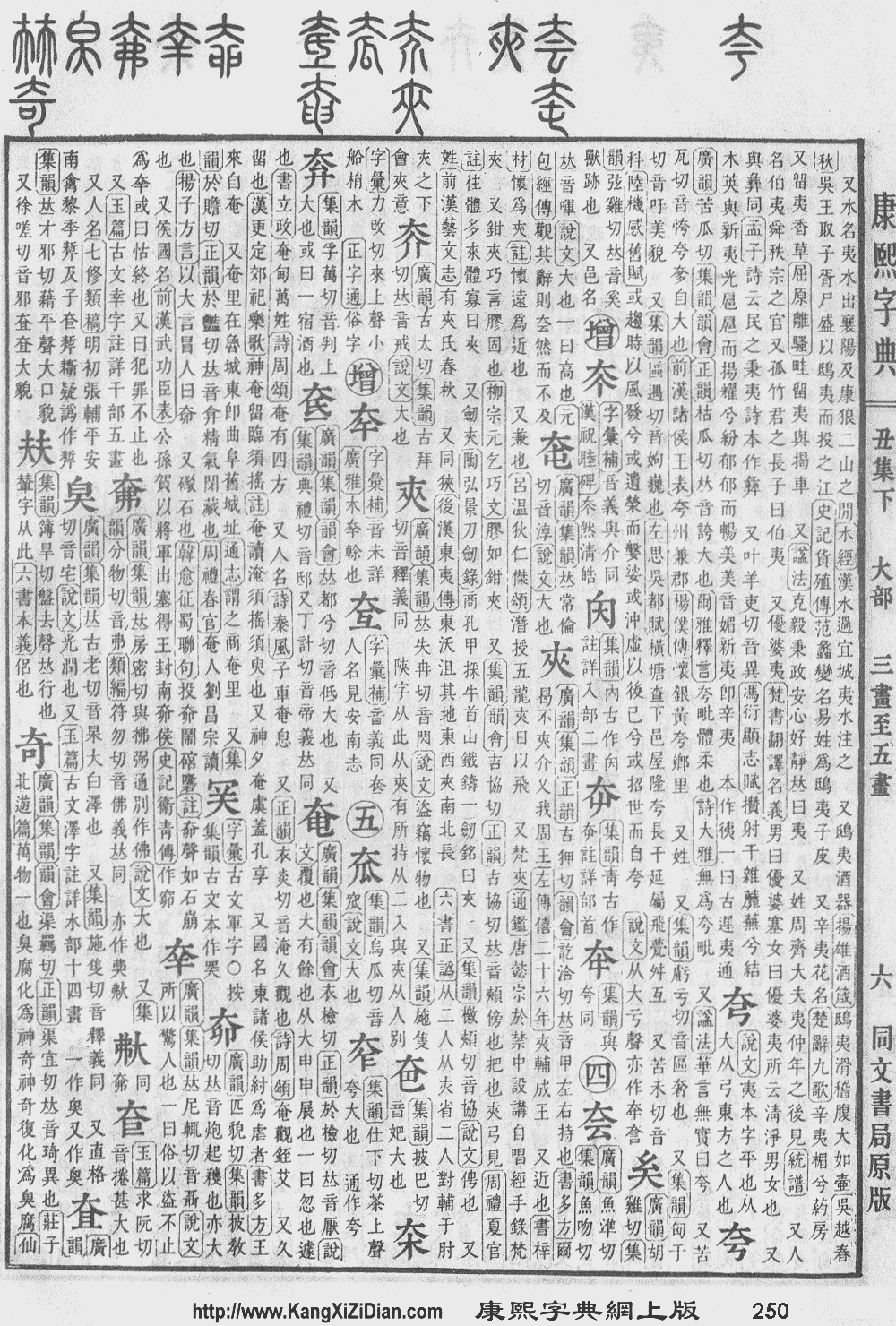
- Kangxi Dictionary: page 250, character 23
- Dai Kanwa Jiten: character 5883
- Dae Jaweon: page 510, character 20
- Hanyu Da Zidian (first edition): volume 1, page 536, character 2
- Unihan data for U+5945
Chinese
Glyph origin
Characters in the same phonetic series (卯) (Zhengzhang, 2003)
| Old Chinese | |
|---|---|
| 卯 | *mruːʔ |
| 昴 | *mruːʔ |
| 泖 | *mruːʔ |
| 茆 | *mruːʔ, *m·ruʔ |
| 奅 | *m̥ʰruːs |
| 窌 | *m̥ʰruːs, *m·ruː, *m·rus |
| 聊 | *m·rɯːw |
| 貿 | *mlus |
| 鄮 | *mlus |
| 劉 | *m·ru |
| 留 | *m·ru, *m·rus |
| 蒥 | *m·ru |
| 鶹 | *m·ru |
| 騮 | *m·ru |
| 榴 | *m·ru |
| 瑠 | *ru |
| 瘤 | *m·ru, *m·rus |
| 遛 | *m·ru |
| 鎦 | *m·ru |
| 飀 | *m·ru |
| 鰡 | *m·ru |
| 嵧 | *m·ru |
| 餾 | *m·ru, *m·rus |
| 瀏 | *m·ru, *m·ruʔ |
| 懰 | *m·ru, *m·ruʔ |
| 柳 | *m·ruʔ |
| 珋 | *m·ruʔ |
| 罶 | *m·ruʔ |
| 嬼 | *m·ruʔ, *m·rus |
| 溜 | *m·rus |
| 霤 | *m·rus |
| 廇 | *m·rus |
| 塯 | *m·rus |
Pronunciation
Pronunciation
Compounds
- 鑠奅/铄奅
Pronunciation
Definitions
奅
- (Taiwanese Hokkien, transitive) to pick up; to get off with (a girl); to flirt with
Japanese
Kanji
奅
- This term needs a translation to English. Please help out and add a translation, then remove the text
{{rfdef}}.
This article is issued from Wiktionary. The text is licensed under Creative Commons - Attribution - Sharealike. Additional terms may apply for the media files.