度
| ||||||||
| ||||||||
Translingual
| Stroke order | |||
|---|---|---|---|
 | |||
Han character
度 (Kangxi radical 53, 广+6, 9 strokes, cangjie input 戈廿水 (ITE), four-corner 00247, composition ⿸广⿱廿又)
Derived characters
References
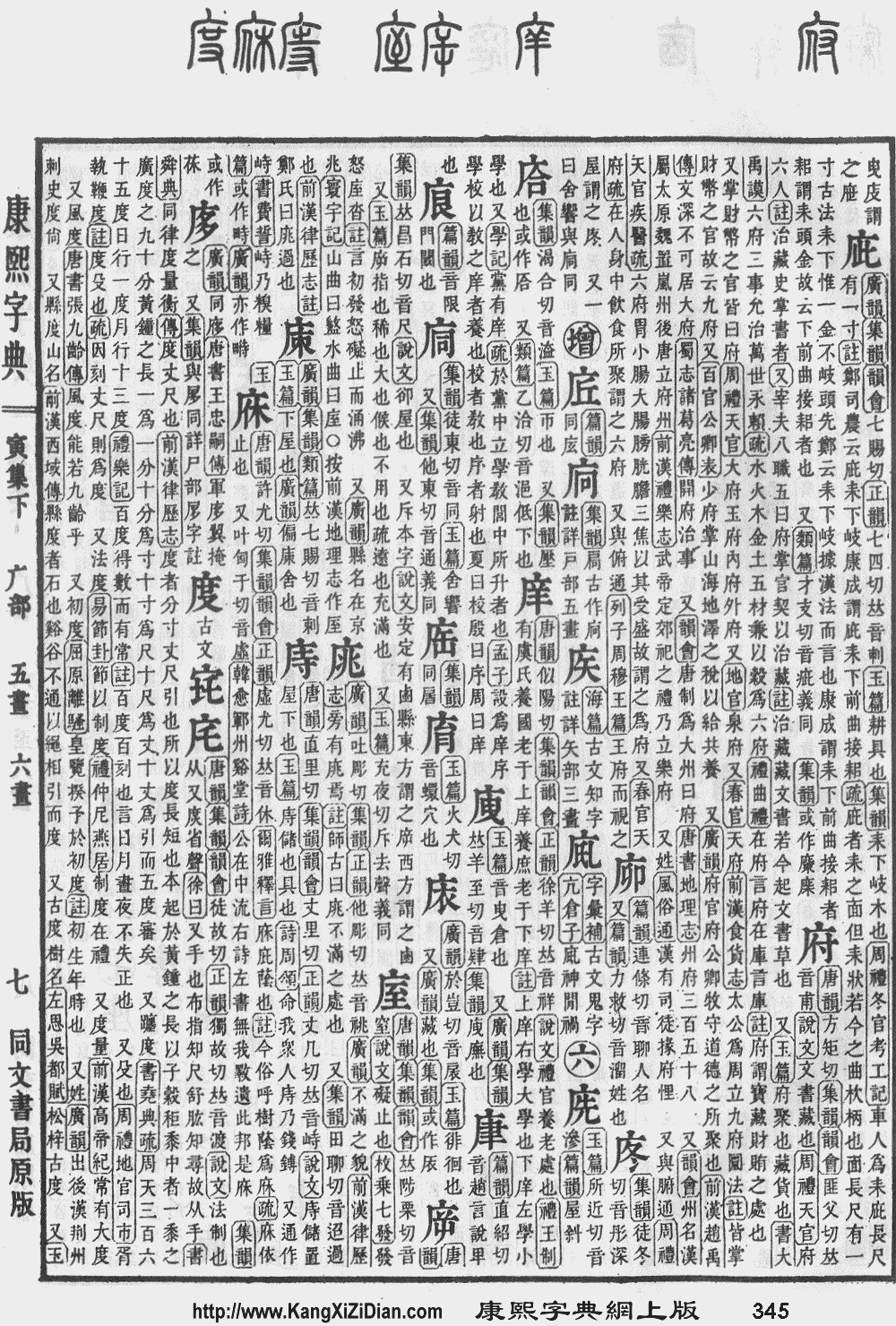
- Kangxi Dictionary: page 345, character 26
- Dai Kanwa Jiten: character 9313
- Dae Jaweon: page 655, character 15
- Hanyu Da Zidian (first edition): volume 2, page 880, character 6
- Unihan data for U+5EA6
- Unihan data for U+FA01
Chinese
Glyph origin
| Historical forms of the character 度 | |
|---|---|
| Shuowen Jiezi (compiled in Han) | Liushutong (compiled in Ming) |
| Small seal script | Transcribed ancient scripts |
 |
 |
Originally an ideogrammic compound (會意/会意) : 石 (“rock”) + 又 (“hand”) — hand measuring a piece of rock. Also a phono-semantic compound (形聲/形声) , with 石 (OC *djaɡ) as a phonetic component. 石 is then corrupted into ⿸广廿.
Shuowen considers it to be a phono-semantic compound (形聲/形声, OC *daːɡs, *daːɡ) : phonetic 庶 (OC *hljaɡs) + semantic 又.
Etymology 1
| simp. and trad. |
度 | |
|---|---|---|
From Proto-Sino-Tibetan *m-twa (“handspan”). Cognate with Tibetan མཐོ (mtho, “span; span of thumb and middle finger”), Burmese ထွာ (htwa, “to measure by a handspan; a quarter yard”), အထွာ (a.htwa, “handspan; quarter yard”), တွက် (twak, “to consider, to reckon; to calculate; to refuse to do things because others would not”), အတွက် (a.twak, “calculation; because of; for the sake of”). It is unclear whether Proto-Mon-Khmer *cɗaʔ (“span; handspan”) (whence Mon ဍ (daˀ, “to measure by spans of thumb and middle finger”)) is related. Related to 圖 (OC *daː, “to plan; to consider; plan; map”).
Pronunciation 1
Definitions
度
- linear measure; size; measures
- 52nd tetragram of the Taixuanjing; "measure" (𝌹)
- consideration; thought; expectation
- law; standard; rule; convention
- extent; limit; quota
- tolerance; open-mindedness
- degree; level; measure (often used to translate English -ness, -ity)
- (graph theory) degree
- plan; design; programme
- to pass (time); to spend time
- to pass (physically); to go over
- (Buddhism) to say prayers or perform Buddhist service to release souls from purgatory
- (religion) to try to persuade someone to become a monk, nun or Taoist priest
- to write; to compose
- Classifier for degrees.
- (literary) Classifier for events or occurrences: time
- 再度 ― zàidù ― one more time
- (Cantonese) Classifier for doors.
- alt. forms: 道
- a surname
Synonyms
Compounds
- 一度 (yīdù)
- 三度空間/三度空间
- 不度
- 中度 (zhōngdù)
- 丰度 (fēngdù)
- 中度颱風/中度台风
- 中緯度/中纬度
- 事業年度/事业年度
- 二度梅
- 二度燒傷/二度烧伤
- 井田制度 (jǐngtián zhìdù)
- 五花度牒
- 交通密度
- 亮度 (liàngdù)
- 伯克制度
- 低度 (dīdù)
- 佃租制度
- 低緯度/低纬度
- 信用額度/信用额度 (xìnyòng édù)
- 保結制度/保结制度
- 光度 (guāngdù)
- 光度計/光度计
- 光潔度/光洁度
- 光陰虛度/光阴虚度
- 八度音程
- 八旗制度
- 六度
- 共審制度/共审制度
- 共度 (gòngdù)
- 典章制度 (diǎnzhāng zhìdù)
- 再度 (zàidù)
- 冷度
- 分度規/分度规
- 初度
- 制度 (zhìdù)
- 刻度 (kèdù)
- 制度化 (zhìdùhuà)
- 剃度 (tìdù)
- 則度/则度 (zédù)
- 前度劉郎/前度刘郎 (qiándùliúláng)
- 剛度/刚度
- 力度 (lìdù)
- 加速度 (jiāsùdù)
- 化度
- 化度寺碑
- 印度 (Yìndù)
- 印度半島/印度半岛 (Yìndù Bàndǎo)
- 印度哲學/印度哲学
- 印度支那 (Yìndù-Zhīnà)
- 印度教 (Yìndùjiào)
- 印度河 (Yìndù Hé)
- 印度法系
- 印度洋 (Yìndùyáng)
- 印度綢/印度绸
- 印度黃檀/印度黄檀 (Yìndù huángtán)
- 厚度 (hòudù)
- 句度
- 可見度/可见度 (kějiàndù)
- 合度
- 君子風度/君子风度
- 器度
- 四度空間/四度空间
- 國度/国度 (guódù)
- 地震強度/地震强度
- 均權制度/均权制度
- 坡度 (pōdù)
- 夜度娘
- 夜度資/夜度资
- 大幅度 (dàfúdù)
- 大度 (dàdù)
- 大度包容
- 大度汪洋
- 大度豁達/大度豁达
- 大智度論/大智度论
- 季度 (jìdù)
- 學位制度/学位制度
- 安全速度
- 宇宙速度 (yǔzhòu sùdù)
- 安度 (āndù)
- 家庭制度 (jiātíng zhìdù)
- 密度 (mìdù)
- 密度指數/密度指数
- 寬仁大度/宽仁大度
- 寬度/宽度 (kuāndù)
- 寬洪大度/宽洪大度
- 封建制度 (fēngjiàn zhìdù)
- 專勤制度/专勤制度
- 尺度 (chǐdù)
- 局度
- 居住密度
- 屈光度
- 工程進度/工程进度
- 常度
- 幅度 (fúdù)
- 平均溫度/平均温度
- 年度 (niándù)
- 年度預算/年度预算
- 年金制度
- 幾度春風/几度春风
- 度世
- 度假 (dùjià)
- 度假勝地/度假胜地
- 度假村 (dùjiàcūn)
- 度口
- 度命 (dùmìng)
- 度器
- 度外
- 度小月
- 度支 (Dùzhī)
- 度數/度数
- 度日 (dùrì)
- 度日如年 (dùrìrúnián)
- 度日如歲/度日如岁
- 度晬 (dùzuì)
- 度曲
- 度歲/度岁 (dùsuì)
- 度牒 (dùdié)
- 度籙/度箓
- 度脫/度脱
- 度荒
- 度蜜月
- 度詞/度词
- 度越
- 度過/度过 (dùguò)
- 度量
- 度量器
- 度量衡 (dùliànghéng)
- 康白度
- 廣度/广度 (guǎngdù)
- 弧度 (húdù)
- 強度/强度 (qiángdù)
- 彈性限度/弹性限度
- 彎度/弯度 (wāndù)
- 彩度
- 律度
- 徵兵制度/征兵制度
- 志度
- 恢宏大度
- 恢廓大度
- 態度/态度 (tàidù)
- 態度冷靜/态度冷静
- 態度嚴肅/态度严肃
- 打知名度
- 揮霍無度/挥霍无度 (huīhuòwúdù)
- 救度 (jiùdù)
- 敏感度
- 教育制度
- 教育程度
- 斜度 (xiédù)
- 斜度標/斜度标
- 明度 (míngdù)
- 春風一度/春风一度
- 普度 (pǔdù)
- 普度眾生/普度众生
- 暗度陳倉/暗度陈仓 (àndùchéncāng)
- 曠世之度/旷世之度
- 曠度/旷度
- 曲度
- 會簽制度/会签制度
- 會計年度/会计年度
- 東印度/东印度 (Dōngyìndù)
- 格度
- 梅開二度/梅开二度 (méikāi'èrdù)
- 極度/极度 (jídù)
- 極限強度/极限强度
- 權度/权度
- 歡度/欢度
- 正法直度
- 母系制度
- 比度
- 民主制度
- 氣壓梯度/气压梯度
- 氣度/气度 (qìdù)
- 泰勒制度
- 法度 (fǎdù)
- 法度嚴明/法度严明
- 波浪銳度/波浪锐度
- 津貼制度/津贴制度
- 涅槃罪度
- 深度 (shēndù)
- 深度報導/深度报导
- 滅度/灭度 (mièdù)
- 溫度/温度 (wēndù)
- 溼度/湿度 (shīdù)
- 溫度表/温度表 (wēndùbiǎo)
- 溼度計/湿度计
- 溫度計/温度计 (wēndùjì)
- 準確度/准确度 (zhǔnquèdù)
- 濃度/浓度 (nóngdù)
- 濟度/济度
- 灰度等級/灰度等级
- 烈度 (lièdù)
- 無度/无度 (wúdù)
- 照度 (zhàodù)
- 父系制度
- 特惠制度
- 王度
- 生活態度/生活态度
- 用度 (yòngdù)
- 當世才度/当世才度
- 疲乏強度/疲乏强度
- 發光度/发光度
- 發燒度/发烧度
- 百度 (Bǎidù)
- 盟旗制度
- 相對溼度/相对湿度 (xiāngduì shīdù)
- 瞬時速度/瞬时速度 (shùnshí sùdù)
- 知名度 (zhīmíngdù)
- 硬度 (yìngdù)
- 社會制度/社会制度 (shèhuì zhìdù)
- 禮度/礼度
- 私度
- 程度 (chéngdù)
- 穠纖合度/秾纤合度
- 穩定度/稳定度
- 節度/节度
- 節度使/节度使 (jiédùshǐ)
- 粒度
- 精密度 (jīngmìdù)
- 精度 (jīngdù)
- 純度/纯度 (chúndù)
- 絕對溼度/绝对湿度
- 絕對溫度/绝对温度 (juéduì wēndù)
- 絕對零度/绝对零度 (juéduì língdù)
- 絕對高度/绝对高度
- 經度/经度 (jīngdù)
- 經緯度/经纬度
- 緯度/纬度 (wěidù)
- 纖穠中度/纤秾中度
- 置之度外 (zhìzhīdùwài)
- 置諸度外/置诸度外
- 聽證制度/听证制度
- 能見度/能见度 (néngjiàndù)
- 脫離速度/脱离速度
- 自度曲
- 苟且自度
- 荒淫無度/荒淫无度 (huāngyínwúdù)
- 莊園制度/庄园制度
- 薦度/荐度
- 虛度/虚度 (xūdù)
- 襟度 (jīndù)
- 西印度
- 規度/规度
- 觀審制度/观审制度
- 觀護制度/观护制度
- 角度 (jiǎodù)
- 角速度 (jiǎosùdù)
- 調度/调度 (diàodù)
- 調度場/调度场
- 調度室/调度室
- 警察制度
- 豁略大度
- 豁達大度/豁达大度
- 象度
- 貪墨敗度/贪墨败度
- 超度 (chāodù)
- 跨度 (kuàdù)
- 軌度/轨度
- 輕度/轻度
- 輕度颱風/轻度台风
- 輪作制度/轮作制度
- 農奴制度/农奴制度 (nóngnú zhìdù)
- 速度 (sùdù)
- 透明度 (tòumíngdù)
- 進度/进度 (jìndù)
- 逸度
- 過度/过度 (guòdù)
- 適度/适度 (shìdù)
- 酋長制度/酋长制度
- 配給制度/配给制度
- 酸鹼度/酸碱度
- 金針度人/金针度人
- 鍊度/炼度
- 長度/长度 (chángdù)
- 限度 (xiàndù)
- 隱度/隐度
- 難度/难度 (nándù)
- 電度表/电度表
- 電流強度/电流强度
- 震度 (zhèndù)
- 靈敏度/灵敏度
- 韻度/韵度
- 響度/响度 (xiǎngdù)
- 領導制度/领导制度
- 額度/额度 (édù)
- 風度/风度 (fēngdù)
- 風度翩翩/风度翩翩
- 飽和度/饱和度
- 飽和溼度/饱和湿度
- 首度 (shǒudù)
- 驕奢無度/骄奢无度
- 體度/体度
- 高度 (gāodù)
- 高度計/高度计
- 高緯度/高纬度
- 高識遠度/高识远度
- 高難度/高难度
- 鹽度/盐度 (yándù)
- 黏度 (niándù)
Pronunciation 2
Definitions
度
- to speculate
- 忖度 ― cǔnduò ― to guess
- to measure; to estimate; to judge
- 權,然後知輕重;度,然後知長短。 [Classical Chinese, trad.]
- From: Mencius, c. 4th century BCE, translated based on James Legge's version
- Quán, ránhòu zhī qīngzhòng; duò, ránhòu zhī chángduǎn. [Pinyin]
- By weighing, we know what things are light, and what heavy. By measuring, we know what things are long, and what short.
权,然后知轻重;度,然后知长短。 [Classical Chinese, simp.]
- to devise
Synonyms
| Variety | Location | Words |
|---|---|---|
| Classical Chinese | 度 | |
| Formal (Written Standard Chinese) | 量 | |
| Mandarin | Beijing | 量 |
| Harbin | 量 | |
| Yantai (Muping) | 量 | |
| Jinan | 量 | |
| Luoyang | 量 | |
| Wanrong | 量 | |
| Xi'an | 量 | |
| Yinchuan | 量 | |
| Xining | 量 | |
| Ürümqi | 量 | |
| Chengdu | 量 | |
| Guiyang | 量 | |
| Guilin | 量 | |
| Liuzhou | 量 | |
| Xuzhou | 量 | |
| Yangzhou | 量 | |
| Nanjing | 量 | |
| Cantonese | Hong Kong | 度, 量 |
| Zhongshan Min | Shaxi (Longdu) | 量 |
| Wu | Shanghai | 量 |
Compounds
Etymology 2
| simp. and trad. |
度 | |
|---|---|---|
| alternative forms | 道 | |
(This etymology is missing or incomplete. Please add to it, or discuss it at the Etymology scriptorium. Particularly: “related to etymology 1?”)
Pronunciation
Definitions
度 (Cantonese)
Etymology 3
| simp. and trad. |
度 | |
|---|---|---|
| alternative forms | 到 倒 | |
(This etymology is missing or incomplete. Please add to it, or discuss it at the Etymology scriptorium. Particularly: “related to etymology 1?”)
Pronunciation
Definitions
度 (Cantonese)
Etymology 4
| For pronunciation and definitions of 度 – see 宅 (“residence; dwelling; house; home; tomb; grave; etc.”). (This character is a variant form of 宅). |
References
- “度”, in 漢語多功能字庫 (Multi-function Chinese Character Database), 香港中文大學 (the Chinese University of Hong Kong), 2014–
Japanese
Readings
Etymology 1
| Kanji in this term |
|---|
| 度 |
| たび Grade: 3 |
| kun’yomi |
Noun
度 • (tabi)
Etymology 2
| Kanji in this term |
|---|
| 度 |
| ど Grade: 3 |
| on’yomi |
Suffix
度 • (-do)
- -itude
- (geometry) degree of an angle
- degree in temperature, scale, and so on
- 2005 November 9, Nobuhiro Watsuki, “武装錬金ファイナル [Armed Alchemy: The Final Act]”, in 武装錬金 (武装錬金) [Armed Alchemy], volume 9, Tokyo: Shueisha, →ISBN:
- 喰らえ 五千百度の炎 ブレイズオブグローリイィ‼
- Kurae gosenhyaku-do no honō Bureizu obu Gurōriii‼
- Take this 5,100-degree flame, Blaze of Glory!!
- 喰らえ 五千百度の炎 ブレイズオブグローリイィ‼
- number of times
- percentage of alcohol concentration
Korean
Etymology 1
From Middle Chinese 度 (MC duH).
| Historical Readings | ||
|---|---|---|
| Dongguk Jeongun Reading | ||
| Dongguk Jeongun, 1448 | 똥〮 (Yale: ttwó) | |
| Middle Korean | ||
| Text | Eumhun | |
| Gloss (hun) | Reading | |
| Hunmong Jahoe, 1527 | 법〮돗〯 (Yale: péptwǒ-s) | 도〯 (Yale: twǒ) |
Pronunciation
- (SK Standard/Seoul) IPA(key): [to̞(ː)]
- Phonetic hangul: [도(ː)]
- Though still prescribed in Standard Korean, most speakers in both Koreas no longer distinguish vowel length.
Compounds
- 각도 (角度, gakdo)
- 감도 (感度, gamdo)
- 강도 (強度, gangdo)
- 경도 (傾度, gyeongdo)
- 경도 (經度, gyeongdo)
- 경도 (輕度, gyeongdo)
- 고도 (高度, godo)
- 과도 (過度, gwado)
- 극도 (極度, geukdo)
- 농도 (濃度, nongdo)
- 도량 (度量, doryang)
- 도수 (度數, dosu)
- 명도 (明度, myeongdo)
- 민도 (民度, mindo)
- 밀도 (密度, mildo)
- 법도 (法度, beopdo)
- 빈도 (頻度, bindo)
- 선도 (鮮度, seondo)
- 속도 (速度, sokdo)
- 순도 (純度, sundo)
- 습도 (濕度, seupdo)
- 심도 (深度, simdo)
- 연도 (年度, yeondo)
- 염도 (鹽度, yeomdo)
- 예도 (禮度, yedo)
- 온도 (溫度, ondo)
- 용도 (用度, yongdo)
- 위도 (緯度, wido)
- 저도 (低度, jeodo)
- 적도 (適度, jeokdo)
- 절도 (節度, jeoldo)
- 정도 (程度, jeongdo)
- 제도 (制度, jedo)
- 진도 (進度, jindo)
- 진도 (震度, jindo)
- 채도 (彩度, chaedo)
- 척도 (尺度, cheokdo)
- 태도 (態度, taedo)
- 한도 (限度, hando)
Etymology 2
From Middle Chinese 度 (MC dak).
| Historical Readings | ||
|---|---|---|
| Dongguk Jeongun Reading | ||
| Dongguk Jeongun, 1448 | 딱〮 (Yale: tták) | |
| Middle Korean | ||
| Text | Eumhun | |
| Gloss (hun) | Reading | |
| Sinjeung Yuhap, 1576 | 혜아릴 (Yale: hyeyalil) | 탁 (Yale: thak) |
Pronunciation
- (SK Standard/Seoul) IPA(key): [tʰa̠k̚]
- Phonetic hangul: [탁]