想
| ||||||||
Translingual
| Stroke order | |||
|---|---|---|---|
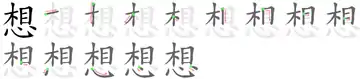 | |||
| Stroke order | |||
|---|---|---|---|
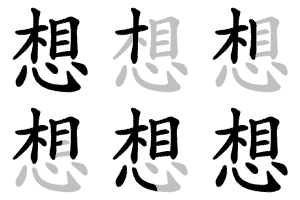 | |||
Han character
想 (Kangxi radical 61, 心+9, 13 strokes, cangjie input 木山心 (DUP), four-corner 46330, composition ⿱相心)
Derived characters
- 𫾋
References
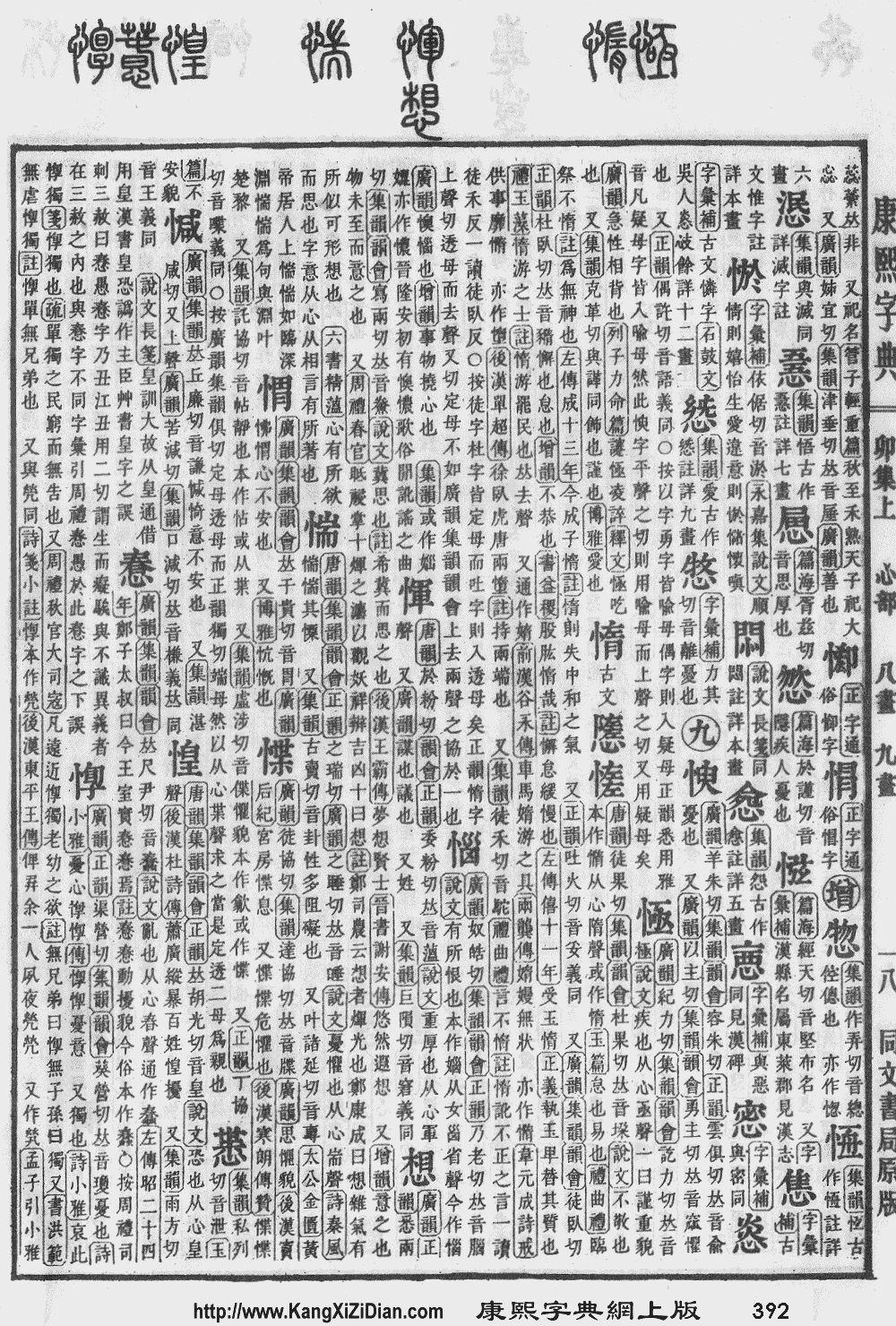
- Kangxi Dictionary: page 392, character 26
- Dai Kanwa Jiten: character 10858
- Dae Jaweon: page 728, character 10
- Hanyu Da Zidian (first edition): volume 4, page 2320, character 11
- Unihan data for U+60F3
Chinese
| simp. and trad. |
想 | |
|---|---|---|
Glyph origin
Characters in the same phonetic series (相) (Zhengzhang, 2003)
Phono-semantic compound (形聲/形声, OC *slaŋʔ) : phonetic 相 (OC *slaŋ, *slaŋs) + semantic 心 (“heart, mind”) – to think, to consider.
Etymology
From 相 (OC *slaŋ, *slaŋs, “to observe; appearance”) (“appearance > to visualise > to think”).
Pronunciation
Definitions
想
- to think (to conceive of something or someone)
- to think about; to plan; to be considering
- to think; to suppose; to guess; to reckon
- to want; to wish for; to desire
- to miss (to feel the absence of someone or something)
- to resemble
- (Hinduism, Buddhism) sanskara
Usage notes
- In the sense of want or desire, 想 (xiǎng) is also used as would like. It also appears together with 要 (yào) as 想要 (xiǎngyào) to mean "would like".
Synonyms
Dialectal synonyms of 想 (“to think”) [map]
Dialectal synonyms of 要 (“to want (to do something)”) [map]
Dialectal synonyms of 想念 (“to miss; to think of; to yearn for”) [map]
| Variety | Location | Words |
|---|---|---|
| Formal (Written Standard Chinese) | 想念, 思念, 掛念, 惦念, 懷念 | |
| Mandarin | Taiwan | 想念, 想 |
| Singapore | 想念, 想 | |
| Cantonese | Guangzhou | 掛住, 掛望 |
| Hong Kong | 掛住 | |
| Singapore (Guangfu) | 掛住 | |
| Southern Min | Xiamen | 數念, 心念 |
| Quanzhou | 數念, 心念 | |
| Zhangzhou | 數念, 心念 | |
| Tainan | 想, 數念, 思念 | |
| Penang (Hokkien) | 數念 | |
| Singapore (Hokkien) | 數念 | |
| Manila (Hokkien) | 數念 | |
| Wenchang | 想念 | |
| Wu | Shanghai | 想, 牽記, 想念 somewhat literary |
| Suzhou | 牽記 | |
| Ningbo | 忖 | |
| Jinhua | 想, 忖 | |
- (to reckon):
Compounds
- 不堪設想/不堪设想 (bùkānshèxiǎng)
- 不想 (bùxiǎng)
- 中心思想 (zhōngxīn sīxiǎng)
- 伏想
- 休想 (xiūxiǎng)
- 假想 (jiǎxiǎng)
- 假想敵/假想敌 (jiǎxiǎngdí)
- 傾想/倾想
- 儘想/尽想
- 冥思苦想 (míngsīkǔxiǎng)
- 冥想 (míngxiǎng)
- 凝想
- 前思後想/前思后想
- 千思萬想/千思万想
- 可想而知 (kěxiǎng'érzhī)
- 呆想
- 回想 (huíxiǎng)
- 夢勞魂想/梦劳魂想
- 夢想/梦想 (mèngxiǎng)
- 夢想成真/梦想成真 (mèngxiǎngchéngzhēn)
- 奇想 (qíxiǎng)
- 妄想 (wàngxiǎng)
- 妄想症 (wàngxiǎngzhèng)
- 妙想
- 封建思想
- 少年袂曉想,食老毋成樣/少年袂晓想,食老毋成样 (siàu-liân bē-hiáu siūⁿ, chia̍h-lāu m̄-chiâⁿ-iūⁿ) (Min Nan)
- 左思右想 (zuǒsīyòuxiǎng)
- 巴想
- 幻想 (huànxiǎng)
- 幻想力
- 幻想曲 (huànxiǎngqǔ)
- 幻想派
- 心想事成 (xīnxiǎngshìchéng)
- 心無二想/心无二想
- 思前想後/思前想后 (sīqiánxiǎnghòu)
- 思想 (sīxiǎng)
- 思想史 (sīxiǎngshǐ)
- 思想家 (sīxiǎngjiā)
- 思想庫/思想库 (sīxiǎngkù)
- 思想戰/思想战
- 悁想
- 想一想
- 想不到 (xiǎngbùdào)
- 想不透
- 想不通 (xiǎngbùtōng)
- 想不開/想不开 (xiǎngbùkāi)
- 想來/想来 (xiǎnglái)
- 想來想去/想来想去
- 想像 (xiǎngxiàng)
- 想像/想象 (xiǎngxiàng)
- 想像/想象力 (xiǎngxiàng)
- 想像力 (xiǎngxiànglì)
- 想入非非 (xiǎngrùfēifēi)
- 想到 (xiǎngdào)
- 想前顧後/想前顾后
- 想家 (xiǎngjiā)
- 想度
- 想得美 (xiǎngdeměi)
- 想得開/想得开 (xiǎngdekāi)
- 想必 (xiǎngbì)
- 想念 (xiǎngniàn)
- 意想 (yìxiǎng)
- 慨想
- 感想 (gǎnxiǎng)
- 意想不到 (yìxiǎngbùdào)
- 想慕
- 想方設法/想方设法 (xiǎngfāngshèfǎ)
- 想望 (xiǎngwàng)
- 想法
- 想法子
- 想當然/想当然 (xiǎngdāngrán)
- 想當然耳/想当然耳
- 想碴兒/想碴儿
- 想要 (xiǎngyào)
- 想見/想见 (xiǎngjiàn)
- 想起 (xiǎngqǐ)
- 想起來/想起来
- 想通 (xiǎngtōng)
- 想開/想开 (xiǎngkāi)
- 想頭/想头 (xiǎngtou)
- 懸想/悬想 (xuánxiǎng)
- 懷想/怀想 (huáixiǎng)
- 戰略思想/战略思想
- 推想 (tuīxiǎng)
- 揣想
- 摹想
- 數想/数想 (siàu-siūⁿ) (Min Nan)
- 料想 (liàoxiǎng)
- 暗想 (ànxiǎng)
- 暢想/畅想 (chàngxiǎng)
- 暮想朝思
- 有想頭/有想头
- 朝思夕想
- 朝思暮想 (zhāosīmùxiǎng)
- 東想西想/东想西想
- 構想/构想 (gòuxiǎng)
- 沒心想/没心想
- 沒心沒想/没心没想
- 沒想到/没想到 (méixiǎngdào)
- 沒想頭/没想头
- 浮想 (fúxiǎng)
- 涉想 (shèxiǎng)
- 浮想聯翩/浮想联翩
- 渴想 (kěxiǎng)
- 濠濮間想/濠濮间想
- 無想頭/无想头
- 煩想/烦想
- 狂想
- 狂想曲 (kuángxiǎngqǔ)
- 猜想 (cāixiǎng)
- 獃想
- 玄想
- 理想 (lǐxiǎng)
- 理想主義/理想主义 (lǐxiǎng zhǔyì)
- 理想化 (lǐxiǎnghuà)
- 理想國/理想国
- 異想天開/异想天开 (yìxiǎngtiānkāi)
- 痴心妄想 (chīxīnwàngxiǎng)
- 痴想 (chīxiǎng)
- 白想想
- 眠思夢想/眠思梦想
- 瞎想
- 瞑想 (míngxiǎng)
- 神仙思想
- 空想 (kōngxiǎng)
- 突發奇想/突发奇想 (tūfāqíxiǎng)
- 緬想/缅想 (miǎnxiǎng)
- 老莊思想/老庄思想
- 聯想/联想 (liánxiǎng)
- 聯想力/联想力
- 胡思亂想/胡思乱想 (húsīluànxiǎng)
- 胡想
- 臆想幣/臆想币
- 苦思惡想/苦思恶想
- 茶思飯想/茶思饭想
- 著想/着想
- 行思坐想
- 觀想念佛/观想念佛
- 設想/设想 (shèxiǎng)
- 試想/试想 (shìxiǎng)
- 貪心妄想/贪心妄想
- 退一步想
- 追想 (zhuīxiǎng)
- 逸想
- 遐想 (xiáxiǎng)
- 難以想像/难以想像
- 非非想 (fēifēixiǎng)
- 預想/预想 (yùxiǎng)
- 默想 (mòxiǎng)
Descendants
Further reading
- “Entry #9451”, in 臺灣閩南語常用詞辭典 [Dictionary of Frequently-Used Taiwan Minnan] (overall work in Mandarin and Hokkien), Ministry of Education, R.O.C., 2023.
Japanese
Vietnamese
This article is issued from Wiktionary. The text is licensed under Creative Commons - Attribution - Sharealike. Additional terms may apply for the media files.