推
| ||||||||
Translingual
Han character
推 (Kangxi radical 64, 手+8, 11 strokes, cangjie input 手人土 (QOG), four-corner 50014, composition ⿰扌隹)
References
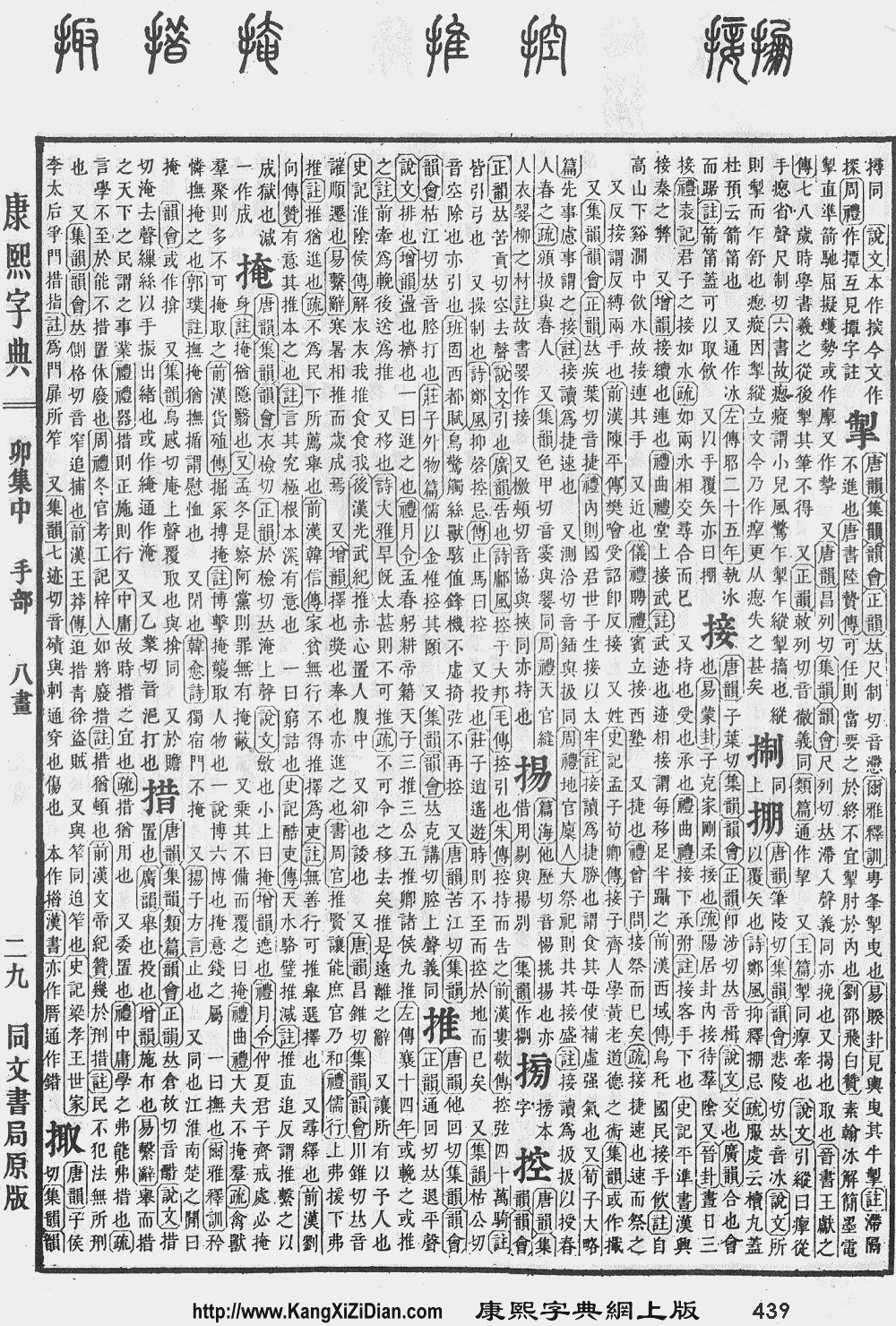
- Kangxi Dictionary: page 439, character 8
- Dai Kanwa Jiten: character 12284
- Dae Jaweon: page 790, character 1
- Hanyu Da Zidian (first edition): volume 3, page 1898, character 7
- Unihan data for U+63A8
Chinese
| simp. and trad. |
推 | |
|---|---|---|
Glyph origin
Phono-semantic compound (形聲/形声, OC *tʰuːl, *tʰjul) : semantic 扌 (“hand”) + phonetic 隹 (OC *tjul) – push with the hand.
Etymology
Middle Chinese distinguishes 推 (MC thwoj, “to push”) and 推 (MC tsrhwij, “to proceed; to promote; to deduce”).
Older Mandarin dictionaries[n 1] give chuī (the Mandarin reflex of 推 (MC tsrhwij)) as a variant reading for all senses, while Cantonese dictionaries[n 2] only assign ceoi1 to the "to deduce" sense (e.g. in 推測 (“to surmise”)). Most modern Sinitic varieties use the reflexes of 推 (MC thwoj) for all meanings, while Sino-Xenic use the reflexes of 推 (MC tsrhwij) (in Korean, however, the reflex of 推 (MC thwoj) is also used in a few words). Some varieties (including certain Hakka, Min, and sometimes Yue dialects) preserve both readings, but not necessarily disambiguate them by meaning.
See also 揣 (MC tsrhjweX|twaX).
Pronunciation
Definitions
推
- to push
- 長江後浪推前浪,世上新人趕舊人。 [Literary Chinese, trad.]
- From: 《增廣賢文》"Enlarged Writings of Worthies"
- Chángjiāng hòulàng tuī qiánlàng, shìshàng xīnrén gǎn jiùrén. [Pinyin]
- On the Yangtze river, the waves behind push the waves before; in this world, the newcomers oust the forerunners.
长江后浪推前浪,世上新人赶旧人。 [Literary Chinese, simp.]
- to postpone; to delay
- (figurative) to put aside; to push away; to dismiss; to explain away
- to prompt; to propel
- 推進/推进 ― tuījìn ― to propel; to push forward
- 推波助瀾/推波助澜 ― tuībōzhùlán ― "to drive the billowing waves"; to add fuel to fire
- to promote; to advertise; to advocate
- to nominate; to recommend
- to generalize; to broaden
- 推己及人 ― tuījǐjírén ― to put oneself in someone's shoes
- to infer; to deduce
- to derive; to reason; to compute
- to proceed; to succeed; to form a procession
- 推移 ― tuīyí ― to proceed (in time)
- (Hong Kong, Internet slang) to bump a thread in support; to "push"
- (ACG or fandom slang) being a devoted fan of [someone]; to support [someone] (in an idol group; etc.)
- 前田敦子推 ― Qiántián Dūnzǐ tuī ― a person supporting Atsuko Maeda
- 一生推 ― yīshēng tuī ― to support [someone or a particular group] for life
- (ACG or fandom slang) oshi; favourite idol
- 首推 ― shǒu tuī ― member that someone like most in an idol group
Synonyms
Compounds
- 三推
- 三推六問/三推六问
- 以此類推/以此类推 (yǐcǐlèituī)
- 你推我擠/你推我挤
- 你推我讓/你推我让
- 借水推船
- 六問三推/六问三推
- 公推
- 前推後擁/前推后拥
- 千推萬阻/千推万阻
- 半推半就 (bàntuībànjiù)
- 受命推事
- 噴射推進/喷射推进
- 多蒙推轂/多蒙推毂
- 大力推荐
- 子推
- 子推割股
- 寒暑推移
- 屋烏推愛/屋乌推爱
- 後擁前推/后拥前推
- 手推車/手推车 (shǒutuīchē)
- 扒推
- 推三宕四
- 推三扯四
- 推三推四
- 推三阻四 (tuīsānzǔsì)
- 推乾淨兒/推干净儿
- 推事 (tuīshì)
- 推亡固存
- 推介 (tuījiè)
- 推估
- 推來推去/推来推去 (tuīláituīqù)
- 推倒 (tuīdǎo)
- 推光頭/推光头
- 推免 (tuīmiǎn)
- 推出 (tuīchū)
- 推刃
- 推力 (tuīlì)
- 推動/推动 (tuīdòng)
- 推勘
- 推卸 (tuīxiè)
- 推卻/推却 (tuīquè)
- 推及
- 推問/推问
- 推因
- 推土機/推土机 (tuītǔjī)
- 推天搶地/推天抢地
- 推奪/推夺
- 推委 (tuīwěi)
- 推子 (tuīzi)
- 推定 (tuīdìng)
- 推宕 (tuīdàng)
- 推宗明本
- 推尋/推寻
- 推尊
- 推導/推导 (tuīdǎo)
- 推就
- 推展 (tuīzhǎn)
- 推山
- 推山移嶺/推山移岭
- 推崇 (tuīchóng)
- 推崇備至/推崇备至 (tuīchóngbèizhì)
- 推己及人 (tuījǐjírén)
- 推度 (tuīduó)
- 推廣/推广 (tuīguǎng)
- 推廣教育/推广教育
- 推延 (tuīyán)
- 推心置腹
- 推心致腹
- 推恩
- 推情準理/推情准理
- 推想 (tuīxiǎng)
- 推戴 (tuīdài)
- 推手 (tuīshǒu)
- 推托 (tuītuō)
- 推拖
- 推拒
- 推拿 (tuīná)
- 推挽
- 推推搡搡
- 推推攮攮
- 推推讓讓/推推让让
- 推搶/推抢
- 推搡 (tuīsǎng)
- 推搪
- 推撞 (tuīzhuàng)
- 推擠/推挤 (tuījǐ)
- 推故
- 推敲 (tuīqiāo)
- 推斥力
- 推斷/推断 (tuīduàn)
- 推服
- 推本溯源
- 推東主西/推东主西
- 推案 (tuī'àn)
- 推桿/推杆
- 推橫車/推横车
- 推步
- 推求 (tuīqiú)
- 推波助瀾/推波助澜 (tuībōzhùlán)
- 推派
- 推測/推测 (tuīcè)
- 推演 (tuīyǎn)
- 推激
- 推濤作浪/推涛作浪
- 推燥居濕/推燥居湿
- 推牌九
- 推獎/推奖
- 推理 (tuīlǐ)
- 推球
- 推理小說/推理小说
- 推理電影/推理电影
- 推病
- 推知 (tuīzhī)
- 推磨 (tuīmò)
- 推移 (tuīyí)
- 推稱/推称
- 推究 (tuījiū)
- 推窗
- 推算 (tuīsuàn)
- 推索
- 推群獨步/推群独步
- 推翻 (tuīfān)
- 推而廣之/推而广之 (tuī'érguǎngzhī)
- 推聾做啞/推聋做哑
- 推聾裝啞/推聋装哑
- 推背圖/推背图
- 推脫/推脱 (tuītuō)
- 推舉/推举 (tuījǔ)
- 推舟於陸/推舟于陆
- 推蓬裝/推蓬装
- 推薦/推荐 (tuījiàn)
- 推薦甄選/推荐甄选
- 推行 (tuīxíng)
- 推襟送抱
- 推見/推见 (tuījiàn)
- 推解
- 推計課稅/推计课税
- 推託/推托 (tuītuō)
- 推許/推许
- 推詳/推详
- 推誠布信/推诚布信
- 推誠布公/推诚布公
- 推誠待物/推诚待物
- 推誠愛物/推诚爱物
- 推誠接物/推诚接物
- 推誠相見/推诚相见
- 推誠置腹/推诚置腹
- 推說/推说
- 推調/推调
- 推諉/推诿 (tuīwěi)
- 推論/推论 (tuīlùn)
- 推諉塞責/推诿塞责
- 推謝/推谢 (tuīxiè)
- 推讓/推让 (tuīràng)
- 推賢下士/推贤下士
- 推賢任人/推贤任人
- 推賢樂善/推贤乐善
- 推賢舉善/推贤举善
- 推賢讓能/推贤让能
- 推賢進善/推贤进善
- 推賢進士/推贤进士
- 推賢遜能/推贤逊能
- 推車/推车 (tuīchē)
- 推輓/推挽
- 推輪捧轂/推轮捧毂
- 推輦歸里/推辇归里
- 推轂/推毂
- 捧轂推輪/捧毂推轮
- 推轉/推转
- 推辭/推辞 (tuīcí)
- 推進/推进 (tuījìn)
- 推進劑/推进剂
- 推進器/推进器 (tuījìnqì)
- 推遜/推逊
- 推選/推选 (tuīxuǎn)
- 推遲/推迟 (tuīchí)
- 推重
- 推鉋/推刨
- 推銷/推销 (tuīxiāo)
- 推銷員/推销员 (tuīxiāoyuán)
- 推鋒爭死/推锋争死
- 推開/推开
- 推阻 (tuīzǔ)
- 推陳出新/推陈出新 (tuīchénchūxīn)
- 推頭/推头 (tuītóu)
- 推食解衣
- 推驗/推验
- 旁推交通
- 杷推
- 欲就還推/欲就还推
- 沙盤推演/沙盘推演
- 爬推
- 牙推
- 直接推理
- 窮源推本/穷源推本
- 衙推
- 解衣推食
- 解驂推食/解骖推食
- 諱敗推過/讳败推过
- 讓棗推梨/让枣推梨
- 農業推廣/农业推广
- 鑑古推今/鉴古推今
- 間接推理/间接推理
- 間接推論/间接推论
- 陪席推事
- 順水推舟/顺水推舟 (shùnshuǐtuīzhōu)
- 順水推船/顺水推船
- 類推/类推 (lèituī)
- 類推作用/类推作用
- 鬼推磨
Descendants
References
- Samuel Wells Williams, 1874; Herbert Allen Giles, 1892
- John Chalmers, 1855; Samuel Wells Williams, 1856; 廣話國語一貫未定稿, 1916
- (Cantonese) 粵音資料集叢
Japanese
Readings
Korean
Hanja
推 • (chu, toe) (hangeul 추, 퇴)
- This term needs a translation to English. Please help out and add a translation, then remove the text
{{rfdef}}.