誰
| ||||||||
Translingual
| Stroke order (Japan) | |||
|---|---|---|---|
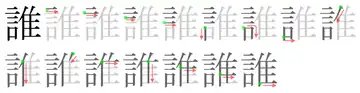 | |||
Han character
誰 (Kangxi radical 149, 言+8, 15 strokes, cangjie input 卜口人土 (YROG), four-corner 00614, composition ⿰訁隹)
References
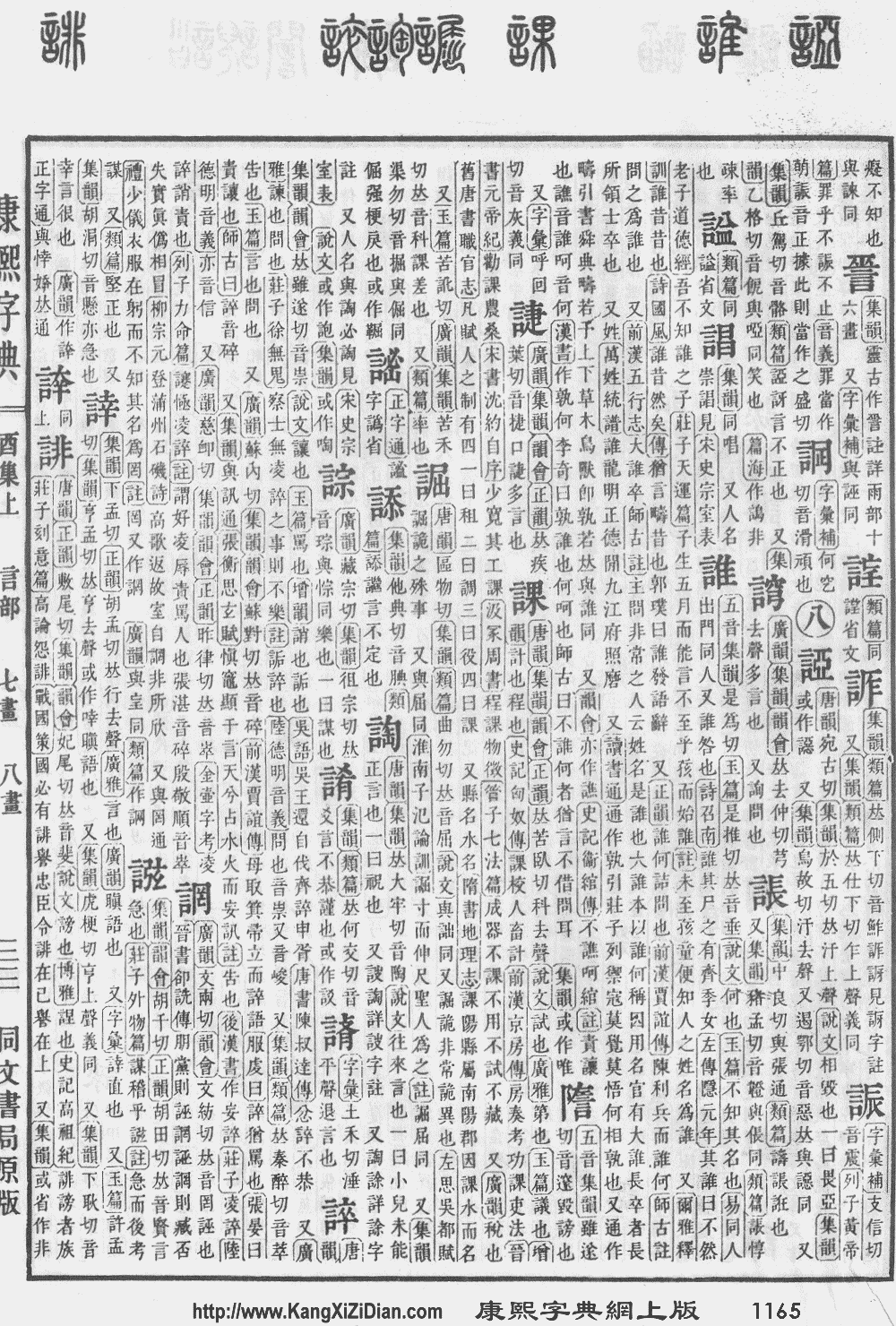
- Kangxi Dictionary: page 1165, character 11
- Dai Kanwa Jiten: character 35686
- Dae Jaweon: page 1630, character 27
- Hanyu Da Zidian (first edition): volume 6, page 3987, character 10
- Unihan data for U+8AB0
Chinese
Glyph origin
Phono-semantic compound (形聲/形声, OC *djul) : semantic 言 (“speak”) + phonetic 隹 (OC *tjul).
Etymology 1
| trad. | 誰 | |
|---|---|---|
| simp. | 谁 | |
From *du + *-i (“suffix in independent pronouns”); cognate with 疇 (OC *du, “who”), 孰 (OC *djɯwɢ, “which one; who”) (Schuessler, 2007). In other Sino-Tibetan languages, compare Mizo tû (“who; which”), Chepang दोह् (“what”), Proto-Kuki-Chin *tuu (“who; which (relativizer)”) (Schuessler, 2007; STEDT).
Pronunciation
Definitions
誰
Compounds
Pronunciation
Pronunciation
Definitions
誰
Pronunciation
Etymology 5
| trad. | 誰 | |
|---|---|---|
| simp. | 谁 | |
| alternative forms | 孰 (chiâ) 咜 (chôa) | |
From shortening of 是誰/是谁 (chī-choa̍h), from 是誰仔/是谁仔 (chī-chūi-á).
Pronunciation
Synonyms
Japanese
Etymology 1
| Kanji in this term |
|---|
| 誰 |
| だれ Grade: S |
| kun’yomi |
/tare/ → /dare/
From earlier tare.[1][2][3][4]
The dare form appears from around the Edo period.[3] The voicing of the initial /t-/ to /d-/ is likely by analogy with other interrogative demonstratives 何れ (dore, “which one”), 何処 (doko, “where”).
Now the primary form, replacing earlier tare.
Pronoun
誰 • (dare)
- interrogative personal pronoun: who, whom
- 誰が誰を作ったのか
- dare ga dare o tsukutta no ka
- Who made who?
- 2016, Makoto Shinkai, director, 君の名は。 [your name.], spoken by Taki Tachibana (Ryūnosuke Kamiki), Toho:
- お前は…誰だ?俺は どうしてここに来た?あいつに…あいつに会うために来た。助けるために来た。生きていてほしかった。誰だ?誰?誰に会いに来た?大事な人、忘れたくない人、忘れちゃダメな人!誰だ?誰だ?誰だ…誰だ⁉名前は⁉
- O-mae wa… dare da? Ore wa dōshite koko ni kita? Aitsu ni… Aitsu ni au tame ni kita. Tasukeru tame ni kita. Ikite ite hoshikatta. Dare da? Dare da? Dare ni ai ni kita? Daiji na hito, wasuretakunai hito, wasurecha dame na hito! Dare da? Dare da? Dare da… Dare da⁉ Namae wa⁉
- Who… are you? Why did I come here? To see her… I came to see her. I came to save her. I wanted her to live. Who was it? Who? Who did I come to see? Someone dear to me, someone I don't wanna forget, someone I must not forget! Who was it? Who was it? Who was it… Who⁉ What's your name⁉
- 2016, Makoto Shinkai, director, 君の名は。 [your name.], spoken by Mitsuha Miyamizu (Mone Kamishiraishi), Toho:
- 誰?誰?あの人は誰?大事な人、忘れちゃダメな人、忘れたくなかった人!誰?誰?君は誰?君の名前は⁉
- Dare? Dare? Ano hito wa dare? Daiji na hito, wasurecha dame na hito, wasuretakunakatta hito! Dare? Dare? Kimi wa dare? Kimi no namae wa⁉
- Who was it? Who? Who was he? Someone I hold dear, someone I must not forget, someone I did not want to forget! Who was he? Who? Who are you? What is your name⁉
- 誰が誰を作ったのか
Derived terms
Idioms
- 誰言うとなく (dare iu to naku)
- 誰とはなしに (dare to hanashi ni)
- 誰の目にも (dare no me ni mo)
Etymology 2
| Kanji in this term |
|---|
| 誰 |
| たれ Grade: S |
| kun’yomi |
From Old Japanese, first attested in the Kojiki (712 CE) alongside its older form ta (see below).
Derived from older 誰 (ta, “who”) + れ (re, “thing”, demonstrative nominalizer ending). Compare the formation of これ (kore, “this”) from 此 (ko, “this”) + れ, 彼 (kare, “that one, that person”) from 彼 (ka, “that”) + れ (re), etc.
Superseded by dare above starting from around the Edo period.[2][3] The tare form does not appear to be used anymore outside of poetry or intentionally archaic text.
Quotations
For quotations using this term, see Citations:誰.
Derived terms
Idioms
- 誰かある (tare ka aru)
Proverbs
- 誰か烏の雌雄を知らん (tare ka karasu no shiyū o shiran)
See also
| a-/wa- “I, we” (first person) |
na-/-ma- “you, ye, thou” (second person) |
k- “this” (close to speaker) |
s- “that” (close to listener) |
a-/ka- “that over there” (far from both) |
i-/ta-/nani- “who, what, where, how, when” (interrogative) |
ono- “oneself” (reflexive) | |
|---|---|---|---|---|---|---|---|
| Person | あ (a) あれ (are) わ (wa) われ (ware) まろ (maro) |
な (na) なれ (nare) なんぢ (nanji) まし (mashi) いまし (imashi) みまし (mimashi) きみ (kimi) |
こ (ko) これ (kore) |
そ (so) それ (sore) |
あ (a) あれ (are) か (ka) かれ (kare) |
た (ta) たれ (tare) なにがし (nanigashi) |
おの (ono) おのれ (onore) |
| Thing | こ (ko) これ (kore) |
そ (so) それ (sore) |
あ (a) あれ (are) か (ka) かれ (kare) |
いづれ (izure) なに (nani) |
|||
| Location | ここ (koko) | そこ (soko) | あしこ (ashiko) かしこ (kashiko) |
いづく (izuku) いづこ (izuko) いどこ (idoko) どこ (doko) |
|||
| Direction | こち (kochi) こなた (konata) |
そち (sochi) そなた (sonata) |
あち (achi) あなた (anata) かなた (kanata) |
いづち (izuchi) いづら (izura) いづかた (izukata) |
|||
| Manner | か (ka) かく (kaku) かくて (kakute) かう (kō) |
さ (sa) さて (sate) しか (shika) |
いか (ika) | ||||
| Time | いつ (itsu) |
Etymology 3
| Kanji in this term |
|---|
| 誰 |
| た Grade: S |
| kun’yomi |
From Old Japanese, first attested in the Kojiki, completed roughly 712 CE.[1]
Appears to be the oldest form.
Pronunciation
- IPA(key): [ta̠]
Pronoun
誰 • (ta)
- (obsolete, persists in some fossilized expressions) interrogative personal pronoun: who, whom
Quotations
For quotations using this term, see Citations:誰.
See also
| a-/wa- “I, we” (first person) |
na-/-ma- “you, ye, thou” (second person) |
k- “this” (close to speaker) |
s- “that” (close to listener) |
a-/ka- “that over there” (far from both) |
i-/ta-/nani- “who, what, where, how, when” (interrogative) |
ono- “oneself” (reflexive) | |
|---|---|---|---|---|---|---|---|
| Person | あ (a) あれ (are) わ (wa) われ (ware) まろ (maro) |
な (na) なれ (nare) なんぢ (nanji) まし (mashi) いまし (imashi) みまし (mimashi) きみ (kimi) |
こ (ko) これ (kore) |
そ (so) それ (sore) |
あ (a) あれ (are) か (ka) かれ (kare) |
た (ta) たれ (tare) なにがし (nanigashi) |
おの (ono) おのれ (onore) |
| Thing | こ (ko) これ (kore) |
そ (so) それ (sore) |
あ (a) あれ (are) か (ka) かれ (kare) |
いづれ (izure) なに (nani) |
|||
| Location | ここ (koko) | そこ (soko) | あしこ (ashiko) かしこ (kashiko) |
いづく (izuku) いづこ (izuko) いどこ (idoko) どこ (doko) |
|||
| Direction | こち (kochi) こなた (konata) |
そち (sochi) そなた (sonata) |
あち (achi) あなた (anata) かなた (kanata) |
いづち (izuchi) いづら (izura) いづかた (izukata) |
|||
| Manner | か (ka) かく (kaku) かくて (kakute) かう (kō) |
さ (sa) さて (sate) しか (shika) |
いか (ika) | ||||
| Time | いつ (itsu) |
References
- .Shōgaku Tosho (1988) 国語大辞典(新装版) [Unabridged Dictionary of Japanese (Revised Edition)] (in Japanese), Tōkyō: Shogakukan, →ISBN
- Matsumura, Akira (1995) 大辞泉 [Daijisen] (in Japanese), First edition, Tōkyō: Shogakukan, →ISBN
- Matsumura, Akira, editor (2006), 大辞林 [Daijirin] (in Japanese), Third edition, Tōkyō: Sanseidō, →ISBN
- Kindaichi, Kyōsuke et al., editors (1997), 新明解国語辞典 [Shin Meikai Kokugo Jiten] (in Japanese), Fifth edition, Tōkyō: Sanseidō, →ISBN
Korean
Hanja
誰 • (su) (hangeul 수)
- This term needs a translation to English. Please help out and add a translation, then remove the text
{{rfdef}}.