祢
See also: 禰
| ||||||||
Translingual
| Japanese | 祢 |
|---|---|
| Simplified | 祢 |
| Traditional | 禰 |
Han character
祢 (Kangxi radical 113, 示+5, 9 strokes, cangjie input 戈火弓火 (IFNF), four-corner 38290, composition ⿰礻尔(G) or ⿰礻尓(J))
Derived characters
- 𡢜
References
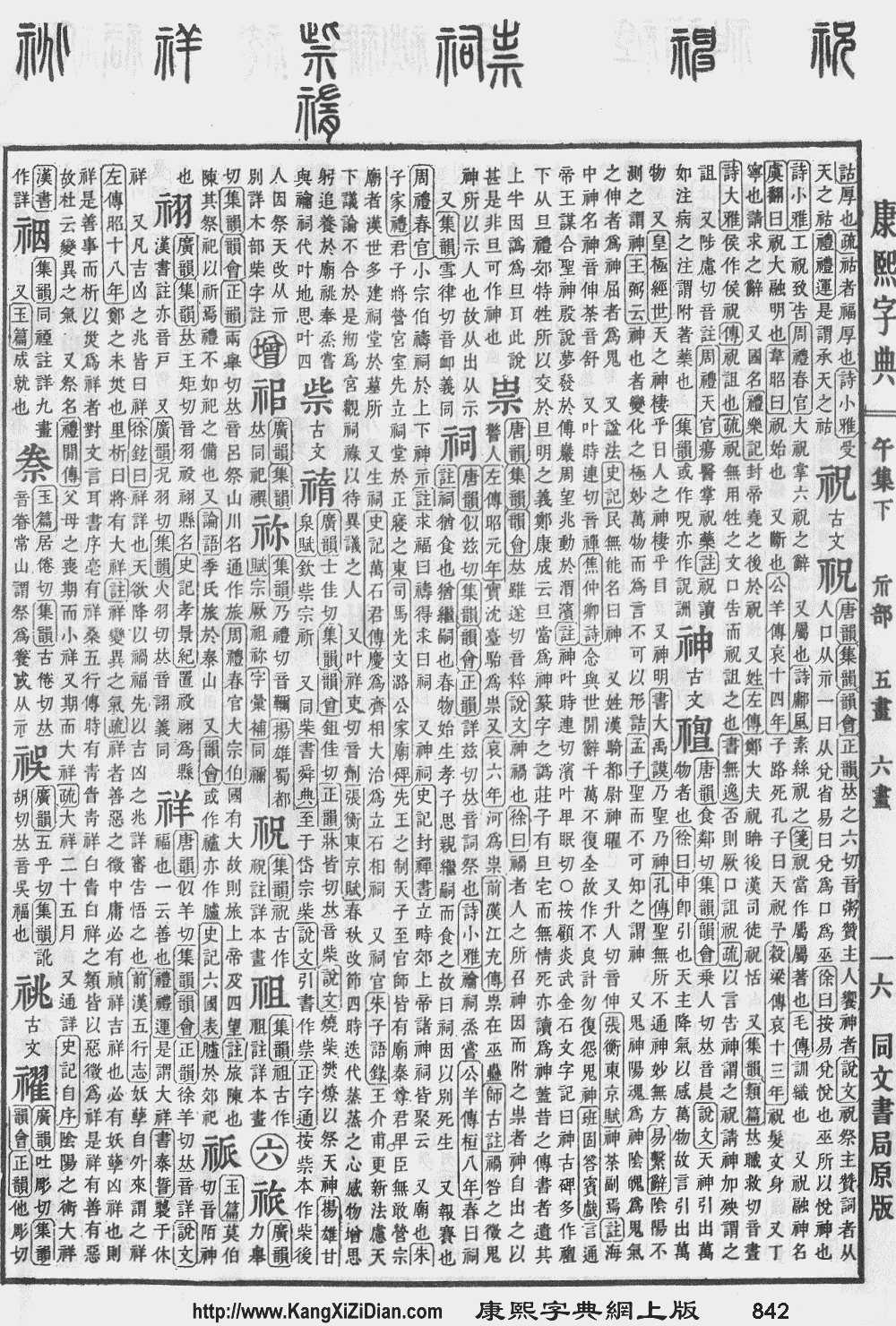
- Kangxi Dictionary: page 842, character 10
- Dai Kanwa Jiten: character 24679
- Dae Jaweon: page 1262, character 7
- Hanyu Da Zidian (first edition): volume 4, page 2394, character 4
- Unihan data for U+7962
Chinese
Etymology 1
| For pronunciation and definitions of 祢 – see 禰 (“one's deceased father; ancestral temple for one's deceased father; etc.”). (This character is the simplified form of 禰). |
Notes:
|
Pronunciation
Definitions
祢
- (deity) You; Thou
- 願我一生全然歸祢,獻在壇上,來為祢發亮。 [Literary Cantonese, trad.]
- From: 角聲使團 (Herald Crusaders), 全然歸祢
- jyun6 ngo5 jat1 sang1 cyun4 jin4 gwai1 nei5, hin3 zoi6 taan4 soeng6, loi4 wai6 nei5 faat3 loeng6. [Jyutping]
- May my whole life be given back to You, offered on the altar, to shine for You.
愿我一生全然归祢,献在坛上,来为祢发亮。 [Literary Cantonese, simp.]
See also
| Standard Mandarin Chinese personal pronouns | |||
|---|---|---|---|
| Person | Singular | Plural | |
| 1st | — | 我 (wǒ) | 我們/我们 (wǒmen) |
| inclusive | 咱們/咱们 (zánmen) | ||
| 2nd | male/indefinite | 你 (nǐ) | 你們/你们 (nǐmen) |
| female | 妳/你 (nǐ) | 妳們/你们 (nǐmen) | |
| deity | 祢 (nǐ) | 祢們/祢们 (nǐmen) | |
| polite | 您 (nín) | 你們/你们 (nǐmen) 您們/您们 (nínmen) | |
| 3rd | male/indefinite | 他 (tā) | 他們/他们 (tāmen) |
| female | 她 (tā) | 她們/她们 (tāmen) | |
| deity | 祂 (tā) | 祂們/祂们 (tāmen) | |
| animal | 牠/它 (tā) | 牠們/它们 (tāmen) | |
| inanimate | 它 (tā) | 它們/它们 (tāmen) | |
Compounds
- 祢們 (nǐmen)
Korean
This article is issued from Wiktionary. The text is licensed under Creative Commons - Attribution - Sharealike. Additional terms may apply for the media files.