路
| ||||||||
| ||||||||
Translingual
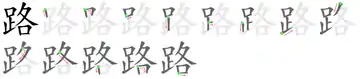
| Stroke order | |||
|---|---|---|---|
 | |||
Han character
路 (Kangxi radical 157, 足+6, 13 strokes, cangjie input 口一竹水口 (RMHER), four-corner 67164, composition ⿰𧾷各)
References
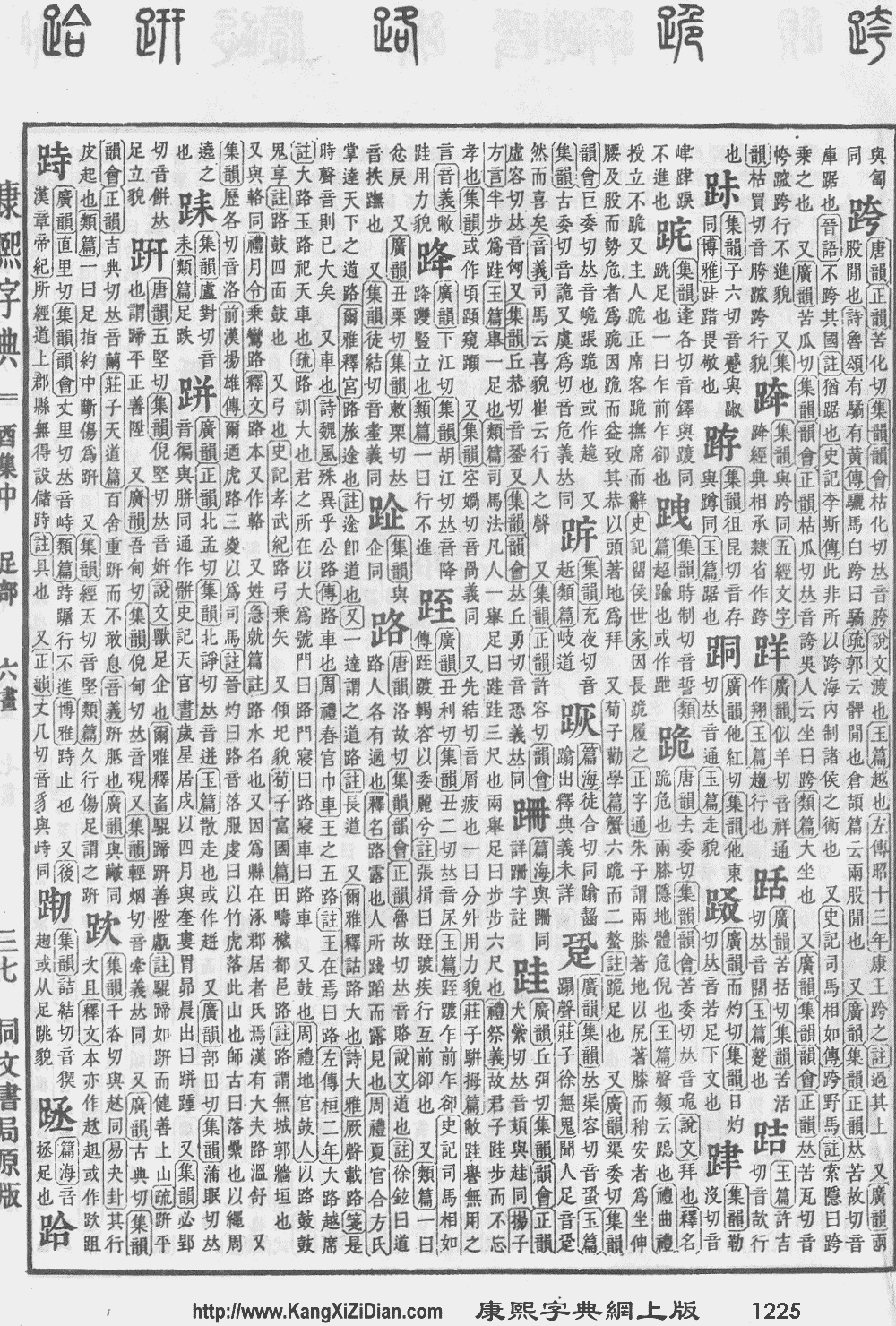
- Kangxi Dictionary: page 1225, character 22
- Dai Kanwa Jiten: character 37524
- Dae Jaweon: page 1697, character 6
- Hanyu Da Zidian (first edition): volume 6, page 3704, character 6
- Unihan data for U+8DEF
- Unihan data for U+F937
Chinese
| simp. and trad. |
路 | |
|---|---|---|
Glyph origin
| Historical forms of the character 路 | |||
|---|---|---|---|
| Western Zhou | Warring States | Shuowen Jiezi (compiled in Han) | Liushutong (compiled in Ming) |
| Bronze inscriptions | Chu slip and silk script | Small seal script | Transcribed ancient scripts |
 |
 |
 |
 |
Characters in the same phonetic series (各) (Zhengzhang, 2003)
| Old Chinese | |
|---|---|
| 髂 | *kʰraːɡs |
| 路 | *ɡ·raːɡs |
| 輅 | *ɡ·raːɡs |
| 賂 | *ɡ·raːɡs |
| 虂 | *ɡ·raːɡs |
| 露 | *ɡ·raːɡs |
| 潞 | *raːɡs |
| 鷺 | *raːɡs |
| 璐 | *raːɡs |
| 簬 | *raːɡs |
| 簵 | *ɡ·raːɡs |
| 洛 | *ɡ·raːɡ |
| 駱 | *ɡ·raːɡ |
| 絡 | *ɡ·raːɡ |
| 酪 | *ɡ·raːɡ |
| 烙 | *ɡ·raːɡ |
| 雒 | *ɡ·raːɡ |
| 珞 | *ɡ·raːɡ |
| 硌 | *ɡ·raːɡ |
| 袼 | *ɡ·raːɡ, *klaːɡ |
| 笿 | *ɡ·raːɡ |
| 鉻 | *ɡ·raːɡ, *kraːɡ |
| 鮥 | *ɡ·raːɡ |
| 鵅 | *ɡ·raːɡ, *kraːɡ |
| 挌 | *ɡ·raːɡ, *kraːɡ |
| 落 | *ɡ·raːɡ |
| 各 | *klaːɡ |
| 胳 | *klaːɡ |
| 閣 | *klaːɡ |
| 格 | *klaːɡ, *kraːɡ |
| 擱 | *klaːɡ |
| 恪 | *kʰlaːɡ |
| 愙 | *kʰaːɡ |
| 貉 | *ɡlaːɡ, *mɡraːɡ |
| 狢 | *ɡlaːɡ |
| 佫 | *ɡlaːɡ |
| 略 | *ɡ·raɡ |
| 茖 | *kraːɡ |
| 骼 | *kraːɡ |
| 觡 | *kraːɡ |
| 蛒 | *kraːɡ |
| 敋 | *kraːɡ |
| 客 | *kʰraːɡ |
| 喀 | *kʰraːɡ |
| 揢 | *kʰraːɡ |
| 額 | *ŋɡraːɡ |
| 峉 | *ŋɡraːɡ |
| 頟 | *ŋɡraːɡ |
| 詻 | *ŋɡraːɡ |
| 垎 | *ɡraːɡ |
| 楁 | *ɡraːɡ |
Phono-semantic compound (形聲/形声, OC *ɡ·raːɡs) : semantic 足 + phonetic 各 (OC *klaːɡ).
Etymology
Either related to 格 (OC *klaːɡ, *kraːɡ, “to come, to arrive (obsolete)”) (Baxter, 1992) or from Austroasiatic (Schuessler, 2007). Compare Proto-Mon-Khmer *kraʔ (“road, way”), whence Proto-Vietic *kraːʔ (→ fossilized Vietnamese sá & Muong khá (“road, way”)), Chong khraa, Kuy (k)na, and Proto-Waic *kraʔ. Possibly cognate with 略 (OC *ɡ·raɡ).
Pronunciation
Definitions
路
- road; path; street (Classifier: 條/条)
- 修路 ― xiūlù ― to build a road
- 這正如地上的路;其實地上本沒有路,走的人多了,也便成了路。 [MSC, trad.]
- From: 1921, Lu Xun, 故鄉 (My Old Home)
- Zhè zhèngrú dìshàng de lù; qíshí dìshàng běn méiyǒu lù, zǒu de rén duō le, yě biàn chéng le lù. [Pinyin]
- It is just like roads across the earth. For actually the earth had no roads to begin with, but when many men pass one way, a road is made.
这正如地上的路;其实地上本没有路,走的人多了,也便成了路。 [MSC, simp.]
- pattern; arrangement; sequence
- way; method
- 生路 ― shēnglù ― means of livelihood; way of subsistence
- journey
- route
- kind; type
- region
- Classifier for lines or rows.
- -year-old, in multiples of ten; decade(s) of one's life; Used for describing the style of people in such age range.
- (historical) circuit (an administrative unit during the Song and Yuan dynasties)
- a surname
Synonyms
Dialectal synonyms of 路 (“road; path”) [map]
Compounds
- 一路 (yīlù)
- 上路 (shànglù)
- 下路
- 世路
- 中南路 (Zhōngnánlù)
- 中華路/中华路 (Zhōnghuálù)
- 中路 (zhōnglù)
- 丹趙路/丹赵路 (Dānzhàolù)
- 伏路 (fúlù)
- 來路/来路 (láilù)
- 便路
- 修路 (xiūlù)
- 僻路
- 先路
- 公路 (gōnglù)
- 出路 (chūlù)
- 分路
- 利路
- 剖路
- 半路 (bànlù)
- 去路 (qùlù)
- 反路
- 古路 (Gǔlù)
- 各路 (gèlù)
- 同路 (tónglù)
- 問路/问路 (wènlù)
- 回路 (huílù)
- 均州路 (Jūnzhōulù)
- 塔路 (Tǎlù)
- 外路
- 大路 (dàlù)
- 天路 (tiānlù)
- 失路 (shīlù)
- 夾路/夹路
- 套路 (tàolù)
- 奪路/夺路 (duólù)
- 子路
- 季路
- 官路
- 對路/对路 (duìlù)
- 小路 (xiǎolù)
- 岔路 (chàlù)
- 岐路 (qílù)
- 工農路/工农路 (Gōngnónglù)
- 帶路/带路 (dàilù)
- 平路
- 引路 (yǐnlù)
- 彎路/弯路 (wānlù)
- 後路/后路 (hòulù)
- 徑路/径路
- 心路 (xīnlù)
- 忠路 (Zhōnglù, “Zhonglu”)
- 思路 (sīlù)
- 截路 (jiélù)
- 戲路/戏路
- 手路 (chhiú-lō͘) (Min Nan)
- 拉撒路 (Lāsālù)
- 探路 (tànlù)
- 擋路/挡路 (dǎnglù)
- 攔路/拦路 (lánlù)
- 支路 (zhīlù)
- 新路 (xīnlù)
- 斷路/断路 (duànlù)
- 旱路 (hànlù)
- 昆侖路/昆仑路 (Kūnlúnlù)
- 書城路/书城路 (Shūchénglù)
- 末路 (mòlù)
- 東路/东路 (dōnglù)
- 樞路/枢路
- 正路 (zhènglù)
- 武南鐵路/武南铁路 (Wǔnántiělù)
- 歧路 (qílù)
- 歸路/归路 (guīlù)
- 歹路
- 死路 (sǐlù)
- 水路 (shuǐlù)
- 沒路/没路
- 沿路 (yánlù)
- 泉路 (quánlù)
- 活路
- 海路 (hǎilù)
- 漢江路/汉江路 (Hànjiānglù)
- 熟路 (shúlù)
- 狹路/狭路
- 珞獅路/珞狮路 (Luòshīlù)
- 理路 (lǐlù)
- 生路 (shēnglù)
- 甬路
- 番路 (Fānlù)
- 當路/当路
- 短路 (duǎnlù)
- 筆路/笔路 (bǐlù)
- 管路 (guǎnlù)
- 築路/筑路 (zhùlù)
- 紋路/纹路 (wénlù)
- 細路/细路
- 絲路/丝路 (Sīlù)
- 絕路/绝路 (juélù)
- 網路/网路 (wǎnglù)
- 線路/线路 (xiànlù)
- 老路 (lǎolù)
- 背路
- 腳路/脚路
- 航路 (hánglù)
- 落路
- 血路 (xuèlù)
- 行路 (xínglù)
- 衢路
- 西藏路 (Xīzànglù)
- 要路
- 解放路 (Jiěfànglù)
- 言路 (yánlù)
- 認路/认路
- 讓路/让路 (rànglù)
- 財路/财路 (cáilù)
- 貪路/贪路
- 賢路/贤路
- 走路 (zǒulù)
- 趕路/赶路 (gǎnlù)
- 跑路 (pǎolù)
- 路上 (lùshàng)
- 路中
- 路人 (lùrén)
- 路兒/路儿
- 路加 (Lùjiā)
- 路劫
- 路口 (lùkǒu)
- 路史
- 路基 (lùjī)
- 路奠
- 路子 (lùzi)
- 路局
- 路岐
- 路引
- 路徑/路径 (lùjìng)
- 路政
- 路數/路数 (lùshù)
- 路斃/路毙
- 路條/路条
- 路標/路标 (lùbiāo)
- 路樹/路树
- 路檢/路检 (lùjiǎn)
- 路次
- 路段 (lùduàn)
- 路況/路况 (lùkuàng)
- 路燈/路灯 (lùdēng)
- 路祭
- 路程 (lùchéng)
- 路竹 (Lùzhú)
- 路籤/路签
- 路線/路线 (lùxiàn)
- 路考 (lùkǎo)
- 路肩 (lùjiān)
- 路衢
- 路角
- 路試/路试 (lùshì)
- 路誌/路志
- 路警
- 路費/路费 (lùfèi)
- 路跑
- 路軌/路轨 (lùguǐ)
- 路途 (lùtú)
- 路過/路过 (lùguò)
- 路道
- 路遠/路远
- 路邊/路边 (lùbiān)
- 路隅
- 路隊/路队
- 路障 (lùzhàng)
- 路霸 (lùbà)
- 路面 (lùmiàn)
- 路頭/路头
- 蹕路/跸路 (bìlù)
- 蹡路/𬧀路
- 車城路/车城路 (Chēchénglù)
- 輦路/辇路
- 退路 (tuìlù)
- 迷路 (mílù)
- 送路
- 通路 (tōnglù)
- 過路/过路 (guòlù)
- 道路 (dàolù)
- 遠路/远路
- 遮路
- 邪路 (xiélù)
- 金峰路 (Jīnfēnglù)
- 鋪路/铺路 (pūlù)
- 銷路/销路 (xiāolù)
- 鐵路/铁路 (tiělù)
- 長路/长路 (chánglù)
- 門路/门路 (ménlù)
- 閉路/闭路
- 開路/开路 (kāilù)
- 關路圻/关路圻 (Guānlùqí)
- 陌路 (mòlù)
- 陸路/陆路 (lùlù)
- 隘路 (àilù)
- 險路/险路
- 雲路/云路
- 電路/电路 (diànlù)
- 順路/顺路 (shùnlù)
- 領路/领路 (lǐnglù)
- 頭路/头路 (tóulù)
- 風路/风路
- 養路/养路
- 餞路/饯路
- 饋路/馈路
- 首義路/首义路 (Shǒuyìlù)
- 首路
- 馬路/马路 (mǎlù)
- 魯磨路/鲁磨路 (Lǔmòlù)
- 鸞路/鸾路
- 黃河路/黄河路 (Huánghélù)
- 黑路
References
- “路”, in 漢語多功能字庫 (Multi-function Chinese Character Database), 香港中文大學 (the Chinese University of Hong Kong), 2014–
- “Entry #10169”, in 臺灣閩南語常用詞辭典 [Dictionary of Frequently-Used Taiwan Minnan] (overall work in Mandarin and Hokkien), Ministry of Education, R.O.C., 2023.
Japanese
Compounds
Compounds
- 路銀 (rogin)
- 路地 (roji)
- 路上 (rojō)
- 路線 (rosen)
- 路傍 (robō)
- 路面 (romen)
- 隘路 (airo)
- 悪路 (akuro)
- 一路 (ichiro)
- 迂路 (uro)
- 駅路 (ekiro)
- 遠路 (enro)
- 沿路 (enro)
- 往路 (ōro)
- 回路 (kairo)
- 海路 (kairo)
- 街路 (gairo)
- 活路 (katsuro)
- 岐路 (kiro)
- 帰路 (kiro)
- 棘路 (kyokuro)
- 空路 (kūro)
- 経路 (keiro), 径路 (keiro), 逕路 (keiro)
- 血路 (ketsuro)
- 険路 (kenro)
- 語路 (goro)
- 行路 (kōro)
- 航路 (kōro)
- 直路 (jikiro)
- 順路 (junro)
- 捷路 (shōro)
- 針路 (shinro)
- 進路 (shinro)
- 水路 (suiro)
- 世路 (seiro)
- 線路 (senro)
- 走路 (sōro)
- 退路 (tairo)
- 直路 (chokuro)
- 通路 (tsūro)
- 鉄路 (tetsuro)
- 電路 (denro)
- 当路 (tōro)
- 道路 (dōro)
- 難路 (nanro)
- 坂路 (hanro)
- 販路 (hanro)
- 復路 (fukuro)
- 返路 (henro)
- 遍路 (henro)
- 末路 (matsuro)
- 迷路 (meiro)
- 冥路 (meiro)
- 要路 (yōro)
- 理路 (riro)
- 陸路 (rikuro)
- 路程 (rotei)
- 路用 (royō)
Pronunciation
- IPA(key): [t͡ɕi]
Suffix
路 • (-chi)
Pronunciation
- IPA(key): [d͡ʑi]
Suffix
Derived terms
Compounds
- 一日路 (ichinichiji)
- 天路 (amaji)
- 家路 (ieji)
- 駅路 (umayaji)
- 海路 (umiji)
- 浦路 (uraji)
- 有漏路 (uroji)
- 大路 (ōji)
- 懸け路 (kakeji)
- 崖路 (gakeji)
- 徒路 (kachiji), 歩路 (kachiji)
- 通い路 (kayoiji)
- 川路 (kawaji)
- 陸路 (kugaji)
- 雲路 (kumoji)
- 雲居路 (kumoiji)
- 恋路 (koiji)
- 坂路 (sakaji)
- 潮路 (shioji)
- 関路 (sekiji)
- 十路 (soji)
- 旅路 (tabiji)
- 長路 (nagaji)
- 無漏路 (muroji)
- 小路 (shōji)
- 繁路 (shigeji)
- 忍び路 (shinobiji)
- 直路 (tadaji)
- 浜路 (hamaji)
- 野路 (noji)
- 波路 (namiji)
- 罷り路 (makariji)
- 崖路 (hokiji)
- 船路 (funaji)
- 目路 (meji), 眼路 (meji)
- 宮路 (miyaji)
- 深山路 (miyamaji)
- 都路 (miyakoji)
- 闇路 (yamiji)
- 黄泉路 (yomiji)
- 夢路 (yumeji)
- 雪路 (yukiji)
- 行き交い路 (yukikaiji)
- 別れ路 (wakareji)
Etymology 3
| Kanji in this term |
|---|
| 路 |
| みち Grade: 3 |
| kun’yomi |
| Alternative spellings |
|---|
| 道 途 径 |
| For pronunciation and definitions of 路 – see the following entry. | ||
| ||
| (This term, 路, is an alternative spelling (uncommon) of the above term.) |
References
- Shōgaku Tosho (1988) 国語大辞典(新装版) [Unabridged Dictionary of Japanese (Revised Edition)] (in Japanese), Tōkyō: Shogakukan, →ISBN
- Matsumura, Akira, editor (2006), 大辞林 [Daijirin] (in Japanese), Third edition, Tōkyō: Sanseidō, →ISBN
Korean
Etymology
From Middle Chinese 路 (MC luH).
| Historical Readings | ||
|---|---|---|
| Dongguk Jeongun Reading | ||
| Dongguk Jeongun, 1448 | 롱〮 (Yale: lwó) | |
| Middle Korean | ||
| Text | Eumhun | |
| Gloss (hun) | Reading | |
| Hunmong Jahoe, 1527 | 길〮 (Yale: kíl) | 로〯 (Yale: lwŏ) |
Pronunciation
- (SK Standard/Seoul) IPA(key): [ɾo̞(ː)] ~ [no̞(ː)]
- Phonetic hangul: [로(ː)/노(ː)]
- Though still prescribed in Standard Korean, most speakers in both Koreas no longer distinguish vowel length.
Hanja
Vietnamese
This article is issued from Wiktionary. The text is licensed under Creative Commons - Attribution - Sharealike. Additional terms may apply for the media files.