耐
| ||||||||
Translingual
Han character
耐 (Kangxi radical 126, 而+3, 9 strokes, cangjie input 一月木戈 (MBDI), four-corner 14200, composition ⿰而寸)
Derived characters
- 𭱈, 𪹅
References
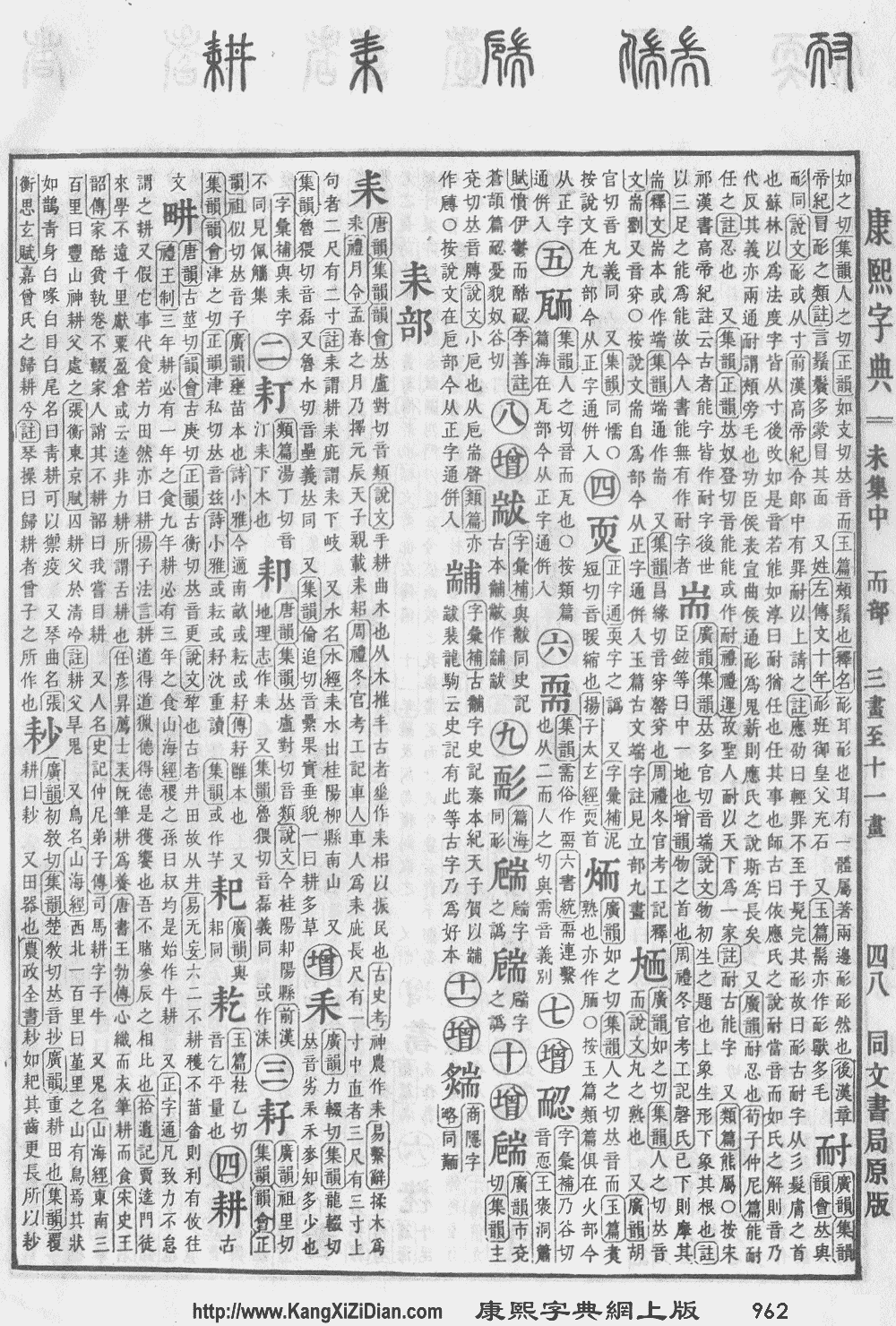
- Kangxi Dictionary: page 962, character 1
- Dai Kanwa Jiten: character 28879
- Dae Jaweon: page 1409, character 24
- Hanyu Da Zidian (first edition): volume 4, page 2811, character 3
- Unihan data for U+8010
Chinese
| simp. and trad. |
耐 | |
|---|---|---|
| alternative forms | 耏 𡬪 𦓎 𩈃 能 “to bear” | |
Glyph origin
Characters in the same phonetic series (而) (Zhengzhang, 2003)
Phono-semantic compound (形聲/形声, OC *nɯːs) : phonetic 而 (OC *njɯ) + semantic 寸.
Etymology 1
STEDT compares this to 難 (OC *n̥ʰaːn, *naːns) and Proto-Tibeto-Burman *na-n/t (“ill, pain, sore, ache, difficult, evil spirit”)
Pronunciation
Definitions
耐
- to be durable; to be able to withstand
- 耐火 ― nàihuǒ ― fire resistant
- to bear; to endure
- (Cantonese, of time) long; taking a long time to happen
- (literary) to be worth; to merit; to deserve; to be worthy of
- (literary) suitable; appropriate
- (literary) an ancient punishment involving shaving one's beard and temples
Synonyms
- (to bear):
- (long):
Dialectal synonyms of 久 (“long (time)”) [map]
- (to be worth):
- (suitable):
- 一定 (yīdìng)
- 停當/停当 (tíngdàng)
- 允 (literary, or in compounds)
- 允當/允当 (yǔndàng) (literary)
- 剛好/刚好 (gānghǎo)
- 合宜 (héyí)
- 合手 (héshǒu)
- 合用 (héyòng) (literary or Min Nan)
- 合適/合适 (héshì)
- 啱 (ngaam1) (Cantonese, Hakka)
- 妥 (tuǒ)
- 妥善 (tuǒshàn)
- 妥帖 (tuǒtiē)
- 妥當/妥当
- 安帖 (āntiē)
- 定當/定当 (dìngdàng)
- 對勁/对劲 (duìjìn) (colloquial)
- 對路/对路 (duìlù) (colloquial)
- 對頭/对头
- 得宜 (déyí) (literary)
- 得當/得当 (dédàng)
- 得體/得体 (détǐ)
- 恰當/恰当 (qiàdàng)
- 拄仔好 (Hokkien)
- 拄好 (Hokkien)
- 的當/的当 (dídàng)
- 相宜 (xiāngyí)
- 相當/相当 (xiāngdāng)
- 貼切/贴切 (tiēqiè)
- 適合/适合 (shìhé)
- 適宜/适宜 (shìyí)
- 適用/适用 (shìyòng)
- 適當/适当 (shìdàng)
- 適量/适量 (shìliàng)
- 配合
Compounds
- 不可耐
- 不寧不耐/不宁不耐
- 不耐 (bùnài)
- 不耐心煩/不耐心烦
- 不耐煩/不耐烦 (bùnàifán)
- 俗不可耐 (súbùkěnài)
- 刻苦耐勞/刻苦耐劳
- 口耐
- 可耐
- 叵耐 (pǒnài)
- 吃苦耐勞/吃苦耐劳 (chīkǔnàiláo)
- 守耐
- 容耐
- 寧耐/宁耐
- 尀耐
- 忍耐 (rěnnài)
- 忍苦耐勞/忍苦耐劳
- 急不可耐
- 按耐
- 挨耐
- 施耐庵
- 末耐何
- 沒耐煩/没耐烦
- 爭耐/争耐
- 禁耐
- 等耐
- 美耐板 (měinàibǎn)
- 美耐皿 (měinàimǐn)
- 耐不住
- 耐久 (nàijiǔ)
- 耐久品
- 耐久朋
- 耐久財/耐久财
- 耐事
- 耐人咀嚼
- 耐人尋味/耐人寻味 (nàirénxúnwèi)
- 耐何
- 耐儲大蒜/耐储大蒜
- 耐冬
- 耐力 (nàilì)
- 耐勞/耐劳 (nàiláo)
- 耐可
- 耐官
- 耐寒 (nàihán)
- 耐實/耐实
- 耐心 (nàixīn)
- 耐心煩兒/耐心烦儿
- 耐心耐意
- 耐心耐腸/耐心耐肠
- 耐性 (nàixìng)
- 耐戰/耐战
- 耐撞
- 耐旱 (nàihàn)
- 耐朵
- 耐格
- 耐水
- 耐火 (nàihuǒ)
- 耐火材料
- 耐火磚/耐火砖
- 耐煩/耐烦 (nàifán)
- 耐熱/耐热 (nàirè)
- 耐用 (nàiyòng)
- 耐痛
- 耐看 (nàikàn)
- 耐磨
- 耐童兒/耐童儿
- 耐篤/耐笃
- 耐綸/耐纶
- 耐罪
- 耐肏 (nàicào)
- 耐苦
- 耐著性子
- 耐辛苦
- 耐辱
- 耐辱居士
- 耐酸 (nàisuān)
- 耐震 (nàizhèn)
- 耐静
- 耐靜/耐静
- 耐面
- 耐頭/耐头
- 耐飽/耐饱
- 耐龍/耐龙
- 能耐 (néngnài)
- 詎耐/讵耐
- 難耐/难耐
- 頗耐/颇耐
Pronunciation
Japanese
Korean
Vietnamese
Han character
耐: Hán Việt readings: nại[1]
耐: Nôm readings: nại[1][2], nề[1][2], nài[2]
- This term needs a translation to English. Please help out and add a translation, then remove the text
{{rfdef}}.
References
- Trần (2004).
- Hồ (1976).
This article is issued from Wiktionary. The text is licensed under Creative Commons - Attribution - Sharealike. Additional terms may apply for the media files.