吃
See also: 喫
| ||||||||
Translingual
| Stroke order | |||
|---|---|---|---|
 | |||
Han character
吃 (Kangxi radical 30, 口+3, 6 strokes, cangjie input 口人弓 (RON), four-corner 68017, composition ⿰口乞)
References
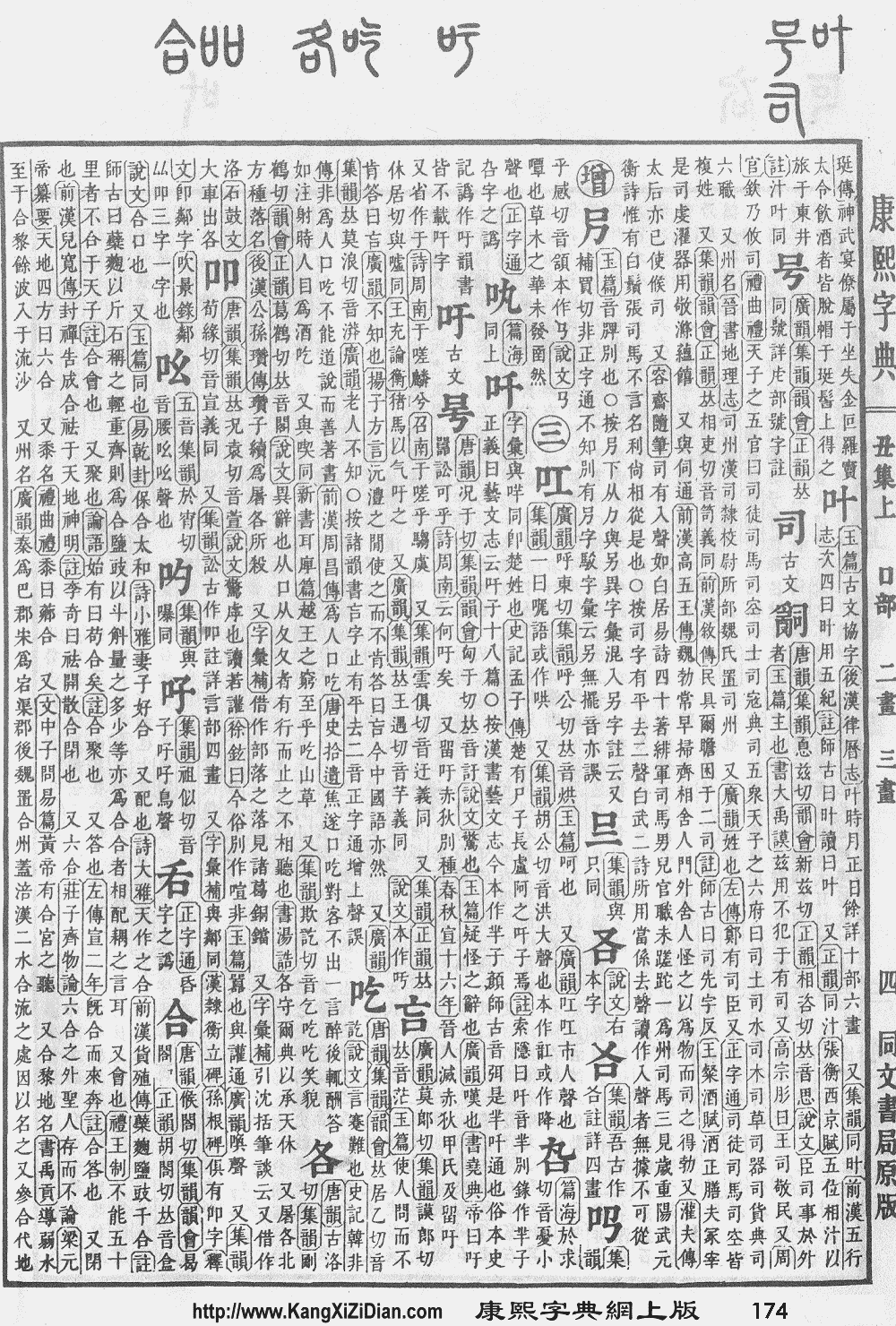
- Kangxi Dictionary: page 174, character 17
- Dai Kanwa Jiten: character 3280
- Dae Jaweon: page 387, character 10
- Hanyu Da Zidian (first edition): volume 1, page 579, character 5
- Unihan data for U+5403
Chinese
Glyph origin
Characters in the same phonetic series (乞) (Zhengzhang, 2003)
Phono-semantic compound (形聲/形声 (xíngshēng)): semantic 口 (kǒu) + phonetic 乞 (OC *kʰɯds, *kʰɯd).
Pronunciation
Definitions
吃
- to eat; to consume
- 他很喜歡吃飯。/他很喜欢吃饭。 ― Tā hěn xǐhuān chīfàn. ― He loves to eat.
- 你吃飯了嗎?/你吃饭了吗? ― Nǐ chīfàn le ma? ― Have you eaten? (also a greeting)
- 你吃過飯嗎?/你吃过饭吗? ― Nǐ chī guò fàn ma? ― Have you eaten? (also a greeting)
- to live on
- to suffer; to endure; to bear
- to exhaust; to be a strain
- to drink
- (board games) to capture
- (mahjong) to chow
- to accept
- 2023, “我的世界地圖”, 黃偉文 [Wyman Wong] (lyrics), 王菀之 [Ivana Wong] (music)performed by 魏浚笙 [Jeffrey Ngai]:
- 年輕一輩 如果只吃前人預設那一套 再沒前路 [Literary Cantonese, trad.]
- nin4 hing1 jat1 bui3, jyu4 gwo2 zi2 hek3 cin4 jan4 jyu6 cit3 naa5 jat1 tou3, zoi3 mut6 cin4 lou6 [Jyutping]
- If the younger generation simply accepts the default methods of those who came before, there will be no more future ahead
年轻一辈 如果只吃前人预设那一套 再没前路 [Literary Cantonese, simp.]
Usage notes
Synonyms
- (to eat): 食用 (shíyòng)
Dialectal synonyms of 吃 (“to eat”) [map]
- (to drink):
Dialectal synonyms of 喝 (“to drink”) [map]
- (to capture):
Dialectal synonyms of 吃 (“(board games) to capture”) [map]
- (to chow):
Compounds
- 一雞三吃/一鸡三吃
- 一魚兩吃/一鱼两吃
- 不吃虧/不吃亏
- 中吃
- 倒吃甘蔗
- 偷吃 (tōuchī)
- 叫吃
- 吃一塹,長一智/吃一堑,长一智 (chī yī qiàn, zhǎng yī zhì)
- 吃一看二
- 吃一驚/吃一惊 (chīyījīng)
- 吃不下
- 吃不上
- 吃不了
- 吃不了,兜著走
- 吃不住 (chībùzhù)
- 吃不來/吃不来
- 吃不到
- 吃不動/吃不动
- 吃不好
- 吃不得
- 吃不慣/吃不惯
- 吃不服
- 吃不消 (chībùxiāo)
- 吃不起
- 吃不透
- 吃不開/吃不开
- 吃主
- 吃乾醋/吃干醋
- 吃乾飯/吃干饭
- 吃了秤砣
- 吃交
- 吃人 (chīrén)
- 吃人兒的/吃人儿的
- 吃人家的嘴軟,拿人家的手短/吃人家的嘴软,拿人家的手短
- 吃人蟲/吃人虫
- 吃住
- 吃偏食
- 吃偏飯/吃偏饭
- 吃傷/吃伤
- 吃傷了/吃伤了
- 吃兒/吃儿 (chīr)
- 吃冤枉
- 吃刀 (chīdāo)
- 吃到飽/吃到饱 (chīdàobǎo)
- 吃力 (chīlì)
- 吃功夫
- 吃勁/吃劲 (chījìn)
- 吃勞保/吃劳保
- 吃勞金/吃劳金
- 吃十方
- 吃受
- 吃口
- 吃吃喝喝 (chīchīhēhē)
- 吃合家歡/吃合家欢
- 吃味 (chīwèi)
- 吃味兒/吃味儿
- 吃啞吧虧/吃哑吧亏
- 吃商品糧/吃商品粮
- 吃啞巴虧/吃哑巴亏
- 吃喜
- 吃喝不分
- 吃喝兒/吃喝儿
- 吃喝嫖賭/吃喝嫖赌 (chīhēpiáodǔ)
- 吃喝玩樂/吃喝玩乐 (chīhēwánlè)
- 吃喜酒
- 吃嘴 (chīzuǐ)
- 吃回扣
- 吃回頭草/吃回头草
- 吃土 (chītǔ)
- 吃地面
- 吃夜草
- 吃大戶/吃大户
- 吃大鍋飯/吃大锅饭 (chī dàguōfàn)
- 吃大項/吃大项
- 吃太平飯/吃太平饭
- 吃好
- 吃子孫飯/吃子孙饭
- 吃官司 (chī guānsi)
- 吃定心丸
- 吃客
- 吃寡酒
- 吃寡醋
- 吃小灶
- 吃小虧,占大便宜
- 吃席 (chīxí)
- 吃床腿
- 吃後悔藥/吃后悔药 (chī hòuhuǐyào)
- 吃得
- 吃得下
- 吃得了
- 吃得住 (chīdezhù)
- 吃得來/吃得来 (chīdelái)
- 吃得光
- 吃得消 (chīdexiāo)
- 吃得苦中苦,方為人上人/吃得苦中苦,方为人上人 (chī de kǔ zhōng kǔ, fāng wéi rén shàng rén)
- 吃得開/吃得开
- 吃心
- 吃悶虧/吃闷亏
- 吃惱/吃恼
- 吃慣/吃惯
- 吃拜拜
- 吃掉 (chīdiào)
- 吃掛絡兒/吃挂络儿
- 吃排落
- 吃排頭/吃排头
- 吃教
- 吃敗仗/吃败仗
- 吃敲才
- 吃本
- 吃板刀麵/吃板刀面
- 吃案
- 吃棒
- 吃槍子/吃枪子
- 吃槍藥/吃枪药 (chī qiāngyào)
- 吃死飯/吃死饭
- 吃水 (chīshuǐ)
- 吃水不忘掘井人
- 吃水線/吃水线 (chīshuǐxiàn)
- 吃法 (chīfǎ)
- 吃派飯/吃派饭
- 吃洋飯/吃洋饭
- 吃火鍋/吃火锅 (chī huǒguō)
- 吃煙/吃烟 (chīyān)
- 吃燒餅/吃烧饼
- 吃牌
- 吃牢
- 吃犒勞/吃犒劳
- 吃獨食/吃独食 (chī dúshí)
- 吃現成/吃现成
- 吃現成飯/吃现成饭
- 吃瓦片兒/吃瓦片儿
- 吃生活
- 吃癟/吃瘪 (chībiě)
- 吃白眼
- 吃白食
- 吃白飯/吃白饭 (chī báifàn)
- 吃皇糧/吃皇粮
- 吃盡當光/吃尽当光
- 吃相 (chīxiàng)
- 吃眼前虧/吃眼前亏
- 吃碰
- 吃碼頭/吃码头
- 吃私
- 吃租
- 吃空茶
- 吃空額/吃空额 (chīkòng'é)
- 吃管子
- 吃糠咽菜
- 吃糧/吃粮
- 吃紅/吃红
- 吃素 (chīsù)
- 吃緊/吃紧 (chījǐn)
- 吃纍/吃累
- 吃罪
- 吃老本 (chīlǎoběn)
- 吃耳光
- 吃膩/吃腻 (chīnì)
- 吃自來食/吃自来食
- 吃自在飯/吃自在饭
- 吃舊鍋粥/吃旧锅粥
- 吃花酒
- 吃苦 (chīkǔ)
- 吃苦耐勞/吃苦耐劳 (chīkǔnàiláo)
- 吃苦頭/吃苦头 (chī kǔtou)
- 吃茶 (chīchá)
- 吃著碗裏,望著鍋裏/吃著碗里,望著锅里
- 吃葷/吃荤 (chīhūn)
- 吃葷飯/吃荤饭
- 吃藥/吃药 (chīyào)
- 吃虧/吃亏 (chīkuī)
- 吃螺絲/吃螺丝 (chī luósī)
- 吃衙門飯/吃衙门饭
- 吃裡扒外/吃里扒外 (chīlǐpáwài)
- 吃裡爬外/吃里爬外 (chīlǐpáwài)
- 吃裏爬外/吃里爬外
- 吃請/吃请
- 吃豆腐 (chī dòufu)
- 吃貨/吃货 (chīhuò)
- 吃賠賬/吃赔账
- 吃贓/吃赃
- 吃軟不吃硬/吃软不吃硬 (chīruǎnbùchīyìng)
- 吃軟飯/吃软饭 (chī ruǎnfàn)
- 吃辣麵/吃辣面
- 吃透
- 吃過路兵/吃过路兵 (chī guòlù bīng)
- 吃酒 (chījiǔ)
- 吃醋 (chīcù)
- 吃醋拈酸
- 吃醋撚酸
- 吃醋爭風/吃醋争风
- 吃重 (chīzhòng)
- 吃釘子/吃钉子
- 吃釘板/吃钉板
- 吃錯藥/吃错药 (chī cuò yào)
- 吃閉門羹/吃闭门羹 (chī bìméngēng)
- 吃開口飯/吃开口饭
- 吃閒話/吃闲话
- 吃閒飯/吃闲饭 (chīxiánfàn)
- 吃零嘴
- 吃零食
- 吃青
- 吃青春飯/吃青春饭
- 吃飛醋/吃飞醋
- 吃食
- 吃食堂 (chī shítáng)
- 吃飯/吃饭 (chīfàn)
- 吃飯傢伙/吃饭家伙
- 吃飯家伙
- 吃飯防噎/吃饭防噎
- 吃飽/吃饱 (chībǎo)
- 吃飽了撐的/吃饱了撑的 (chībǎo le chēng de)
- 吃館子/吃馆子
- 吃香 (chīxiāng)
- 吃香喝辣
- 吃驚/吃惊 (chījīng)
- 吃鴨蛋/吃鸭蛋
- 吃黑棗兒/吃黑枣儿
- 吃墨船兒/吃墨船儿
- 吃齋/吃斋 (chīzhāi)
- 吃齋唸佛/吃斋念佛
- 吞吃 (tūnchī)
- 嘴吃屎
- 坐吃山崩
- 坐吃山空
- 大吃
- 大吃一驚/大吃一惊 (dàchīyījīng)
- 大吃大喝 (dàchīdàhē)
- 大吃大嚼
- 天狗吃月
- 夯吃
- 好吃
- 好吃懶做/好吃懒做 (hàochīlǎnzuò)
- 寅吃卯糧/寅吃卯粮 (yínchīmǎoliáng)
- 小吃 (xiǎochī)
- 少吃無著/少吃无著
- 幫狗吃食/帮狗吃食
- 幫虎吃食/帮虎吃食
- 應卯吃糧/应卯吃粮
- 手面賺吃/手面赚吃
- 抹嘴吃
- 拈酸吃醋
- 搶生吃/抢生吃
- 搪酒吃
- 撩蜂吃螫
- 放牛吃草
- 暗吃一驚/暗吃一惊
- 死吃死嚼
- 混吃混玩
- 添案小吃
- 混飯吃/混饭吃 (hùnfànchī)
- 濫吃濫用/滥吃滥用
- 爭鋒吃醋/争锋吃醋
- 爭風吃醋/争风吃醋
- 狗吃屎
- 狗吃熱屎/狗吃热屎
- 狼吃幞頭
- 獨吃自痾/独吃自疴
- 生吃 (shēngchī)
- 白吃 (báichī)
- 白吃白住
- 白吃白喝 (báichībáihē)
- 百吃不厭/百吃不厌
- 禮教吃人/礼教吃人
- 穩吃三注
- 老大吃驚/老大吃惊 (lǎodà chījīng)
- 自找苦吃
- 自討苦吃/自讨苦吃 (zìtǎokǔchī)
- 蟲吃牙/虫吃牙
- 街頭小吃/街头小吃
- 討吃/讨吃
- 貪吃/贪吃 (tānchī)
- 貪吃懶做/贪吃懒做
- 賞口飯吃/赏口饭吃
- 通吃
- 零吃 (língchī)
- 靠山吃山
- 黑吃黑 (hēichīhēi)
Etymology 2
| simp. and trad. |
吃 | |
|---|---|---|
| alternative forms | 㰟 | |
(This etymology is missing or incomplete. Please add to it, or discuss it at the Etymology scriptorium.)
Pronunciation
Compounds
- 口吃 (kǒuchī)
- 吃口令
- 吃子
- 蹇吃
- 鄧艾吃/邓艾吃
Pronunciation
Pronunciation
Definitions
吃
- (Hokkien) Alternative form of 食
- 看你在過生活 攏是坐著賺躺著吃 [Taiwanese Hokkien, trad.]
- From: 2003, 蔡秋鳳 (Kerris Tsai) (lyricist 李岩修), 爽到你艱苦到我
- khòaⁿ lí leh kòe seng-oa̍h, lóng sī chē-leh thàn tó-teh chia̍h [Pe̍h-ōe-jī]
- When I look at you living your life, you're always earning your living while sitting and eating while lying down.
看你在过生活 拢是坐著赚躺著吃 [Taiwanese Hokkien, simp.]
Japanese
Derived terms
Etymology 2
| Kanji in this term |
|---|
| 吃 |
| チー Hyōgaiji |
| irregular |
Noun
吃 • (chī)
Etymology 3
| Kanji in this term |
|---|
| 吃 |
| ままなき Hyōgaiji |
| irregular |
Possibly a compound of 儘 (mama, “remaining at a certain state”) + 泣き (naki, the 連用形 (ren'yōkei, “stem or continuative form”) of verb 泣く (naku), “to cry”). (Can this(+) etymology be sourced?)
References
- Shōgaku Tosho (1988) 国語大辞典(新装版) [Unabridged Dictionary of Japanese (Revised Edition)] (in Japanese), Tōkyō: Shogakukan, →ISBN
- Matsumura, Akira (1995) 大辞泉 [Daijisen] (in Japanese), First edition, Tōkyō: Shogakukan, →ISBN
- Matsumura, Akira, editor (2006), 大辞林 [Daijirin] (in Japanese), Third edition, Tōkyō: Sanseidō, →ISBN
Korean
Hanja
吃 (eum 흘 (heul))
- This term needs a translation to English. Please help out and add a translation, then remove the text
{{rfdef}}.
Vietnamese
This article is issued from Wiktionary. The text is licensed under Creative Commons - Attribution - Sharealike. Additional terms may apply for the media files.