返
| ||||||||
Translingual
Han character
返 (Kangxi radical 162, 辵+4, 8 strokes in traditional Chinese and Korean, 7 strokes in simplified Chinese and Japanese, cangjie input 卜竹水 (YHE), four-corner 31304 or 32304, composition ⿺辶反)
References
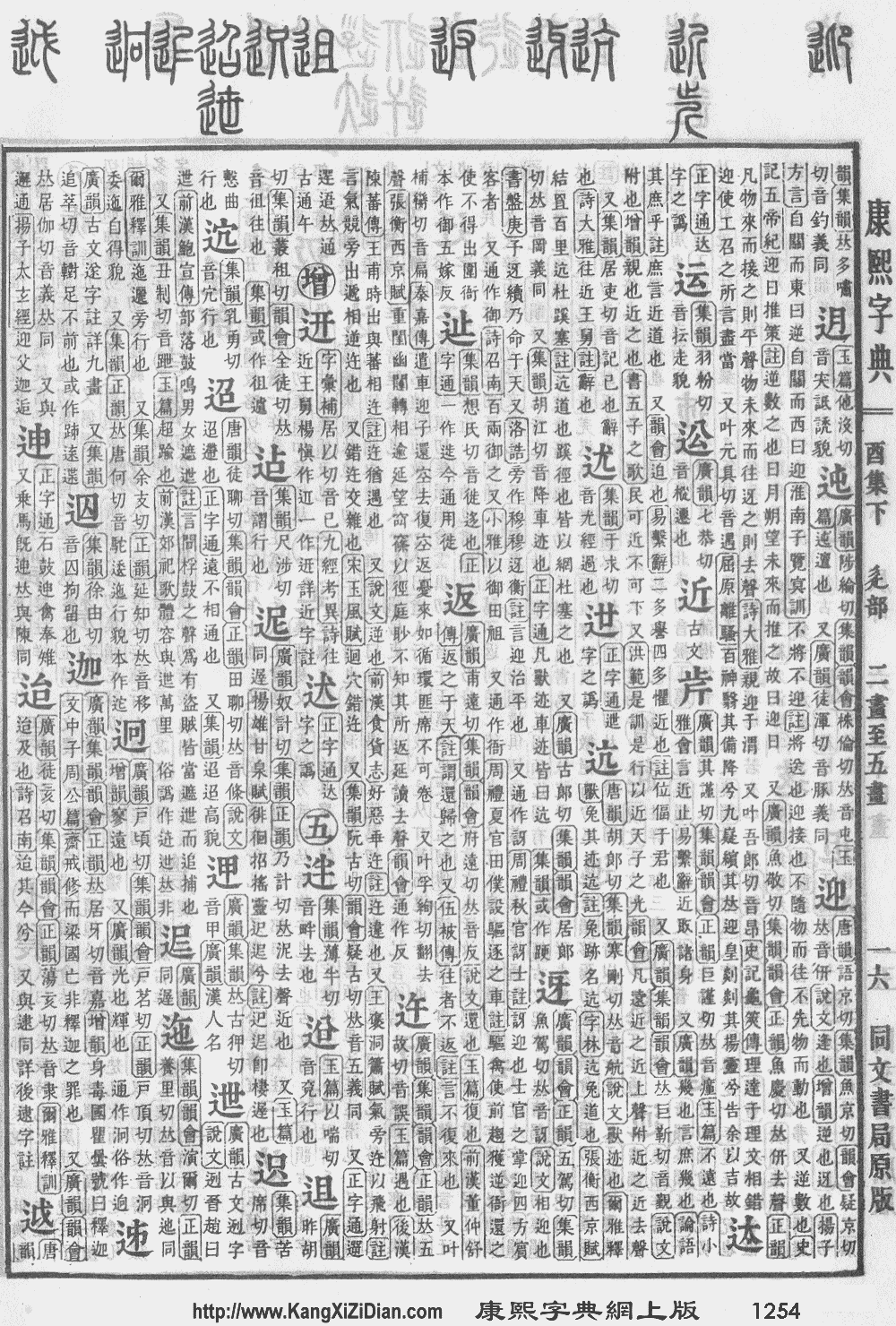
- Kangxi Dictionary: page 1254, character 14
- Dai Kanwa Jiten: character 38758
- Dae Jaweon: page 1737, character 7
- Hanyu Da Zidian (first edition): volume 6, page 3820, character 1
- Unihan data for U+8FD4
Chinese
Glyph origin
| Historical forms of the character 返 | |||
|---|---|---|---|
| Warring States | Shuowen Jiezi (compiled in Han) | Liushutong (compiled in Ming) | |
| Bronze inscriptions | Chu slip and silk script | Small seal script | Transcribed ancient scripts |
 |
 |
 |
 |
Characters in the same phonetic series (反) (Zhengzhang, 2003)
Pronunciation
Definitions
返
Compounds
- 一去不返 (yīqùbùfǎn)
- 七返九還/七返九还
- 不返
- 二返投唐
- 倦鳥知返/倦鸟知返
- 回光返照 (huíguāngfǎnzhào)
- 廢然而返/废然而返
- 往返 (wǎngfǎn)
- 徒勞往返/徒劳往返
- 慈烏返哺/慈乌返哺
- 折返 (zhéfǎn)
- 樂而忘返/乐而忘返
- 流連忘返/流连忘返 (liúliánwàngfǎn)
- 無功而返/无功而返 (wúgōng'érfǎn)
- 由博返約/由博返约
- 留連忘返/留连忘返
- 積重難返/积重难返 (jīzhòngnánfǎn)
- 覺返迷津/觉返迷津
- 返來/返来
- 返勾
- 返吟復吟/返吟复吟
- 返哺 (fǎnbǔ)
- 返回 (fǎnhuí)
- 返國/返国 (fǎnguó)
- 返抵 (fǎndǐ)
- 返旆
- 返景
- 返本還原/返本还原
- 返棹
- 返正撥亂/返正拨乱
- 返潮 (fǎncháo)
- 返照 (fǎnzhào)
- 返照回光
- 返璞歸真/返璞归真 (fǎnpúguīzhēn)
- 返璧
- 返程 (fǎnchéng)
- 返老歸童/返老归童
- 返老還童/返老还童 (fǎnlǎohuántóng)
- 返航 (fǎnháng)
- 返躬內省/返躬内省
- 返轡/返辔
- 返鄉/返乡 (fǎnxiāng)
- 返里
- 返防
- 返魂
- 返魂乏術/返魂乏术 (fǎnhúnfáshù)
- 返魂草
- 迴光返照/回光返照 (huíguāngfǎnzhào)
- 迷而不返
- 迷而知返
- 迷途知返 (mítúzhīfǎn)
- 遣返 (qiǎnfǎn)
- 還元返本/还元返本
- 還淳返樸/还淳返朴
- 還珠返璧/还珠返璧
- 重返 (chóngfǎn)
- 駕返瑤池/驾返瑶池
Etymology 2
| trad. | 返 | |
|---|---|---|
| simp. # | 返 | |
| alternative forms | 翻 (faan1) Cantonese 番 (faan1) Cantonese | |
(This etymology is missing or incomplete. Please add to it, or discuss it at the Etymology scriptorium. Particularly: “Derived from the Jiyun 孚袁切 reading of 返? Or is it actually 翻?”)
Pronunciation
Definitions
返 (Cantonese)
- to return (to); to come or go back (to)
- to go to
- back, returning to a previous state
- 擠返喺嗰度/挤返喺嗰度 [Cantonese] ― zai1 faan1 hai2 go2 dou6 [Jyutping] ― to put (something) back there
- 換返件衫/换返件衫 [Cantonese] ― wun6 faan1 gin6 saam1 [Jyutping] ― to change back one's clothes
- 打返佢 [Cantonese] ― daa2 faan1 keoi5 [Jyutping] ― to return him a hit; to hit him back
- 救唔返 [Cantonese] ― gau3 m4 faan1 [Jyutping] ― unable to be saved: unsalvageable, beyond hope, etc.
- 諗返舊陣時/谂返旧阵时 [Cantonese] ― nam2 faan1 gau6 zan6 si4-2 [Jyutping] ― thinking back to older times
- 去返轉頭/去返转头 [Cantonese] ― heoi3 faan1 zyun3 tau4 [Jyutping] ― to go back; to turn around
- 搵返/揾返 [Cantonese] ― wan2 faan1 [Jyutping] ― to find (something that was lost)
- 整返好 [Cantonese] ― zing2 faan1 hou2 [Jyutping] ― to repair; to fix
- 病返 [Cantonese] ― beng6 faan1 [Jyutping] ― to fall ill again
- 好返 [Cantonese] ― hou2 faan1 [Jyutping] ― to recover (from an illness)
- 開始喐返/开始喐返 [Cantonese] ― hoi1 ci2 juk1 faan1 [Jyutping] ― to start to move again
- 寫返英文/写返英文 [Cantonese] ― se2 faan1 jing1 man4-2 [Jyutping] ― use English instead
- 仲未覆返你 [Cantonese] ― zung6 mei6 fuk1 faan1 nei5 [Jyutping] ― still hasn't replied you
- To be left over, to be remaining
- Used after verbs for starting a new, good action.
Synonyms
- (to return):
Dialectal synonyms of 回 (“to return; to come/go back”) [map]
| Variety | Location | Words |
|---|---|---|
| Classical Chinese | 回, 歸 | |
| Formal (Written Standard Chinese) | 回, 返回, 回歸 | |
| Mandarin | Beijing | 回 |
| Taiwan | 回 | |
| Chengdu | 轉, 回 | |
| Guilin | 回 | |
| Malaysia | 回 | |
| Singapore | 回 | |
| Cantonese | Guangzhou | 返 |
| Hong Kong | 返 | |
| Macau | 返 | |
| Zhongshan (Shiqi) | 返 | |
| Taishan | 返 | |
| Kuala Lumpur (Guangfu) | 返 | |
| Singapore (Guangfu) | 返 | |
| Hakka | Meixian | 轉 |
| Miaoli (N. Sixian) | 轉 | |
| Pingtung (Neipu; S. Sixian) | 歸 | |
| Hsinchu County (Zhudong; Hailu) | 轉 | |
| Taichung (Dongshi; Dabu) | 轉 | |
| Hsinchu County (Qionglin; Raoping) | 轉 | |
| Yunlin (Lunbei; Zhao'an) | 轉 | |
| Kuching (Hepo) | 轉 | |
| Eastern Min | Fuzhou | 轉 |
| Singapore (Fuqing) | 轉 | |
| Southern Min | Xiamen | 轉, 倒 |
| Quanzhou | 轉 | |
| Zhangzhou | 轉 | |
| Zhao'an | 轉 | |
| Taipei | 轉 | |
| New Taipei (Sanxia) | 轉 | |
| Kaohsiung | 轉 | |
| Yilan | 轉 | |
| Changhua (Lukang) | 轉 | |
| Taichung | 轉 | |
| Tainan | 轉 | |
| Hsinchu | 轉 | |
| Kinmen | 轉 | |
| Penghu (Magong) | 轉 | |
| Penang (Hokkien) | 轉 | |
| Singapore (Hokkien) | 轉 | |
| Manila (Hokkien) | 倒 | |
| Chaozhou | 轉 | |
| Shantou | 轉 | |
| Haifeng | 轉 | |
| Singapore (Teochew) | 轉 | |
| Wenchang | 轉 | |
| Singapore (Hainanese) | 轉 | |
| Wu | Ningbo | 回, 轉 rare |
Compounds
Pronunciation
Japanese
| Shinjitai | 返 | |
| Kyūjitai [1] |
返󠄁 返+ 󠄁?(Adobe-Japan1) |
 |
| 返󠄄 返+ 󠄄?(Hanyo-Denshi) (Moji_Joho) |
 | |
| The displayed kanji may be different from the image due to your environment. See here for details. | ||
Readings
References
- “返”, in 漢字ぺディア (Kanjipedia) (in Japanese), 日本漢字能力検定協会, 2015–2024
Vietnamese
This article is issued from Wiktionary. The text is licensed under Creative Commons - Attribution - Sharealike. Additional terms may apply for the media files.